Public Family Trees
Real families, shared by their owners and reviewed by our team - browse the stories and connections behind them.
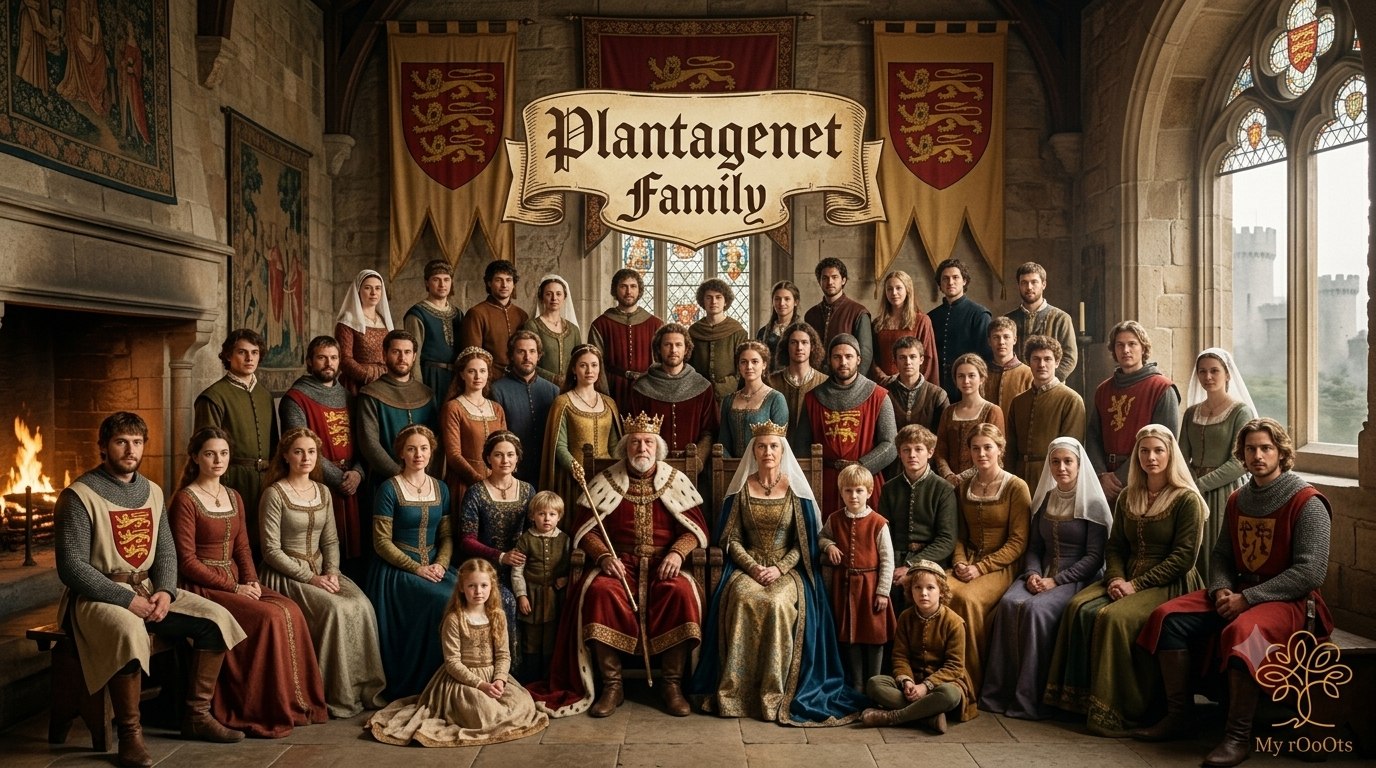
Plantagenet Family Tree - The House of Plantagenet from Henry II to Richard III
The House of Plantagenet was the royal dynasty that ruled England for 331 years, from the accession of Henry II in 1154 to the death of Richard III at the Battle of Bosworth in 1485, making it the longest-reigning royal house in English history. Fourteen Plantagenet kings held the throne in unbroken succession, and in the fifteenth century the family's two junior branches, the houses of Lancaster and York, fought each other for the crown in the civil wars later known as the Wars of the Roses. ## Origins The dynasty came from Anjou in western France. Geoffrey V, Count of Anjou, is said to have worn a sprig of broom, *planta genista*, in his cap, and from that nickname the family eventually took its name, although it was not used as an actual surname until Richard, 3rd Duke of York, adopted it in the 1440s. Geoffrey's marriage in 1128 to Empress Matilda, daughter and designated heir of Henry I of England, gave their son a claim to the English throne that he made good in 1154. With Normandy and Anjou behind him, and Aquitaine gained through his marriage to Eleanor of Aquitaine, Henry II ruled lands reaching from the Scottish border to the Pyrenees, the assemblage historians call the Angevin Empire. ## Notable members The early, or Angevin, kings are among the most familiar names in English history: Henry II, whose itinerant justices and sworn juries laid the foundations of the common law; Richard the Lionheart, a leading commander of the Third Crusade; and King John, who sealed Magna Carta at Runnymede in 1215. Henry III rebuilt Westminster Abbey, Edward I conquered Wales and summoned the Model Parliament, and Edward III opened the Hundred Years' War and founded the Order of the Garter. Later generations produced Edward the Black Prince, the victor of Poitiers, Henry V of Agincourt, and Richard III, whose lost grave was rediscovered in Leicester in 2012. ## Lancaster and York Edward III's many sons divided the dynasty. From his third surviving son, John of Gaunt, Duke of Lancaster, came Henry IV, Henry V and Henry VI, and, through Gaunt's Beaufort children, Margaret Beaufort and her son Henry VII. From his fourth son, Edmund of Langley, Duke of York, combined with the senior Mortimer descent from his second son, Lionel of Antwerp, came Richard, 3rd Duke of York, and his sons Edward IV and Richard III. The rivalry of those branches produced thirty years of intermittent civil war, ending when Henry Tudor defeated Richard III at Bosworth and married Elizabeth of York, uniting the red and white roses. ## Significance No other family has shaped English institutions so deeply. Under the Plantagenets, Magna Carta became a settled principle, parliament grew from an occasional royal council into a body whose consent was needed for taxation, the common law took its enduring form, and English displaced French as the language of the court. Their castles, abbeys and cathedrals still define the medieval landscape of England and Wales. | Fact | Details | | --- | --- | | Ruled | England, 1154 to 1485 | | Founder | Henry II, son of Geoffrey V of Anjou and Empress Matilda | | Place of origin | Anjou, France | | Kings | Fourteen, from Henry II to Richard III | | Branches | Angevin, Lancaster, York | | Emblems | The broom flower, the red rose of Lancaster, the white rose of York | | Last king | Richard III, killed at Bosworth in 1485 | | Legacy | Magna Carta, English common law, the growth of parliament |
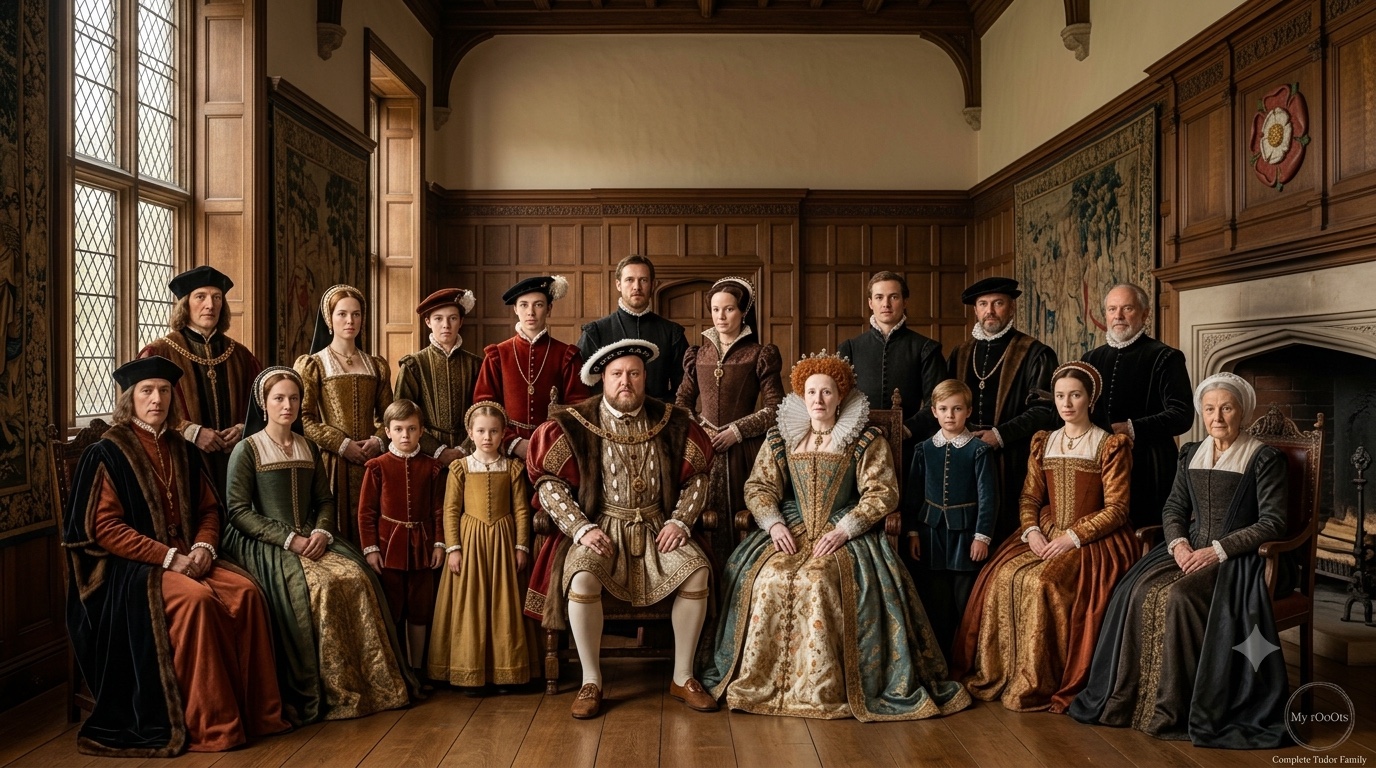
Tudor Family Tree - The House of Tudor from Henry VII to Elizabeth I
The House of Tudor was the royal family that ruled England and Wales from 1485 to 1603, founded by Henry VII after his victory at Bosworth Field and ending with the death of his granddaughter Elizabeth I. In five reigns the dynasty took England out of the Roman Catholic church, made the monarch the head of a national religion, and turned a peripheral kingdom into a naval and literary power. This tree follows the line from the Welsh courtier Owen Tudor and the dowager queen Catherine of Valois down to Elizabeth I, together with the Brandon, Grey and Clifford cousins and the Scottish line that ended in James VI and I. ## Origins The family name comes from Penmynydd in Anglesey, north Wales, where the Tudors were landed gentry in the service of the princes of Gwynedd. Owen Tudor came to the English court in the 1420s and married Catherine of Valois, the widow of Henry V. Their sons Edmund and Jasper Tudor were half-brothers of Henry VI, who raised them to earldoms in 1452. Edmund's marriage to Lady Margaret Beaufort, a great-granddaughter of John of Gaunt, added the senior Lancastrian claim to the throne, and their only child, born after his father's death, became Henry VII. His marriage to Elizabeth of York, eldest daughter of Edward IV, joined the two houses whose rivalry had driven the Wars of the Roses and gave the dynasty its red and white rose. ## Notable members Henry VII rebuilt the crown's finances and secured the new dynasty through marriage alliances with Spain and Scotland. Henry VIII married six times and broke with Rome, and his three surviving children each reigned in turn: Edward VI as a Protestant boy king, Mary I as the first queen to rule England in her own right, and Elizabeth I for forty-four years. Around them stand the cousins who carried royal blood without the crown, among them Lady Jane Grey, queen for nine days, her sisters Catherine and Mary Grey, and Margaret Pole, Countess of Salisbury, one of the last Plantagenets. ## The Scottish and Suffolk lines Henry VII's daughters carried the blood outward. Margaret Tudor married James IV of Scotland, and her line runs through James V and Mary, Queen of Scots, to James VI and I, who inherited England in 1603. Mary Tudor married Charles Brandon, 1st Duke of Suffolk, and their daughters Frances and Eleanor Brandon produced the Grey and Clifford claimants whom Henry VIII's will preferred over the Scottish descendants of his elder sister. ## Significance No English dynasty changed the country more in so few generations. The Tudors created the Church of England, absorbed the wealth of the monasteries into the crown, brought Wales formally into the English legal and parliamentary system, and built the navy that met the Spanish Armada. The Elizabethan settlement shaped English religion for centuries, and the Elizabethan decades produced Shakespeare, Spenser and the first English voyages to the Americas. When Elizabeth I died unmarried in 1603, the throne passed peacefully to her Scottish cousin, and the two crowns were joined in one person for the first time. | Fact | Details | |---|---| | Origin | Penmynydd, Anglesey, Wales | | Ruled | England, Wales and Ireland, 1485 to 1603 | | Founder | Owen Tudor, through his son Edmund Tudor | | Monarchs | Henry VII, Henry VIII, Edward VI, Mary I, Elizabeth I | | Emblem | The Tudor rose, red and white combined | | Principal seats | Richmond, Greenwich, Hampton Court and Whitehall palaces | | Ended | Death of Elizabeth I in 1603, succeeded by James VI of Scotland |
Want your family here?
Build your family tree for free, then opt in from your family's settings page. Our team reviews every family before it's listed.