Public Family Trees/Tudor Family Tree - The House of Tudor from Henry VII to Elizabeth I
Tudor Family Tree - The House of Tudor from Henry VII to Elizabeth I
Explore 51 people across 7 generations of the Tudor family, built with My rOoOts.
51
People
7
Generations
0
Living
51
Passed on
24
Marriages
43 yrs
Avg. lifespan
Family Tree
51 members mapped across 7 generations
Loading family tree…
Your turn
Build a tree like this for your own family
Free, with no sign-up to start. Add yourself, then your parents and grandparents, and watch it grow.
About the Tudor family
The House of Tudor was the royal family that ruled England and Wales from 1485 to 1603, founded by Henry VII after his victory at Bosworth Field and ending with the death of his granddaughter Elizabeth I. In five reigns the dynasty took England out of the Roman Catholic church, made the monarch the head of a national religion, and turned a peripheral kingdom into a naval and literary power. This tree follows the line from the Welsh courtier Owen Tudor and the dowager queen Catherine of Valois down to Elizabeth I, together with the Brandon, Grey and Clifford cousins and the Scottish line that ended in James VI and I.
At a glance
- Origin
- Penmynydd, Anglesey, Wales
- Ruled
- England, Wales and Ireland, 1485 to 1603
- Founder
- Owen Tudor, through his son Edmund Tudor
- Monarchs
- Henry VII, Henry VIII, Edward VI, Mary I, Elizabeth I
- Emblem
- The Tudor rose, red and white combined
- Principal seats
- Richmond, Greenwich, Hampton Court and Whitehall palaces
- Ended
- Death of Elizabeth I in 1603, succeeded by James VI of Scotland
7 generations, 1401 to 1566
1401
Gen 1
Catherine of Valois1442
Gen 2
Edward IV Plantagenet1457
Gen 3
Henry VII Tudor1486
Gen 4
Arthur Tudor1512
Gen 5
James V Stewart1537
Gen 6
Jane Grey1566
Gen 7
James VI and I Stuart
Read the full historyHide the full history
Origins
The family name comes from Penmynydd in Anglesey, north Wales, where the Tudors were landed gentry in the service of the princes of Gwynedd. Owen Tudor came to the English court in the 1420s and married Catherine of Valois, the widow of Henry V. Their sons Edmund and Jasper Tudor were half-brothers of Henry VI, who raised them to earldoms in 1452. Edmund's marriage to Lady Margaret Beaufort, a great-granddaughter of John of Gaunt, added the senior Lancastrian claim to the throne, and their only child, born after his father's death, became Henry VII. His marriage to Elizabeth of York, eldest daughter of Edward IV, joined the two houses whose rivalry had driven the Wars of the Roses and gave the dynasty its red and white rose.
Notable members
Henry VII rebuilt the crown's finances and secured the new dynasty through marriage alliances with Spain and Scotland. Henry VIII married six times and broke with Rome, and his three surviving children each reigned in turn: Edward VI as a Protestant boy king, Mary I as the first queen to rule England in her own right, and Elizabeth I for forty-four years. Around them stand the cousins who carried royal blood without the crown, among them Lady Jane Grey, queen for nine days, her sisters Catherine and Mary Grey, and Margaret Pole, Countess of Salisbury, one of the last Plantagenets.
The Scottish and Suffolk lines
Henry VII's daughters carried the blood outward. Margaret Tudor married James IV of Scotland, and her line runs through James V and Mary, Queen of Scots, to James VI and I, who inherited England in 1603. Mary Tudor married Charles Brandon, 1st Duke of Suffolk, and their daughters Frances and Eleanor Brandon produced the Grey and Clifford claimants whom Henry VIII's will preferred over the Scottish descendants of his elder sister.
Significance
No English dynasty changed the country more in so few generations. The Tudors created the Church of England, absorbed the wealth of the monasteries into the crown, brought Wales formally into the English legal and parliamentary system, and built the navy that met the Spanish Armada. The Elizabethan settlement shaped English religion for centuries, and the Elizabethan decades produced Shakespeare, Spenser and the first English voyages to the Americas. When Elizabeth I died unmarried in 1603, the throne passed peacefully to her Scottish cousin, and the two crowns were joined in one person for the first time.
Notable Members
Key figures from 7 generations of the Tudor family
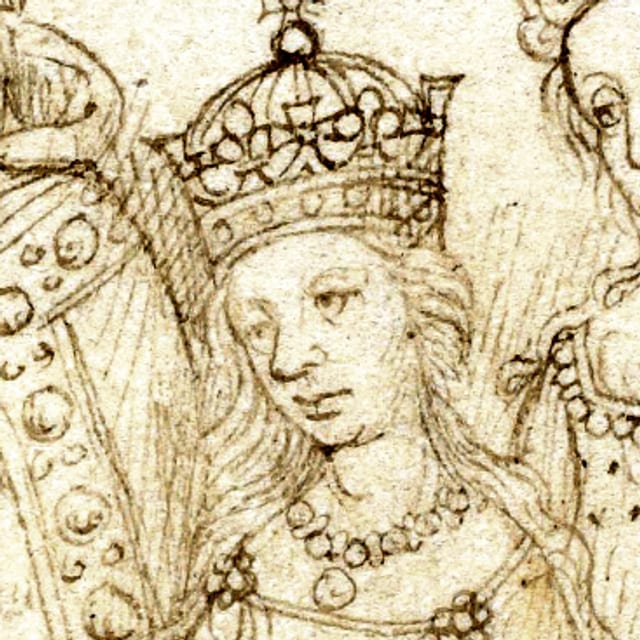 Gen 1
Gen 1Catherine of Valois
1401 - 1437
Queen consort of England
Photo: Caxton Master, "The Beauchamp Pageants", Public domain, via Wikimedia Commons
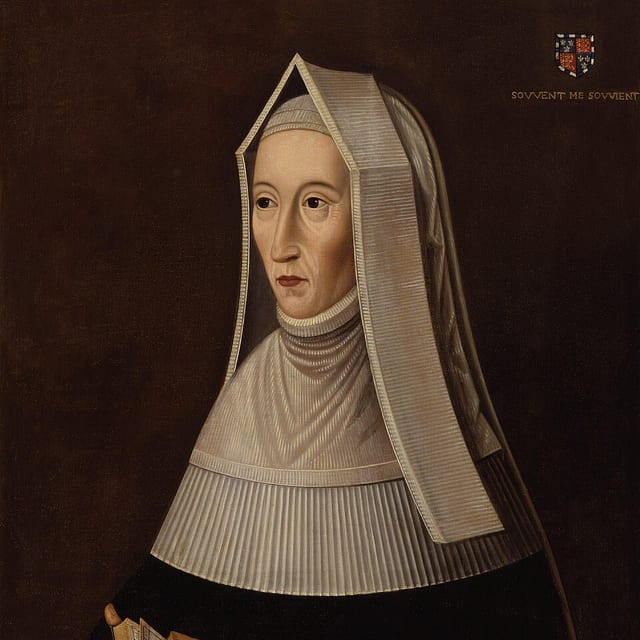 Gen 2
Gen 2Margaret Beaufort
1443 - 1509
Countess of Richmond and Derby
Photo: Unidentified painter, Public domain, via Wikimedia Commons
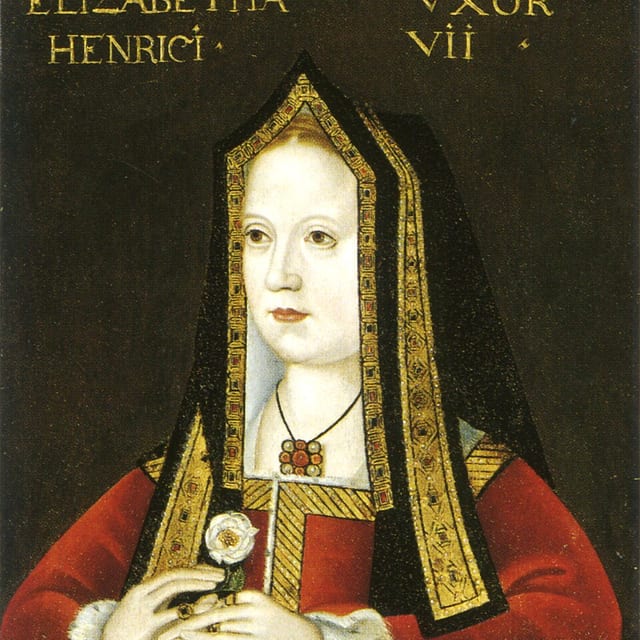
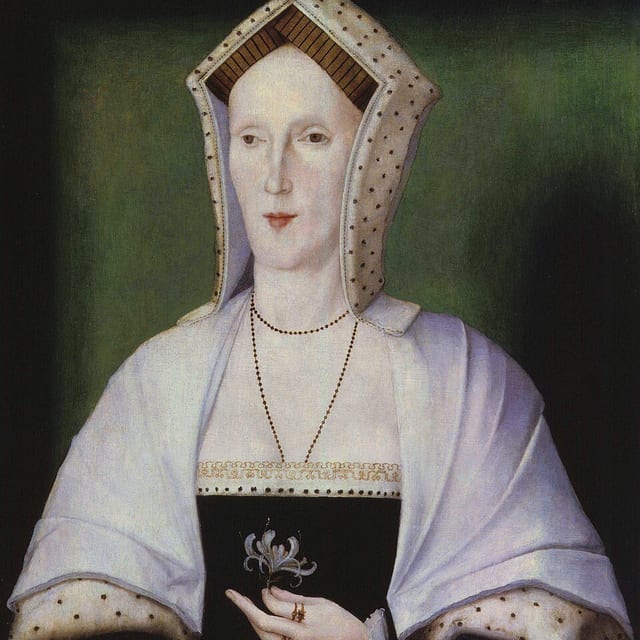
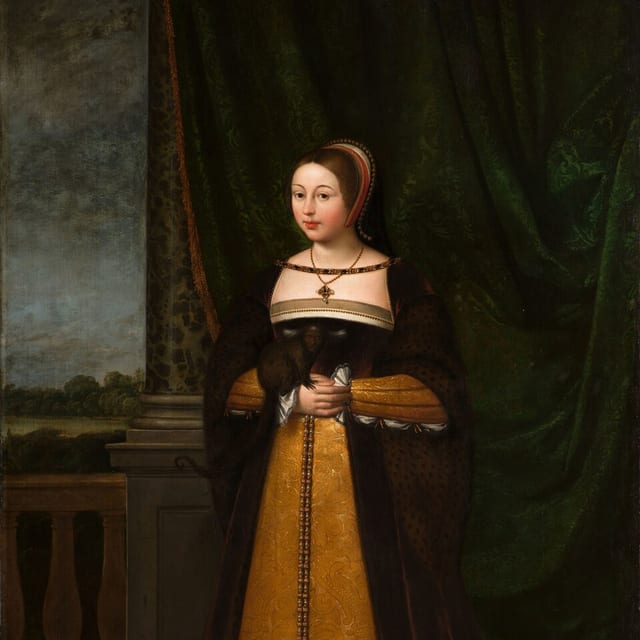
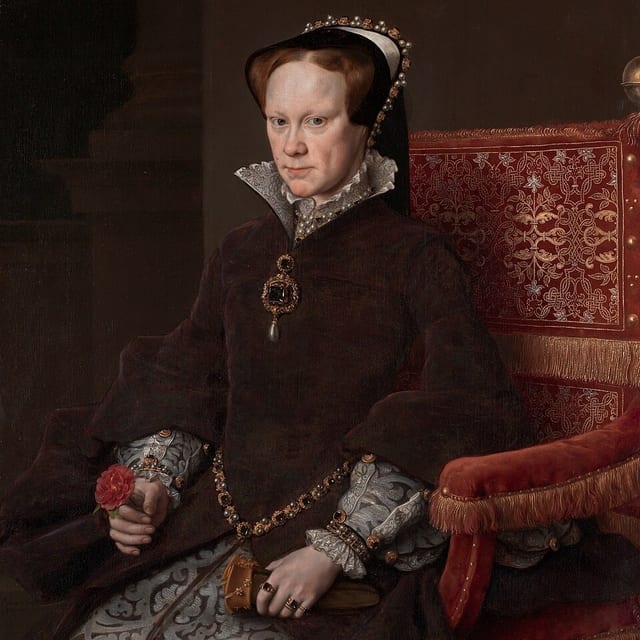
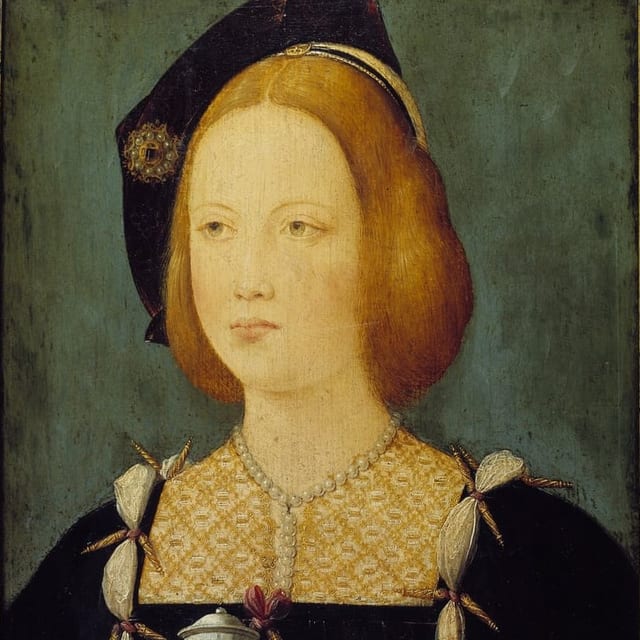 Gen 4
Gen 4Mary Tudor
1496 - 1533
Queen consort of France, Duchess of Suffolk
Photo: Attributed to Jean Perréal, Public domain, via Wikimedia Commons
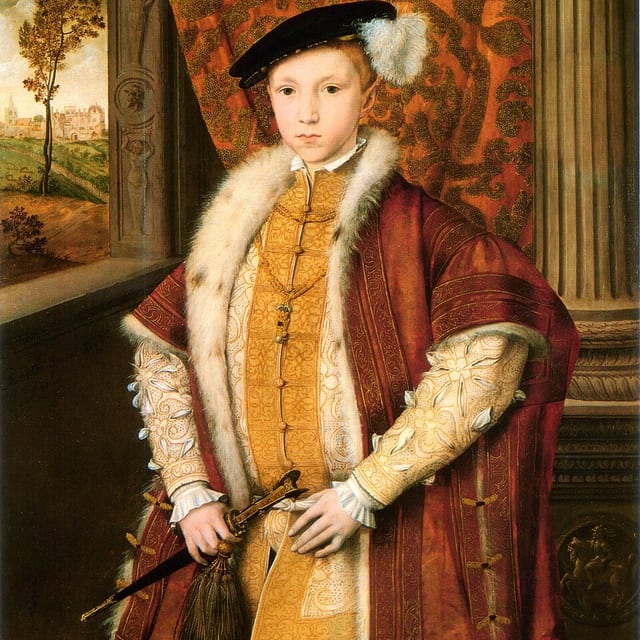 Gen 5
Gen 5Edward VI Tudor
1537 - 1553
King of England
Photo: Attributed to William Scrots (active 1537-1553) [1], Public domain, via Wikimedia Commons
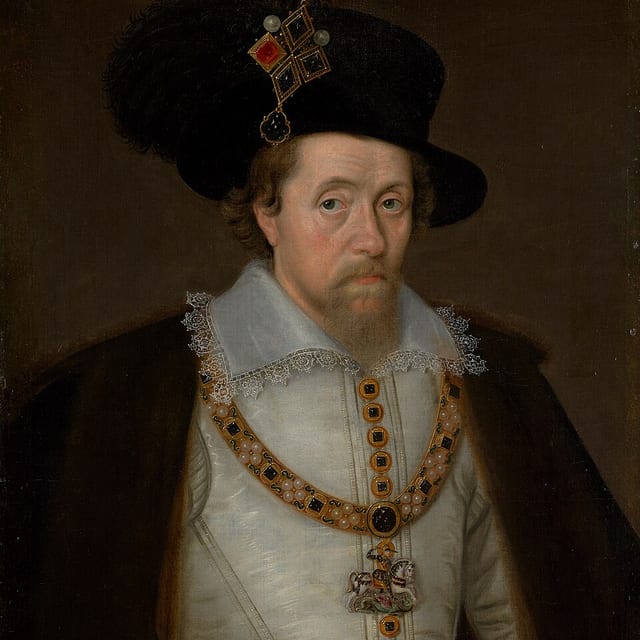
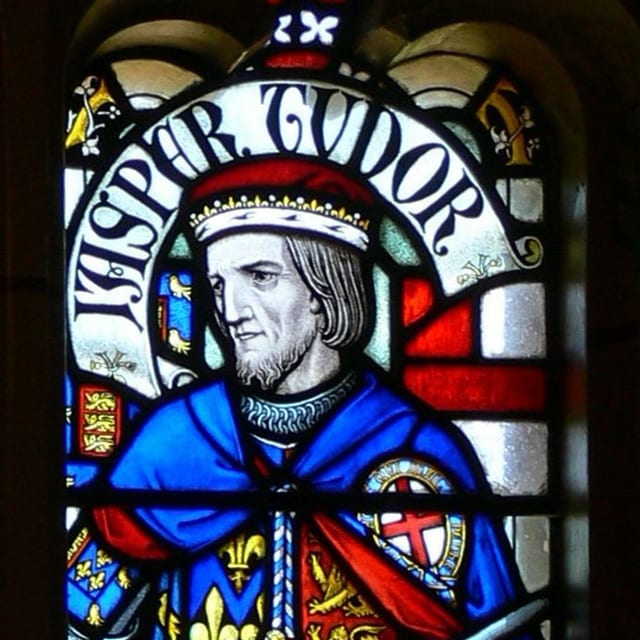
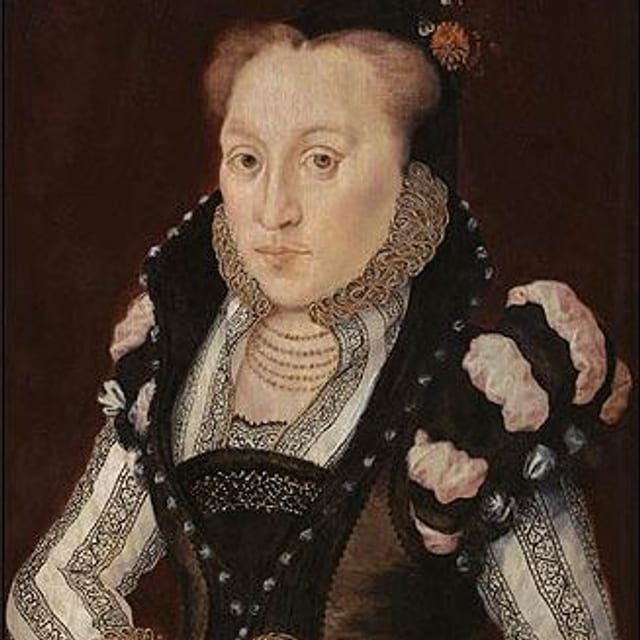
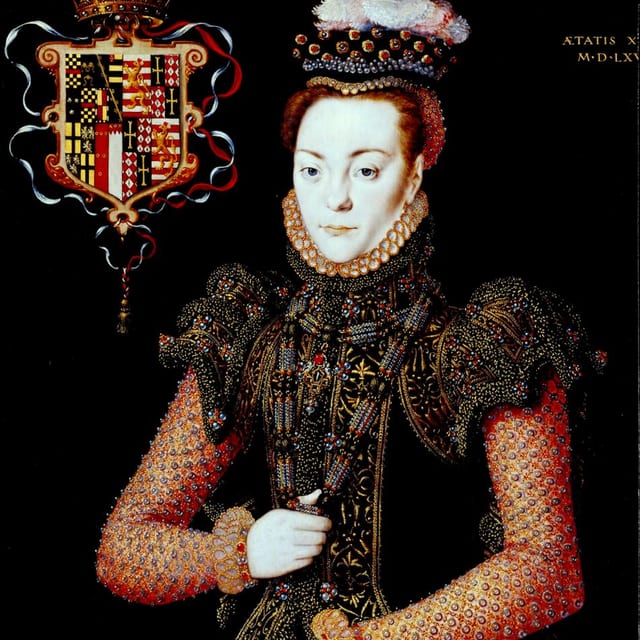
Family Members
Showing 11 of 51 people
Catherine of Valois
Gen 1 · 1401 - 1437
Catherine of Valois was a French princess who became queen of England as the wife of Henry V and, by her second marriage, the grandmother of Henry VII. Born in Paris in 1401, the youngest daughter of Charles VI of France and Isabeau of Bavaria, she was married to Henry V in 1420 under the Treaty of Troyes, which was meant to settle the Hundred Years' War by making her husband heir to the French throne. Their only child succeeded as Henry VI of England at the age of nine months. Widowed at twenty, Catherine formed a lasting union with Owen Tudor, a Welshman of her household, and their sons Edmund and Jasper Tudor grew up under the protection of their royal half-brother. She died in 1437 and was buried at Westminster Abbey.
John Beaufort
Gen 1 · 1404 - 1444
John Beaufort, 1st Duke of Somerset, was an English nobleman and soldier of the Lancastrian royal house and the father of Lady Margaret Beaufort. Born in 1404, he was a grandson of John of Gaunt, Duke of Lancaster, through Gaunt's marriage to Katherine Swynford, whose children were legitimated by parliament but later barred from the succession by a clause of doubtful authority. Captured in France as a young man at the Battle of Bauge, he spent some seventeen years as a prisoner of war before being ransomed. He was created Duke of Somerset in 1443 and given command of an expensive expedition to France that achieved nothing and ended in his disgrace at court. He died in 1444, leaving his infant daughter Margaret as his heiress and, through her, the Tudor line.
Edward IV Plantagenet
Gen 2 · 1442 - 1483
Edward IV was king of England from 1461 to 1470 and again from 1471 to 1483, the first monarch of the House of York and the maternal grandfather of Henry VIII. Born at Rouen in 1442, the eldest surviving son of Richard, 3rd Duke of York, and Cecily Neville, he took the throne as a teenager after his father's death in the Wars of the Roses and won decisive victories at Towton, Barnet and Tewkesbury. His secret marriage to Elizabeth Woodville in 1464 alienated his chief ally, the Earl of Warwick, and drove him briefly into exile. His second reign brought England relative peace, a revived royal revenue and a fashionable court. He died in 1483, and three years later his eldest daughter Elizabeth of York married Henry VII.
Margaret Beaufort
Gen 2 · 1443 - 1509
Lady Margaret Beaufort, Countess of Richmond and Derby, was the mother of Henry VII and the source of the Lancastrian claim that put the Tudors on the English throne. Born at Bletsoe Castle in Bedfordshire in 1443, the only surviving child of John Beaufort, 1st Duke of Somerset, she was a great-granddaughter of John of Gaunt. Married to Edmund Tudor at twelve and widowed within a year, she gave birth to her only child at Pembroke Castle in 1457. Through the Yorkist decades she worked steadily for her exiled son's cause, helping to arrange the understanding with the Woodvilles that preceded Bosworth. As the king's mother she was a formidable landowner, a patron of printing and learning, and the founder of Christ's College and St John's College, Cambridge. She died in 1509.
Henry VII Tudor
Gen 3 · 1457 - 1509
Henry VII was the first Tudor king of England, reigning from 1485 to 1509 after defeating Richard III at the Battle of Bosworth Field. Born at Pembroke Castle in 1457, the posthumous son of Edmund Tudor and Lady Margaret Beaufort, he spent most of his youth in exile in Brittany and France in the care of his uncle Jasper Tudor. His marriage to Elizabeth of York in January 1486 joined the rival houses of Lancaster and York and produced the combined red and white rose that became the dynasty's badge. He suppressed a series of pretenders, restored the crown's finances through close personal control of revenue and a formidable network of bonds, and married his children into the ruling houses of Spain and Scotland. He died at Richmond Palace in 1509.
Elizabeth of York
Gen 3 · 1466 - 1503
Elizabeth of York was queen of England as the wife of Henry VII and the mother of Henry VIII, and the only Englishwoman to be the daughter, sister, niece, wife and mother of kings. Born at the Palace of Westminster in 1466, she was the eldest child of Edward IV and Elizabeth Woodville. Her father's death in 1483 left her and her siblings declared illegitimate under Richard III, and her marriage to the victorious Henry Tudor in January 1486 was the settlement that closed the Wars of the Roses. She bore at least seven children, of whom Arthur, Margaret, Henry and Mary survived infancy, and was widely praised for her generosity, her piety and the dignity she brought to the new dynasty. She died at the Tower of London on her thirty-seventh birthday in 1503.
Arthur Tudor
Gen 4 · 1486 - 1502
Arthur, Prince of Wales, was the eldest son of Henry VII and Elizabeth of York and heir to the English throne until his death at fifteen. Born at Winchester in September 1486, less than a year after his parents' marriage, he was named to evoke the legendary British king and to advertise the new dynasty's ambitions. He was betrothed in infancy to Catherine of Aragon, daughter of Ferdinand of Aragon and Isabella of Castile, and the two were married at St Paul's Cathedral in November 1501 in a match that anchored England's alliance with Spain. The couple were sent to Ludlow Castle to head the council of the Welsh Marches, and Arthur died there in April 1502. His younger brother became Henry VIII and in 1509 married his widow.
Margaret Tudor
Gen 4 · 1489 - 1541
Margaret Tudor was queen of Scots as the wife of James IV and the grandmother of Mary, Queen of Scots, the link through which the Stuarts eventually inherited the English throne. Born at the Palace of Westminster in 1489, the eldest daughter of Henry VII and Elizabeth of York, she was married to James IV in 1503 under the settlement known as the Treaty of Perpetual Peace. Widowed at Flodden in 1513, she served briefly as regent for her infant son James V, then married Archibald Douglas, 6th Earl of Angus, by whom she had a daughter, Margaret Douglas. Scottish politics for the next two decades turned largely on the rivalry between her, the Douglases and the Duke of Albany. She died at Methven Castle in 1541.
James V Stewart
Gen 5 · 1512 - 1542
James V was king of Scots from 1513 to 1542, the son of James IV and Margaret Tudor and the father of Mary, Queen of Scots. Born at Linlithgow Palace in 1512, he succeeded before his second birthday and spent his minority under a succession of regents and, from 1525, in the custody of his stepfather the Earl of Angus, from whom he escaped in 1528 to rule in his own right. He rebuilt royal finances, kept Scotland aligned with France and with Rome against the reformation pursued by his uncle Henry VIII, and remodelled the palaces of Falkland and Stirling in the new Renaissance style. His first wife, Madeleine of Valois, died soon after their marriage; his second, Mary of Guise, bore him a daughter six days before his own death at Falkland Palace in December 1542.
Margaret Douglas
Gen 5 · 1515 - 1578
Lady Margaret Douglas, Countess of Lennox, was an English and Scottish noblewoman, the daughter of Margaret Tudor and the Earl of Angus and the grandmother of James VI and I. Born at Harbottle Castle in Northumberland in October 1515 while her mother was in flight from Scotland, she was brought up largely at the English court as a favoured niece of Henry VIII and a close companion of Princess Mary. She was twice imprisoned for making marriage arrangements without royal consent before marrying Matthew Stewart, 4th Earl of Lennox, in 1544. Her persistent dynastic manoeuvring secured the marriage of her son Lord Darnley to Mary, Queen of Scots, uniting the two strongest claims to the English succession. She died in London in 1578.
Jane Grey
Gen 6 · 1537 - 1554
Lady Jane Grey was proclaimed queen of England in July 1553 and held the throne for nine days, the shortest reign in English history. Born at Bradgate Park in Leicestershire in 1537, the eldest daughter of Henry Grey and Frances Brandon and a great-granddaughter of Henry VII, she was among the best-educated women of her generation, reading Latin and Greek and corresponding with continental reformers; the scholar Roger Ascham left a famous account of finding her reading Plato while her family hunted. In May 1553 she was married to Lord Guildford Dudley, and on the death of Edward VI she was named queen under his device for the succession. Support collapsed within days in favour of Mary I. She died at the Tower of London in February 1554, aged about seventeen.
Is this your family?
Claim this tree to correct it, add relatives, and keep it up to date yourself.
Claim this treeStart your own family tree
Build yours for free, then send relatives a link to fill in their side of the family.
Start my tree, freeRelationship Explorer
How are two people related?
Pick any two names in the tree to trace the exact line of descent, marriage or shared ancestor connecting them.
Catherine of Valois is James VI and I Stuart's 4x Great-Grandmother.
- 👨James VI and I Stuartson of
- 👩Mary Stuartdaughter of
- 👨James V Stewartson of
- 👩Margaret Tudordaughter of
- 👨Henry VII Tudorson of
- 👨Edmund Tudorson of
- 👩Catherine of Valois
Find out how you're related to your own cousins.
Build your treeIs this your family?
Claim the Tudor family tree to take it over, edit it, and add family members yourself.
Frequently Asked Questions
How many people are in the Tudor family tree?+−
This family tree currently documents 51 people across 7 recorded generations.
How many generations does the Tudor family tree span?+−
7 generations are recorded so far, and may grow as more history is added.
How many marriages are recorded?+−
24 marriages are recorded in this family.
Where is the Tudor family from?+−
The most commonly recorded native place is England.
Start building your own family story
Create a tree in minutes, import a GEDCOM file, or explore more public family trees.
Free. Private by default. GEDCOM export any time.