Public Family Trees
Real families, shared by their owners and reviewed by our team - browse the stories and connections behind them.
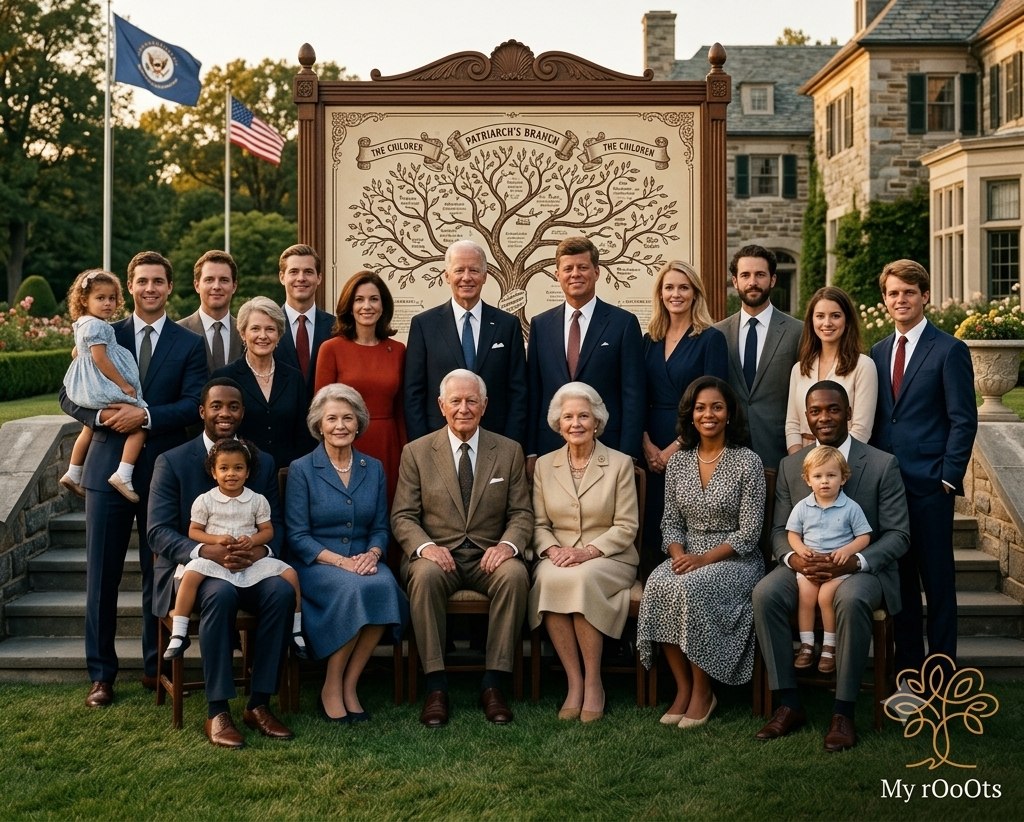
Kennedy Family Tree - America's Political Dynasty
The Kennedy family is an Irish American political dynasty from Boston, Massachusetts, whose members have included the 35th President of the United States, three United States senators, four congressmen, several ambassadors, and the founders of the Peace Corps and the Special Olympics. Across four documented generations the family moved from a County Wexford farm to the White House, and its name became shorthand in American public life for both political ambition and public service. ## Origins The American line begins with Patrick Kennedy, a farmer's son from Dunganstown, near New Ross in County Wexford, who emigrated to East Boston during the Great Famine. His son, Patrick Joseph "P. J." Kennedy (1858 to 1929), built a livelihood in the liquor and banking trades and served in both houses of the Massachusetts legislature, becoming one of the Democratic ward leaders who ran the city's Irish Catholic politics. On the other side stood John Francis "Honey Fitz" Fitzgerald (1863 to 1950), congressman and twice Mayor of Boston. The two families joined in 1914 when P. J.'s son Joseph P. Kennedy Sr. married Honey Fitz's daughter Rose Fitzgerald. Their nine children, raised between Brookline, Bronxville and the compound at Hyannis Port on Cape Cod, form the generation the world knows. ## Notable members John F. Kennedy served as President from 1961 until his death in 1963, having previously represented Massachusetts in the House and Senate. His brother Robert F. Kennedy was Attorney General, then Senator from New York, and a candidate for the presidency in 1968. Their youngest brother Edward "Ted" Kennedy sat in the United States Senate for almost 47 years and was one of the most productive legislators of his era. The eldest son, Joseph P. Kennedy Jr., was a naval aviator killed on a volunteer mission in 1944. Away from elected office, Eunice Kennedy Shriver founded the Special Olympics, her husband Sargent Shriver created the Peace Corps and Head Start, and Jean Kennedy Smith founded the arts and disability organisation VSA before serving as United States Ambassador to Ireland. The following generations have produced congressmen, a lieutenant governor, ambassadors, documentary filmmakers, human rights advocates and journalists. ## Significance No other American family has combined electoral success, philanthropy and public visibility on this scale for so long. The Kennedys shaped the civil rights era, the space programme, immigration reform, health care legislation and the modern understanding of disability rights, and their private losses were mourned publicly in a way usually reserved for royalty. The Kennedy Library in Boston, the Kennedy Center in Washington and dozens of schools and institutions carry the name. | Fact | Details | | --- | --- | | Family name | Kennedy | | Irish origin | Dunganstown, County Wexford, Ireland | | American home | Boston and Hyannis Port, Massachusetts | | Founding couple | Patrick Joseph Kennedy and Mary Augusta Hickey | | Best known member | John F. Kennedy, 35th President of the United States | | Generations covered | Four | | Offices held | Presidency, US Senate, US House, ambassadorships, state office | | Institutions founded | Peace Corps, Special Olympics, Best Buddies, Citizens Energy |
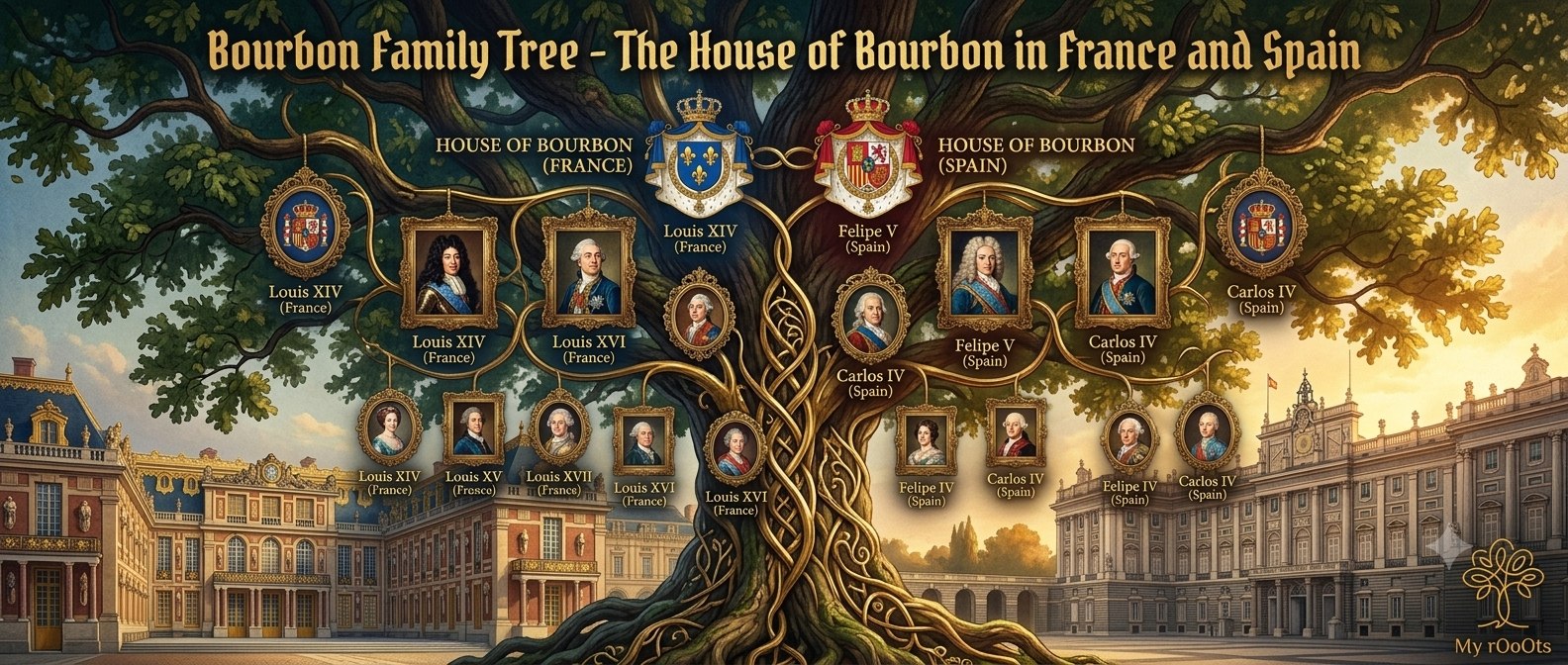
Bourbon Family Tree - The House of Bourbon in France and Spain
The House of Bourbon is a European royal dynasty, descended in the male line from the Capetian kings of France, that ruled France from 1589 to 1792 and again from 1814 to 1848, and that still reigns in Spain today under King Felipe VI. Over four centuries its members also held the thrones of Navarre, Naples and Sicily, Parma and Etruria, which makes it one of the most widely established royal houses in European history. ## Origins The family takes its name from the lordship of Bourbon in the Auvergne, centred on Bourbon-l'Archambault. Its royal line descends from Robert, Count of Clermont, a younger son of King Louis IX of France, whose marriage to Beatrice of Burgundy, heiress of Bourbon, carried the name into the Capetian house in 1272. For three centuries afterwards the Bourbons were powerful French princes of the blood rather than kings. That changed with Antoine de Bourbon, Duke of Vendome, whose marriage to Jeanne d'Albret, queen regnant of Navarre, produced Henry of Navarre. When the Valois line died out in 1589, Henry was the senior Capetian heir, and he took the French throne as Henry IV. ## Notable members Henry IV ended the French Wars of Religion and issued the Edict of Nantes in 1598. His son Louis XIII, guided by Cardinal Richelieu, built the centralised state that Louis XIV, the Sun King, carried to its height across a reign of seventy-two years, the longest of any European sovereign, and to the palace of Versailles. Louis XV and then Louis XVI inherited that system, and Louis XVI and his queen, Marie Antoinette, were swept away by the French Revolution in 1792. The dynasty returned with Louis XVIII in 1814 and Charles X in 1824, and in 1830 the crown passed to Louis Philippe I of the cadet House of Orleans, the last king to rule in France. ## The Spanish branch In 1700 the childless Charles II of Spain left his crown to Philip, Duke of Anjou, a grandson of Louis XIV. Philip became Philip V, the first Bourbon king of Spain, at the cost of the War of the Spanish Succession, which ended with his renunciation of any claim to the French throne. His descendants include the reforming Charles III, Ferdinand VII, Isabella II, Alfonso XII and Alfonso XIII, who left Spain in 1931. The monarchy was restored in 1975 under Juan Carlos I, grandson of Alfonso XIII, who presided over Spain's transition to democracy and abdicated in 2014 in favour of his son Felipe VI. Felipe's elder daughter Leonor, Princess of Asturias, is heir to the throne. ## Significance No other family links the absolute monarchy of Versailles to a working constitutional monarchy in twenty-first century Madrid. Bourbon marriages tied the house to the Habsburgs of Austria and Spain, the dukes of Savoy, the Medici of Florence and the British royal family, so a Bourbon family tree doubles as a map of European dynastic politics from the Reformation to the present day. | Fact | Details | | --- | --- | | Family name | House of Bourbon (Maison de Bourbon, Casa de Borbon) | | Place of origin | Bourbon-l'Archambault, Auvergne, France | | Founder of the line | Robert, Count of Clermont (1256-1317), son of Louis IX | | First king of France | Henry IV, reigned 1589 to 1610 | | Last king to rule France | Louis Philippe I, reigned 1830 to 1848 | | First king of Spain | Philip V, reigned 1700 to 1746 | | Head of the house in Spain | King Felipe VI, since 2014 | | Heir in Spain | Leonor, Princess of Asturias | | Principal seats | Versailles, Fontainebleau, the Louvre, the Royal Palace of Madrid |
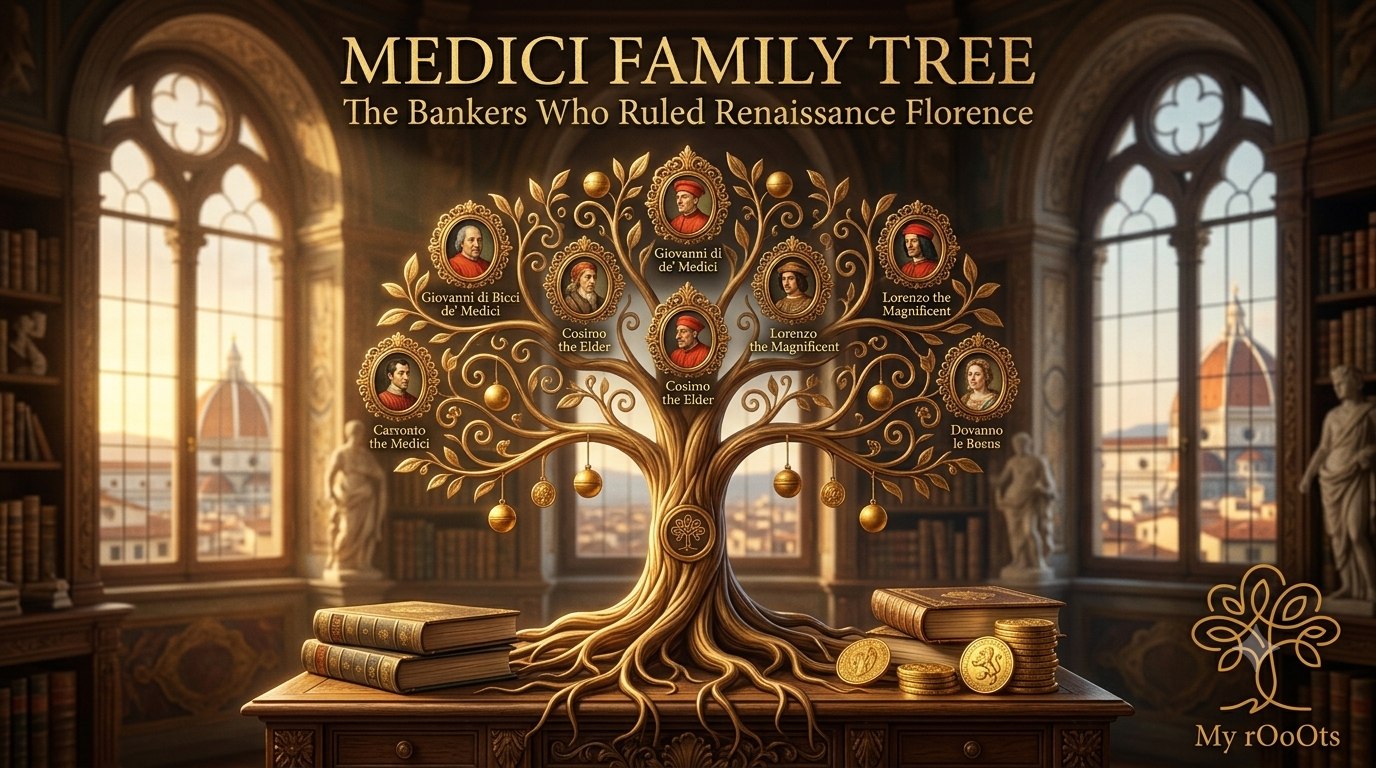
Medici Family Tree - The Bankers Who Ruled Renaissance Florence
The House of Medici was a Florentine banking family and political dynasty that rose from mercantile wealth in the late fourteenth century to dominate the Republic of Florence, produced two popes and two queens of France, and ruled as hereditary Grand Dukes of Tuscany for nearly two centuries before the direct male line died out in 1737. ## Origins The family's fortune began with Giovanni di Bicci de' Medici, who founded the Medici Bank around 1397 and built it into one of the most trusted financial institutions in Europe through close ties to the papacy. His son Cosimo de' Medici turned that wealth into political dominance of Florence without ever holding a formal princely title, ruling through alliance, patronage, and public opinion for three decades. Cosimo's descendants, especially his grandson Lorenzo de' Medici, known as Lorenzo the Magnificent, consolidated the family's grip on the city while becoming the era's foremost patrons of Renaissance art and humanist scholarship. ## Notable Members Lorenzo the Magnificent's sons included Giovanni, who became Pope Leo X, the first Medici pope, and whose cousin Giulio later reigned as Pope Clement VII. Lorenzo's granddaughter Catherine de' Medici became queen of France and, as regent, steered the country through the Wars of Religion; a later Medici, Marie de' Medici, likewise became queen of France as the second wife of Henry IV. When the senior line failed with the assassination of Alessandro de' Medici in 1537, the family's junior branch, descended from Cosimo the Elder's brother, provided Cosimo I de' Medici, who was crowned the first Grand Duke of Tuscany in 1569. His descendants, including the scientific patrons Cosimo II and Ferdinando II, ruled Tuscany until Gian Gastone de' Medici, the last Grand Duke, died without an heir in 1737. His sister, Anna Maria Luisa de' Medici, outlived him as the family's final member. ## Significance Beyond their political rule, the Medici reshaped European culture through unmatched patronage: they backed Brunelleschi, Donatello, Botticelli, Michelangelo, and Galileo Galilei, and financed the buildings, art, and institutions that still define Florence today. Anna Maria Luisa's 1737 Patto di Famiglia bequeathed the family's entire art collection to the Tuscan state on the condition it never leave Florence, directly founding the holdings of the Uffizi Gallery and Pitti Palace. | Fact | Details | |---|---| | Founded | c. 1397, Florence (Medici Bank) | | Founder | Giovanni di Bicci de' Medici | | Seat | Florence; later the Grand Duchy of Tuscany | | Peak title | Grand Duke of Tuscany (from 1569) | | Popes produced | Leo X (1513-1521), Clement VII (1523-1534) | | Queens of France | Catherine de' Medici, Marie de' Medici | | Dynasty ended | 1737 (Gian Gastone); 1743 (Anna Maria Luisa) | | Lasting legacy | Uffizi Gallery and Pitti Palace collections |
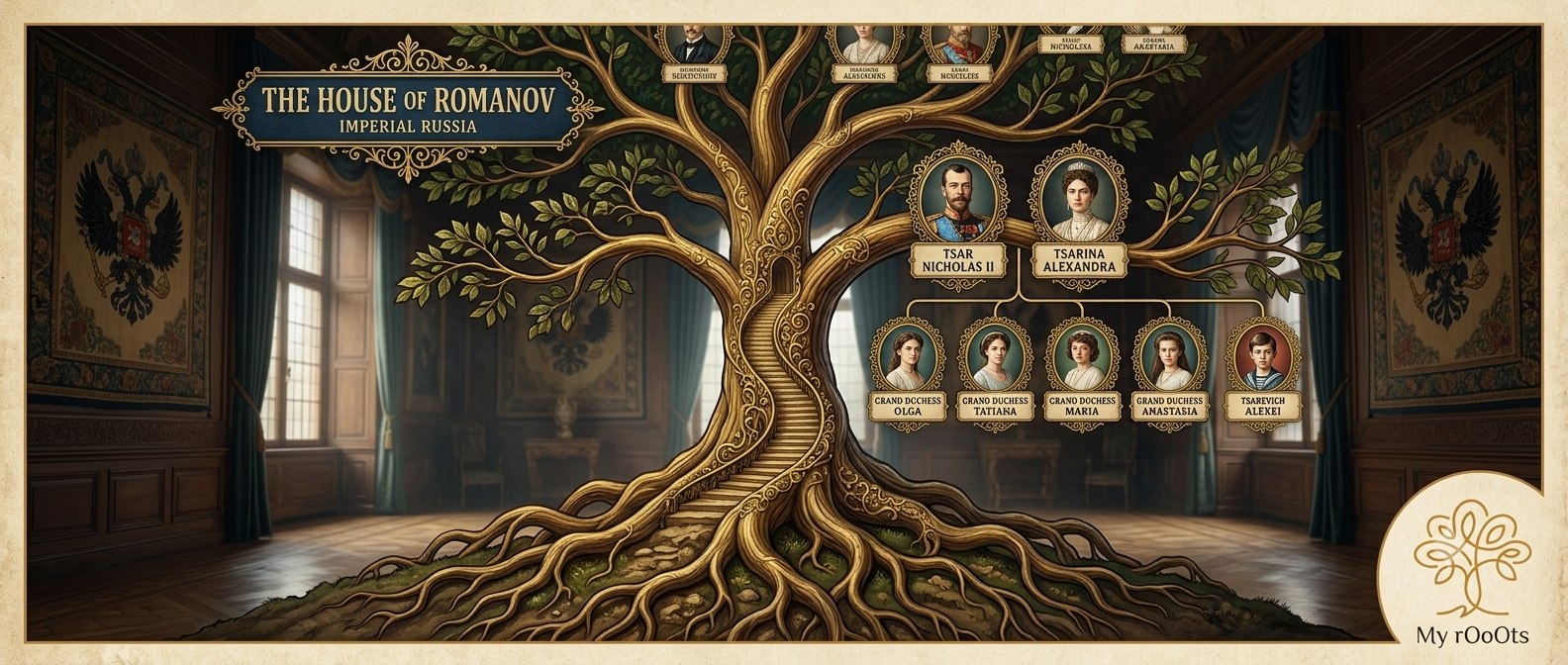
Romanov Family Tree - Tsar Nicholas II and the Last Imperial House of Russia
The Romanov family ruled the Russian Empire for more than three centuries, and this tree traces the dynasty's final direct line, from Emperor Nicholas I through to his great-great-grandson Nicholas II, the last Tsar of Russia, and the imperial household that perished with him in 1918. ## Origins of the Line The House of Romanov had governed Russia since 1613, but this tree begins with Nicholas I, who reigned from 1825 to 1855 and whose descendants form an unbroken line to the end of the dynasty. His son Alexander II, the 'Tsar Liberator' who abolished serfdom in 1861, married Maria Alexandrovna and fathered both his successor, Alexander III, and Grand Duke Sergei Alexandrovich, who later governed Moscow and married Elizabeth Feodorovna, elder sister of the future Empress Alexandra. Alexander III, who married Maria Feodorovna (born Princess Dagmar of Denmark), presided over a conservative, stable reign before his early death in 1894 brought his son Nicholas II to the throne at the age of twenty-six. ## The Last Imperial Family Nicholas II married Alexandra Feodorovna, born Princess Alix of Hesse and a granddaughter of Britain's Queen Victoria, in 1894. Their five children, Grand Duchesses Olga, Tatiana, Maria, and Anastasia, and Tsarevich Alexei, grew up largely secluded within the palaces of Tsarskoye Selo and Peterhof. Alexei's haemophilia, inherited through his mother, shaped the family's private life profoundly, drawing them into a controversial dependence on Grigori Rasputin. Nicholas's siblings, Grand Duke Michael Alexandrovich, Grand Duchess Xenia Alexandrovna, and Grand Duchess Olga Alexandrovna, lived through the same collapse: Michael was briefly named Nicholas's successor in March 1917 before declining the crown, ending over three centuries of Romanov rule, while Xenia and Olga escaped Russia with their mother in 1919 and lived out their lives in exile. ## Notable Members and Their Legacy Beyond the throne, this branch of the family produced figures remembered for reasons other than politics: Elizabeth Feodorovna, widowed in 1905, founded a Moscow convent devoted to charitable work; the four Romanov sisters served as wartime nurses; and Anastasia became the subject of one of the twentieth century's most persistent identity mysteries, with impostor claims lasting decades until DNA testing in 2007-2009 confirmed her fate. Nicholas II himself remains a defining figure of early twentieth-century history, his reign bridging the industrializing, autocratic Russia of his father and the revolutionary Russia that followed. ## Significance The direct line traced here represents the final chapter of Romanov rule: a family whose personal history, from Nicholas I's conservative autocracy to Nicholas II's abdication, mirrors Russia's turbulent transition from empire to revolution. Its members remain among the most documented and searched royal figures in history. | Fact | Details | |---|---| | Dynasty | House of Romanov | | Ruling dates covered | 1825-1917 (Nicholas I to Nicholas II's abdication) | | Last reigning Tsar | Nicholas II (r. 1894-1917) | | Root figure | Nicholas II | | Notable in-laws | Alexandra Feodorovna (Hesse), Maria Feodorovna (Denmark), Elizabeth Feodorovna (Hesse) | | End of dynasty's rule | March 1917, with Michael Alexandrovich's refusal of the throne |
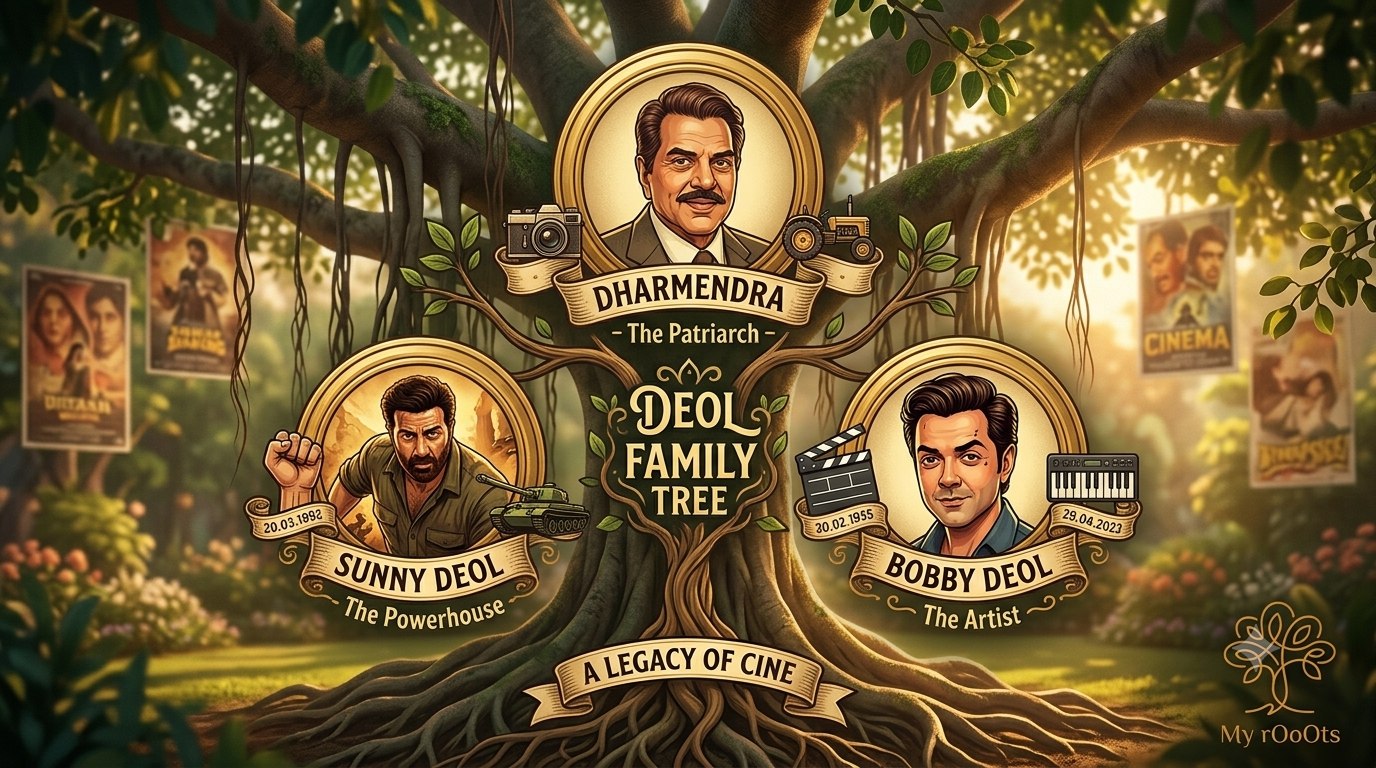
Deol Family Tree - Dharmendra, Sunny Deol and Bobby Deol
The Deol family is a Punjabi film dynasty of Hindi cinema, founded by the actor Dharmendra and continued by his sons Sunny Deol and Bobby Deol, his daughter Esha Deol, his nephew Abhay Deol and his grandsons Karan and Rajveer Deol. Few families have kept such a long unbroken presence on the Hindi screen. From Dharmendra's debut in 1960 to his grandsons' first films in 2019 and 2023, three generations of Deols have worked as leading actors, and the family's production banner, Vijayta Films, has launched several of them. ## Origins The Deols come from the Ludhiana district of Punjab. Dharmendra was born Dharam Singh Deol in 1935 to Kewal Kishan Singh Deol, a schoolteacher, and his wife Satwant Kaur, and grew up in the villages of rural Punjab. In 1954 he married Prakash Kaur, and a few years later he left for Bombay after winning a talent contest, making his screen debut in *Dil Bhi Tera Hum Bhi Tere* (1960). His younger brother Ajit Deol also settled in Bombay, where Ajit's son Abhay was born. ## Notable members - **Dharmendra** (1935-2025), the family patriarch, starred in *Phool Aur Patthar*, *Satyakam*, *Seeta Aur Geeta*, *Chupke Chupke* and *Sholay*, received the Padma Bhushan in 2012 and served as a Member of Parliament for Bikaner. - **Hema Malini**, Dharmendra's second wife, is one of Hindi cinema's best-known actresses, a classical dancer and a Member of Parliament for Mathura. - **Sunny Deol**, Dharmendra's elder son, became an action star with *Betaab*, *Ghayal*, *Damini*, *Border* and *Gadar: Ek Prem Katha*. - **Bobby Deol**, the younger son, debuted in *Barsaat* (1995) and found a second wave of success with *Aashram* and *Animal*. - **Esha Deol**, daughter of Dharmendra and Hema Malini, starred in *Koi Mere Dil Se Poochhe*, *Dhoom* and *Yuva*. - **Abhay Deol**, Dharmendra's nephew, is known for independent-minded films such as *Dev.D*, *Oye Lucky! Lucky Oye!* and *Zindagi Na Milegi Dobara*. - **Karan Deol** and **Rajveer Deol**, Sunny Deol's sons, represent the third generation of Deol actors. ## Significance The Deols are closely identified with a rugged, rural Punjabi screen image, carried from Dharmendra's action roles of the 1970s to Sunny Deol's patriotic dramas. The family also spans politics: Dharmendra, Hema Malini and Sunny Deol have each been elected to the Lok Sabha. Films such as *Apne* (2007) and *Yamla Pagla Deewana* (2011) put father and sons on screen together, and the family's two branches, through Prakash Kaur and Hema Malini, are among the most discussed relationships in Indian cinema. ## Quick facts | Fact | Details | |---|---| | Origin | Ludhiana district, Punjab, India | | Founder | Dharmendra (Dharam Singh Deol), 1935-2025 | | Field | Hindi cinema, Indian politics | | Production banner | Vijayta Films | | Generations of actors | Three | | Best-known films | *Sholay*, *Ghayal*, *Gadar: Ek Prem Katha*, *Animal* | | Members of Parliament | Dharmendra, Hema Malini, Sunny Deol |
Chakri Dynasty Family Tree - The Royal House of Thailand
The Chakri dynasty is the ruling royal house of Thailand, founded in 1782 by King Rama I (Buddha Yodfa Chulaloke) and continuing through ten monarchs to the reigning king, Rama X (Vajiralongkorn). For nearly two and a half centuries it has presided over Siam's transformation from an early modern Southeast Asian kingdom into the modern nation of Thailand, surviving colonial pressure, foreign war, and the 1932 shift from absolute to constitutional monarchy. ## Origins The dynasty takes its name from its founder's pre-royal title, Chao Phraya Chakri, the highest military rank in the old Siamese order. After serving as a general under King Taksin of Thonburi, he took the throne amid the political turmoil that followed Taksin's downfall, founded Bangkok as the new capital in 1782, and set about restoring the laws, religious texts, and administrative structures that had been lost when Ayutthaya fell to Burma in 1767. His descendants ruled in direct succession from father to son or brother to brother, with several kings, notably Rama III, having no direct heir positioned to inherit and the throne instead passing sideways to a brother or nephew. ## Notable members Several Chakri kings are individually significant. Rama IV (Mongkut) spent nearly three decades as a Buddhist monk before opening Siam to Western trade and diplomacy. His son Rama V (Chulalongkorn) abolished slavery and modernized the kingdom's administration while keeping it the only Southeast Asian state never colonized by a European power. Rama VII (Prajadhipok) presided over the end of absolute monarchy in 1932 and abdicated in 1935. Rama IX (Bhumibol Adulyadej), who reigned for seventy years until 2016, became the longest-reigning monarch in Thai history, and his children include the current king, Rama X, and the widely respected Princess Sirindhorn. ## Significance The Chakri dynasty is unique among Southeast Asian royal houses for its continuous, unbroken rule and its central role in preserving Thai national identity and independence through the colonial era. Its monarchs remain constitutionally central to Thai public life today, with the king serving as head of state and a unifying symbol above elected politics. | Fact | Details | |---|---| | Founded | 1782, by Rama I | | Current monarch | Rama X (Vajiralongkorn), since 2016 | | Capital established | Bangkok | | Number of kings to date | Ten | | Longest reign | Rama IX (Bhumibol Adulyadej), 1946-2016 | | Country | Thailand (formerly Siam) |
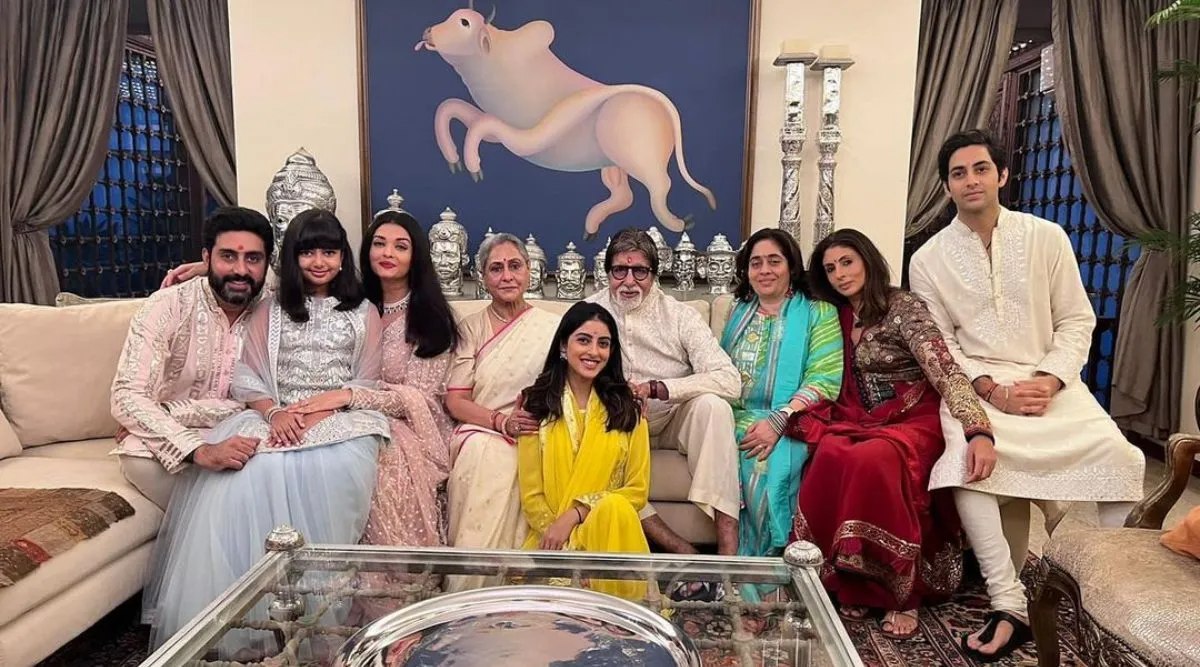
Bachchan Family Tree - Bollywood's First Family
The Bachchan family is an Indian family of poets, film actors and industrialists, descended from the Hindi poet Harivansh Rai Bachchan of Allahabad and known above all for his elder son, the actor Amitabh Bachchan, whose own marriage and children have kept the family at the centre of Hindi cinema for more than half a century. ## Origins in Allahabad The family's documented line begins with Pratap Narayan Shrivastava, a Srivastava Kayastha from Babupatti in the Raniganj area of Pratapgarh district, in what is now Uttar Pradesh, who settled in Allahabad and worked in the city's paper trade. He and his wife Saraswati Devi had a son, Harivansh Rai, born in 1907. The boy was called "Bachchan" at home, a Hindi word meaning child, and he later took the nickname as his pen name. It has been the family surname ever since, which is why the Bachchans carry a name that began as a term of endearment rather than a caste or clan title. ## Poet, star and the generations after Harivansh Rai Bachchan became one of the most widely read Hindi poets of the twentieth century. His 1935 collection Madhushala is still recited across north India, and he combined writing with teaching English at Allahabad University, a Cambridge doctorate on W. B. Yeats, and service in the Ministry of External Affairs. His first wife, Shyama, died in 1936; his second, Teji Suri, was a Punjabi social activist who became a well-known figure in Delhi's cultural life. Their sons were Amitabh, born in 1942, and the businessman Ajitabh, born in 1947. Amitabh Bachchan's career, from Saat Hindustani in 1969 through Zanjeer, Deewaar and Sholay to Kaun Banega Crorepati, made him the single most recognisable figure in Indian popular culture. He married the actress Jaya Bhaduri in 1973, joining the family to the Bhaduris of Bhopal, whose head was the journalist and author Taroon Kumar Bhaduri. Their daughter Shweta became an author and columnist, and their son Abhishek an actor. ## The Nanda and Rai branches Two marriages widened the family considerably. In 1997 Shweta married Nikhil Nanda of Delhi, chairman of the Escorts Kubota engineering group, the son of the industrialist Rajan Nanda and of Ritu Nanda, herself a daughter of the film-maker Raj Kapoor. Their children are the entrepreneur Navya Naveli Nanda and the actor Agastya Nanda. In 2007 Abhishek married Aishwarya Rai, Miss World 1994 and one of Indian cinema's most internationally recognised stars, bringing in the Rai family of coastal Karnataka: her father Krishnaraj Rai, a biologist with the Indian Army, her mother Brindya, and her brother Aditya. ## Significance Few Indian families span so many fields in four generations: Hindi literature, mainstream cinema, heavy engineering and parliamentary politics, with Jaya Bachchan serving several terms in the Rajya Sabha. The Bachchan house in Mumbai has been a fixed point of Indian public life for decades, and the family's marriages have tied it to the Bhaduris, the Nandas and, through Ritu Nanda, to the Kapoor film dynasty. | Fact | Details | | --- | --- | | Founding figure | Harivansh Rai Bachchan (1907-2003), Hindi poet | | Surname origin | "Bachchan", a childhood nickname meaning "child", adopted as a pen name | | Native place | Babupatti, Pratapgarh district, and Allahabad (Prayagraj), Uttar Pradesh | | Best known member | Amitabh Bachchan (born 1942), actor | | Generations covered | Four, from Pratap Narayan Shrivastava to Navya Naveli and Agastya Nanda | | Families married in | Bhaduri of Bhopal, Nanda of Delhi, Rai of Mangalore | | Fields | Hindi poetry, cinema, business, politics |
Chopra Family Tree - Yash Chopra & B.R. Chopra Film Dynasty
The Chopra family is one of Hindi cinema's most influential filmmaking dynasties, founded by brothers Baldev Raj (B.R.) Chopra and Yash Chopra, whose respective studios, B.R. Films and Yash Raj Films, shaped Bollywood across seven decades. Beginning with B.R. Chopra's socially conscious dramas of the 1950s and continuing through Yash Chopra's romantic epics and his son Aditya Chopra's era as head of Yash Raj Films, the family has produced directors, producers, and actors spanning four generations, and remains active at the top of the Indian film industry today. ## Origins The Chopra family originates from Lahore, in what was then British India's Punjab province, where the brothers' father raised his family before the 1947 Partition forced its relocation to independent India. Baldev Raj Chopra, born in 1914, was the elder of the two brothers and began his career as a film journalist before turning to directing and, in 1955, founding B.R. Films. He brought his much younger brother, Yash Chopra, born in 1932, into the industry as an assistant, launching a partnership between two studios that would go on to define mainstream Hindi cinema. ## Notable members B.R. Chopra directed landmark films including Naya Daur (1957), Waqt (1965), and Nikaah, and later produced the television adaptation of the Mahabharata (1988-1990) with his son, director Ravi Chopra, who also directed the hit family drama Baghban (2003). Yash Chopra, meanwhile, founded Yash Raj Films (YRF) in 1970 and directed a string of romances, including Deewaar, Kabhi Kabhie, Silsila, Chandni, Darr, and Veer-Zaara, earning him the nickname the "King of Romance." His wife, Pamela Chopra, contributed to YRF's costumes and music for decades. Their elder son, Aditya Chopra, debuted as a director with the era-defining Dilwale Dulhania Le Jayenge (1995) and now chairs Yash Raj Films, while their younger son, Uday Chopra, built a career as an actor and producer, notably in the Dhoom franchise. Aditya Chopra is married to actress Rani Mukerji. ## Significance Between them, B.R. Films and Yash Raj Films helped define mainstream Hindi cinema's social dramas, historical epics, and romances across the second half of the twentieth century and into the twenty-first, and YRF remains one of Bollywood's largest and most powerful studios under Aditya Chopra's leadership. The family is sometimes confused with actress Priyanka Chopra, who shares the surname but is not related to this dynasty in any way; the two Chopra families are entirely distinct. | Fact | Details | |---|---| | Founding generation | Brothers B.R. Chopra (1914-2008) and Yash Chopra (1932-2012) | | Studios founded | B.R. Films (1955), Yash Raj Films (1970) | | Landmark productions | Naya Daur, Waqt, Deewaar, Mahabharat (TV), DDLJ, Veer-Zaara | | Current head | Aditya Chopra, chairman of Yash Raj Films | | Origin | Lahore, British India (pre-1947 Punjab) | | Not related to | Actress Priyanka Chopra and her family |
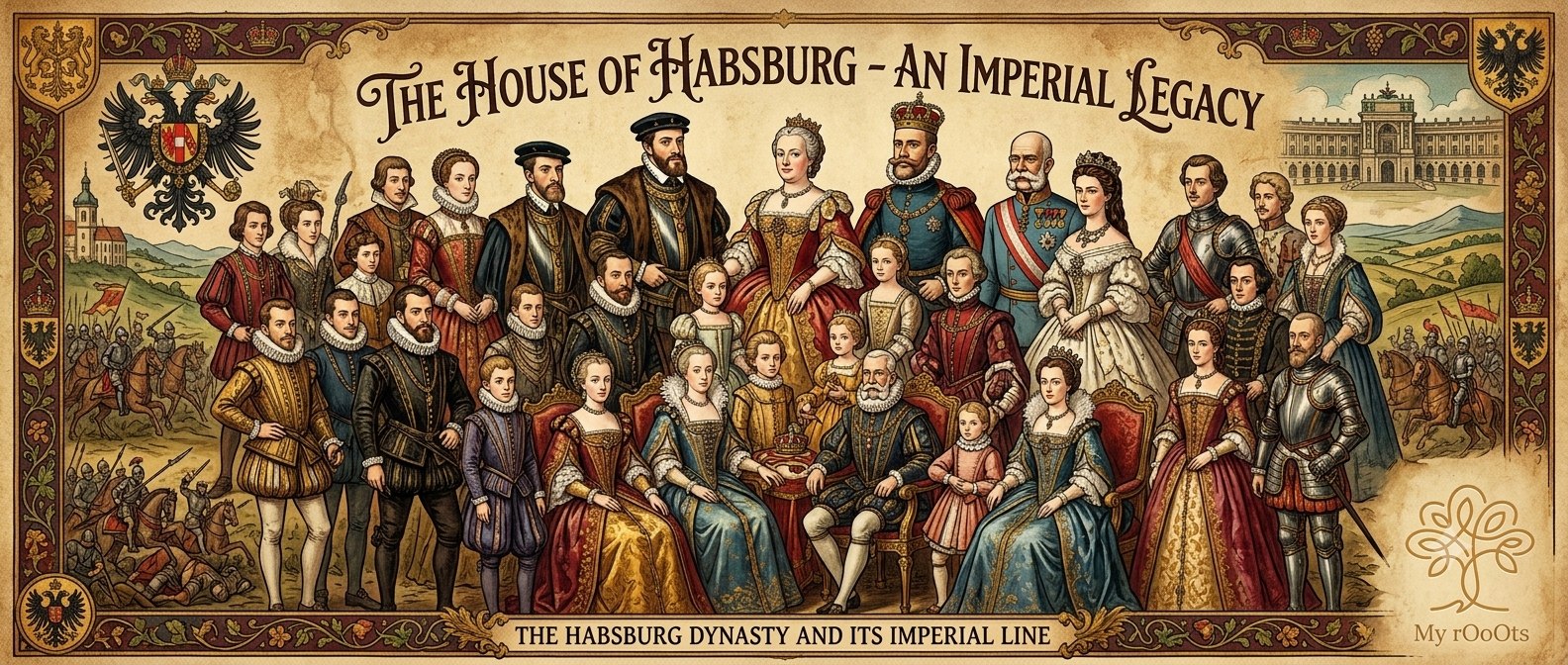
Habsburg Family Tree - The House of Habsburg
The House of Habsburg was one of the most powerful royal dynasties in European history, ruling Austria from 1282, supplying almost every Holy Roman Emperor between 1438 and the empire's dissolution in 1806, and reigning over Spain and its overseas empire from 1516 to 1700. Named for a castle in what is now Switzerland, the family rose from modest Swabian counts to sovereigns of lands stretching from the Danube to the Andes, and its senior line ended only in 1918 with the fall of Austria-Hungary. ## Origins The dynasty takes its name from Habsburg Castle in the Aargau, in present-day Switzerland, held by a family of counts with scattered lands in Swabia and Alsace. Its fortunes changed in 1273, when the prince-electors chose Rudolf I as King of the Romans after a long interregnum. Rudolf defeated Ottokar II of Bohemia in 1278, took the duchies of Austria and Styria, and granted them to his sons, moving the family's centre of gravity permanently to Vienna. Two centuries later the marriage of Maximilian I to Mary of Burgundy, and of their son Philip the Handsome to Joanna of Castile, converted a regional Alpine power into a continental one within a single generation. ## Notable members Charles V inherited Spain, the Netherlands, Austria, Naples and the Spanish Americas, and on his abdication in 1556 divided them: Spain and the Low Countries to his son Philip II, the Austrian lands and the imperial title to his brother Ferdinand I. The Spanish branch ran from Philip II through Philip III and Philip IV to Charles II, whose death in 1700 without an heir set off the War of the Spanish Succession. The Austrian branch ran from Ferdinand I through Ferdinand II and Ferdinand III to Charles VI, whose daughter Maria Theresa became the only woman to rule the Habsburg lands in her own right. Her marriage to Francis I Stephen of Lorraine founded the House of Habsburg-Lorraine, which produced Joseph II, Leopold II, Marie Antoinette, Francis II, and the long-reigning Franz Joseph I. ## Significance For six centuries the Habsburgs shaped the map of Europe less by conquest than by marriage, holding together a multilingual realm of Germans, Hungarians, Czechs, Poles, Italians, Croats and others under a single crown. They led the Counter-Reformation, halted Ottoman expansion at Vienna in 1683, and gave Europe both the Thirty Years' War and the Congress system that followed Napoleon. The assassination of Archduke Franz Ferdinand in 1914 triggered the First World War, and the abdication of Charles I in 1918 ended Habsburg rule. | Fact | Details | | --- | --- | | Founder of the royal line | Rudolf I of Habsburg, King of the Romans from 1273 | | Family seat | Habsburg Castle, Aargau; later Vienna, Graz and Madrid | | Height of power | Charles V (1500 to 1558), ruler of Spain, the Netherlands, Austria, Naples and Spanish America | | Spanish line | Philip II to Charles II, 1556 to 1700 | | Austrian line | Ferdinand I to Charles VI, 1521 to 1740 | | Habsburg-Lorraine | From Maria Theresa and Francis I Stephen, 1736 onward | | Last reigning monarch | Charles I of Austria, who left government in 1918 | | Principal titles | Holy Roman Emperor, Emperor of Austria, King of Spain, Hungary and Bohemia |
Want your family here?
Build your family tree for free, then opt in from your family's settings page. Our team reviews every family before it's listed.