Public Family Trees/Chakri Dynasty Family Tree - The Royal House of Thailand
Chakri Dynasty Family Tree - The Royal House of Thailand
Explore 23 people across 7 generations of the Chakri Dynasty family, built with My rOoOts.
23
People
7
Generations
6
Living
17
Passed on
9
Marriages
61 yrs
Avg. lifespan
Family Tree
23 members mapped across 7 generations
Loading family tree…
Your turn
Build a tree like this for your own family
Free, with no sign-up to start. Add yourself, then your parents and grandparents, and watch it grow.
About the Chakri Dynasty family
The Chakri dynasty is the ruling royal house of Thailand, founded in 1782 by King Rama I (Buddha Yodfa Chulaloke) and continuing through ten monarchs to the reigning king, Rama X (Vajiralongkorn). For nearly two and a half centuries it has presided over Siam's transformation from an early modern Southeast Asian kingdom into the modern nation of Thailand, surviving colonial pressure, foreign war, and the 1932 shift from absolute to constitutional monarchy.
At a glance
- Founded
- 1782, by Rama I
- Current monarch
- Rama X (Vajiralongkorn), since 2016
- Capital established
- Bangkok
- Number of kings to date
- Ten
- Longest reign
- Rama IX (Bhumibol Adulyadej), 1946-2016
- Country
- Thailand (formerly Siam)
7 generations, 1737 to 1951
1737
Gen 1
Rama I (Buddha Yodfa Chulaloke) Chakri1767
Gen 2
Rama II (Buddha Loetla Nabhalai) Chakri1788
Gen 3
Rama III (Nangklao) Chakri1853
Gen 4
Rama V (Chulalongkorn) Chakri1880
Gen 5
Rama VI (Vajiravudh) Chakri1925
Gen 6
Rama VIII (Ananda Mahidol) Chakri1951
Gen 7
Ubolratana Chakri
Read the full historyHide the full history
Origins
The dynasty takes its name from its founder's pre-royal title, Chao Phraya Chakri, the highest military rank in the old Siamese order. After serving as a general under King Taksin of Thonburi, he took the throne amid the political turmoil that followed Taksin's downfall, founded Bangkok as the new capital in 1782, and set about restoring the laws, religious texts, and administrative structures that had been lost when Ayutthaya fell to Burma in 1767. His descendants ruled in direct succession from father to son or brother to brother, with several kings, notably Rama III, having no direct heir positioned to inherit and the throne instead passing sideways to a brother or nephew.
Notable members
Several Chakri kings are individually significant. Rama IV (Mongkut) spent nearly three decades as a Buddhist monk before opening Siam to Western trade and diplomacy. His son Rama V (Chulalongkorn) abolished slavery and modernized the kingdom's administration while keeping it the only Southeast Asian state never colonized by a European power. Rama VII (Prajadhipok) presided over the end of absolute monarchy in 1932 and abdicated in 1935. Rama IX (Bhumibol Adulyadej), who reigned for seventy years until 2016, became the longest-reigning monarch in Thai history, and his children include the current king, Rama X, and the widely respected Princess Sirindhorn.
Significance
The Chakri dynasty is unique among Southeast Asian royal houses for its continuous, unbroken rule and its central role in preserving Thai national identity and independence through the colonial era. Its monarchs remain constitutionally central to Thai public life today, with the king serving as head of state and a unifying symbol above elected politics.
Notable Members
Key figures from 7 generations of the Chakri Dynasty family
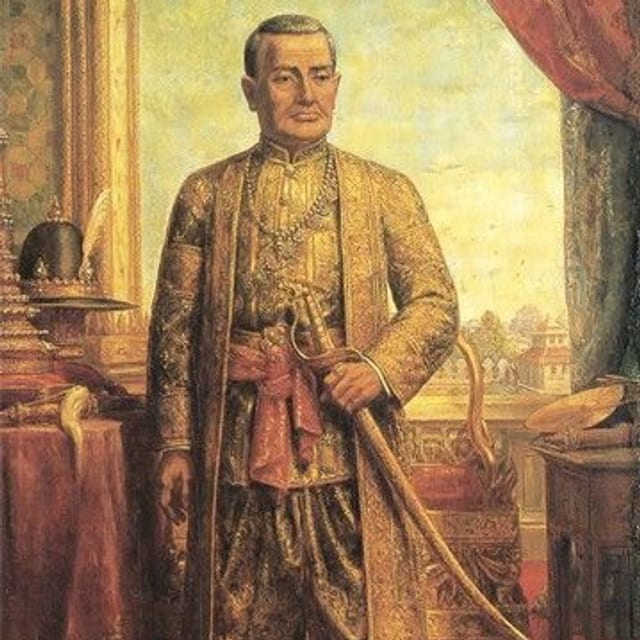 Gen 1
Gen 1Rama I (Buddha Yodfa Chulaloke) Chakri
1737 - 1809
King of Siam (Rama I)
Photo: Unknown author Unknown author, Public domain, via Wikimedia Commons
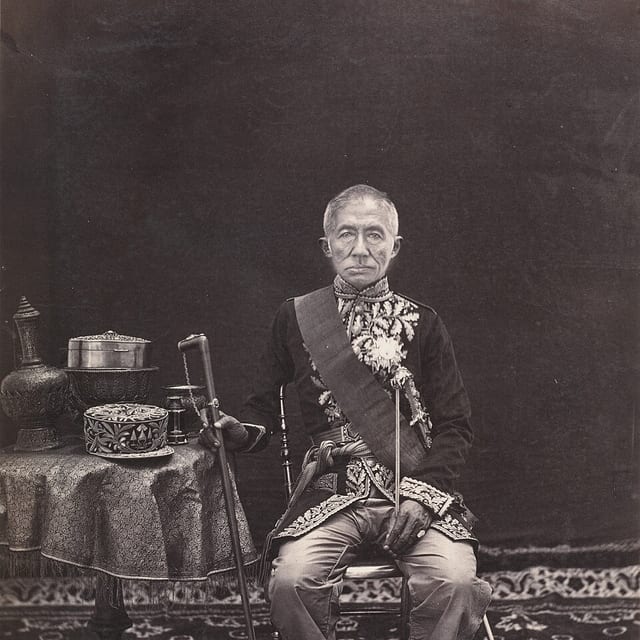
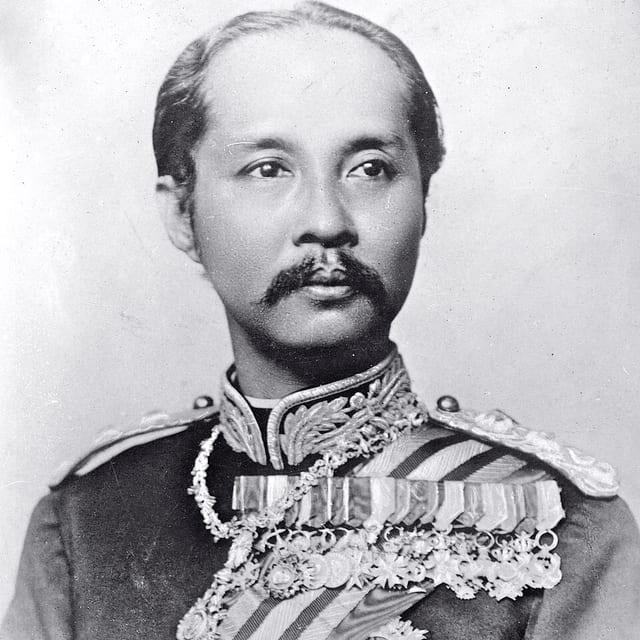 Gen 4
Gen 4Rama V (Chulalongkorn) Chakri
1853 - 1910
King of Siam (Rama V)
Photo: Bain News Service, publisher., Public domain, via Wikimedia Commons
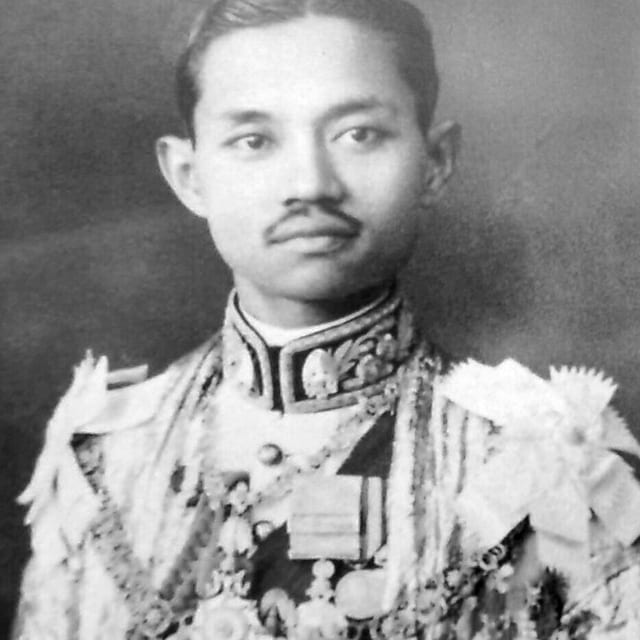 Gen 5
Gen 5Rama VII (Prajadhipok) Chakri
1893 - 1941
King of Siam (Rama VII)
Photo: Unknown author Unknown author, Public domain, via Wikimedia Commons
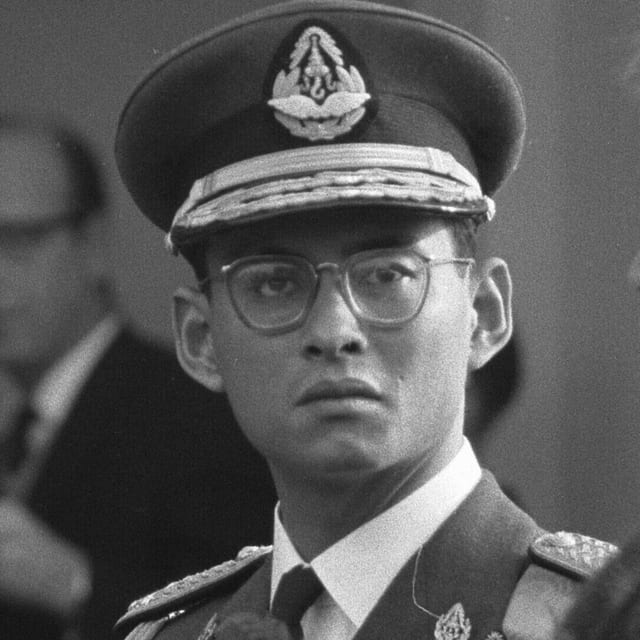
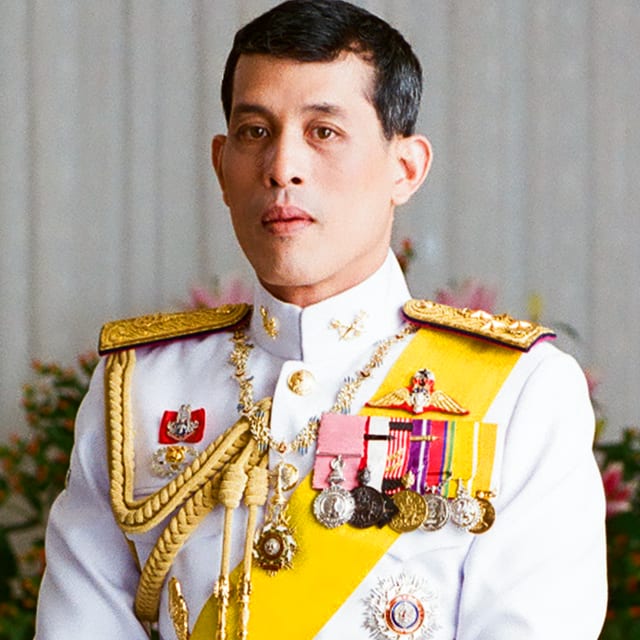
Family Members
Showing 11 of 23 people
Rama I (Buddha Yodfa Chulaloke) Chakri
Gen 1 · 1737 - 1809
Buddha Yodfa Chulaloke, known as Rama I, founded the Chakri dynasty in 1782 after the fall of the Thonburi kingdom and established Bangkok as the new capital of Siam on the east bank of the Chao Phraya River. Born in Ayutthaya in 1737, he rose through military ranks under King Taksin before taking the throne himself. As king, he rebuilt Siamese administration, law, and religion after decades of war with Burma, commissioning a revised legal code and restoring Buddhist temples and texts. His son with chief consort Amarindra, Isarasundhorn, succeeded him as Rama II. He reigned until his death in 1809 and remains the dynasty's namesake, its royal house named for his pre-royal title, Chao Phraya Chakri.
Rama II (Buddha Loetla Nabhalai) Chakri
Gen 2 · 1767 - 1824
Buddha Loetla Nabhalai, known as Rama II, ruled Siam from 1809 to 1824 as the second monarch of the Chakri dynasty. Born in 1767, the son of Rama I and Queen Amarindra, he is remembered chiefly as a poet-king who revived Siamese literature and classical arts after the disruptions of the eighteenth century, personally composing verse and sponsoring the royal poets of his court. He fathered two sons who would each later reign as king: Prince Jessadabodindra, by consort Sri Sulalai, who became Rama III, and Prince Mongkut, by principal queen Sri Suriyendra, who became Rama IV. He died in Bangkok in 1824.
Rama III (Nangklao) Chakri
Gen 3 · 1788 - 1851
Phra Nangklao, known as Rama III, reigned as King of Siam from 1824 to 1851, succeeding his father Rama II ahead of his more senior half-brother, the future Rama IV. Born in 1788, he expanded Siam's trade with China and, later in his reign, with Western powers, while overseeing military campaigns that secured Siamese influence over Laos and Cambodia. A devout patron of Buddhism, he sponsored the restoration and construction of numerous temples, including Wat Pho and Wat Arun in Bangkok. He never married a principal queen and left no heir positioned to succeed him, so on his death in 1851 the throne passed to his half-brother Mongkut, who became Rama IV.
Rama IV (Mongkut) Chakri
Gen 3 · 1804 - 1868
Mongkut, known as Rama IV, reigned as King of Siam from 1851 to 1868. Born in 1804, the son of Rama II and Queen Sri Suriyendra, he spent 27 years as a Buddhist monk, rising to become a respected scholar of Pali scripture, science, and Western languages, before his accession at age 47 following the death of his half-brother Rama III. As king he opened Siam to Western trade and diplomacy through treaties including the 1855 Bowring Treaty, while preserving the kingdom's independence during an era of European colonial expansion in Southeast Asia. His employment of British tutor Anna Leonowens later inspired a heavily fictionalized Western portrayal of his court. His son with Queen Debsirindra, Chulalongkorn, succeeded him as Rama V.
Rama V (Chulalongkorn) Chakri
Gen 4 · 1853 - 1910
Chulalongkorn, known as Rama V, reigned as King of Siam from 1868 to 1910 and is regarded as one of the country's greatest modernizing monarchs. Born in 1853, the son of Rama IV and Queen Debsirindra, he abolished slavery and the prostration custom, reformed the civil service, judiciary, and tax system along Western lines, and built Siam's first railways and telegraph network, all while skillfully navigating British and French colonial pressure to keep the kingdom the only Southeast Asian state never colonized. With his consort Queen Saovabha Phongsri he had several sons who later reigned as kings, including Vajiravudh (Rama VI), Prajadhipok (Rama VII), and, through his son Prince Mahidol, grandsons Ananda Mahidol (Rama VIII) and Bhumibol Adulyadej (Rama IX). He died in 1910.
Rama VI (Vajiravudh) Chakri
Gen 5 · 1880 - 1925
Vajiravudh, known as Rama VI, reigned as King of Siam from 1910 to 1925. Born in 1880, the son of Rama V and Queen Saovabha Phongsri, he was educated in Britain and became a prolific writer and translator, introducing Western drama and modern Thai literature to the court. He introduced the use of surnames in Siam, established the Wild Tiger Corps paramilitary organization, and brought Siam into the First World War on the Allied side in 1917. He had no son; a daughter was born to him only days before his death in 1925, so the throne passed to his younger brother, Prajadhipok, who became Rama VII.
Mahidol Adulyadej Chakri
Gen 5 · 1892 - 1929
Prince Mahidol Adulyadej was a son of King Rama V and Queen Saovabha Phongsri, and the father of two future kings, Ananda Mahidol (Rama VIII) and Bhumibol Adulyadej (Rama IX). Born in 1892, he studied public health and medicine at Harvard University in the United States, and is honored in Thailand as the father of modern medicine and public health for his work establishing medical education and hospital standards. He married Sangwan Talapat, later titled Srinagarindra, and the couple had three children. He died in 1929, well before either of his sons came to the throne, and never reigned himself.
Rama VIII (Ananda Mahidol) Chakri
Gen 6 · 1925 - 1946
Ananda Mahidol, known as Rama VIII, was King of Thailand from 1935 to 1946. Born in Heidelberg, Germany in 1925, the elder son of Prince Mahidol Adulyadej and Srinagarindra, he was still a schoolboy in Switzerland when he inherited the throne at age nine following his uncle Prajadhipok's abdication, and a regency governed in his name for most of his reign. He returned to Thailand only briefly as an adult before his sudden death at the Grand Palace in Bangkok in June 1946, at age twenty. He was succeeded by his younger brother, Bhumibol Adulyadej, as Rama IX.
Rama IX (Bhumibol Adulyadej) Chakri
Gen 6 · 1927 - 2016
Bhumibol Adulyadej, known as Rama IX, reigned as King of Thailand from 1946 until his death in 2016, the longest reign of any Thai monarch. Born in Cambridge, Massachusetts in 1927, the younger son of Prince Mahidol Adulyadej and Srinagarindra, he succeeded his elder brother Ananda Mahidol at age eighteen. Over seven decades he became a unifying figure through repeated political upheavals, sponsoring thousands of rural development projects on poverty, agriculture, and water management. He married Sirikit in 1950, and their four children were Ubolratana, Vajiralongkorn (later Rama X), Sirindhorn, and Chulabhorn. He died in Bangkok in 2016.
Ubolratana Chakri
Gen 7 · b. 1951
Princess Ubolratana Rajakanya is the eldest child of King Bhumibol Adulyadej and Queen Sirikit, and the elder sister of King Vajiralongkorn (Rama X). Born in Lausanne, Switzerland in 1951, she gave up her royal titles in 1972 upon marrying an American, Peter Ladd Jensen, and lived in the United States for over two decades, working as an actress and businesswoman. Following her divorce, she returned to live in Thailand in the early 2000s and resumed an active public role in royal family events, though without reinstating her full royal title. She has remained largely engaged in charitable and film-related work.
Rama X (Vajiralongkorn) Chakri
Gen 7 · b. 1952
Maha Vajiralongkorn, known as Rama X, has reigned as King of Thailand since 2016, succeeding his father Bhumibol Adulyadej. Born in Bangkok in 1952, the only son of Bhumibol and Queen Sirikit, he was educated in Australia and the United Kingdom and trained as a military pilot before being formally named Crown Prince in 1972. He assumed the throne after a period of mourning following his father's death, and was formally crowned in a traditional ceremony in 2019. He has been married several times; his current wife, since 2019, is Queen Suthida. He is the tenth monarch of the Chakri dynasty.
Is this your family?
Claim this tree to correct it, add relatives, and keep it up to date yourself.
Claim this treeStart your own family tree
Build yours for free, then send relatives a link to fill in their side of the family.
Start my tree, freeRelationship Explorer
How are two people related?
Pick any two names in the tree to trace the exact line of descent, marriage or shared ancestor connecting them.
Rama I (Buddha Yodfa Chulaloke) Chakri is Rama X (Vajiralongkorn) Chakri's 4x Great-Grandfather.
- 👨Rama X (Vajiralongkorn) Chakrison of
- 👨Rama IX (Bhumibol Adulyadej) Chakrison of
- 👨Mahidol Adulyadej Chakrison of
- 👨Rama V (Chulalongkorn) Chakrison of
- 👨Rama IV (Mongkut) Chakrison of
- 👨Rama II (Buddha Loetla Nabhalai) Chakrison of
- 👨Rama I (Buddha Yodfa Chulaloke) Chakri
Find out how you're related to your own cousins.
Build your treeIs this your family?
Claim the Chakri Dynasty family tree to take it over, edit it, and add family members yourself.
Frequently Asked Questions
How many people are in the Chakri Dynasty family tree?+−
This family tree currently documents 23 people across 7 recorded generations.
How many generations does the Chakri Dynasty family tree span?+−
7 generations are recorded so far, and may grow as more history is added.
How many marriages are recorded?+−
9 marriages are recorded in this family.
Where is the Chakri Dynasty family from?+−
The most commonly recorded native place is Bangkok, Siam.
Start building your own family story
Create a tree in minutes, import a GEDCOM file, or explore more public family trees.
Free. Private by default. GEDCOM export any time.