Public Family Trees/Habsburg Family Tree - The House of Habsburg
Habsburg Family Tree - The House of Habsburg
Explore 40 people across 22 generations of the Habsburg family, built with My rOoOts.
40
People
22
Generations
0
Living
40
Passed on
8
Marriages
56 yrs
Avg. lifespan
Family Tree
40 members mapped across 22 generations
Loading family tree…
Your turn
Build a tree like this for your own family
Free, with no sign-up to start. Add yourself, then your parents and grandparents, and watch it grow.
About the Habsburg family
The House of Habsburg was one of the most powerful royal dynasties in European history, ruling Austria from 1282, supplying almost every Holy Roman Emperor between 1438 and the empire's dissolution in 1806, and reigning over Spain and its overseas empire from 1516 to 1700. Named for a castle in what is now Switzerland, the family rose from modest Swabian counts to sovereigns of lands stretching from the Danube to the Andes, and its senior line ended only in 1918 with the fall of Austria-Hungary.
At a glance
- Founder of the royal line
- Rudolf I of Habsburg, King of the Romans from 1273
- Family seat
- Habsburg Castle, Aargau; later Vienna, Graz and Madrid
- Height of power
- Charles V (1500 to 1558), ruler of Spain, the Netherlands, Austria, Naples and Spanish America
- Spanish line
- Philip II to Charles II, 1556 to 1700
- Austrian line
- Ferdinand I to Charles VI, 1521 to 1740
- Habsburg-Lorraine
- From Maria Theresa and Francis I Stephen, 1736 onward
- Last reigning monarch
- Charles I of Austria, who left government in 1918
- Principal titles
- Holy Roman Emperor, Emperor of Austria, King of Spain, Hungary and Bohemia
22 generations, 1218 to 1912
1218
Gen 1
Rudolf I of Habsburg1255
Gen 2
Albert I of Habsburg1298
Gen 3
Albert II of Austria1351
Gen 4
Leopold III of Austria1377
Gen 5
Ernest of Austria1415
Gen 6
Frederick III of Habsburg1459
Gen 7
Maximilian I of Habsburg1478
Gen 8
Philip the Handsome1500
Gen 9
Charles V of Habsburg1527
Gen 10
Philip II of Spain1578
Gen 11
Ferdinand II of Habsburg1608
Gen 12
Ferdinand III of Habsburg1605
Gen 13
Philip IV of Spain1661
Gen 14
Charles II of Spain1717
Gen 15
Maria Theresa of Austria1741
Gen 16
Joseph II of Habsburg-Lorraine1768
Gen 17
Francis II of Habsburg-Lorraine1802
Gen 18
Franz Karl of Austria1830
Gen 19
Franz Joseph I of Austria1858
Gen 20
Rudolf of Austria1887
Gen 21
Charles I of Austria1912
Gen 22
Otto von Habsburg
Read the full historyHide the full history
Origins
The dynasty takes its name from Habsburg Castle in the Aargau, in present-day Switzerland, held by a family of counts with scattered lands in Swabia and Alsace. Its fortunes changed in 1273, when the prince-electors chose Rudolf I as King of the Romans after a long interregnum. Rudolf defeated Ottokar II of Bohemia in 1278, took the duchies of Austria and Styria, and granted them to his sons, moving the family's centre of gravity permanently to Vienna. Two centuries later the marriage of Maximilian I to Mary of Burgundy, and of their son Philip the Handsome to Joanna of Castile, converted a regional Alpine power into a continental one within a single generation.
Notable members
Charles V inherited Spain, the Netherlands, Austria, Naples and the Spanish Americas, and on his abdication in 1556 divided them: Spain and the Low Countries to his son Philip II, the Austrian lands and the imperial title to his brother Ferdinand I. The Spanish branch ran from Philip II through Philip III and Philip IV to Charles II, whose death in 1700 without an heir set off the War of the Spanish Succession. The Austrian branch ran from Ferdinand I through Ferdinand II and Ferdinand III to Charles VI, whose daughter Maria Theresa became the only woman to rule the Habsburg lands in her own right. Her marriage to Francis I Stephen of Lorraine founded the House of Habsburg-Lorraine, which produced Joseph II, Leopold II, Marie Antoinette, Francis II, and the long-reigning Franz Joseph I.
Significance
For six centuries the Habsburgs shaped the map of Europe less by conquest than by marriage, holding together a multilingual realm of Germans, Hungarians, Czechs, Poles, Italians, Croats and others under a single crown. They led the Counter-Reformation, halted Ottoman expansion at Vienna in 1683, and gave Europe both the Thirty Years' War and the Congress system that followed Napoleon. The assassination of Archduke Franz Ferdinand in 1914 triggered the First World War, and the abdication of Charles I in 1918 ended Habsburg rule.
Notable Members
Key figures from 22 generations of the Habsburg family
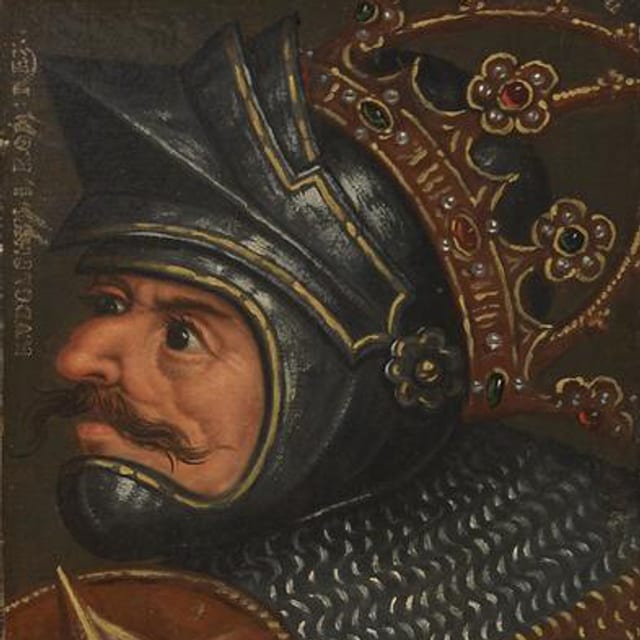
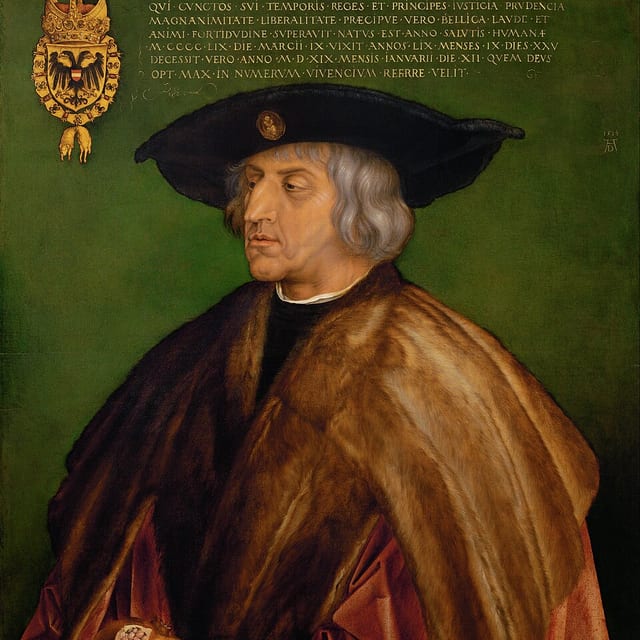
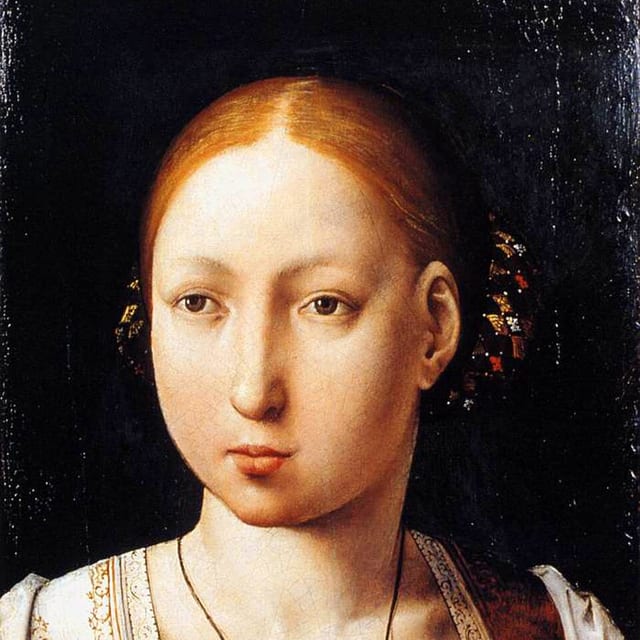 Gen 8
Gen 8Joanna of Castile
1479 - 1555
Queen of Castile and Aragon
Photo: Juan de Flandes, Public domain, via Wikimedia Commons
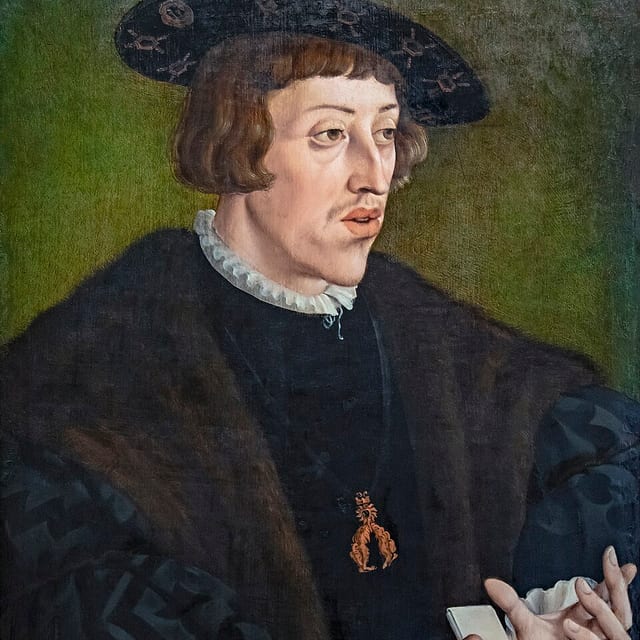 Gen 9
Gen 9Ferdinand I of Habsburg
1503 - 1564
Holy Roman Emperor, Archduke of Austria
Photo: Didier Descouens, Public domain, via Wikimedia Commons
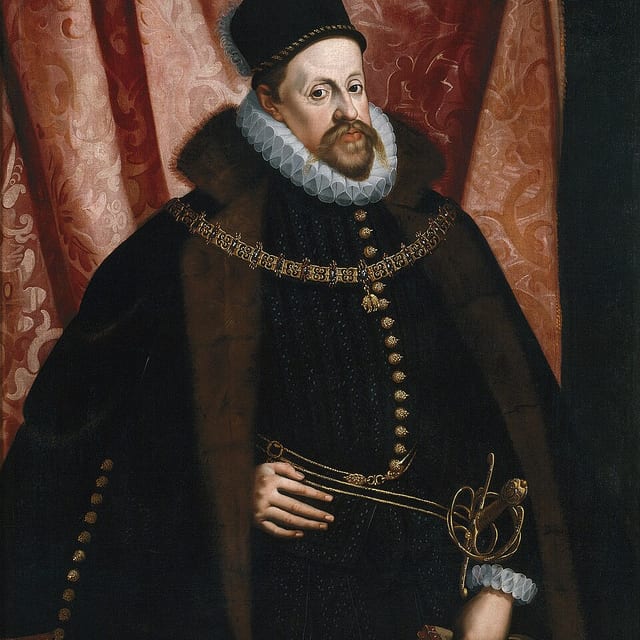 Gen 10
Charles II of Inner Austria
1540 - 1590
Archduke of Inner Austria
Photo: Bartolomé González y Serrano, Public domain, via Wikimedia Commons
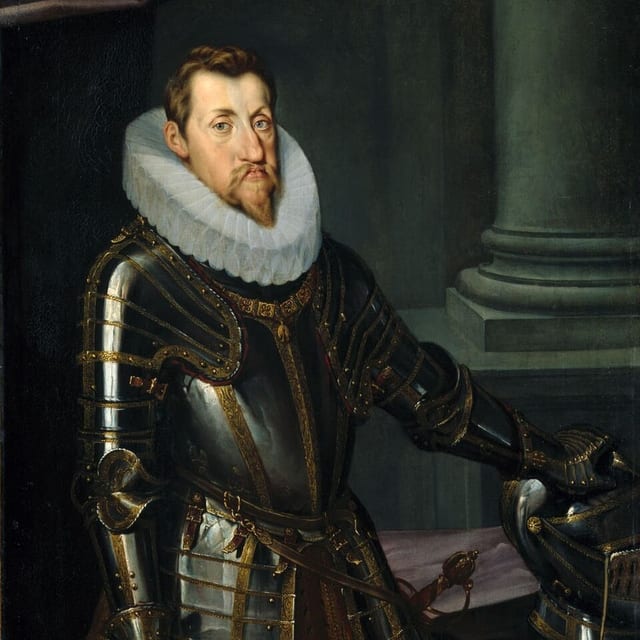 Gen 11
Ferdinand II of Habsburg
1578 - 1637
Holy Roman Emperor
Photo: Unidentified painter, Public domain, via Wikimedia Commons
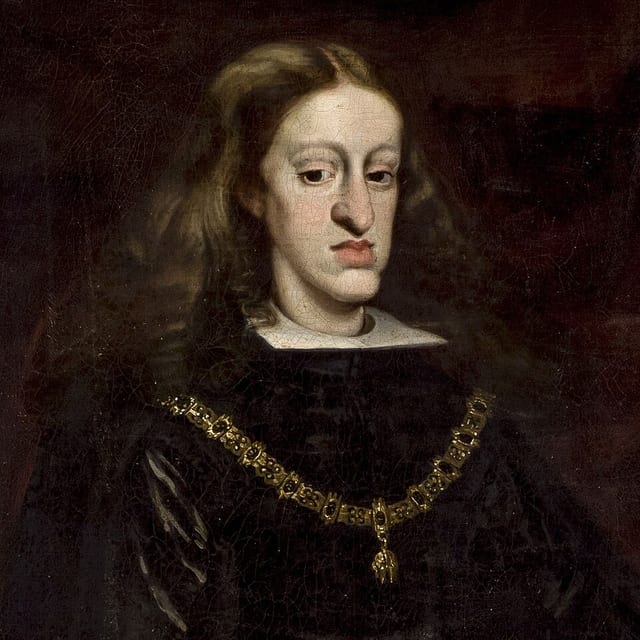 Gen 14
Charles II of Spain
1661 - 1700
King of Spain
Photo: Juan Carreño de Miranda, Public domain, via Wikimedia Commons
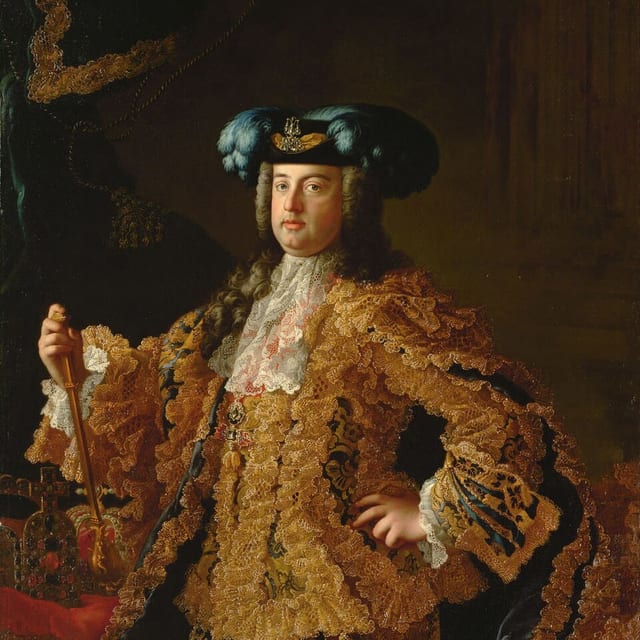 Gen 15
Francis I Stephen of Lorraine
1708 - 1765
Holy Roman Emperor, Grand Duke of Tuscany
Photo: Martin van Meytens, Public domain, via Wikimedia Commons
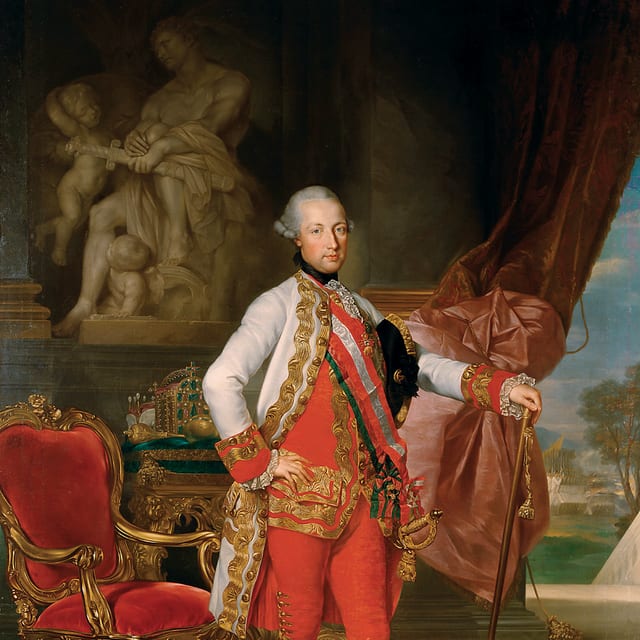 Gen 16
Joseph II of Habsburg-Lorraine
1741 - 1790
Holy Roman Emperor
Photo: Anton von Maron, Public domain, via Wikimedia Commons
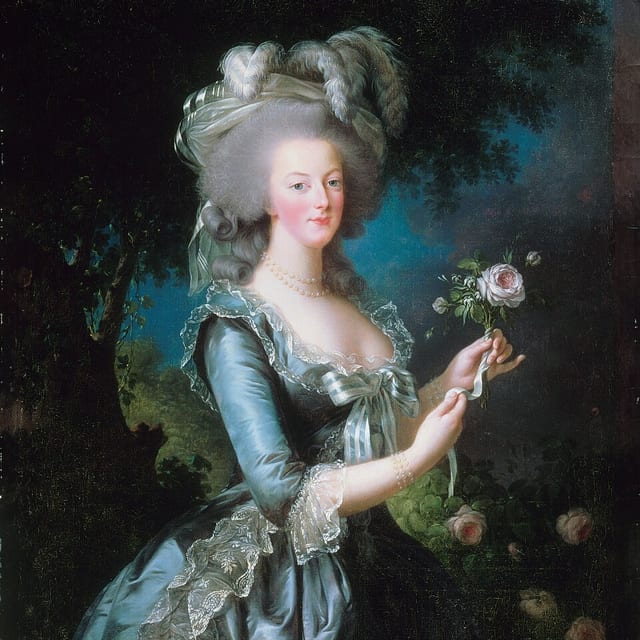 Gen 16
Marie Antoinette of Austria
1755 - 1793
Queen of France
Photo: Élisabeth Louise Vigée Le Brun, Public domain, via Wikimedia Commons
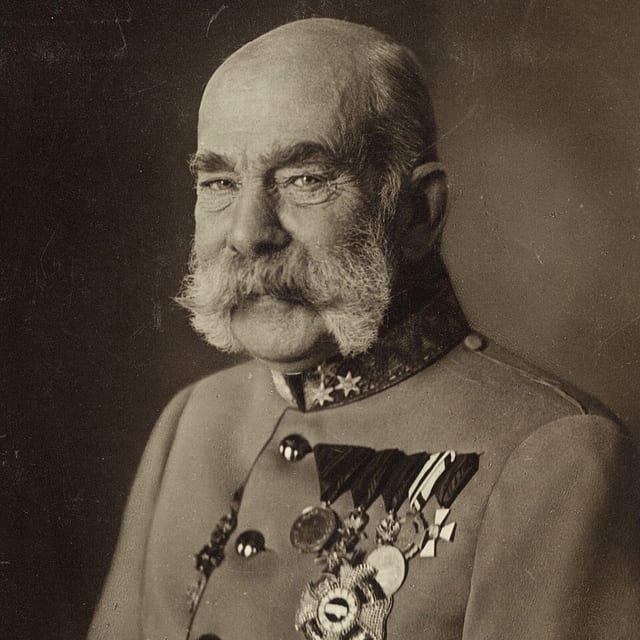
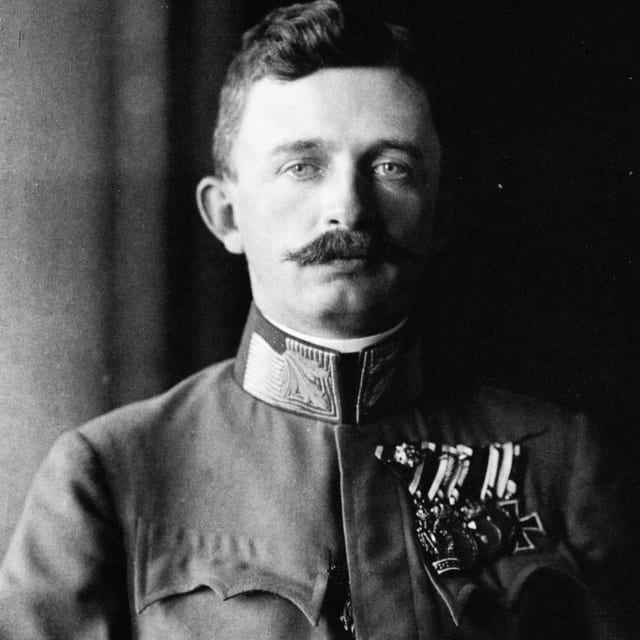
Family Members
Showing 11 of 40 people
Rudolf I of Habsburg
Gen 1 · 1218 - 1291
Rudolf I of Habsburg was the first member of his family to be elected King of the Romans, ruling the German kingdom from 1273 until 1291. Born into a comital family with scattered lands in the Aargau, Swabia and Alsace, he was chosen by the prince-electors partly because he seemed a modest, unthreatening figure after the long interregnum that followed the collapse of Hohenstaufen power. He proved otherwise. After defeating Ottokar II of Bohemia on the Marchfeld in 1278 he took possession of Austria and Styria and, in 1282, granted them to his sons, shifting the family's centre of gravity from the Swiss lands to the Danube. Married to Gertrude of Hohenberg, he was the father of Albert I and the ancestor of every later Habsburg ruler.
Albert I of Habsburg
Gen 2 · 1255 - 1308
Albert I was the eldest son of Rudolf I of Habsburg and Gertrude of Hohenberg, and the second Habsburg to wear the German crown. He governed Austria and Styria as duke from 1282, imposing firm and often resented rule on the Austrian nobility, and was passed over for the kingship in 1292 in favour of Adolf of Nassau. He pressed his claim, was elected King of the Romans in 1298, and spent his reign consolidating royal rights, curbing the Rhineland princes and attempting, without success, to bring Bohemia into the family's grasp. Married to Elizabeth of Gorizia-Tyrol, he was the father of Frederick the Fair, Leopold I and Albert II, through whom the Austrian line continued.
Albert II of Austria
Gen 3 · 1298 - 1358
Albert II, known as Albert the Wise, was a son of King Albert I and ruled the Habsburg hereditary lands as Duke of Austria and Styria from 1330. A careful and conciliatory ruler after decades of family conflict, he restored the dynasty's finances, issued a body of territorial law for Austria, and in 1335 secured Carinthia and Carniola for the Habsburgs, a decisive addition that anchored their power in the south-eastern Alps. He kept Austria largely out of the wars between the Empire and the papacy in his day. By his marriage to Joanna of Pfirt he had four sons who survived him, among them Rudolf IV, the founder of the University of Vienna, and Leopold III, from whom all later Habsburg emperors descend.
Leopold III of Austria
Gen 4 · 1351 - 1386
Leopold III was a younger son of Duke Albert II of Austria and Joanna of Pfirt, and the founder of the Leopoldian line of the Habsburgs. Under the Treaty of Neuberg in 1379 he divided the family lands with his elder brother Albert III, taking Inner Austria, that is Styria, Carinthia and Carniola, together with Tyrol and the family's older possessions in Swabia and Alsace. He pushed Habsburg influence westward into the Swiss and south German territories, acquiring Trieste in 1382 and giving the dynasty its first Adriatic port. His campaigns against the Swiss Confederation ended with the Habsburg defeat at Sempach in 1386. Married to Viridis Visconti of Milan, he was the father of Ernest the Iron.
Ernest of Austria
Gen 5 · 1377 - 1424
Ernest, called Ernest the Iron, was a son of Duke Leopold III and Viridis Visconti, and ruled Inner Austria, the Styrian, Carinthian and Carniolan lands, from Graz. He was the last Habsburg to be enthroned in the old Carinthian ceremony at the Prince's Stone in 1414, and he was among the first of the family to use the title Archduke of Austria consistently, a rank the dynasty asserted to place itself above the ordinary princes of the Empire. He spent much of his rule defending the southern frontier and containing his brothers' rival claims. By his second wife, Cymburgis of Masovia, he was the father of Frederick III, the first Habsburg to hold the imperial title without interruption in the family thereafter.
Frederick III of Habsburg
Gen 6 · 1415 - 1493
Frederick III, son of Ernest the Iron and Cymburgis of Masovia, reigned as German king from 1440 and as Holy Roman Emperor from 1452, the longest tenure of any emperor and the last imperial coronation performed by a pope in Rome. Slow, patient and famously unhurried, he lost ground in Hungary and Bohemia during his lifetime but secured the imperial dignity permanently for his house and elevated Austria to an archduchy in law. He is remembered for the enigmatic device AEIOU that he inscribed on his buildings and possessions. His greatest achievement was diplomatic: the marriage he arranged in 1477 between his son Maximilian I and Mary of Burgundy, which brought the Burgundian inheritance to the Habsburgs.
Maximilian I of Habsburg
Gen 7 · 1459 - 1519
Maximilian I, the only surviving son of Emperor Frederick III and Eleanor of Portugal, transformed the Habsburgs from an Alpine dynasty into the leading power of Europe. His marriage in 1477 to Mary of Burgundy, heiress of Charles the Bold, brought him the wealthy Low Countries and Franche-Comte, which he defended against France for the rest of his life. German king from 1486 and emperor from 1508, he reformed imperial administration and the army, and was a lavish patron of art and printing. Above all he was a matchmaker: the marriages he arranged for his son Philip the Handsome and his grandchildren with the ruling houses of Spain, Bohemia and Hungary delivered Spain and central Europe to his descendants.
Philip the Handsome
Gen 8 · 1478 - 1506
Philip the Handsome, son of Maximilian I and Mary of Burgundy, ruled the Burgundian Netherlands from 1482 and became the first Habsburg king in Spain. His marriage in 1496 to Joanna, daughter of Ferdinand of Aragon and Isabella of Castile, was intended only as an anti-French alliance, but the deaths of Joanna's brother and elder sister made her heiress of Castile, and in 1506 Philip was proclaimed king alongside her as Philip I. His Spanish reign lasted a matter of months before his death at Burgos in the same year, at the age of twenty-eight. Through his sons Charles V and Ferdinand I, he stands at the point where the Spanish and Austrian Habsburg lines both begin.
Charles V of Habsburg
Gen 9 · 1500 - 1558
Charles V, eldest son of Philip the Handsome and Joanna of Castile, ruled the largest collection of territories any European sovereign had yet held: the Burgundian Netherlands from 1506, Spain with Naples, Sicily and the American possessions from 1516 as Charles I, the Austrian hereditary lands from 1519, and the Holy Roman Empire from his election in the same year. His reign was defined by wars with France over Italy, by the Ottoman advance on Vienna and the Mediterranean, and by the Protestant Reformation, which he confronted at the Diet of Worms in 1521 and failed to reverse. Exhausted, he abdicated between 1555 and 1556, dividing his inheritance between his son Philip II and his brother Ferdinand I, and retired to the monastery of Yuste.
Philip II of Spain
Gen 10 · 1527 - 1598
Philip II, son of Charles V and Isabella of Portugal, ruled Spain, the Netherlands, Naples, Sicily, Milan and the Spanish empire in the Americas and the Philippines from 1556, and added Portugal and its possessions in 1580, briefly uniting the whole Iberian peninsula under one crown. Working from the vast monastery-palace of El Escorial that he built outside Madrid, he governed through paper and councils in an age of Spanish cultural ascendancy. His reign saw the naval victory over the Ottomans at Lepanto in 1571, the long revolt of the Dutch provinces, and the failure of the Armada sent against England in 1588. He married four times, and by his last wife, Anna of Austria, was the father of Philip III.
Ferdinand II of Habsburg
Gen 11 · 1578 - 1637
Ferdinand II, son of Archduke Charles II of Inner Austria and Maria Anna of Bavaria, was educated by the Jesuits at Ingolstadt and ruled Inner Austria from 1590 before becoming King of Bohemia and Hungary and, in 1619, Holy Roman Emperor. His determination to restore Catholicism in his lands provoked the Bohemian revolt of 1618 that opened the Thirty Years' War; his victory at the White Mountain in 1620 broke the Bohemian estates and made the crown hereditary in his house. Relying on the armies of Wallenstein and the Catholic League, he issued the Edict of Restitution in 1629 at the height of his power, then saw the war turn with Swedish and French intervention. He was the father of Ferdinand III.
Is this your family?
Claim this tree to correct it, add relatives, and keep it up to date yourself.
Claim this treeStart your own family tree
Build yours for free, then send relatives a link to fill in their side of the family.
Start my tree, freeRelationship Explorer
How are two people related?
Pick any two names in the tree to trace the exact line of descent, marriage or shared ancestor connecting them.
Rudolf I of Habsburg is Charles I of Austria's 18x Great-Grandfather.
- 👨Charles I of Austriason of
- 👨Otto Franz of Austriason of
- 👨Karl Ludwig of Austriason of
- 👨Franz Karl of Austriason of
- 👨Francis II of Habsburg-Lorraineson of
- 👨Leopold II of Habsburg-Lorraineson of
- 👩Maria Theresa of Austriadaughter of
- 👨Charles VI of Habsburgson of
- 👨Leopold I of Habsburgson of
- 👨Ferdinand III of Habsburgson of
- 👨Ferdinand II of Habsburgson of
- 👨Charles II of Inner Austriason of
- 👨Ferdinand I of Habsburgson of
- 👨Philip the Handsomeson of
- 👨Maximilian I of Habsburgson of
- 👨Frederick III of Habsburgson of
- 👨Ernest of Austriason of
- 👨Leopold III of Austriason of
- 👨Albert II of Austriason of
- 👨Albert I of Habsburgson of
- 👨Rudolf I of Habsburg
Find out how you're related to your own cousins.
Build your treeIs this your family?
Claim the Habsburg family tree to take it over, edit it, and add family members yourself.
Frequently Asked Questions
How many people are in the Habsburg family tree?+−
This family tree currently documents 40 people across 22 recorded generations.
How many generations does the Habsburg family tree span?+−
22 generations are recorded so far, and may grow as more history is added.
How many marriages are recorded?+−
8 marriages are recorded in this family.
Where is the Habsburg family from?+−
The most commonly recorded native place is Vienna, Austria.
Start building your own family story
Create a tree in minutes, import a GEDCOM file, or explore more public family trees.
Free. Private by default. GEDCOM export any time.