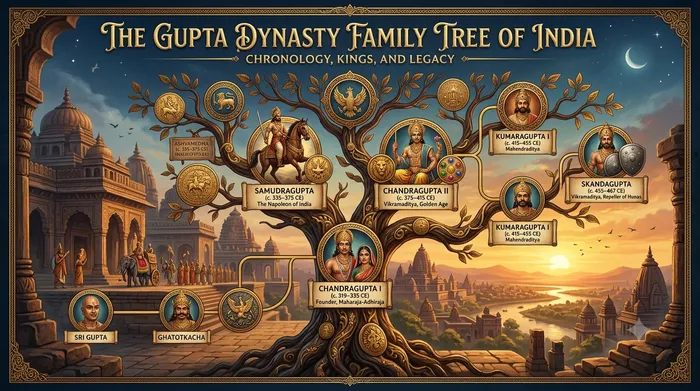
The Gupta Dynasty Family Tree of India
The Gupta Dynasty ruled large parts of northern and central India from the early 4th to the mid-6th century CE. Historians often call this period the Golden Age of India because of its achievements in art, literature, science, and administration. The family tree of the Guptas shows how a relatively modest lineage rose to build one of the most celebrated empires in Indian history.
Origins of the Dynasty
The earliest known ruler is Sri Gupta (or simply Gupta), who lived in the late 3rd century CE. He was followed by his son Ghatotkacha. Both held the title Maharaja. The family rose to imperial status under Chandragupta I, who took the higher title Maharajadhiraja (“Great King of Kings”) and began the Gupta Era in 319–320 CE.
Chandragupta I’s marriage to the Lichchhavi princess Kumaradevi is widely regarded as an important political alliance that strengthened the dynasty’s position.
Main Gupta Family Tree
Here is a simplified family tree of the principal rulers:
Sri Gupta (late 3rd century CE)
└── Ghatotkacha (c. 280–319 CE)
    └── Chandragupta I (c. 319–335 CE)
        ├── m. Kumaradevi (Lichchhavi princess)
        └── Samudragupta (c. 335–375 CE)
            └── Chandragupta II Vikramaditya (c. 375–415 CE)
                └── Kumaragupta I (c. 415–455 CE)
                    ├── Skandagupta (c. 455–467 CE)
                    └── Later Gupta line
                        ├── Purugupta
                        ├── Budhagupta
                        ├── Narasimhagupta
                        └── Vishnugupta (last known ruler, mid-6th century CE)
Note: Some sources mention possible short-reigning or rival figures such as Kacha and Ramagupta. The tree above follows the main accepted line of succession.
Key Rulers and Their Achievements
| Ruler | Approximate Reign | Notable Contributions |
|---|---|---|
| Chandragupta I | 319–335 CE | First imperial ruler; started Gupta Era |
| Samudragupta | 335–375 CE | Great military expansion; “Napoleon of India” |
| Chandragupta II Vikramaditya | 375–415 CE | Defeated Western Kshatrapas; peak of prosperity |
| Kumaragupta I | 415–455 CE | Maintained the empire; performed Ashvamedha |
| Skandagupta | 455–467 CE | Successfully resisted early Huna invasions |
Samudragupta is especially famous for his extensive campaigns, recorded in the Allahabad Pillar inscription composed by his court poet Harisena. Chandragupta II is remembered for cultural flourishing and is often linked with the legendary Vikramaditya tradition.
The Golden Age
Under the later 4th and early 5th century rulers, India saw remarkable developments:
- Literature: Kalidasa and other classical Sanskrit writers
- Science and mathematics: Aryabhata and advances in astronomy
- Art and architecture: refinements in sculpture and temple forms
- Political stability and flourishing internal and external trade
The empire gradually weakened after Skandagupta under the pressure of Huna invasions and internal fragmentation. By the mid-6th century the main imperial line had faded.
Why the Gupta Family Tree Matters
The Gupta tree illustrates how political marriage, military success, and effective administration allowed a regional family to dominate northern India for more than two centuries. It also marks a high point of classical Indian civilization. Many later dynasties looked back to the Guptas as a model of kingship and culture.
Recording Family Histories Across Generations
Royal genealogies like that of the Guptas were carefully preserved in inscriptions and literary works. Ordinary families today carry the same desire to remember parents, grandparents, and earlier generations. A clear digital record helps keep names, relationships, and stories from being lost.
You can begin building your own private family tree for free, with no sign-up required, at the My rOoOts create-tree page.
The family tree generator offers a simple starting point. An ancestor timeline generator helps place generations against historical periods. When relatives contribute information, a relationship calculator clarifies connections across the family.
Gupta Dynasty - Family Tree - India
Conclusion
The Gupta Dynasty family tree begins with Sri Gupta and Ghatotkacha, rises to imperial height under Chandragupta I, Samudragupta, and Chandragupta II Vikramaditya, and continues through Kumaragupta I and Skandagupta before declining in the 6th century. This lineage presided over one of the most creative and prosperous periods in Indian history.
Studying the Gupta tree offers both a window into India’s classical past and a reminder of the enduring human impulse to record ancestry — an impulse that continues whenever families document their own stories for the generations that follow.
Editor's picks
8 August 2026
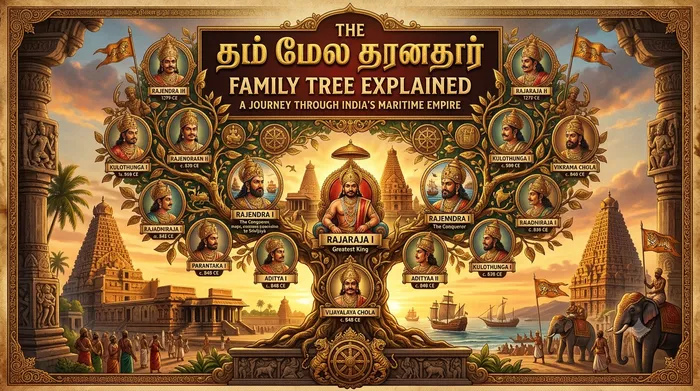
The Chola Dynasty Family Tree Explained
Explore the Chola Dynasty family tree from Vijayalaya to Rajaraja I, Rajendra I, and the later rulers who built one of South India’s greatest empires.
8 August 2026
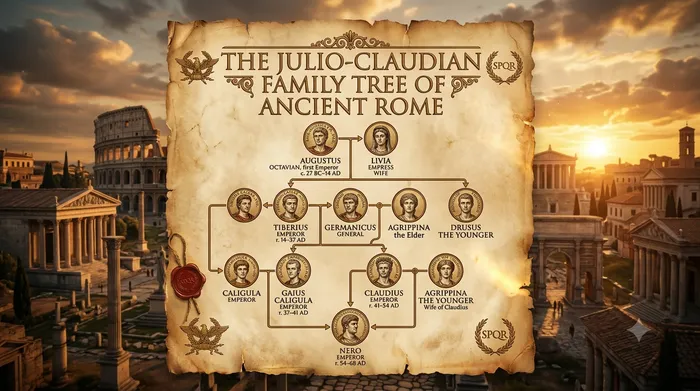
The Julio-Claudian Family Tree of Ancient Rome
Explore the Julio-Claudian family tree of ancient Rome, from Augustus to Nero, including the complex ties of blood, adoption, and marriage that shaped the first imperial dynasty.
8 August 2026
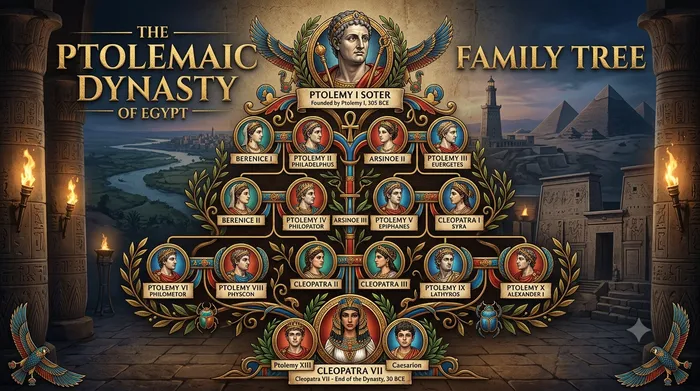
The Ptolemaic Dynasty Family Tree of Egypt
Explore the Ptolemaic Dynasty family tree of Egypt, from Ptolemy I Soter to Cleopatra VII, including the complex royal marriages and the end of pharaonic rule.
8 August 2026
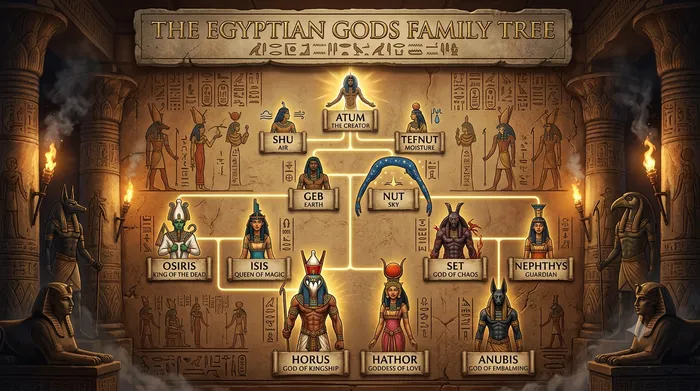
The Egyptian Gods Family Tree for Beginners
A simple beginner’s guide to the Egyptian gods family tree, from Atum and the Ennead of Heliopolis to Osiris, Isis, Horus, and the main divine relationships.
8 August 2026
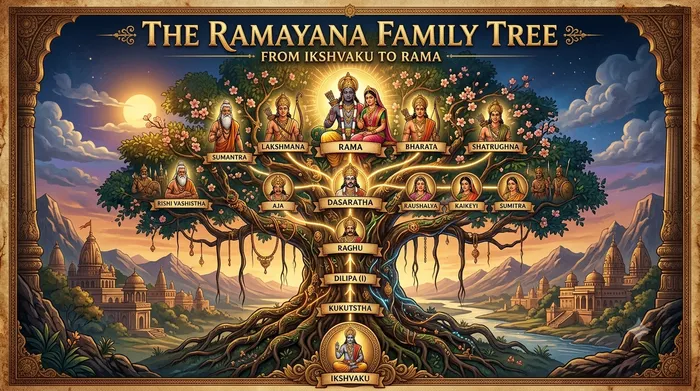
The Ramayana Family Tree from Ikshvaku to Rama
Explore the Ramayana family tree from Ikshvaku, founder of the Solar Dynasty, through legendary kings to Rama, Lakshmana, Bharata and Shatrughna in a clear simplified guide.
7 August 2026
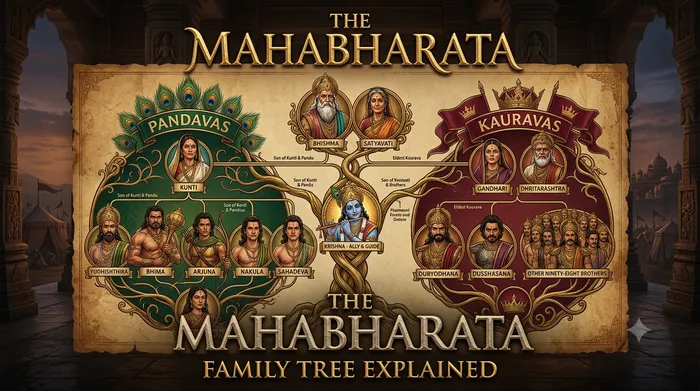
The Mahabharata Family Tree Explained: Kuru, Pandava and Kaurava Lineage
Understand the Mahabharata family tree in clear steps. Trace the Kuru dynasty from Shantanu to the Pandavas and Kauravas and see how the great war became a family conflict.
7 August 2026
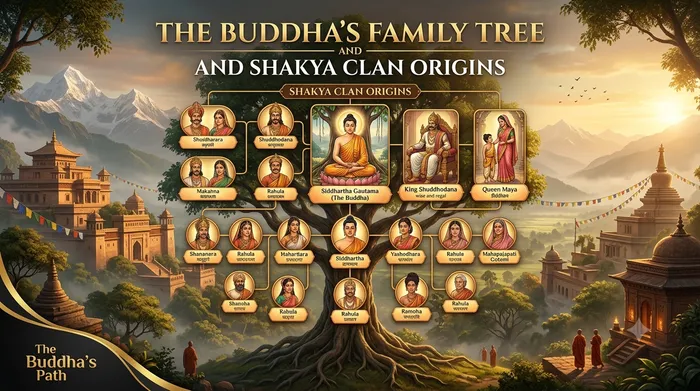
The Buddha’s Family Tree and Shakya Clan Origins: A Clear Historical Guide
Explore the Buddha’s family tree and the origins of the Shakya clan. Learn about Kapilavastu, the Ikshvaku link, and the key relatives of Siddhartha Gautama.
4 August 2026
The World’s Largest and Most Powerful Dynasties in History: Empires, Royal Families, and Lasting Legacies
Explore the world’s largest and most powerful dynasties, from the Qing and Romanovs to the Mughals and Habsburgs, and discover how royal family trees shaped global history.
1 August 2026
The Family Tree of Asian Royal Families: History, Lineages & Royal Heritage
Explore the family trees of Asian royal families, including the Japanese Imperial Family, Thai Royal Family, Brunei Royal Family, and other historic dynasties. Learn how royal lineages are preserved through generations.
Create Your Family Tree for Free
Start building your family history in minutes with the My rOoOts Free Family Tree Creator. Add parents, grandparents, children, and relatives, organize generations visually, and create a beautiful family tree that you can save and share.
👉 Create your free family tree: Free Family Tree Creator
No design skills required. Simply enter your family details and generate a clear, easy-to-read family tree online for free.
Check Zodiac Compatibility for Any Two People
Curious about how well two people match based on their date of birth? Try the My rOoOts Zodiac Compatibility Tool to compare zodiac signs, explore relationship compatibility, and get a quick compatibility score for couples, friends, or family members.
👉 Check compatibility now: Zodiac Compatibility Calculator
You can enter two dates of birth and even mention the relationship type to get a more personalized compatibility result.
Download a Free Family Tree Template
Want to draw your family tree yourself? The My rOoOts Family Tree Template provides a free printable blank pedigree chart for documenting your family history across multiple generations.
👉 Download a free family tree template: Family Tree Template
Choose a 3-generation, 4-generation, or 5-generation family tree template and save it as a PDF for printing, writing, and documenting your ancestors.
Discover the Meaning and Origin of Your Surname
Ever wondered where your family name came from? Use the My rOoOts Surname Meaning Lookup to explore surname meanings, origins, history, and etymology from different regions and cultures around the world.
👉 Discover your surname meaning: Surname Meaning Lookup
Learn more about your last name and explore the possible linguistic, geographic, cultural, and historical roots behind your family surname.
Start your family tree free
No account needed to begin. Build it in minutes, then save it whenever you're ready.
Build your family tree