Royal families have fascinated people for centuries. Their family trees are not only records of kings, queens, princes, and princesses but also reflections of history, culture, politics, and tradition.
Across Asia, royal families have maintained detailed genealogical records that connect generations of rulers, heirs, and descendants.
From the ancient Japanese Imperial Family to the modern royal houses of Thailand and Brunei, Asian royal lineages represent centuries of heritage.
Understanding these family trees helps us explore:
- How royal succession works
- How dynasties continue through generations
- How marriages connect royal houses
- How historical events shaped royal families
With MyRooots, you can explore the importance of genealogy and preserve your own family's history through a structured family tree.
🌳 Start building your family tree today: https://myrooots.app/
Why Royal Family Trees Are Important
A royal family tree is more than a list of names.
It records:
- Births and deaths
- Marriages
- Succession lines
- Royal titles
- Historical events
- Connections between dynasties
Royal genealogies have been carefully maintained because succession often depends on documented ancestry.
The Japanese Imperial Family Tree
The Japanese Imperial Family is one of the world's oldest continuous hereditary monarchies.
Japan's imperial lineage is traditionally traced back over many centuries.
The Emperor of Japan is considered the symbolic head of state, while the imperial family represents national tradition and continuity.
Early Imperial Lineage
According to Japanese tradition, the imperial line begins with:
- Emperor Jimmu (traditional first emperor)
- Successive emperors through Japanese history
Historical records become more reliable from later periods as written documentation improved.
Modern Japanese Imperial Family
The current imperial family descends from:
- Emperor Taishō
- Emperor Shōwa (Hirohito)
- Emperor Akihito
- Emperor Naruhito
The modern succession line continues through the current generation.
Important Members of the Japanese Imperial Family
The imperial family includes:
- Emperor Naruhito
- Empress Masako
- Crown Prince Fumihito
- Crown Princess Kiko
- Other members of the imperial household
The Imperial Household Agency maintains official records and manages royal affairs.
Unique Features of Japanese Royal Genealogy
The Japanese Imperial Family is known for:
- Long historical continuity
- Strict succession traditions
- Detailed ancestral records
- Strong cultural symbolism
The imperial family tree represents one of the world's longest documented royal traditions.
The Thai Royal Family Tree
Thailand's monarchy is one of Southeast Asia's most recognized royal institutions.
The current dynasty is the Chakri Dynasty, established in 1782.
The Chakri Dynasty
The Chakri Dynasty began with:
King Rama I
He founded the dynasty after the establishment of Bangkok as Thailand's capital.
The dynasty continued through multiple generations of kings.
Major Thai Monarchs
Important rulers include:
King Rama V (Chulalongkorn)
Known for:
- Modernizing Thailand
- Administrative reforms
- Strengthening national institutions
King Rama IX (Bhumibol Adulyadej)
One of Thailand's longest-reigning monarchs.
His reign was marked by:
- National development projects
- Public service initiatives
- Strong cultural influence
King Rama X (Maha Vajiralongkorn)
The current monarch of Thailand.
His reign continues the Chakri royal tradition.
Thai Royal Family Relationships
The Thai royal family includes:
- The King
- The Queen
- Crown Prince
- Princesses
- Other royal descendants
Royal titles and family positions follow specific traditions.
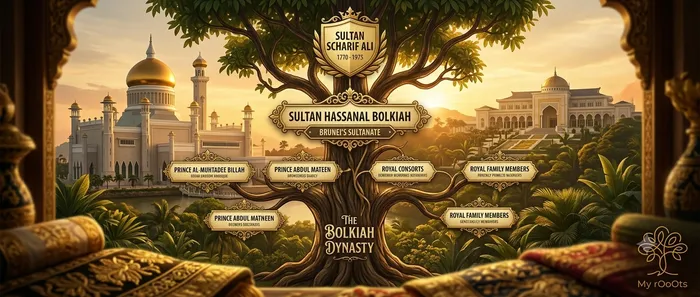
The Brunei Royal Family Tree
Brunei's royal family is one of the oldest continuously ruling monarchies in the world.
The country is ruled by the House of Bolkiah.
The House of Bolkiah
The dynasty traces its origins back many centuries.
The royal lineage has continued through generations of sultans.
Sultan Hassanal Bolkiah
The current Sultan of Brunei is one of the world's longest-serving monarchs.
The royal family includes:
- Sultan Hassanal Bolkiah
- Crown Prince Al-Muhtadee Billah
- Other princes and princesses
Features of Brunei Royal Genealogy
The Brunei royal family tree highlights:
- Long hereditary succession
- Islamic royal traditions
- Strong family connections
- Historical continuity
Other Important Asian Royal Families
Asia has many historic and modern royal houses.
Cambodia Royal Family
Cambodia's monarchy includes the House of Norodom.
The royal family has played an important role in Cambodian history.
Malaysian Royal Families
Malaysia has a unique rotating monarchy system.
The country consists of multiple royal houses from different states, including:
- Johor
- Selangor
- Perak
- Kedah
- Pahang
The Yang di-Pertuan Agong is selected from among hereditary rulers.
Bhutan Royal Family
Bhutan's monarchy belongs to the Wangchuck dynasty.
The royal family has played an important role in Bhutan's modern development.
Saudi and Middle Eastern Asian Royal Families
Although culturally different from East and Southeast Asian monarchies, Asian royal families also include major dynasties from West Asia.
Examples include:
- House of Saud
- Hashemite dynasty
Their genealogies span many generations.
How Royal Family Trees Are Created
Royal genealogy follows many of the same principles as ordinary family history research.
Researchers use:
- Birth records
- Marriage records
- Historical documents
- Royal archives
- Official genealogies
- Historical publications
The same methods used to study royal families can help anyone research their own ancestry.
What We Can Learn From Royal Genealogy
Royal family trees teach us about:
- Generational connections
- Historical migrations
- Marriage alliances
- Cultural traditions
- Succession systems
They show how every family, royal or ordinary, has a story shaped by generations.
Building Your Own Family Tree Like a Royal Archive
You do not need to belong to a royal family to preserve your heritage.
Every family has valuable history.
A family tree can preserve:
- Ancestors
- Family stories
- Photographs
- Important dates
- Cultural traditions
With MyRooots, you can create a digital family archive that grows with every generation.
Features include:
- Multi-generation family trees
- Relationship tracking
- Memory preservation
- Photo storage
- Family sharing
🌳 Start creating your family tree today: https://myrooots.app/
Frequently Asked Questions
What is the oldest royal family in Asia?
The Japanese Imperial Family is traditionally considered one of the world's oldest continuous hereditary monarchies.
How are Asian royal family trees maintained?
Royal genealogies are preserved through official records, historical documents, and royal institutions.
Are royal family trees publicly available?
Many royal genealogies are documented through official sources, historical archives, and genealogy research.
Can ordinary people trace connections to royal families?
Some people discover distant connections to historical nobility or royalty, but these relationships require documented genealogy research.
Why are royal family trees useful for genealogy?
Royal family trees demonstrate how generations can be connected and preserved through careful documentation.
Final Thoughts
Royal families represent some of the most carefully documented family histories in the world.
From Japan's ancient imperial tradition to Thailand's Chakri Dynasty and Brunei's House of Bolkiah, these royal lineages show the importance of preserving family connections across generations.
But every family has a history worth protecting.
Whether your ancestors were rulers, farmers, merchants, or explorers, their stories are part of your heritage.
🌳 Preserve your family's legacy with MyRooots: https://myrooots.app/
Find Any Family Relationship Instantly
Not sure how someone is related to you? Use the MyRooots Relationship Calculator to instantly identify relationships such as cousin, aunt, uncle, nephew, niece, in-laws, and many more. It is a quick and easy tool for understanding complex family connections.
👉 MyRooots Relationship Calculator
Create a Beautiful Family Tree Online
Turn your family information into a clear and organized family tree within minutes. The MyRooots Family Tree Generator helps you add relatives, connect generations, and create a shareable family tree that can grow over time.
👉 MyRooots Family Tree Generator
Visualize Your Family History Through Time
See your ancestors in chronological order with the My rOoOts Ancestor Timeline Generator. It creates a visual timeline of births, marriages, deaths, and important life events, making it easier to understand your family's history across generations.
Editor's picks
4 August 2026
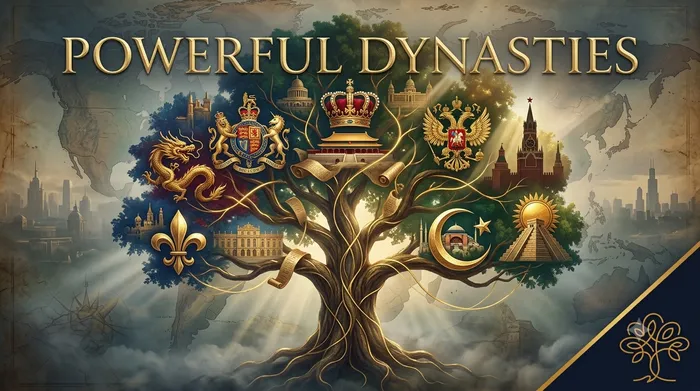
The World’s Largest and Most Powerful Dynasties in History: Empires, Royal Families, and Lasting Legacies
Explore the world’s largest and most powerful dynasties, from the Qing and Romanovs to the Mughals and Habsburgs, and discover how royal family trees shaped global history.
4 August 2026
Bhutan’s Top Dynasty: The Wangchuck Dynasty and the Royal Family That Shaped Modern Bhutan
Explore Bhutan’s Wangchuck Dynasty, the royal family that has ruled since 1907, and discover how its kings shaped Bhutan’s culture, democracy, and national identity.
4 August 2026
Thailand’s Top Dynasty: The Chakri Dynasty and the Royal Family That Shaped Modern Thailand
Explore Thailand’s Chakri Dynasty, the royal family that has ruled since 1782, and learn how its kings shaped Thai history, culture, modernization, and national identity.
5 August 2026
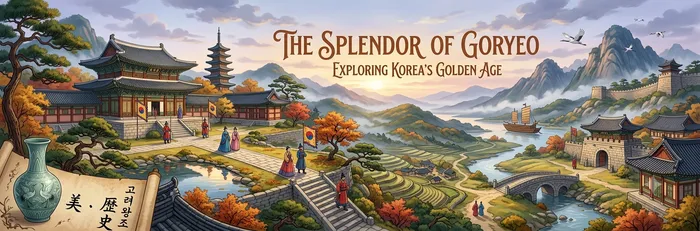
Goryeo Dynasty Explained: The Kingdom That Gave Korea Its Name
Learn about the Goryeo Dynasty, the medieval Korean kingdom that unified the peninsula, produced celadon and the Tripitaka Koreana, and gave Korea its modern name.

5 August 2026
Joseon Dynasty Explained: Korea’s Longest-Lasting Kingdom
Discover the Joseon Dynasty, Korea’s longest-lasting kingdom. Learn its founding, kings, Confucian society, major events, cultural legacy, and lasting impact on modern Korea.
6 August 2026
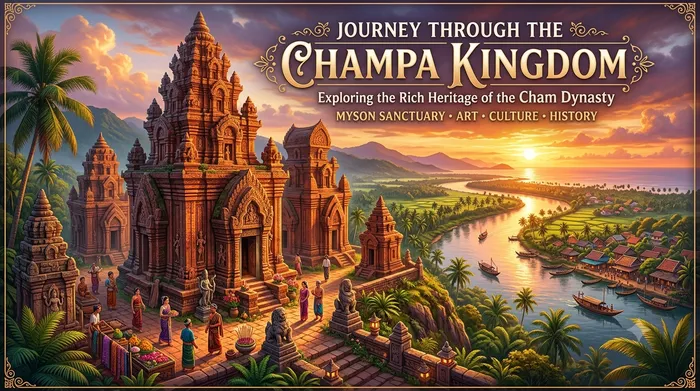
The Genealogy of the Champa Kingdom: Tracing Cham Ancestry
Explore the history of the Champa Kingdom and learn how Cham ancestry, clan traditions, and family records help modern descendants trace their roots across Vietnam and beyond.
Check Zodiac Compatibility for Any Two People
Curious about how well two people match based on their date of birth? Try the My rOoOts Zodiac Compatibility Tool to compare zodiac signs, explore relationship compatibility, and get a quick compatibility score for couples, friends, or family members.
👉 Check compatibility now: Zodiac Compatibility Calculator
You can enter two dates of birth and even mention the relationship type to get a more personalized compatibility result.
Create Your Family Tree for Free
Start building your family history in minutes with the My rOoOts Free Family Tree Creator. Add parents, grandparents, children, and relatives, organize generations visually, and create a beautiful family tree that you can save and share.
👉 Create your free family tree: Free Family Tree Creator
No design skills required. Simply enter your family details and generate a clear, easy-to-read family tree online for free.
Download a Free Family Tree Template
Want to draw your family tree yourself? The My rOoOts Family Tree Template provides a free printable blank pedigree chart for documenting your family history across multiple generations.
👉 Download a free family tree template: Family Tree Template
Choose a 3-generation, 4-generation, or 5-generation family tree template and save it as a PDF for printing, writing, and documenting your ancestors.
Discover the Meaning and Origin of Your Surname
Ever wondered where your family name came from? Use the My rOoOts Surname Meaning Lookup to explore surname meanings, origins, history, and etymology from different regions and cultures around the world.
👉 Discover your surname meaning: Surname Meaning Lookup
Learn more about your last name and explore the possible linguistic, geographic, cultural, and historical roots behind your family surname.
Start your family tree free
No account needed to begin. Build it in minutes, then save it whenever you're ready.
Build your family tree