The World’s Largest and Most Powerful Dynasties in History: Empires, Royal Families, and Lasting Legacies
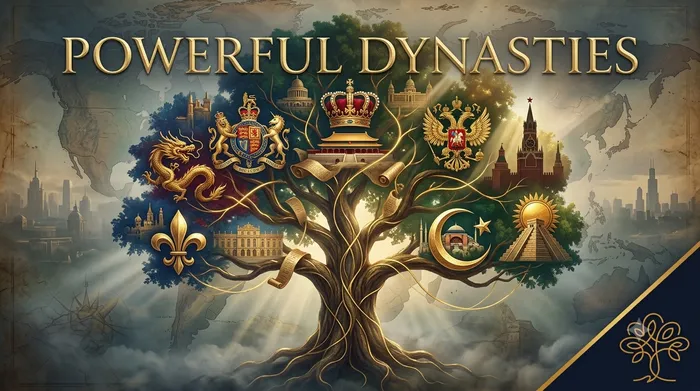
Throughout history, dynasties have shaped civilizations, controlled vast territories, influenced religion and culture, and changed the course of world events. Some dynasties ruled for centuries, while others created enormous empires that affected millions of people across continents.
But what makes a dynasty “large” or “powerful”? Historians usually consider several factors:
- Territory controlled
- Population governed
- Length of rule
- Military strength
- Economic influence
- Cultural and political legacy
This guide explores some of the world’s most influential dynasties and explains why they are remembered as among the largest and most powerful in human history.
⸻
What Is a Dynasty?
A dynasty is a sequence of rulers from the same family or royal house. Power is usually inherited through bloodline, marriage, or succession traditions.
Examples include:
- Kings and queens
- Emperors and empresses
- Sultans
- Shahs
- Tsars
Dynasties often developed detailed family records, making them especially important for historians and genealogists.
⸻
How Historians Measure Great Dynasties
No single dynasty was the “best” in every category. A dynasty might have ruled a huge territory but for a short period, while another ruled a smaller area for many centuries.
Measure Example Dynasty Largest territory Qing Dynasty Longest lasting Japanese Imperial House Greatest European influence Habsburg Dynasty Major Islamic empire Ottoman Dynasty Greatest South Asian empire Mughal Dynasty Largest population governed Qing Dynasty
⸻
The Qing Dynasty: The Largest Chinese Empire
The Qing Dynasty ruled China from 1644 to 1912 and created the largest territorial empire in Chinese history.
Why It Was Powerful
- Controlled Tibet, Xinjiang, Mongolia, and Taiwan.
- Governed one of the world’s largest populations.
- Possessed immense agricultural and commercial wealth.
- Influenced East Asian politics for centuries.
By the eighteenth century, Qing China was one of the richest and most populous states on Earth.
⸻
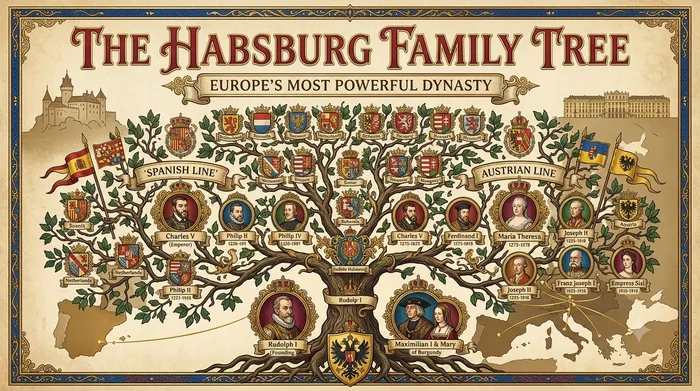
The Habsburg Dynasty: Europe’s Marriage Empire
The Habsburg Dynasty became famous for expanding its power through strategic marriages rather than conquest.
Major Territories
- Austria
- Spain
- Hungary
- Bohemia
- The Netherlands
- Parts of Italy
- Overseas Spanish colonies
The saying “Let others wage war; you, happy Austria, marry” perfectly summarizes Habsburg strategy.
Lasting Legacy
Habsburg family connections linked many European royal houses and shaped European politics for hundreds of years.
⸻
The Ottoman Dynasty: Six Centuries of Imperial Rule
The Ottoman Dynasty ruled from 1299 to 1922, making it one of history’s longest-lasting imperial dynasties.
Peak Power
- Controlled Southeast Europe, the Middle East, and North Africa.
- Commanded major trade routes between Europe and Asia.
- Maintained a powerful military, including the Janissaries.
- Served as a leading center of Islamic civilization.
The Ottoman Empire lasted more than 600 years, an extraordinary achievement.
⸻
The Mughal Dynasty: South Asia’s Imperial Giant
The Mughal Dynasty ruled much of the Indian subcontinent from 1526 to 1857.
Why It Was Powerful
- Governed a massive population.
- Generated enormous agricultural revenue.
- Sponsored architecture, literature, and art.
- Built monuments such as the Taj Mahal.
At its height under Emperor Akbar and Aurangzeb, the Mughal Empire was among the world’s wealthiest states.
⸻
The Romanov Dynasty: Russia’s Imperial Rulers
The Romanov Dynasty ruled Russia from 1613 to 1917.
Major Achievements
- Expanded Russia across Siberia to the Pacific.
- Modernized the state under Peter the Great.
- Made Russia a major European power.
- Developed Saint Petersburg as an imperial capital.
The Romanovs governed one of the largest land empires in history.
⸻
The Japanese Imperial House: The Longest Continuing Dynasty
The Japanese Imperial House claims an unbroken imperial line stretching back more than 1,500 years.
Why It Is Unique
- Longest continuing hereditary monarchy.
- Strong cultural and religious significance.
- Survived wars, reforms, and modernization.
- Continues today under a constitutional monarchy.
Its longevity is unmatched among major royal houses.
⸻
The Ptolemaic Dynasty: Egypt’s Hellenistic Power
The Ptolemaic Dynasty ruled Egypt from 305 to 30 BCE.
Famous Figure
- Cleopatra VII
The dynasty controlled one of the ancient world’s richest regions and made Alexandria a major center of learning.
⸻
The Maurya Dynasty: Ancient India’s First Great Empire
The Maurya Dynasty ruled much of the Indian subcontinent from 322 to 185 BCE.
Most Famous Emperor
- Ashoka
After the Kalinga War, Ashoka promoted Buddhism across Asia, giving the dynasty a profound religious legacy.
⸻
Which Dynasty Was the Most Powerful?
The answer depends on the criteria used.
Category Strongest Candidate Largest territory Qing Dynasty Largest population Qing Dynasty Greatest European influence Habsburg Dynasty Longest duration Japanese Imperial House Greatest Islamic imperial power Ottoman Dynasty Greatest South Asian wealth Mughal Dynasty Largest Eurasian land empire among these Romanov Dynasty
If historians had to choose one dynasty that combined territory, population, wealth, and global influence, the Qing Dynasty is often considered the strongest candidate.
⸻
Dynasties and Family Trees
One reason royal dynasties fascinate people is that their histories can be traced through detailed family trees. These records reveal:
- Marriage alliances
- Succession disputes
- Political partnerships
- Cultural connections between kingdoms
For example, many European monarchs were related through the Habsburgs, while Asian dynasties often used marriage to strengthen alliances.
⸻
What We Can Learn from Royal Genealogy
Studying dynastic family trees helps us understand:
- How power was inherited.
- Why wars of succession occurred.
- How empires expanded.
- How cultures and religions spread.
- How royal families connected distant regions.
Genealogy turns political history into a human story of parents, children, siblings, and generations.
⸻
Explore Your Own Family History
You do not need to belong to a royal family to preserve your heritage. Modern genealogy tools make it easy to document ordinary family stories alongside historical research.
Useful Family History Tools
- Create Tree: Start building a family tree instantly.
- Family Tree Generator: Create a visual family tree.
- Relationship Calculator: Discover how two relatives are connected.
- Ancestor Timeline Generator: Arrange family events chronologically.
- Zodiac Compatibility Tool: Explore zodiac compatibility with family members, friends, or partners.
These tools can help preserve family memories for future generations.
⸻
Fascinating Dynastic Facts
- The Japanese Imperial House is older than most modern nations.
- The Ottoman Dynasty ruled for over six centuries.
- The Habsburgs controlled territories on multiple continents.
- The Mughals built some of the world’s most famous monuments.
- The Qing Dynasty governed hundreds of millions of people.
- The Romanovs expanded Russia across eleven time zones.
⸻
Conclusion
History’s greatest dynasties were not merely royal families; they were institutions that shaped civilizations. The Qing, Habsburg, Ottoman, Mughal, Romanov, Japanese Imperial, Ptolemaic, and Maurya dynasties each left a distinct legacy in politics, culture, religion, architecture, and governance.
Among them, the Qing Dynasty stands out for its enormous territory and population, while the Japanese Imperial House stands out for its extraordinary longevity. Together, these dynasties remind us that family lineage has often been one of the most powerful forces in world history.
To explore genealogy further and preserve your own family legacy, visit MyRooots and create a family tree inspired by the great dynasties of the world.
Editor's picks
8 August 2026
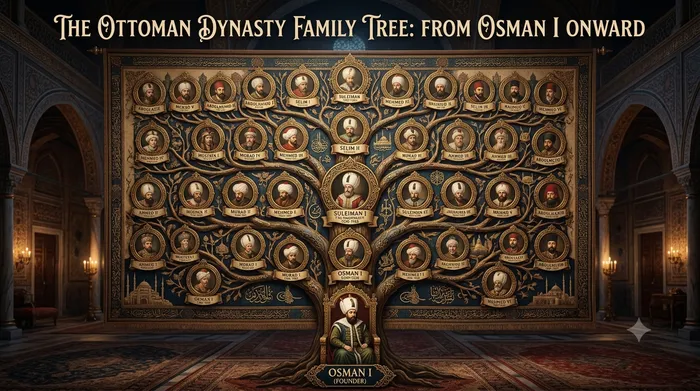
The Ottoman Dynasty Family Tree from Osman I Onward
Explore the Ottoman Dynasty family tree from Osman I to the last sultan Mehmed VI, covering the major sultans who ruled one of history’s longest-lasting empires.
6 August 2026
The Habsburg Family Tree: Europe’s Most Powerful Dynasty
Explore the Habsburg family tree, from their Swiss origins to the Spanish and Austrian branches that dominated European politics for centuries through marriage and empire.
6 August 2026
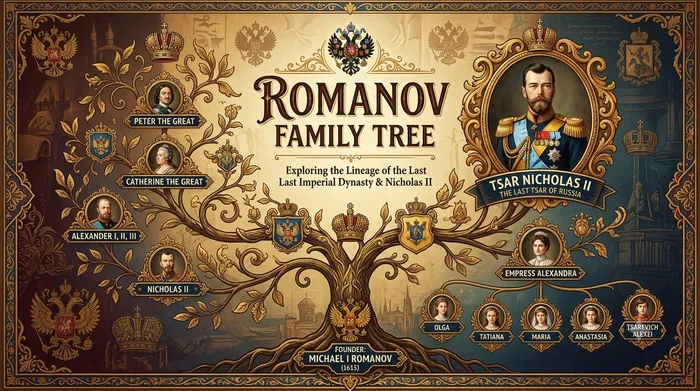
The Romanov Family Tree and the Last Tsar of Russia
Explore the Romanov family tree, focusing on Tsar Nicholas II, the last Emperor of Russia, his wife Alexandra, their five children, and the end of the dynasty in 1918.
6 August 2026
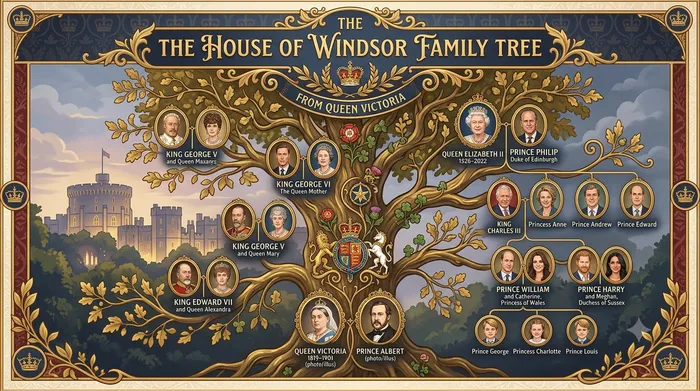
The House of Windsor Family Tree from Queen Victoria to Today
Explore the House of Windsor family tree from Queen Victoria through George V, Elizabeth II, and King Charles III to the present generation of British royals.
8 August 2026
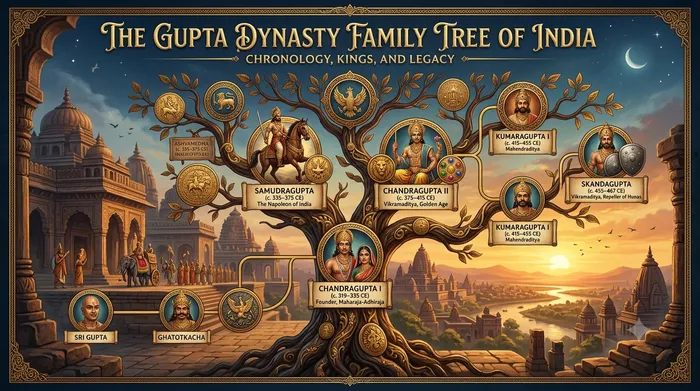
The Gupta Dynasty Family Tree of India
Explore the Gupta Dynasty family tree of India, from Sri Gupta and Chandragupta I to Samudragupta, Chandragupta II Vikramaditya, and the later rulers of India’s Golden Age.
4 August 2026
Bhutan’s Top Dynasty: The Wangchuck Dynasty and the Royal Family That Shaped Modern Bhutan
Explore Bhutan’s Wangchuck Dynasty, the royal family that has ruled since 1907, and discover how its kings shaped Bhutan’s culture, democracy, and national identity.
4 August 2026
Thailand’s Top Dynasty: The Chakri Dynasty and the Royal Family That Shaped Modern Thailand
Explore Thailand’s Chakri Dynasty, the royal family that has ruled since 1782, and learn how its kings shaped Thai history, culture, modernization, and national identity.
1 August 2026
The Family Tree of Asian Royal Families: History, Lineages & Royal Heritage
Explore the family trees of Asian royal families, including the Japanese Imperial Family, Thai Royal Family, Brunei Royal Family, and other historic dynasties. Learn how royal lineages are preserved through generations.
Create Your Family Tree for Free
Start building your family history in minutes with the My rOoOts Free Family Tree Creator. Add parents, grandparents, children, and relatives, organize generations visually, and create a beautiful family tree that you can save and share.
👉 Create your free family tree: Free Family Tree Creator
No design skills required. Simply enter your family details and generate a clear, easy-to-read family tree online for free.
Check Zodiac Compatibility for Any Two People
Curious about how well two people match based on their date of birth? Try the My rOoOts Zodiac Compatibility Tool to compare zodiac signs, explore relationship compatibility, and get a quick compatibility score for couples, friends, or family members.
👉 Check compatibility now: Zodiac Compatibility Calculator
You can enter two dates of birth and even mention the relationship type to get a more personalized compatibility result.
Download a Free Family Tree Template
Want to draw your family tree yourself? The My rOoOts Family Tree Template provides a free printable blank pedigree chart for documenting your family history across multiple generations.
👉 Download a free family tree template: Family Tree Template
Choose a 3-generation, 4-generation, or 5-generation family tree template and save it as a PDF for printing, writing, and documenting your ancestors.
Discover the Meaning and Origin of Your Surname
Ever wondered where your family name came from? Use the My rOoOts Surname Meaning Lookup to explore surname meanings, origins, history, and etymology from different regions and cultures around the world.
👉 Discover your surname meaning: Surname Meaning Lookup
Learn more about your last name and explore the possible linguistic, geographic, cultural, and historical roots behind your family surname.
Start your family tree free
No account needed to begin. Build it in minutes, then save it whenever you're ready.
Build your family tree