The Egyptian Gods Family Tree for Beginners
Ancient Egyptian religion featured hundreds of gods and goddesses. For beginners, the easiest way to understand their relationships is through the Heliopolitan family tree — the Ennead of Heliopolis. This system starts with the creator god and shows how the major deities of earth, sky, kingship, and the afterlife are related.
The Starting Point: Creation from Chaos
In the beginning there was Nun, the watery chaos. From Nun arose the self-created god Atum (often linked with or later merged with Ra, the sun god). Atum produced the first divine couple without a partner, usually by spitting or sneezing them into existence.
These first children were:
- Shu – god of air and light
- Tefnut – goddess of moisture and order
The Core Family Tree (Heliopolitan Ennead)
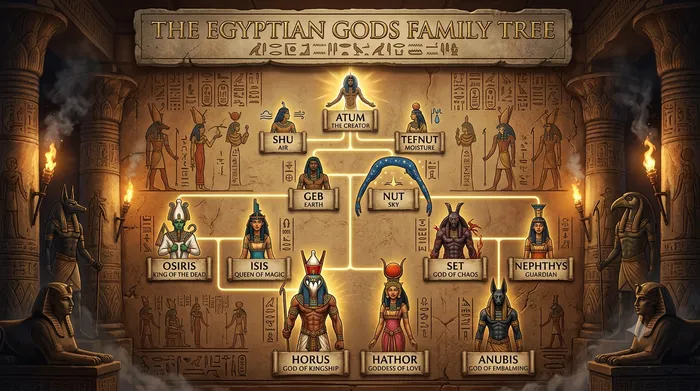
Here is a clear, simplified family tree of the main gods:
Atum (Ra-Atum) – the self-created Creator
├── Shu (Air / Light)  m.  Tefnut (Moisture / Order)
│   ├── Geb (Earth)  m.  Nut (Sky)
│   │   ├── Osiris  m.  Isis
│   │   │   └── Horus the Younger (Horus the Child / Horus son of Isis)
│   │   ├── Set (Seth)  m.  Nephthys
│   │   │   └── Anubis (in the most common tradition: son of Osiris + Nephthys)
│   │   ├── Isis
│   │   └── Nephthys
│   └── (occasionally other minor figures)
│
├── (Other major gods often linked to this family)
│   ├── Hathor (frequently called daughter of Ra)
│   ├── Sekhmet (daughter of Ra in many texts)
│   ├── Bastet (sometimes daughter of Ra)
│   └── Thoth (usually independent, but closely associated)
This group of nine deities (Atum + the eight descendants) forms the Great Ennead of Heliopolis, one of the most important theological systems in ancient Egypt.
                    Atum / Ra-Atum
                          │
              ┌───────────┴───────────┐
             Shu                     Tefnut
          (Air/Light)             (Moisture)
              │                       │
              └───────────┬───────────┘
                          │
              ┌───────────┴───────────┐
             Geb                     Nut
           (Earth)                  (Sky)
              │                       │
              └───────────┬───────────┘
                          │
     ┌────────┬───────────┼───────────┬────────┐
     │        │           │           │        │
  Osiris  +  Isis       Set    +  Nephthys   (Horus the Elder*)
     │                    │
     │                    └── Anubis (most common version)
     │
   Horus
(the Younger)
Key Gods and Their Roles
| God / Goddess | Role | Family Position |
|---|---|---|
| Atum / Ra | Creator and sun god | Origin of the family |
| Shu | Air, light, supporter of the sky | Son of Atum |
| Tefnut | Moisture, rain, order | Daughter of Atum |
| Geb | Earth | Son of Shu & Tefnut |
| Nut | Sky | Daughter of Shu & Tefnut |
| Osiris | God of the afterlife, resurrection, kingship | Son of Geb & Nut |
| Isis | Magic, motherhood, protection | Daughter of Geb & Nut; wife of Osiris |
| Set | Chaos, desert, storms, strength | Son of Geb & Nut |
| Nephthys | Protection, mourning, night | Daughter of Geb & Nut; wife of Set |
| Horus | Kingship, the sky, protection of the pharaoh | Son of Osiris & Isis |
The Story Behind the Tree
The relationships are not just a static chart — they tell a foundational myth.
Geb (earth) and Nut (sky) were locked in embrace until Shu separated them, creating space for life. Nut then gave birth to Osiris, Isis, Set, and Nephthys.
Osiris became a just ruler. His brother Set murdered him out of jealousy. Isis, through her powerful magic, reassembled Osiris’s body and conceived their son Horus. Horus later fought Set to avenge his father and reclaim the throne of Egypt. This conflict between Horus and Set became a central symbol of order versus chaos and of legitimate kingship.
Note: Different cities in Egypt had their own creation stories (Hermopolis, Memphis, Thebes). The Heliopolitan tree is simply the most widely taught and easiest starting point for beginners.
Other Important Gods Outside the Main Tree
Not every major deity fits neatly into the Ennead:
- Anubis – jackal-headed god of mummification; often described as son of Osiris and Nephthys (or Set and Nephthys)
- Thoth – god of wisdom, writing, and the moon; sometimes independent, sometimes linked to the family
- Hathor – goddess of love, music, and motherhood; frequently called daughter of Ra
- Sekhmet, Ptah, Amun – powerful gods with their own cult centers and family connections
These deities often intermarried or were syncretized (combined) with members of the main tree as Egyptian religion evolved over 3,000 years.
Why the Family Tree Matters
Understanding the divine family helps make sense of Egyptian art, temple inscriptions, and myths. When you see Osiris shown as a mummified king, Isis with a throne headdress, or Horus as a falcon, you now know where they sit in the larger story. The tree also explains why pharaohs identified themselves with Horus while alive and with Osiris after death.
Recording Lineages — Divine and Human
The ancient Egyptians cared deeply about lineage, both for gods and for people. Royal and private genealogies appear on tomb walls and papyri. Today, families continue the same impulse when they record parents, grandparents, and ancestors.
A clear digital family tree makes it easy to organize names, relationships, and stories so they are not lost. You can start building your own private record for free, with no sign-up required, at the My rOoOts create-tree page.
The family tree generator offers a simple way to begin. An ancestor timeline generator helps place generations in time. When relatives add information, a relationship calculator clarifies connections across the family.
Conclusion
The Egyptian gods family tree, centered on the Heliopolitan Ennead, begins with the self-created Atum and moves through Shu and Tefnut to Geb and Nut, and finally to Osiris, Isis, Set, Nephthys, and Horus. This structure gives beginners a clear map of the most important divine relationships in ancient Egyptian religion.
Once the core tree is understood, the rich world of Egyptian mythology — with its stories of creation, murder, magic, and resurrection — becomes much easier to follow. And just as the Egyptians recorded the lineages of their gods, modern families can record their own, keeping the thread of memory alive across generations.
Editor's picks
8 August 2026
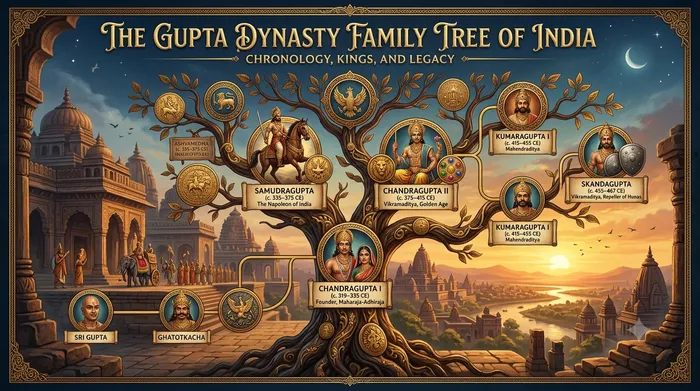
The Gupta Dynasty Family Tree of India
Explore the Gupta Dynasty family tree of India, from Sri Gupta and Chandragupta I to Samudragupta, Chandragupta II Vikramaditya, and the later rulers of India’s Golden Age.
8 August 2026
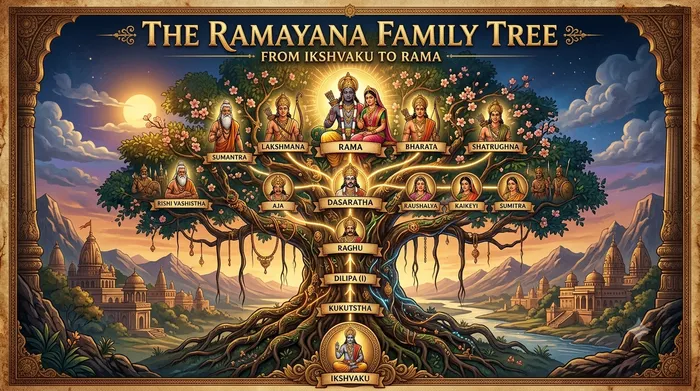
The Ramayana Family Tree from Ikshvaku to Rama
Explore the Ramayana family tree from Ikshvaku, founder of the Solar Dynasty, through legendary kings to Rama, Lakshmana, Bharata and Shatrughna in a clear simplified guide.
8 August 2026
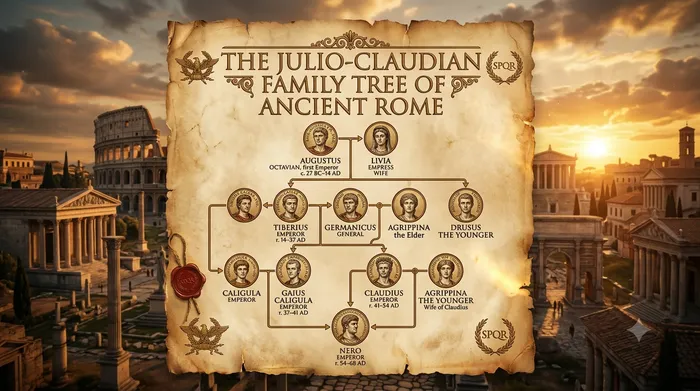
The Julio-Claudian Family Tree of Ancient Rome
Explore the Julio-Claudian family tree of ancient Rome, from Augustus to Nero, including the complex ties of blood, adoption, and marriage that shaped the first imperial dynasty.
8 August 2026
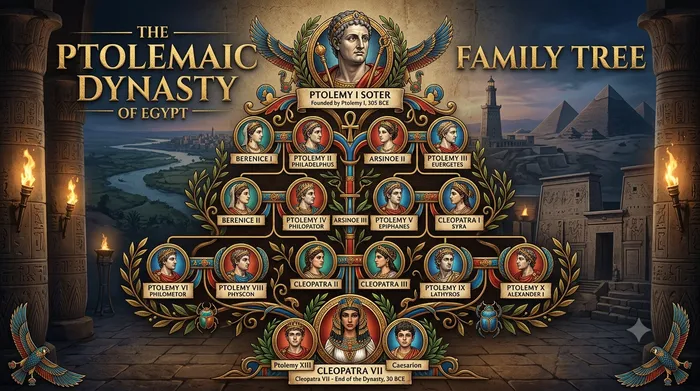
The Ptolemaic Dynasty Family Tree of Egypt
Explore the Ptolemaic Dynasty family tree of Egypt, from Ptolemy I Soter to Cleopatra VII, including the complex royal marriages and the end of pharaonic rule.
7 August 2026
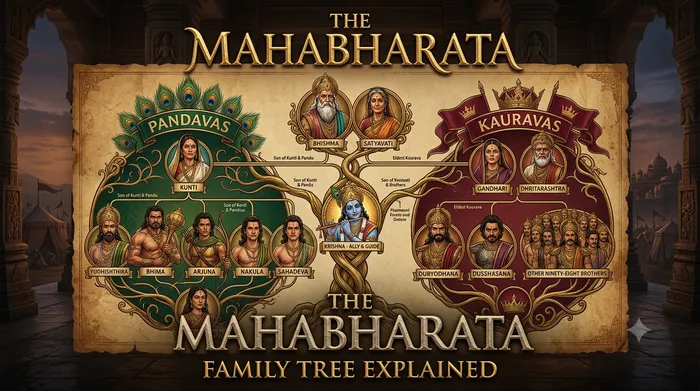
The Mahabharata Family Tree Explained: Kuru, Pandava and Kaurava Lineage
Understand the Mahabharata family tree in clear steps. Trace the Kuru dynasty from Shantanu to the Pandavas and Kauravas and see how the great war became a family conflict.
7 August 2026
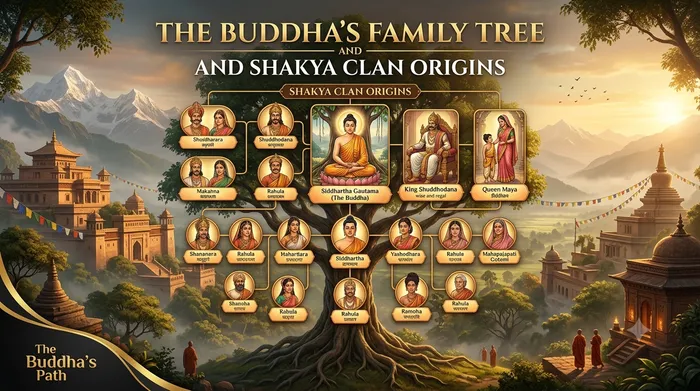
The Buddha’s Family Tree and Shakya Clan Origins: A Clear Historical Guide
Explore the Buddha’s family tree and the origins of the Shakya clan. Learn about Kapilavastu, the Ikshvaku link, and the key relatives of Siddhartha Gautama.
8 August 2026
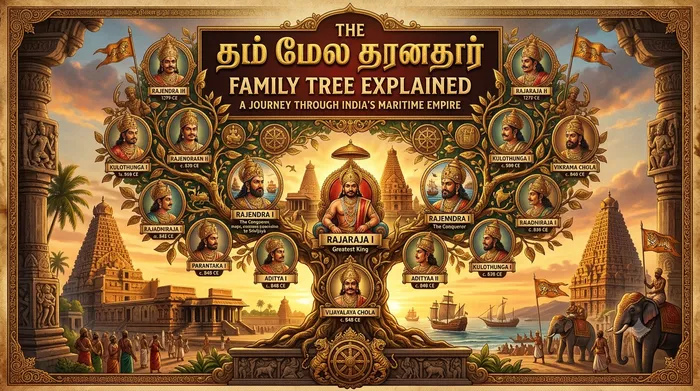
The Chola Dynasty Family Tree Explained
Explore the Chola Dynasty family tree from Vijayalaya to Rajaraja I, Rajendra I, and the later rulers who built one of South India’s greatest empires.
Create Your Family Tree for Free
Start building your family history in minutes with the My rOoOts Free Family Tree Creator. Add parents, grandparents, children, and relatives, organize generations visually, and create a beautiful family tree that you can save and share.
👉 Create your free family tree: Free Family Tree Creator
No design skills required. Simply enter your family details and generate a clear, easy-to-read family tree online for free.
Check Zodiac Compatibility for Any Two People
Curious about how well two people match based on their date of birth? Try the My rOoOts Zodiac Compatibility Tool to compare zodiac signs, explore relationship compatibility, and get a quick compatibility score for couples, friends, or family members.
👉 Check compatibility now: Zodiac Compatibility Calculator
You can enter two dates of birth and even mention the relationship type to get a more personalized compatibility result.
Download a Free Family Tree Template
Want to draw your family tree yourself? The My rOoOts Family Tree Template provides a free printable blank pedigree chart for documenting your family history across multiple generations.
👉 Download a free family tree template: Family Tree Template
Choose a 3-generation, 4-generation, or 5-generation family tree template and save it as a PDF for printing, writing, and documenting your ancestors.
Discover the Meaning and Origin of Your Surname
Ever wondered where your family name came from? Use the My rOoOts Surname Meaning Lookup to explore surname meanings, origins, history, and etymology from different regions and cultures around the world.
👉 Discover your surname meaning: Surname Meaning Lookup
Learn more about your last name and explore the possible linguistic, geographic, cultural, and historical roots behind your family surname.
Start your family tree free
No account needed to begin. Build it in minutes, then save it whenever you're ready.
Build your family tree