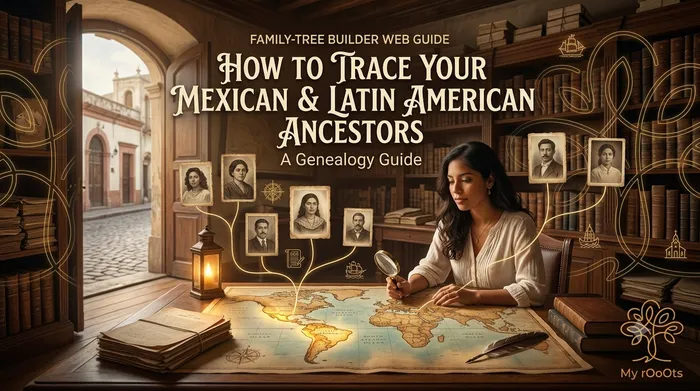
Tracing Mexican or broader Latin American ancestry can feel intimidating at first, mostly because the record types are different from what most beginner genealogy guides assume. Most introductory advice is written around U.S. census records and Ellis Island passenger lists, which simply don't apply here. The good news is that Mexico and much of Latin America actually have an unusually deep and well-organized paper trail, thanks to centuries of Catholic Church recordkeeping. Once you know where to look, it's very possible to trace a family line back well into the 1700s or even earlier.
Start With What You Know: Living Memory First
Before touching a single archive, talk to the oldest living relatives you have access to. Write down:
- Full names, including maternal and paternal surnames (more on this below)
- The specific town, municipality, and state of birth, not just "Mexico" or "Guatemala" generally
- Approximate years of birth, marriage, and death
- Any nicknames, since Spanish-language records often use formal baptismal names that differ from what a person was called day to day
This step matters more here than in many other genealogies, because Latin American civil records are organized by municipality, and you generally can't search effectively without knowing at least the state and ideally the town.
Understand the Naming System First
The single biggest stumbling block for English-speaking researchers is the Spanish-language double-surname system. A person traditionally carries both their father's first surname and their mother's first surname, in that order. For example, if a father named Garcia Lopez and a mother named Martinez Diaz have a son, that son's full name would be something like Juan Garcia Martinez - taking the first surname from each parent.
This matters enormously for research because:
- A woman does not typically change her surname at marriage in most Latin American countries, which actually makes her easier to trace consistently across records
- Records may list a person under either surname depending on the document, so search both
- U.S. immigration and census records often collapse this two-surname system into a single "last name," frequently dropping the maternal surname entirely, which can make it hard to connect a U.S. record back to the original Mexican one
The Core Record Types, and Where to Find Them
| Record type | What it covers | Where to look |
|---|---|---|
| Catholic parish registers | Baptism, marriage, burial, often back to the 1600s-1700s | FamilySearch's Mexico collection, local diocesan archives |
| Civil registration | Birth, marriage, death records kept by the government | Mexico's Civil Registry (Registro Civil) began in 1859; similar systems exist across Latin America, dates vary by country |
| Census records | Household-level population counts | National archives; coverage and survival is spottier than U.S. census records |
| Immigration and border-crossing records | Departures to and arrivals from the U.S. | U.S. National Archives border crossing cards, especially useful from the early 1900s onward |
Why Parish Records Are Often the Best Starting Point
Because civil registration didn't begin in most of Latin America until the mid-to-late 1800s, Catholic parish registers are usually your deepest and most reliable source, often stretching back far further than any government record. Baptism records in particular are valuable because they typically list:
- The child's full name and date of baptism
- Both parents' names, including their surnames
- Often the paternal and maternal grandparents' names as well
- The godparents (padrinos), who were frequently extended family members
A single well-preserved baptism record can hand you three generations at once - this is the single biggest reason parish records outperform almost every other source for this region.
A Practical Research Order
- Gather names, places, and approximate dates from living relatives first.
- Search FamilySearch's free Mexico (and broader Latin America) collections, which have digitized an enormous volume of parish and civil records at no cost.
- Identify the correct parish or municipality using the most specific place name you have - Latin American genealogy is very location-dependent, unlike broader national record sets in some other countries.
- Work backward one generation at a time through baptism and marriage records, noting both surnames at each generation so you don't lose the maternal line.
- Cross-check against U.S. immigration or border-crossing records if the family later moved north, since these records sometimes list the exact hometown back in Mexico or elsewhere in Latin America, which is often the missing piece needed to locate the right parish.
A Note on Indigenous and Mixed Ancestry
Many Latin American family trees eventually connect to Indigenous communities whose own record-keeping traditions predate Spanish colonial administration and were not always captured in parish books. If your research reaches this point, local Indigenous community archives, oral history projects, and regional historical societies are often better sources than the standard national genealogy databases, and it's worth seeking them out specifically rather than assuming parish records tell the whole story.
Frequently Asked Questions
What's the best free source for Mexican genealogy records?
FamilySearch has digitized an extensive collection of Mexican Catholic parish registers and civil registration records, and it's free to search and browse, making it the best starting point for most researchers.
Why do Latin American records list two surnames?
The tradition combines the father's first surname and the mother's first surname for each child, which preserves both family lines in every full name. This differs from the single-surname system common in English-speaking countries and is essential to understand before searching records.
How far back can Mexican genealogy records typically go?
Catholic parish registers frequently extend back to the 1600s or 1700s in well-documented regions, considerably further back than civil registration, which generally only began in 1859 in Mexico.
Do women keep their birth surname after marriage in Mexico?
Traditionally, yes - a woman's legal surname generally does not change at marriage in Mexico and much of Latin America, which is genuinely helpful for genealogists since it keeps her identifiable by the same name across records throughout her life.
What should I do if my family's hometown in Mexico is unknown?
Check U.S. border-crossing cards and naturalization records first, since these frequently list the specific town or municipality of origin, which is often the exact detail needed to locate the correct parish records back in Mexico.
Editor's picks
25 August 2026
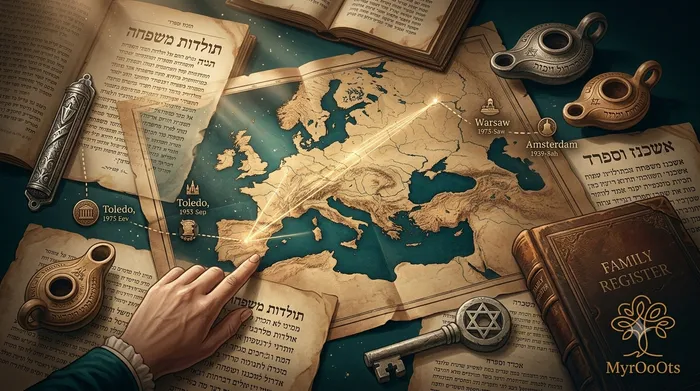
Ashkenazi and Sephardic Jewish Genealogy: How to Trace Your Jewish Family Tree
Jewish genealogy comes with its own record types, naming patterns, and migration history. Here's how to start tracing Ashkenazi, Sephardic, or Mizrahi Jewish ancestry with confidence.
8 August 2026
Best Family Tree Generators in 2026: Free and Easy Tools for Building Your Family History
Looking for the best family tree generator in 2026? Compare free and paid tools, learn what features matter, and choose the right family tree maker for your family history project.
14 August 2026
Trace Your Ancestors Before 1947: A Beginner’s Guide for Indian Families
Learn how to trace Indian ancestors before 1947 using voter lists, land records, temple and church registers, and oral history interviews in this practical beginner’s guide.
4 August 2026
Romani or Gypsy? Understanding the Correct Terms and Their History
Learn the difference between Romani and Gypsy, the true origins of the Romani people, and why respectful language matters when exploring family history and ancestry.
25 August 2026
Scottish Clan Ancestry: How to Trace Your Family to a Highland Clan
A tartan and a surname aren't quite enough to prove clan ancestry. Here's how the Scottish clan system actually worked, and how to genuinely trace your family back to one.
8 August 2026
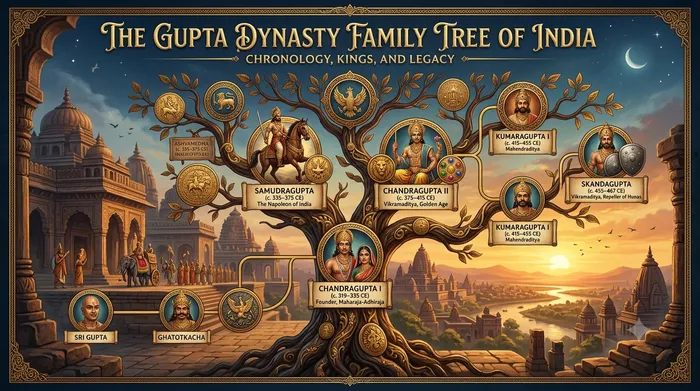
The Gupta Dynasty Family Tree of India
Explore the Gupta Dynasty family tree of India, from Sri Gupta and Chandragupta I to Samudragupta, Chandragupta II Vikramaditya, and the later rulers of India’s Golden Age.
Download a Free Family Tree Template
Want to draw your family tree yourself? The My rOoOts Family Tree Template provides a free printable blank pedigree chart for documenting your family history across multiple generations.
👉 Download a free family tree template: Family Tree Template
Choose a 3-generation, 4-generation, or 5-generation family tree template and save it as a PDF for printing, writing, and documenting your ancestors.
Create Your Family Tree for Free
Start building your family history in minutes with the My rOoOts Free Family Tree Creator. Add parents, grandparents, children, and relatives, organize generations visually, and create a beautiful family tree that you can save and share.
👉 Create your free family tree: Free Family Tree Creator
No design skills required. Simply enter your family details and generate a clear, easy-to-read family tree online for free.
Check Zodiac Compatibility for Any Two People
Curious about how well two people match based on their date of birth? Try the My rOoOts Zodiac Compatibility Tool to compare zodiac signs, explore relationship compatibility, and get a quick compatibility score for couples, friends, or family members.
👉 Check compatibility now: Zodiac Compatibility Calculator
You can enter two dates of birth and even mention the relationship type to get a more personalized compatibility result.
Start your family tree free
No account needed to begin. Build it in minutes, then save it whenever you're ready.
Build your family tree