Somewhere in a gift shop in Edinburgh, there's a rack of tartan scarves organized by surname, and a tourist matching their last name to a clan tartan without asking any further questions. It's a fun souvenir, but it's not genealogy. The real Scottish clan system was a genuine social and political structure, and tracing an actual documented connection to a Highland clan takes more than just sharing a surname with one.
What a Clan Actually Was
The word "clan" comes from the Gaelic clann, meaning children or descendants. Historically, a Scottish clan wasn't just an extended family, it was a territorial and political community led by a clan chief, who held real authority over land, justice, and military service, particularly in the Highlands from the medieval period through the 18th century.
Crucially, not everyone who bore a clan's name was actually descended from its chiefly bloodline. Clans absorbed unrelated families for protection, tenancy, or political alliance, and those families often adopted the clan surname as a mark of allegiance rather than blood. This is one of the biggest misconceptions in Scottish genealogy: a shared surname suggests an association with a clan's territory or protection, not necessarily a direct bloodline to the chief's family.
Clans, Septs, and Why Your Surname Might Not Be the Clan Name
Many clans had septs, associated families and surnames considered part of the wider clan grouping even though the surname itself differs from the clan's own name. For example:
- The MacDonald clan's septs include surnames like MacDonnell, Whyte, and Ronald
- The Campbell clan's septs include MacTavish, Burnes, and Lindsay
- The Gordon clan's septs include Adam, Milne, and Huntley
If your surname doesn't seem to match any clan directly, checking sept lists, widely published by clan societies, is often the next step before assuming there's no connection at all.
How the Clan System Actually Ended
Timeline of the Highland Clan System

1745-46 -> Jacobite Rising and defeat at the Battle of Culloden
    -> British government bans tartan, weapons, and clan gatherings (Dress Act 1746)
        -> Clan chiefs lose traditional legal authority over their lands
            -> 1780s-1850s: The Highland Clearances displace tens of thousands
                -> Mass emigration to Canada, the US, Australia, and New Zealand
                    -> Clan identity survives mainly through societies, tartans, and family memory
The defeat of the Jacobite rising at Culloden in 1746 effectively ended the clan system as a functioning political structure. The British government's Dress Act banned Highland dress and tartan for decades, and clan chiefs lost their traditional judicial power over their own people. What followed, the Highland Clearances, saw tens of thousands of tenant families evicted from clan lands to make way for large-scale sheep farming, driving a wave of emigration that scattered clan descendants across Canada, the United States, Australia, and New Zealand. If your family emigrated from Scotland during this period, that displacement is very likely part of the story.
How to Actually Trace a Clan Connection
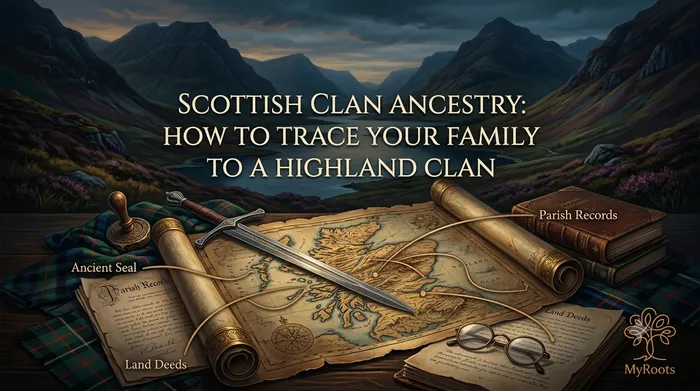
- Start with standard Scottish records first - civil registration (from 1855), parish registers, and census records through Scotland's People, the official government genealogy archive, before making any assumptions about clan ties
- Identify your ancestor's specific parish or region, not just "Scotland" broadly, since clan territories were geographically concentrated and a parish location often points directly to a likely clan association
- Check sept lists for your surname through recognized clan societies if the surname itself isn't a clan name
- Look for tenancy or rent records tied to a specific estate, which can show whether your ancestors lived on land controlled by a particular clan chief
- Treat tartan and "clan crest" merchandise as decorative, not evidential - modern clan tartans were largely standardized in the 19th century, well after most clans' active political existence, so owning or wearing one says nothing definitive about ancestry
Records Worth Searching
- National Records of Scotland / Scotland's People - births, marriages, deaths, and censuses
- Clan society archives - many clans have active modern societies maintaining membership genealogies and historical records
- Kirk session records - Presbyterian church minutes that often recorded local disputes, poor relief, and family matters in remarkable detail
- Highland Clearance emigration records - passenger lists and land grant records in Canada, Australia, and the US often name the specific Scottish parish of origin
Frequently Asked Questions
Does sharing a surname with a clan mean I'm descended from it?
Not necessarily. Clans historically included many unrelated families who adopted the clan name through tenancy, protection, or political alliance, so a shared surname points to a historical association with the clan's territory, not automatically a direct bloodline to the chief's family.
What is a sept, and how is it different from a clan?
A sept is a family or surname historically associated with a larger clan, even though the surname itself is different from the clan's own name. Checking sept lists is useful if your surname doesn't obviously match any clan directly.
When did the Scottish clan system stop functioning?
The clan system's role as a real political and legal structure effectively ended after the 1746 defeat at Culloden, when the British government banned Highland dress and stripped clan chiefs of their traditional authority, followed by mass displacement during the Highland Clearances.
Where should I start researching Scottish clan ancestry?
Start with standard genealogical records, civil registration, parish registers, and census data through Scotland's People, to establish your ancestor's specific parish and time period before trying to connect them to a particular clan.
Are modern clan tartans historically accurate?
Most of today's standardized clan tartans were formalized in the 19th century, well after the clan system's active political period, so they're a modern tradition rather than direct evidence of medieval or early modern clan identity.
Editor's picks
25 August 2026
Ashkenazi and Sephardic Jewish Genealogy: How to Trace Your Jewish Family Tree
Jewish genealogy comes with its own record types, naming patterns, and migration history. Here's how to start tracing Ashkenazi, Sephardic, or Mizrahi Jewish ancestry with confidence.
6 August 2026
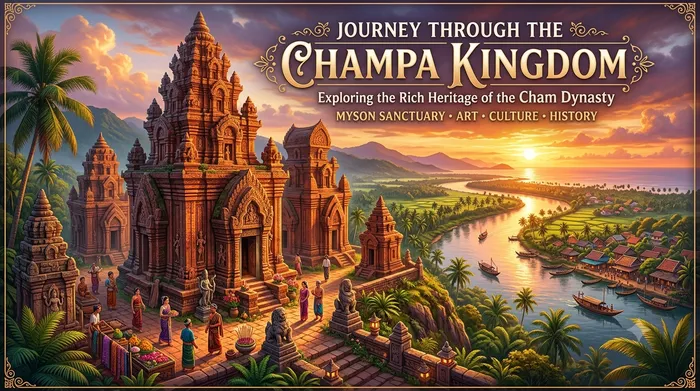
The Genealogy of the Champa Kingdom: Tracing Cham Ancestry
Explore the history of the Champa Kingdom and learn how Cham ancestry, clan traditions, and family records help modern descendants trace their roots across Vietnam and beyond.
6 August 2026
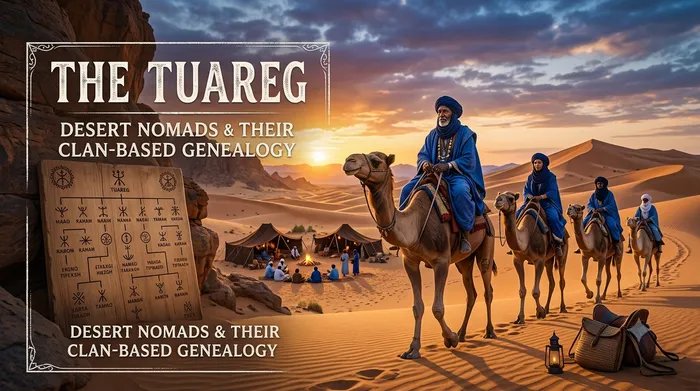
The Tuareg: Desert Nomads and Their Clan-Based Genealogy
Explore the Tuareg people of the Sahara, their nomadic heritage, clan-based social structure, and how genealogy shapes identity, status, and family history across the desert.
8 August 2026
Best Family Tree Generators in 2026: Free and Easy Tools for Building Your Family History
Looking for the best family tree generator in 2026? Compare free and paid tools, learn what features matter, and choose the right family tree maker for your family history project.
8 August 2026
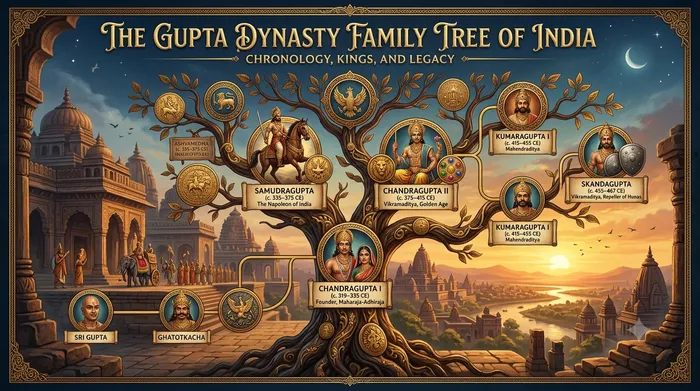
The Gupta Dynasty Family Tree of India
Explore the Gupta Dynasty family tree of India, from Sri Gupta and Chandragupta I to Samudragupta, Chandragupta II Vikramaditya, and the later rulers of India’s Golden Age.
26 July 2026
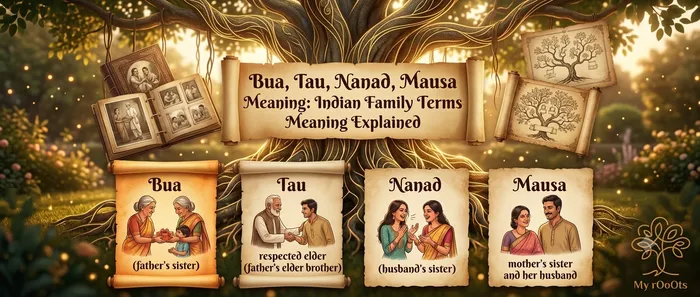
Bua, Tau, Nanad, Mausa Meaning: Indian Family Terms Meaning Explained
A plain-English guide to Indian family relationship names: what bua's husband is called (fufa), what mausa, tau, jija ji and nanad mean, and how Hindi kinship terms map to English relatives like aunt, uncle and in-law.
Download a Free Family Tree Template
Want to draw your family tree yourself? The My rOoOts Family Tree Template provides a free printable blank pedigree chart for documenting your family history across multiple generations.
👉 Download a free family tree template: Family Tree Template
Choose a 3-generation, 4-generation, or 5-generation family tree template and save it as a PDF for printing, writing, and documenting your ancestors.
Check Zodiac Compatibility for Any Two People
Curious about how well two people match based on their date of birth? Try the My rOoOts Zodiac Compatibility Tool to compare zodiac signs, explore relationship compatibility, and get a quick compatibility score for couples, friends, or family members.
👉 Check compatibility now: Zodiac Compatibility Calculator
You can enter two dates of birth and even mention the relationship type to get a more personalized compatibility result.
Create Your Family Tree for Free
Start building your family history in minutes with the My rOoOts Free Family Tree Creator. Add parents, grandparents, children, and relatives, organize generations visually, and create a beautiful family tree that you can save and share.
👉 Create your free family tree: Free Family Tree Creator
No design skills required. Simply enter your family details and generate a clear, easy-to-read family tree online for free.
Start your family tree free
No account needed to begin. Build it in minutes, then save it whenever you're ready.
Build your family tree