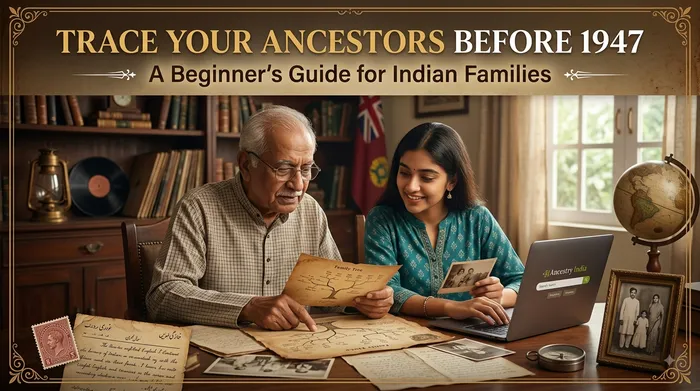
Trace Your Ancestors Before 1947: A Beginner’s Guide for Indian Families
Many Indian families can name parents and grandparents, but details become unclear beyond that. Tracing ancestors who lived before 1947 is challenging because records are scattered, handwritten, and often held in local offices or religious institutions. Yet with a systematic approach, ordinary families can uncover valuable information about their pre-Independence roots.
This beginner’s guide explains the most useful sources available to Indian families today.
Why Pre-1947 Research Matters
The year 1947 marks a major turning point in Indian history. Records created before Independence often use different administrative systems, place names, and languages. Researching this period helps families:
- Recover forgotten names and relationships
- Understand migration within the subcontinent
- Connect personal history with larger historical events
- Preserve information before older relatives are no longer available
Step 1: Start with Oral History Interviews
The most valuable information often comes from living people.
What to ask elders:
- Full names of parents, grandparents, and great-grandparents
- Village, tehsil, district, and former princely state (if any)
- Approximate years of birth, marriage, and death
- Caste, community, gotra, or clan details
- Occupations and land ownership
- Stories of migration, famine, epidemic, or Partition
Tips for better interviews:
- Record audio (with permission)
- Ask the same questions to more than one relative
- Note different versions of the same story
- Collect old photographs and letters while you talk
Write everything down immediately. Oral information becomes the foundation for searching written records.
Step 2: Use Old Voter Lists and Electoral Rolls
Electoral rolls are among the most accessible official sources for the 20th century.
What they can tell you:
- Full name and age (or approximate age)
- Father’s or husband’s name
- Address and village
- Sometimes community details
Where to look:
- State election commission archives
- District collectorate record rooms
- Some older rolls digitised by genealogy or archival websites
- Local libraries and state archives
Pre-Independence and early post-Independence rolls (1950s) can still help you identify people who were adults before 1947. Always note the exact year of the roll you are using.
Step 3: Search Land and Revenue Records
Land records are among the richest sources for Indian family history.
Useful documents include:
- Record of Rights (RoR) / Khatauni / Pahani
- Settlement registers
- Mutation records
- Old jamabandi and khasra papers
- Inam and watan records (in some regions)
What they reveal:
- Names of landholders across generations
- Father-son relationships
- Village of origin
- Changes in ownership over time
Where to find them:
- Tehsil or taluk office
- District record room
- State archives
- Some states now offer online land-record portals (coverage varies)
Land records often go back several generations and can push a family tree well into the 19th century when combined with oral history.
Step 4: Explore Temple and Religious Records
In many communities, temples maintained important family information.
Possible sources:
- Donor inscriptions and engraved plaques
- Temple account books noting gifts and rituals
- Purohit (family priest) registers
- Marriage and thread-ceremony notes kept by traditional priests
- Community or matha records
These sources are especially useful for families with long associations with a particular temple or religious institution. Approach temple authorities politely and explain your genealogical purpose.
Step 5: Check Church and Mission Records (Where Relevant)
Families with Christian ancestry have some of the best-preserved registers in India.
Common records:
- Baptism registers
- Marriage registers
- Burial registers
- Mission school and hospital records
Where to look:
- Local church or diocesan archives
- Older mission societies
- Some state archives that hold missionary collections
These registers frequently list parents’ names, ages, and places of origin, making them excellent for pre-1947 research.
Organising Your Findings
As information grows, keep it structured:
| Generation | Name | Approximate Year | Place | Source | Notes |
|---|---|---|---|---|---|
| Great-grandfather | |||||
| Grandfather | |||||
| Father |
Create both a simple pedigree chart and a timeline. Digital tools make this much easier than paper alone.
Create a Clear Digital Family Tree
Once you have names and relationships, record them in one place so nothing is lost.
You can start a private family tree for free (no sign-up required) at the My rOoOts Create Family Tree page.
Helpful features include:
- Family Tree Generator for quick visual building
- Ancestor Timeline Generator to place people in historical context
- Relationship Calculator for accurate kinship terms
A digital tree also makes it simple to share progress with relatives and invite them to add missing details.
Practical Research Tips
- Work backwards from the known to the unknown
- Verify names across at least two sources when possible
- Learn old place names (many villages and districts were renamed)
- Be prepared for spelling variations in English and regional languages
- Respect privacy and local rules when accessing official or religious records
- Keep a research log of what you searched and what you found
Frequently Asked Questions: Tracing Indian Ancestors Before 1947
How can I trace my Indian ancestors before 1947?
Start with oral history interviews of elders, then search old voter lists, land and revenue records, temple registers, and church records where relevant. Work backwards from known family members and keep detailed notes of every source.
What records are available to find pre-Independence ancestors in India?
Useful sources include electoral rolls, land records (Khatauni, jamabandi, settlement registers), temple donor lists and priest registers, church baptism and marriage registers, and family documents such as old letters or property papers.
Where can I find old land records for family history research in India?
Land records are usually kept at the tehsil/taluk office, district record room, or state archives. Some states provide online access through official land-record portals. These documents often list generations of landholders and their relationships.
Are voter lists useful for tracing ancestors before 1947?
Yes. Early electoral rolls (especially from the 1950s) can identify people who were adults before Independence. They typically show name, age, father’s or husband’s name, and address, helping you confirm identities and locations.
How do temple records help in Indian genealogy?
Many temples maintained donor inscriptions, account books, and ritual registers. Family priests (purohits) sometimes kept private notebooks recording marriages, initiations, and gotra details. These sources can confirm names and community links.
What church records are useful for Indian Christian families?
Baptism, marriage, and burial registers often contain parents’ names, ages, and places of origin. These are usually held at the local church, diocesan archives, or in older missionary collections.
How important are oral history interviews for pre-1947 research?
Oral history is often the most valuable starting point. Elders can provide names, village details, migration stories, and approximate dates that are not written anywhere else. Record interviews carefully and cross-check with multiple relatives.
What should I ask elders when collecting family history?
Ask for full names, approximate birth and death years, village and district of origin, occupations, land ownership, caste or community details, and any stories related to migration, Partition, or local historical events.
How do I organise information while tracing Indian ancestors?
Create a simple table or digital family tree with columns for name, approximate year, place, source, and notes. Update it after every new discovery and keep a research log of places you have searched.
Can I create a digital family tree for my pre-1947 ancestors?
Yes. You can build a private, clear family tree online for free at My rOoOts Create Family Tree. It helps you organise generations, add sources, and share the tree with relatives who may contribute more information.
Why is it difficult to trace Indian ancestors before 1947?
Many records are handwritten, stored locally, written in regional languages or old scripts, and not yet digitised. Place names and administrative boundaries have also changed. Patience and systematic searching are essential.
Should I hire a professional genealogist for pre-Independence research?
For most families, starting independently with oral history and local records is enough. A professional can help later if you encounter language barriers, need archival visits in another state, or want to verify complex information.
Conclusion
Tracing Indian ancestors before 1947 is possible even for beginners. Start with thorough oral history interviews, then move to voter lists, land and revenue records, temple sources, and church registers where relevant. Each source adds a piece of the puzzle.
The families who succeed are those who combine patience, careful note-taking, and systematic organisation. Begin with the living, document everything, and gradually push your tree further into the past. Your ancestors’ names and stories deserve to be remembered.
Editor's picks
14 August 2026
Independence Day Family Tree Project Ideas for Students (2026)
Creative Independence Day family tree project ideas for students in 2026, including chart designs, freedom-fighter examples, printable templates, and free online tools.
9 August 2026
Narendra Modi Family History and Tree: Parents, Siblings, and Ancestral Roots
Explore Narendra Modi’s family history, including his parents Damodardas and Heeraben Modi, siblings, early life in Vadnagar, and a clear look at his family tree and roots.
5 August 2026
Is Indira Gandhi Related to Mahatma Gandhi? A Simple Family Explanation
Is Indira Gandhi related to Mahatma Gandhi? The short answer is no. This simple guide explains the two different families, the shared surname, and how the confusion began.
7 August 2026
The Buddha’s Family Tree and Shakya Clan Origins: A Clear Historical Guide
Explore the Buddha’s family tree and the origins of the Shakya clan. Learn about Kapilavastu, the Ikshvaku link, and the key relatives of Siddhartha Gautama.
8 August 2026
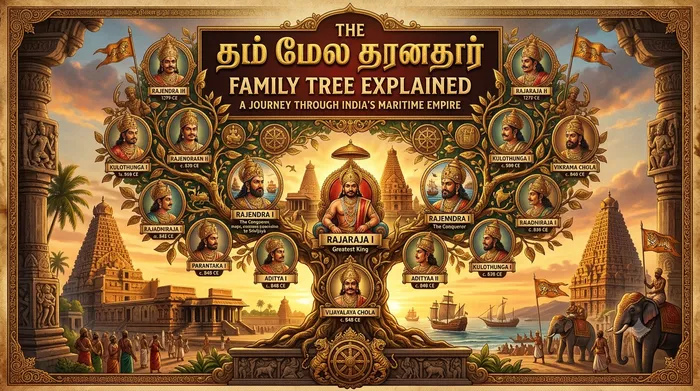
The Chola Dynasty Family Tree Explained
Explore the Chola Dynasty family tree from Vijayalaya to Rajaraja I, Rajendra I, and the later rulers who built one of South India’s greatest empires.
8 August 2026
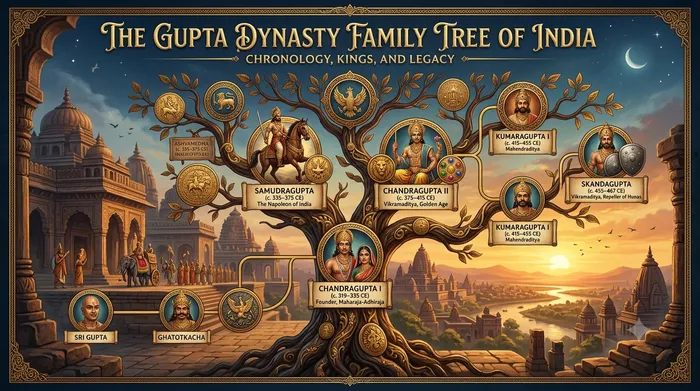
The Gupta Dynasty Family Tree of India
Explore the Gupta Dynasty family tree of India, from Sri Gupta and Chandragupta I to Samudragupta, Chandragupta II Vikramaditya, and the later rulers of India’s Golden Age.
2 August 2026
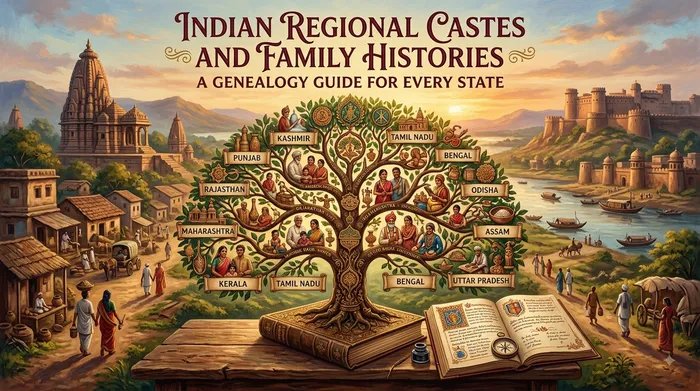
Indian Regional Castes and Family Histories: A Genealogy Guide for Every State
Explore the rich diversity of Indian regional castes, surnames, clans, and family traditions across every state. Learn how communities preserve ancestry records and discover how to build your digital family tree with MyRooots.
29 July 2026
Family Tree vs Genealogy: What’s the Difference?
Many people use the terms “family tree” and “genealogy” interchangeably, but they aren’t exactly the same. Learn the differences and discover how both help preserve your family’s history.
Create Your Family Tree for Free
Start building your family history in minutes with the My rOoOts Free Family Tree Creator. Add parents, grandparents, children, and relatives, organize generations visually, and create a beautiful family tree that you can save and share.
👉 Create your free family tree: Free Family Tree Creator
No design skills required. Simply enter your family details and generate a clear, easy-to-read family tree online for free.
Check Zodiac Compatibility for Any Two People
Curious about how well two people match based on their date of birth? Try the My rOoOts Zodiac Compatibility Tool to compare zodiac signs, explore relationship compatibility, and get a quick compatibility score for couples, friends, or family members.
👉 Check compatibility now: Zodiac Compatibility Calculator
You can enter two dates of birth and even mention the relationship type to get a more personalized compatibility result.
Download a Free Family Tree Template
Want to draw your family tree yourself? The My rOoOts Family Tree Template provides a free printable blank pedigree chart for documenting your family history across multiple generations.
👉 Download a free family tree template: Family Tree Template
Choose a 3-generation, 4-generation, or 5-generation family tree template and save it as a PDF for printing, writing, and documenting your ancestors.
Discover the Meaning and Origin of Your Surname
Ever wondered where your family name came from? Use the My rOoOts Surname Meaning Lookup to explore surname meanings, origins, history, and etymology from different regions and cultures around the world.
👉 Discover your surname meaning: Surname Meaning Lookup
Learn more about your last name and explore the possible linguistic, geographic, cultural, and historical roots behind your family surname.
Start your family tree free
No account needed to begin. Build it in minutes, then save it whenever you're ready.
Build your family tree