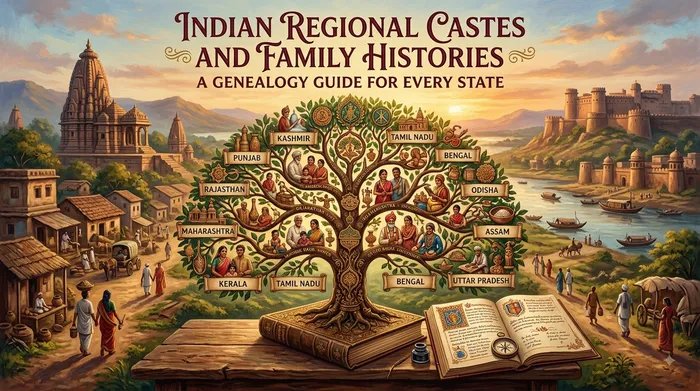
India is home to one of the world's most diverse collections of communities, clans, castes, tribes, and family traditions. From the Rajputs of Rajasthan and Nairs of Kerala to the Ahoms of Assam and Lingayats of Karnataka, every region has developed unique family structures, surnames, and ancestral traditions over centuries.
For anyone building a family tree, understanding regional family histories can provide valuable clues about migration patterns, occupations, surnames, and ancestral origins.
This guide explores major regional communities across India and highlights resources that can help you research your own family history.
Understanding Castes, Communities, and Family History
When researching Indian genealogy, it is important to remember:
- Castes and communities are only one part of family history.
- Surnames often reveal regional origins.
- Families frequently migrated across states and kingdoms.
- Historical occupations influenced community identities.
- Oral family traditions can be as valuable as written records.
Genealogy should focus on documenting ancestors and preserving family stories rather than reinforcing social hierarchies.
North India
Uttar Pradesh
Major historical communities include:
- Brahmins
- Rajputs
- Kayasthas
- Yadavs
- Kurmis
- Jats
Common surnames:
- Sharma
- Mishra
- Tiwari
- Singh
- Verma
- Srivastava
Genealogy clues often come from village records, land records, and family oral histories.
Rajasthan
Major communities:
- Rajputs
- Jats
- Brahmins
- Bishnois
- Meenas
Many Rajput families maintain detailed clan histories and genealogical records through traditional family historians known as Bhat and Charan genealogists.
Common clan names:
- Sisodia
- Rathore
- Chauhan
- Solanki
- Bhati
Punjab
Major communities:
- Jats
- Khatris
- Aroras
- Ramgarhias
Common surnames:
- Singh
- Gill
- Sidhu
- Sandhu
- Bedi
- Kapoor
Sikh family histories often include information preserved in religious institutions and family records.
Haryana
Major communities:
- Jats
- Ahirs
- Brahmins
- Gujjars
Village-level ancestry records often provide valuable family connections.
Western India
Gujarat
Major communities:
- Patels
- Brahmins
- Rajputs
- Lohanas
- Jains
Common surnames:
- Patel
- Shah
- Mehta
- Desai
Many Gujarati families have extensive migration histories across East Africa, the United Kingdom, and North America.
Maharashtra
Major communities:
- Marathas
- Brahmins
- CKP
- Kunbi
Common surnames:
- Deshmukh
- Kulkarni
- Joshi
- Patil
Genealogy research often benefits from old land records and district gazetteers.
Southern India
Tamil Nadu
Major communities:
- Vellalar
- Chettiar
- Brahmins
- Thevar
- Gounder
Unlike many northern regions, traditional surnames are less common, making family records and village histories especially important.
Karnataka
Major communities:
- Lingayats
- Vokkaligas
- Brahmins
- Kodavas
Common family identifiers may include village names and ancestral occupations.
Kerala
Major communities:
- Nairs
- Namboodiris
- Ezhavas
- Syrian Christians
Kerala has some of India's richest family record traditions, including extensive church and temple records.
Andhra Pradesh and Telangana
Major communities:
- Reddy
- Kamma
- Velama
- Kapu
Family histories often include village-level genealogical information.
Eastern India
West Bengal
Major communities:
- Brahmins
- Kayasthas
- Baidyas
Common surnames:
- Banerjee
- Mukherjee
- Chatterjee
- Bose
- Ghosh
Many Bengali families possess rich literary and historical archives.
Odisha
Major communities:
- Khandayat
- Brahmins
- Karanas
Temple records can be valuable sources of family history.
Northeast India
Assam
Major communities:
- Ahoms
- Bodos
- Assamese Brahmins
The Ahom kingdom left behind extensive historical records useful for ancestry research.
Nagaland
Family history is often preserved through tribal and clan traditions rather than written surnames.
Major tribes include:
- Angami
- Ao
- Sema
- Lotha
Mizoram
Mizo genealogy frequently relies on clan history and oral traditions.
Meghalaya
Major communities:
- Khasi
- Garo
- Jaintia
Many Khasi families follow matrilineal ancestry systems, where lineage is traced through the mother's side.
Tribal and Indigenous Family Histories
India is home to hundreds of tribal communities, including:
- Gond
- Santhal
- Bhil
- Munda
- Toda
- Khasi
Many tribal genealogies are preserved through oral storytelling rather than written records.
How Migration Changed Indian Family Histories
Indian family trees are rarely confined to a single state.
Historical migrations include:
- Gujarati traders moving to East Africa
- Punjabis migrating across the world
- Tamil communities settling in Southeast Asia
- Marwari merchants expanding across India
- Bengali families relocating during Partition
Understanding migration patterns can reveal unexpected ancestral connections.
Official Indian Records for Genealogy Research
Unlike some countries, India does not maintain a centralized public genealogy database. However, several official resources can help researchers.
National Archives of India
The National Archives preserves government records, census reports, gazetteers, maps, and historical documents dating back to the colonial period. It is the largest archival repository in South Asia. (National Archives of India)
Useful resource:
Abhilekh Patal Digital Archive
The National Archives operates the Abhilekh Patal portal, which provides access to millions of archival references and digitized historical records. Researchers can search archival collections online. (National Archives of India)
Useful resource:
Census of India Digital Library
Historical census reports contain demographic information, occupations, castes, tribes, languages, and regional population data that can help place ancestors in historical context. (National Archives of India)
Useful resource:
Census Digital Library of India
Civil Registration System
Birth and death certificates can be essential for building modern family trees. India's Civil Registration System provides access to registration services across many states and union territories. (India.gov.in)
Useful resource:
Civil Registration System Information Portal
State Registration and Land Record Portals
Many states provide online access to registration records, property records, and historical land information through the National Generic Document Registration System (NGDRS). These records can help trace ancestral properties and family movements. (NGDRS)
Useful resource:
NGDRS State Registration Portals
Build Your Indian Family Tree
Researching Indian ancestry often requires combining:
- Family stories
- Old photographs
- Birth and death records
- Land records
- Census reports
- Religious records
- Community histories
The more information you collect today, the easier it becomes to preserve your family's heritage for future generations.
Create Your Family Tree
MyRooots Family Tree Generator
Discover Family Connections
MyRooots Relationship Calculator
Visualize Family History Through Time
MyRooots Ancestor Timeline Generator
Final Thoughts
India's family histories are as diverse as its languages, regions, and cultures. Whether your ancestors were Rajputs in Rajasthan, Ahoms in Assam, Nairs in Kerala, Patels in Gujarat, or members of tribal communities preserving oral traditions, every family has a story worth documenting.
Building a family tree is more than recording names. It is about preserving migrations, traditions, occupations, memories, and the journeys that shaped generations of your family.
Editor's picks
14 August 2026
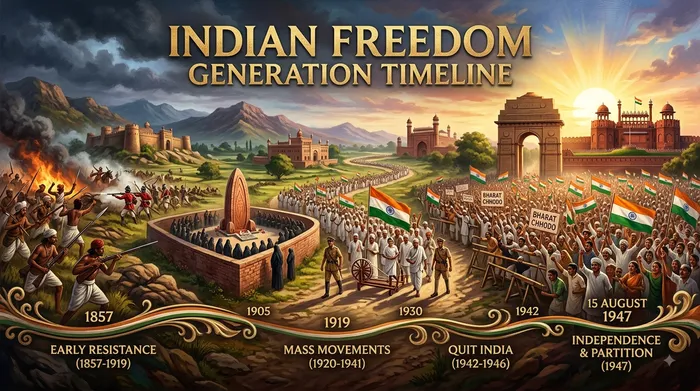
Indian Freedom Generation Timeline: Place Your Ancestors in History
Explore the Indian Freedom Generation Timeline from 1857 to 1947 and learn how to place your grandparents and great-grandparents in the key phases of India’s freedom struggle.
14 August 2026
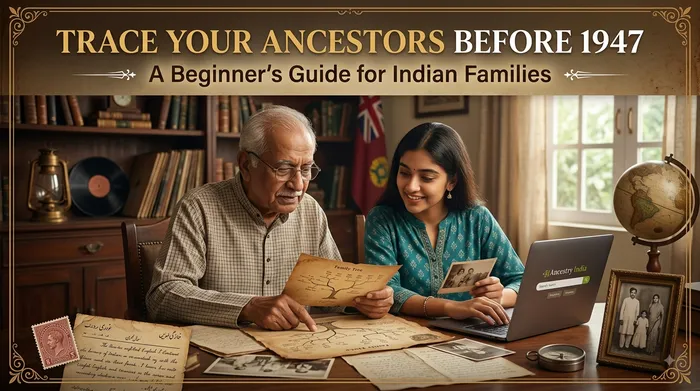
Trace Your Ancestors Before 1947: A Beginner’s Guide for Indian Families
Learn how to trace Indian ancestors before 1947 using voter lists, land records, temple and church registers, and oral history interviews in this practical beginner’s guide.
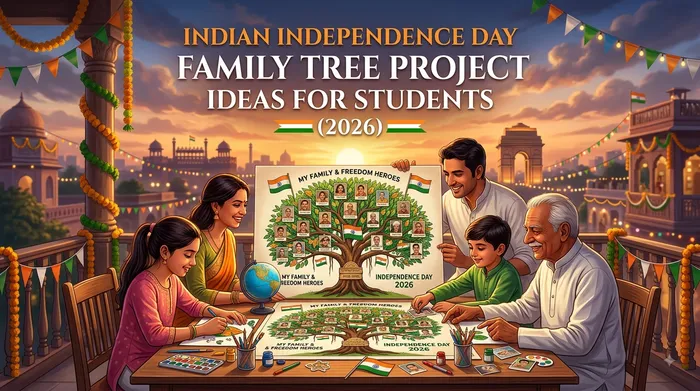
14 August 2026
Independence Day Family Tree Project Ideas for Students (2026)
Creative Independence Day family tree project ideas for students in 2026, including chart designs, freedom-fighter examples, printable templates, and free online tools.
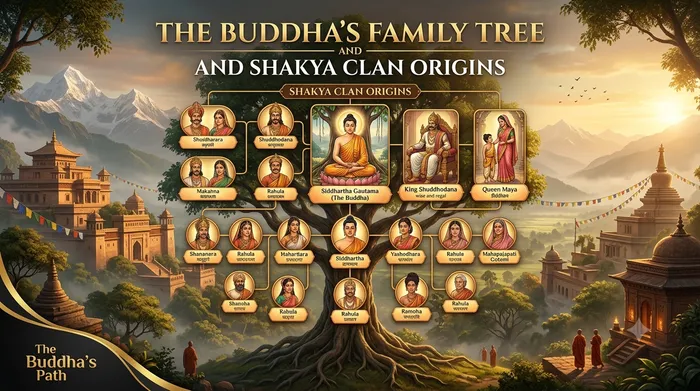
7 August 2026
The Buddha’s Family Tree and Shakya Clan Origins: A Clear Historical Guide
Explore the Buddha’s family tree and the origins of the Shakya clan. Learn about Kapilavastu, the Ikshvaku link, and the key relatives of Siddhartha Gautama.
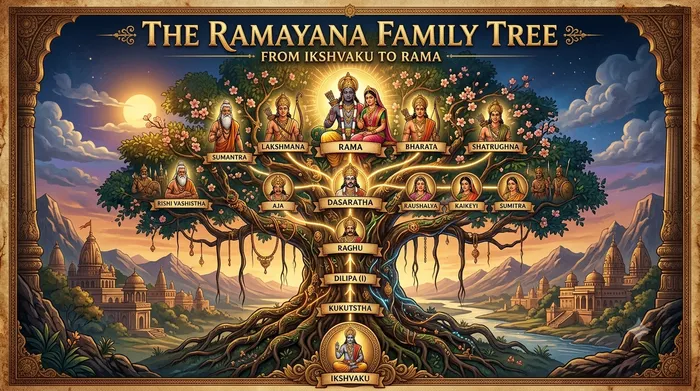
8 August 2026
The Ramayana Family Tree from Ikshvaku to Rama
Explore the Ramayana family tree from Ikshvaku, founder of the Solar Dynasty, through legendary kings to Rama, Lakshmana, Bharata and Shatrughna in a clear simplified guide.
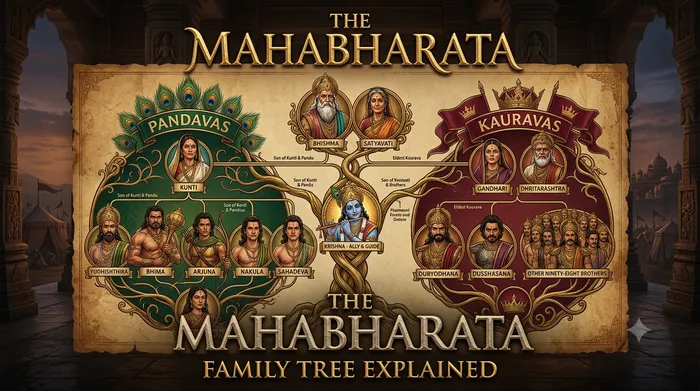
7 August 2026
The Mahabharata Family Tree Explained: Kuru, Pandava and Kaurava Lineage
Understand the Mahabharata family tree in clear steps. Trace the Kuru dynasty from Shantanu to the Pandavas and Kauravas and see how the great war became a family conflict.
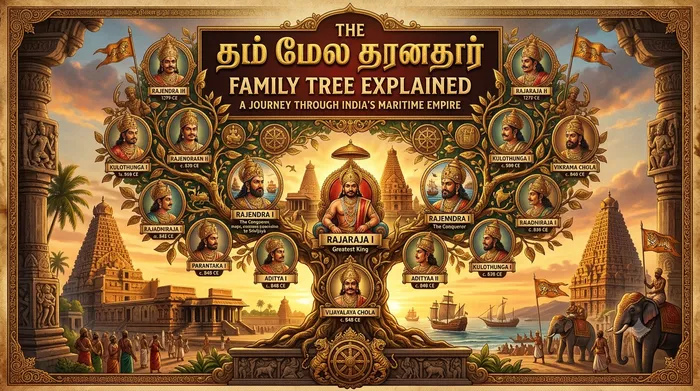
8 August 2026
The Chola Dynasty Family Tree Explained
Explore the Chola Dynasty family tree from Vijayalaya to Rajaraja I, Rajendra I, and the later rulers who built one of South India’s greatest empires.
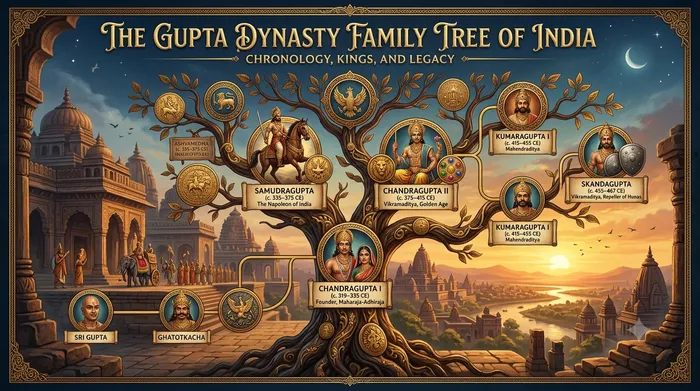
8 August 2026
The Gupta Dynasty Family Tree of India
Explore the Gupta Dynasty family tree of India, from Sri Gupta and Chandragupta I to Samudragupta, Chandragupta II Vikramaditya, and the later rulers of India’s Golden Age.
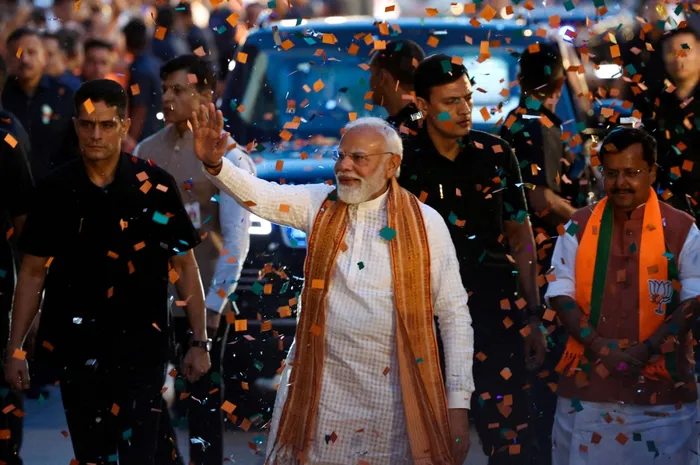
9 August 2026
Narendra Modi Family History and Tree: Parents, Siblings, and Ancestral Roots
Explore Narendra Modi’s family history, including his parents Damodardas and Heeraben Modi, siblings, early life in Vadnagar, and a clear look at his family tree and roots.
4 August 2026
Bhutan’s Top Dynasty: The Wangchuck Dynasty and the Royal Family That Shaped Modern Bhutan
Explore Bhutan’s Wangchuck Dynasty, the royal family that has ruled since 1907, and discover how its kings shaped Bhutan’s culture, democracy, and national identity.
Check Zodiac Compatibility for Any Two People
Curious about how well two people match based on their date of birth? Try the My rOoOts Zodiac Compatibility Tool to compare zodiac signs, explore relationship compatibility, and get a quick compatibility score for couples, friends, or family members.
👉 Check compatibility now: Zodiac Compatibility Calculator
You can enter two dates of birth and even mention the relationship type to get a more personalized compatibility result.
Create Your Family Tree for Free
Start building your family history in minutes with the My rOoOts Free Family Tree Creator. Add parents, grandparents, children, and relatives, organize generations visually, and create a beautiful family tree that you can save and share.
👉 Create your free family tree: Free Family Tree Creator
No design skills required. Simply enter your family details and generate a clear, easy-to-read family tree online for free.
Download a Free Family Tree Template
Want to draw your family tree yourself? The My rOoOts Family Tree Template provides a free printable blank pedigree chart for documenting your family history across multiple generations.
👉 Download a free family tree template: Family Tree Template
Choose a 3-generation, 4-generation, or 5-generation family tree template and save it as a PDF for printing, writing, and documenting your ancestors.
Discover the Meaning and Origin of Your Surname
Ever wondered where your family name came from? Use the My rOoOts Surname Meaning Lookup to explore surname meanings, origins, history, and etymology from different regions and cultures around the world.
👉 Discover your surname meaning: Surname Meaning Lookup
Learn more about your last name and explore the possible linguistic, geographic, cultural, and historical roots behind your family surname.
Start your family tree free
No account needed to begin. Build it in minutes, then save it whenever you're ready.
Build your family tree