Indian Freedom Generation Timeline: Place Your Ancestors in History
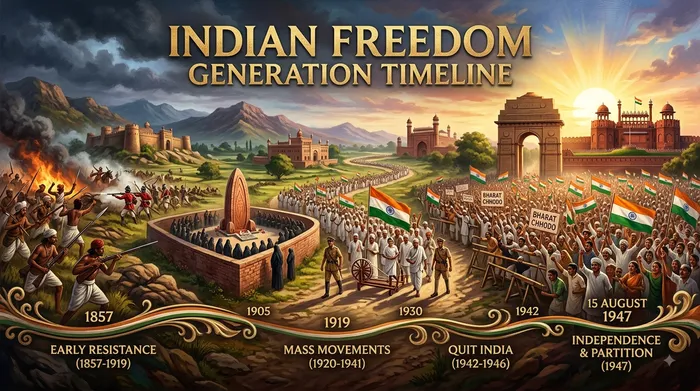
Many Indian families know that their grandparents or great-grandparents lived during the freedom struggle, but they are unsure exactly which phase shaped their lives. An Indian Freedom Generation Timeline helps you map ancestors against the major events of the independence movement. This makes family stories clearer and turns personal history into a meaningful part of national history.
Why a Freedom Generation Timeline Matters
When you know the approximate birth years of your ancestors, you can understand:
- What major events they witnessed
- Whether they were children, young adults, or elders during key movements
- How national events may have affected their village, occupation, or migration
This approach is especially useful for students, family historians, and anyone building a multi-generational family tree.
Major Phases of the Indian Freedom Struggle
| Period | Key Phase | Typical Age of Adults at the Time | What Families Often Remember |
|---|---|---|---|
| 1857–1858 | First War of Independence | 20–50 years | Local revolts, British reprisals |
| 1885–1905 | Early Congress & Moderate Phase | 20–60 years | Political meetings, petitions |
| 1905–1918 | Swadeshi & Revolutionary Activity | 15–45 years | Boycotts, secret groups |
| 1919–1922 | Non-Cooperation Movement | 15–50 years | Hartals, boycott of British goods |
| 1930–1934 | Civil Disobedience & Salt March | 15–50 years | Salt marches, forest satyagrahas |
| 1942–1944 | Quit India Movement | 15–50 years | Mass protests, arrests |
| 1947 | Independence & Partition | All ages | Freedom celebrations, Partition stories |
Generation-by-Generation Timeline
Here is a practical way to place family members on the freedom timeline:
Generation Timeline (Approximate)
• Born 1840–1860 → Witnessed or heard first-hand accounts of 1857
• Born 1870–1890 → Adults during Swadeshi and early nationalist politics
• Born 1890–1910 → Young adults or leaders during Non-Cooperation & Civil Disobedience
• Born 1910–1925 → Active youth during Quit India (1942)
• Born 1925–1940 → Children or teenagers at Independence in 1947
• Born 1940–1950 → Freedom generation children (grew up in free India)
Use the birth years of your grandparents and great-grandparents to see which national events shaped their youth and adulthood.
How to Build Your Own Freedom Generation Timeline
-
Collect approximate birth years
Ask elders for the birth years (or even decade) of parents, grandparents, and great-grandparents. -
Match them to the phases above
Write the major movement next to each ancestor’s name. -
Add personal details
Note if anyone went to jail, joined processions, boycotted foreign cloth, or migrated during Partition. -
Create a visual version
Draw a simple horizontal timeline or use a digital family tree and add historical notes.
Example of a Family Freedom Timeline
Great-Grandfather (born ~1895)
└── Young adult during Non-Cooperation (1920–22)
└── Grandfather (born ~1920)
└── Teenager/young adult during Quit India (1942)
└── Father (born ~1948)
└── Born in free India
Even a short version like this helps younger family members understand how close their elders were to historic events.
Linking the Timeline to Your Family Tree
A freedom generation timeline becomes much more powerful when combined with a proper family tree. You can record:
- Names and approximate years
- Places of residence before and after 1947
- Any known participation in the freedom movement
- Migration caused by Partition or economic change
You can create a clear digital family tree for free at the My rOoOts Create Family Tree page.
Helpful tools:
These tools let you add historical notes alongside personal details so the freedom timeline and family tree stay connected.
Tips for Students and Family Historians
- Focus on decades rather than exact years when exact dates are unknown
- Respect family memories even if they differ slightly from official history
- Cross-check stories with older relatives
- Add both maternal and paternal sides for a fuller picture
- Keep the tone respectful — many families experienced hardship as well as pride
Frequently Asked Questions: Indian Freedom Generation Timeline
What is an Indian Freedom Generation Timeline?
An Indian Freedom Generation Timeline is a simple way to place your parents, grandparents, and great-grandparents against the major phases of India’s freedom struggle (1857–1947). It helps you understand which historic events they witnessed or lived through.
How do I place my ancestors on the freedom struggle timeline?
Collect the approximate birth years of your grandparents and great-grandparents. Then match those years with key periods such as the 1857 Revolt, Non-Cooperation Movement (1919–22), Civil Disobedience (1930–34), Quit India (1942), and Independence in 1947.
Which generation lived through the Quit India Movement?
People born roughly between 1910 and 1925 were generally young adults or active youth during the Quit India Movement of 1942. Those born a little earlier were mature adults, while younger children experienced it indirectly.
How can I find the birth years of my pre-1947 ancestors?
Start with oral history interviews of elders. Support the information with old voter lists, land records, school certificates, pension papers, or family documents that mention age or year of birth.
What is the difference between a family tree and a freedom generation timeline?
A family tree shows names and relationships across generations. A freedom generation timeline adds historical context by showing which national events each generation lived through. Both work best when used together.
Can students use this timeline for Independence Day projects?
Yes. Students can create a simple chart or digital timeline that links their grandparents and great-grandparents to major freedom movement phases. It makes history personal and is suitable for school projects.
What should I do if I only know approximate ages or decades?
Using decades is perfectly acceptable. For example, “born around 1920” is enough to place a person in the Quit India or Independence generation. Exact dates are helpful but not required.
How does Partition fit into the freedom generation timeline?
Independence and Partition both occurred in 1947. Family members who were alive that year may have stories of celebration, migration, loss, or resettlement. These personal accounts are an important part of the timeline.
Where can I record my family’s freedom generation timeline?
You can build a clear digital family tree and add historical notes for free at My rOoOts Create Family Tree. The Ancestor Timeline feature is especially useful for placing generations against historical events.
Why is it important to record these details now?
Many people who lived through the final decades of the freedom struggle are no longer alive, and first-hand memories are fading. Recording names, approximate years, and stories now helps preserve them for future generations.
Conclusion
An Indian Freedom Generation Timeline turns abstract history into personal history. By placing grandparents and great-grandparents against the major phases of the freedom struggle — from 1857 to 1947 — families gain a deeper understanding of the lives that came before them.
Start with the birth years you already know, match them to the key movements, and record everything in a clear family tree. The result is a meaningful project that honours both your ancestors and the larger story of India’s independence.
Editor's picks
14 August 2026
Trace Your Ancestors Before 1947: A Beginner’s Guide for Indian Families
Learn how to trace Indian ancestors before 1947 using voter lists, land records, temple and church registers, and oral history interviews in this practical beginner’s guide.
14 August 2026
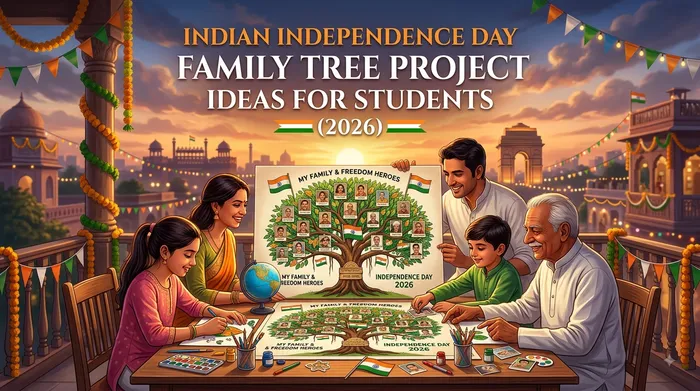
Independence Day Family Tree Project Ideas for Students (2026)
Creative Independence Day family tree project ideas for students in 2026, including chart designs, freedom-fighter examples, printable templates, and free online tools.
9 August 2026
Narendra Modi Family History and Tree: Parents, Siblings, and Ancestral Roots
Explore Narendra Modi’s family history, including his parents Damodardas and Heeraben Modi, siblings, early life in Vadnagar, and a clear look at his family tree and roots.
7 August 2026
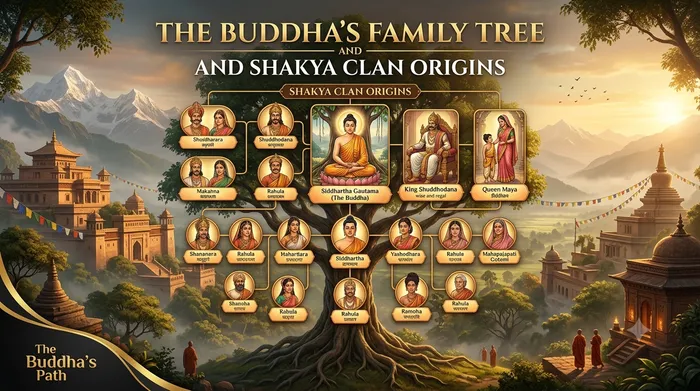
The Buddha’s Family Tree and Shakya Clan Origins: A Clear Historical Guide
Explore the Buddha’s family tree and the origins of the Shakya clan. Learn about Kapilavastu, the Ikshvaku link, and the key relatives of Siddhartha Gautama.
5 August 2026
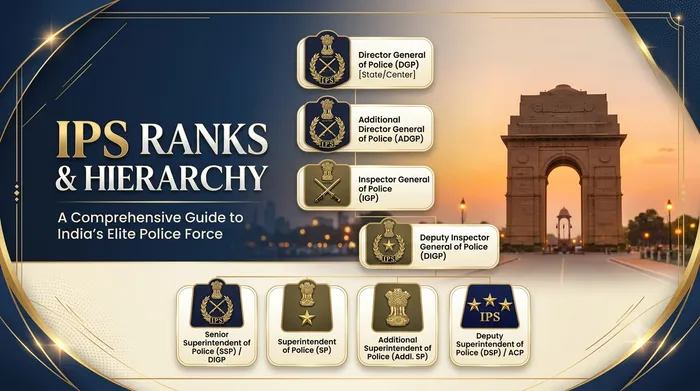
IPS Rank Structure Explained: Complete Hierarchy from ASP to DGP
A clear explanation of the IPS rank structure from Assistant Superintendent of Police to Director General of Police, including hierarchy, promotions, state vs central postings, and career progression.
1 August 2026
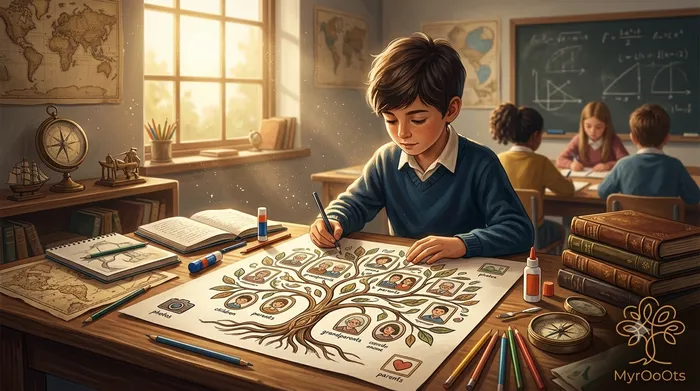
School Project Family Tree Template: Free Ideas, Examples & Easy Guide for Students
Looking for a school project family tree template? Discover easy family tree ideas, examples, layouts, and tips for creating an impressive family tree project for school.
5 August 2026
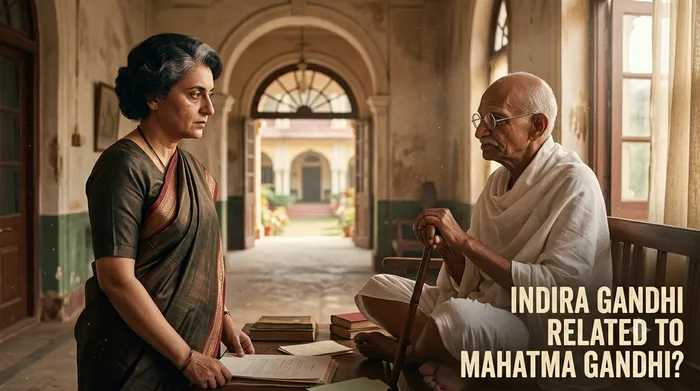
Is Indira Gandhi Related to Mahatma Gandhi? A Simple Family Explanation
Is Indira Gandhi related to Mahatma Gandhi? The short answer is no. This simple guide explains the two different families, the shared surname, and how the confusion began.
29 July 2026
Family Tree vs Genealogy: What’s the Difference?
Many people use the terms “family tree” and “genealogy” interchangeably, but they aren’t exactly the same. Learn the differences and discover how both help preserve your family’s history.
Create Your Family Tree for Free
Start building your family history in minutes with the My rOoOts Free Family Tree Creator. Add parents, grandparents, children, and relatives, organize generations visually, and create a beautiful family tree that you can save and share.
👉 Create your free family tree: Free Family Tree Creator
No design skills required. Simply enter your family details and generate a clear, easy-to-read family tree online for free.
Check Zodiac Compatibility for Any Two People
Curious about how well two people match based on their date of birth? Try the My rOoOts Zodiac Compatibility Tool to compare zodiac signs, explore relationship compatibility, and get a quick compatibility score for couples, friends, or family members.
👉 Check compatibility now: Zodiac Compatibility Calculator
You can enter two dates of birth and even mention the relationship type to get a more personalized compatibility result.
Download a Free Family Tree Template
Want to draw your family tree yourself? The My rOoOts Family Tree Template provides a free printable blank pedigree chart for documenting your family history across multiple generations.
👉 Download a free family tree template: Family Tree Template
Choose a 3-generation, 4-generation, or 5-generation family tree template and save it as a PDF for printing, writing, and documenting your ancestors.
Discover the Meaning and Origin of Your Surname
Ever wondered where your family name came from? Use the My rOoOts Surname Meaning Lookup to explore surname meanings, origins, history, and etymology from different regions and cultures around the world.
👉 Discover your surname meaning: Surname Meaning Lookup
Learn more about your last name and explore the possible linguistic, geographic, cultural, and historical roots behind your family surname.
Start your family tree free
No account needed to begin. Build it in minutes, then save it whenever you're ready.
Build your family tree