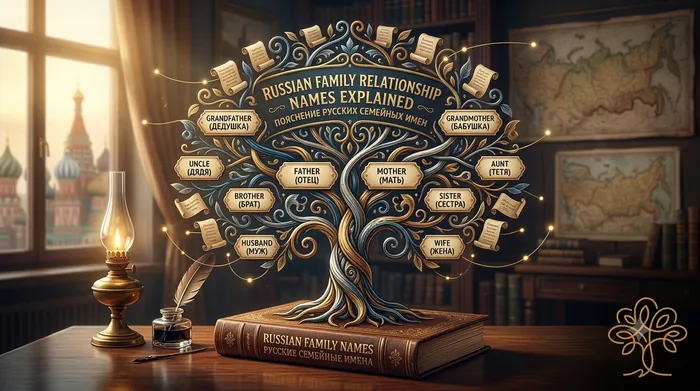
Russian kinship vocabulary is unusually precise about one thing English glosses over entirely: which side of the family a relative belongs to. Where English happily uses "mother-in-law" for either your husband's mother or your wife's mother, Russian has completely different words for each. If you're building out a Russian branch of your family tree, that precision is worth understanding before you start labeling relatives.
This guide covers the core Russian family relationship names - parents, siblings, grandparents, and the in-law terms that make Russian kinship vocabulary stand out.
Immediate Family
- Father: otets (отец), often called papa (папа) informally
- Mother: mat (мать), often called mama (мама) informally
- Son: syn (сын)
- Daughter: doch (дочь)
- Husband: muzh (муж)
- Wife: zhena (жена)
- Brother: brat (брат)
- Sister: sestra (сестра)
Unlike Japanese or Vietnamese, Russian sibling terms don't encode birth order - brat and sestra work regardless of whether the sibling is older or younger. If you need to specify, you add starshiy (старший, older) or mladshiy (младший, younger) as a modifier.
Grandparents and Extended Family
| Relationship | Russian | Transliteration |
|---|---|---|
| Grandfather | дедушка | dedushka |
| Grandmother | бабушка | babushka |
| Uncle | дядя | dyadya |
| Aunt | тётя | tyotya |
| Cousin (male) | двоюродный брат | dvoyurodnyi brat |
| Cousin (female) | двоюродная сестра | dvoyurodnaya sestra |
| Nephew | племянник | plemyannik |
| Niece | племянница | plemyannitsa |
Like Japanese, Russian doesn't split uncle/aunt terms by which parent's side they're on - dyadya and tyotya cover both. Cousins are built compositionally: dvoyurodnyi brat literally means something like "twice-removed brother," and the same pattern extends further out to dvoyurodnyi dyadya (a cousin of your parent, roughly a first cousin once removed) if you need to go further up the tree.
Where It Gets Interesting: In-Laws
This is the part that surprises most English speakers learning Russian family vocabulary. Russian doesn't have one word for "mother-in-law" - it has two, depending on whether you're the husband or the wife:
- Svekrov (свекровь): husband's mother, used by the wife
- Tyoshcha (тёща): wife's mother, used by the husband
- Svyokor (свёкор): husband's father, used by the wife
- Test (тесть): wife's father, used by the husband
The same split continues for siblings-in-law:
- Zolovka (золовка): husband's sister
- Shurin (шурин): wife's brother
- Svояченица (свояченица): wife's sister
- Dever (деверь): husband's brother
Historically, this precision reflects a family structure where a new wife moved into her husband's household and needed clear, distinct words to navigate a whole new set of relatives she hadn't grown up around - the vocabulary itself is a small artifact of how Russian extended families used to live together.
A Quick Comparison
| English (ambiguous) | Russian (specific) |
|---|---|
| Mother-in-law | svekrov (his mother) or tyoshcha (her mother) |
| Father-in-law | svyokor (his father) or test (her father) |
| Brother-in-law | dever (his brother) or shurin (her brother) |
| Sister-in-law | zolovka (his sister) or svoyachenitsa (her sister) |
Building a Russian Branch of Your Family Tree
A few practical notes if you're adding Russian relatives to a family tree:
- Record which spouse each in-law term is relative to - "tyoshcha" only makes sense once you know whose mother-in-law she is, so keep that context attached to the label, not just the word itself.
- Don't assume dyadya or tyotya tells you which side of the family someone is from - you'll need a separate note, since Russian doesn't distinguish maternal from paternal the way the in-law terms do.
- If older relatives used patronymics (a middle name derived from the father's first name), record those too - they're a genuinely useful genealogical clue for identifying which generation someone belonged to.
My rOoOts lets you attach relationship labels directly to each person in your tree, which is especially handy for a system like Russian's where the same English word ("mother-in-law," "brother-in-law") maps to two different, non-interchangeable Russian words.
Frequently Asked Questions
Why does Russian have different words for mother-in-law depending on which side of the family?
The distinction comes from a family structure where a wife traditionally joined her husband's household. She needed a specific word for his mother (svekrov) that was distinct from the word a husband used for his own wife's mother (tyoshcha), since the two relationships carried different social expectations.
Does Russian distinguish older and younger siblings the way some Asian languages do?
Not by default - brat and sestra work for any sibling. If you want to specify birth order, you add starshiy (older) or mladshiy (younger) before the word, but it's optional rather than built into a separate term.
Is there one word for "cousin" in Russian?
Russian specifies gender: dvoyurodnyi brat for a male cousin and dvoyurodnaya sestra for a female cousin. There's no single gender-neutral word the way English has "cousin."
What does "dvoyurodnyi" actually mean?
It roughly translates to "second-degree" or "twice-removed," and it's the building block Russian uses to describe more distant relatives - a first cousin once removed, for example, extends the same pattern one generation further.
Do modern Russian families still use all these in-law terms in everyday speech?
Yes, though usage varies by region and generation - many younger Russian speakers use them less formally or substitute first names, but the words themselves remain standard and are still the correct terms for a family tree or formal document.
Editor's picks
20 August 2026
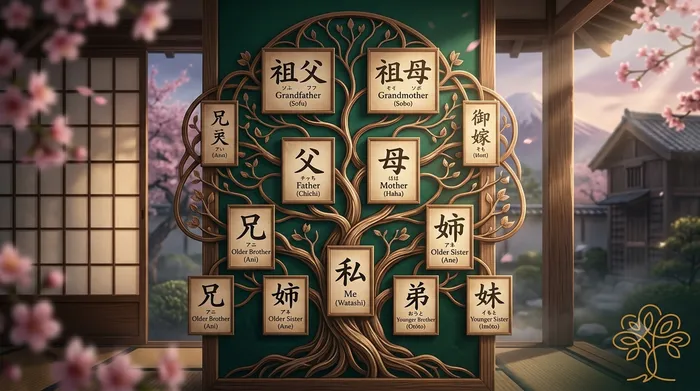
Japanese Family Relationship Names Explained (English to Japanese Guide)
A clear English-to-Japanese guide to family relationship names, including the age-ranked sibling terms and the own-family-vs-other-family rule that trips up most learners.
17 August 2026
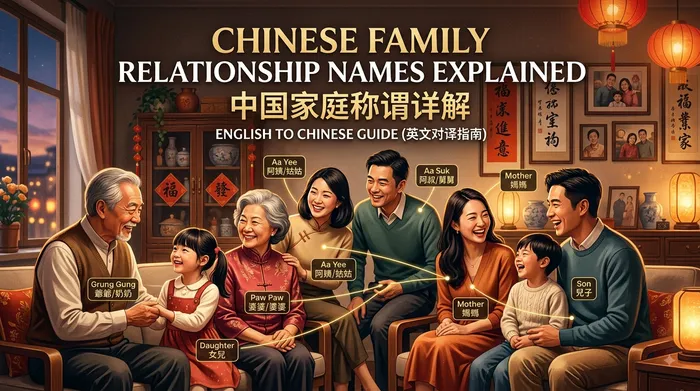
Chinese Family Relationship Names Explained (English to Chinese Guide)
A clear guide to Chinese family relationship names in Mandarin, covering grandparents, aunts, uncles, and cousins on both the paternal and maternal sides.
9 August 2026
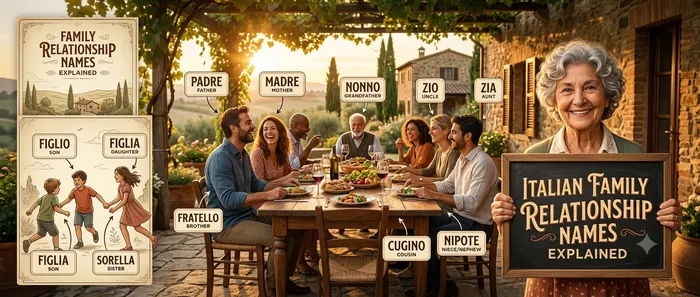
Italian Family Relationship Names Explained
A complete English-to-Italian guide to family relationship names, covering parents, siblings, grandparents, cousins, in-laws, step-family and more with clear tables.
9 August 2026
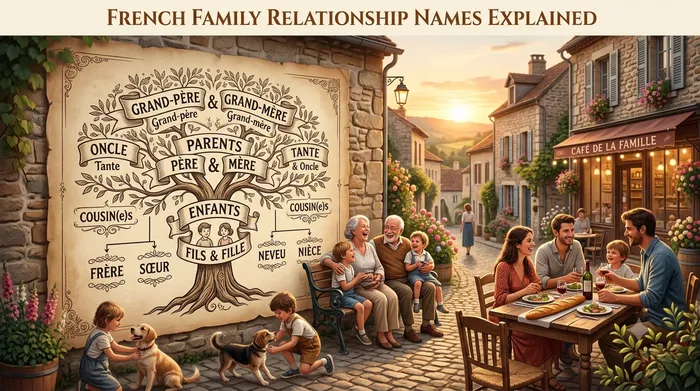
French Family Relationship Names Explained (English to French Guide)
A complete English-to-French guide to family relationship names, covering parents, siblings, grandparents, in-laws, cousins, step-family, and more with clear tables and examples.
19 August 2026
Marathi Family Relationship Names Explained (English to Marathi Guide)
A complete English-to-Marathi guide to family relationship names, from parents and grandparents to in-laws and cousins, rooted in Maharashtra's family traditions.
19 August 2026
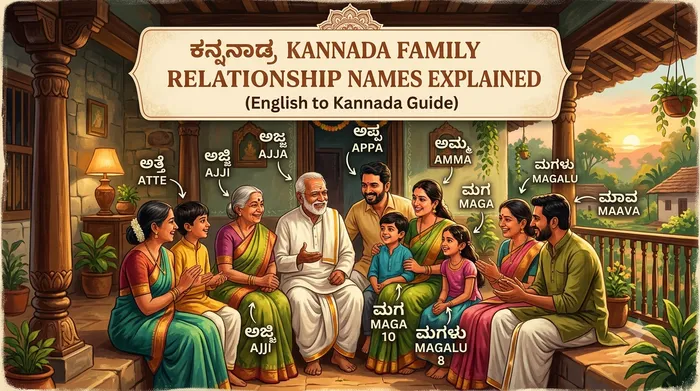
Kannada Family Relationship Names Explained (English to Kannada Guide)
A clear English-to-Kannada guide to family relationship names, covering parents, grandparents, uncles, aunts, in-laws and cousins in Karnataka's family tradition.
Create Your Family Tree for Free
Start building your family history in minutes with the My rOoOts Free Family Tree Creator. Add parents, grandparents, children, and relatives, organize generations visually, and create a beautiful family tree that you can save and share.
👉 Create your free family tree: Free Family Tree Creator
No design skills required. Simply enter your family details and generate a clear, easy-to-read family tree online for free.
Check Zodiac Compatibility for Any Two People
Curious about how well two people match based on their date of birth? Try the My rOoOts Zodiac Compatibility Tool to compare zodiac signs, explore relationship compatibility, and get a quick compatibility score for couples, friends, or family members.
👉 Check compatibility now: Zodiac Compatibility Calculator
You can enter two dates of birth and even mention the relationship type to get a more personalized compatibility result.
Download a Free Family Tree Template
Want to draw your family tree yourself? The My rOoOts Family Tree Template provides a free printable blank pedigree chart for documenting your family history across multiple generations.
👉 Download a free family tree template: Family Tree Template
Choose a 3-generation, 4-generation, or 5-generation family tree template and save it as a PDF for printing, writing, and documenting your ancestors.
Discover the Meaning and Origin of Your Surname
Ever wondered where your family name came from? Use the My rOoOts Surname Meaning Lookup to explore surname meanings, origins, history, and etymology from different regions and cultures around the world.
👉 Discover your surname meaning: Surname Meaning Lookup
Learn more about your last name and explore the possible linguistic, geographic, cultural, and historical roots behind your family surname.
Start your family tree free
No account needed to begin. Build it in minutes, then save it whenever you're ready.
Build your family tree