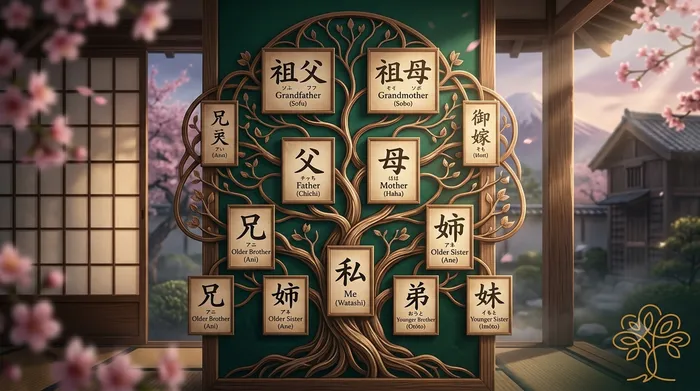
If you've ever tried to translate a family tree into Japanese, you've probably noticed something odd: there's no single word for "brother" or "grandmother." Japanese kinship terms are built around two things English speakers aren't used to thinking about - relative age and whose family you're talking about. Once you understand those two rules, the whole system clicks into place.
This guide walks through the core Japanese family relationship names, why there are often two versions of the same word, and how to use them correctly when you're labeling a family tree or just trying to talk about your relatives.
The Big Rule: Your Family vs. Someone Else's Family
Japanese has a built-in politeness system, and it applies directly to family words. You use one set of terms when talking about your own family (humble, plain form) and a different, more respectful set when talking about someone else's family - or when addressing your own relatives directly.
For example, you'd never call your own mother "okaasan" when describing her to a stranger in the humble register - you'd say "haha." But you'd call her "okaasan" to her face, and you'd always use "okaasan" for someone else's mother.
| Relationship | Your family (plain) | Addressing them / someone else's family |
|---|---|---|
| Father | chichi | otousan |
| Mother | haha | okaasan |
| Grandfather | sofu | ojiisan |
| Grandmother | sobo | obaasan |
| Husband | otto / shujin | goshujin |
| Wife | tsuma / kanai | okusan |
| Son | musuko | musukosan |
| Daughter | musume | musumesan |
This distinction matters most in formal or written contexts - in casual daily conversation, most families simply use "otousan" and "okaasan" for their own parents too.
Siblings: Age Comes First
Unlike English, Japanese has no neutral word for "brother" or "sister." You always specify whether the sibling is older or younger than you:
- Ani - older brother (own family) / oniisan - older brother, respectful
- Otouto - younger brother
- Ane - older sister (own family) / oneesan - older sister, respectful
- Imouto - younger sister
There's no separate respectful form for a younger sibling - "otouto" and "imouto" work in both contexts, since younger siblings aren't addressed with the same honorific weight as older ones. This age-first structure is a legacy of a family system that historically treated birth order as socially significant, and it still shapes how Japanese families talk about each other today.
Grandparents, Aunts, Uncles and Cousins
- Grandfather: sofu (own) / ojiisan (respectful)
- Grandmother: sobo (own) / obaasan (respectful)
- Uncle: oji (covers both father's and mother's brothers, and aunts' husbands)
- Aunt: oba (covers both father's and mother's sisters, and uncles' wives)
- Cousin: itoko - one word regardless of age or side of the family
- Nephew: oi
- Niece: mei
Notice that Japanese doesn't distinguish paternal from maternal uncles and aunts the way some languages do - "oji" and "oba" cover the whole extended family on both sides.
In-Laws
In-law terms are built by adding context rather than inventing new words in most cases:
- Mother-in-law / Father-in-law: giri no okaasan / giri no otousan ("giri no" means "by law" or "in-law"), though many families simply use okaasan/otousan directly once they're close
- Brother-in-law: giri no ani/otouto, depending on age relative to the speaker
- Sister-in-law: giri no ane/imouto
Building a Japanese Branch of Your Family Tree
If you're documenting a Japanese side of your family history, a few practical tips:
- Record both the plain and respectful forms if you're labeling the tree for a Japanese-speaking relative - it shows care and avoids sounding overly formal or overly casual in the wrong context.
- Note birth order explicitly for siblings, since the Japanese terms themselves already encode it - your tree will be more accurate if you capture who was older.
- Keep uncle/aunt relationships tied to which parent's side they're on in your notes, even though Japanese doesn't require it - future generations researching the tree in English will want that clarity.
A tool like My rOoOts lets you attach these relationship labels directly to each person in your tree, so you're not relying on memory to keep the Japanese and English terms straight as the tree grows.
Frequently Asked Questions
Why does Japanese have separate words for older and younger siblings?
Japanese family structure has historically placed weight on birth order, particularly for inheritance and social roles within the household. That emphasis is baked directly into the vocabulary - there's simply no age-neutral word for "brother" or "sister" the way English has one.
What's the difference between chichi and otousan?
Both mean "father," but chichi is the humble form used when talking about your own father to someone outside the family, while otousan is the respectful form used to address your father directly or to refer to someone else's father.
Do Japanese people actually use two different words for their own parents in daily life?
In casual, everyday speech, most people call their own parents otousan and okaasan even at home. The plain forms (chichi, haha) mostly appear in more formal writing, business contexts, or when specifically distinguishing your family from someone else's.
Is there a single Japanese word for "cousin"?
Yes - itoko covers all cousins regardless of age, gender, or which side of the family they're on, which is simpler than the sibling and aunt/uncle system.
How do I say "in-laws" in Japanese?
Add "giri no" (meaning "by law") before the relevant family term, such as giri no okaasan for mother-in-law. In everyday speech, many families drop "giri no" once the relationship feels established and just use the direct family term.
Editor's picks
17 August 2026
Chinese Family Relationship Names Explained (English to Chinese Guide)
A clear guide to Chinese family relationship names in Mandarin, covering grandparents, aunts, uncles, and cousins on both the paternal and maternal sides.
9 August 2026
Italian Family Relationship Names Explained
A complete English-to-Italian guide to family relationship names, covering parents, siblings, grandparents, cousins, in-laws, step-family and more with clear tables.
9 August 2026
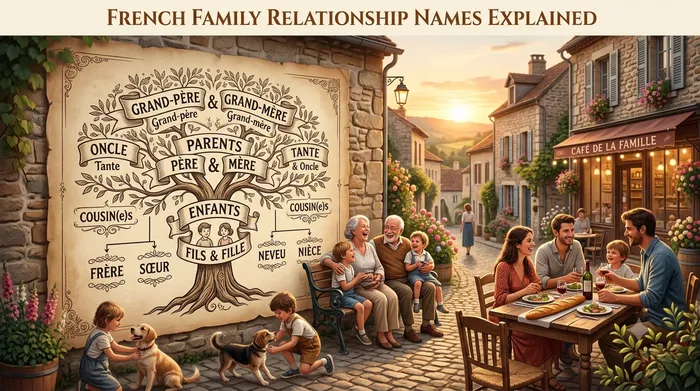
French Family Relationship Names Explained (English to French Guide)
A complete English-to-French guide to family relationship names, covering parents, siblings, grandparents, in-laws, cousins, step-family, and more with clear tables and examples.
19 August 2026
Marathi Family Relationship Names Explained (English to Marathi Guide)
A complete English-to-Marathi guide to family relationship names, from parents and grandparents to in-laws and cousins, rooted in Maharashtra's family traditions.
19 August 2026
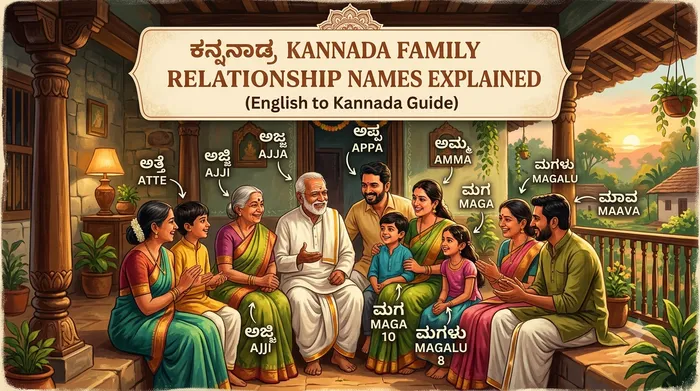
Kannada Family Relationship Names Explained (English to Kannada Guide)
A clear English-to-Kannada guide to family relationship names, covering parents, grandparents, uncles, aunts, in-laws and cousins in Karnataka's family tradition.

18 August 2026
Gujarati Family Relationship Names Explained (English to Gujarati Guide)
A clear English-to-Gujarati guide to family relationship names, from kaka and foi to sasu and nanand, with tables you can actually use.
Create Your Family Tree for Free
Start building your family history in minutes with the My rOoOts Free Family Tree Creator. Add parents, grandparents, children, and relatives, organize generations visually, and create a beautiful family tree that you can save and share.
👉 Create your free family tree: Free Family Tree Creator
No design skills required. Simply enter your family details and generate a clear, easy-to-read family tree online for free.
Check Zodiac Compatibility for Any Two People
Curious about how well two people match based on their date of birth? Try the My rOoOts Zodiac Compatibility Tool to compare zodiac signs, explore relationship compatibility, and get a quick compatibility score for couples, friends, or family members.
👉 Check compatibility now: Zodiac Compatibility Calculator
You can enter two dates of birth and even mention the relationship type to get a more personalized compatibility result.
Download a Free Family Tree Template
Want to draw your family tree yourself? The My rOoOts Family Tree Template provides a free printable blank pedigree chart for documenting your family history across multiple generations.
👉 Download a free family tree template: Family Tree Template
Choose a 3-generation, 4-generation, or 5-generation family tree template and save it as a PDF for printing, writing, and documenting your ancestors.
Discover the Meaning and Origin of Your Surname
Ever wondered where your family name came from? Use the My rOoOts Surname Meaning Lookup to explore surname meanings, origins, history, and etymology from different regions and cultures around the world.
👉 Discover your surname meaning: Surname Meaning Lookup
Learn more about your last name and explore the possible linguistic, geographic, cultural, and historical roots behind your family surname.
Start your family tree free
No account needed to begin. Build it in minutes, then save it whenever you're ready.
Build your family tree