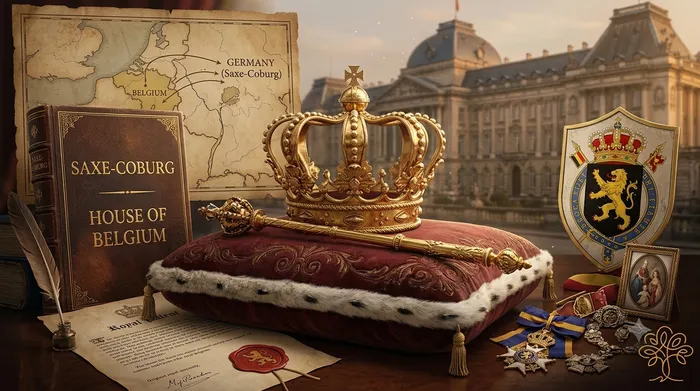
Belgium is one of Europe's newer monarchies, but it's also one of the continent's steadiest. When Belgium broke away from the Netherlands in 1830, its founders didn't have a home-grown royal bloodline to fall back on. Instead, a young National Congress went looking for a king, and the man they picked, a German prince named Leopold of Saxe-Coburg-Saalfeld, became the root of a family tree that still occupies the throne today.
If you've hit a Belgian ancestor in your own genealogy research, or you're just curious how a minor German prince ended up founding a Belgian dynasty, here's the lineage laid out clearly.
A Throne Built From Scratch in 1831
Belgium's independence in 1830 left it with a constitution, a parliament, and no monarch. The National Congress considered several European princes before settling on Leopold, who had already turned down the throne of Greece the year before. He was well connected (his niece was the future Queen Victoria of the United Kingdom) and politically neutral enough for the great powers of the day to accept. He was sworn in as Leopold I, King of the Belgians, on 21 July 1831, a date still celebrated as Belgium's national day.
The Line of Belgian Monarchs
- Leopold I (r. 1831-1865) - founder of the dynasty, uncle to Queen Victoria
- Leopold II (r. 1865-1909) - his son, remembered for Belgium's brutal colonial rule of the Congo Free State
- Albert I (r. 1909-1934) - Leopold II's nephew (Leopold II outlived his own sons), known as the "Soldier King" for leading Belgian forces in WWI
- Leopold III (r. 1934-1951) - Albert's son, whose conduct during WWII triggered a national crisis that forced his abdication
- Baudouin (r. 1951-1993) - reigned for 42 years, the longest of any 20th-century Belgian king, but had no children
- Albert II (r. 1993-2013) - Baudouin's younger brother, inherited the throne unexpectedly and later abdicated in his own right
- Philippe (r. 2013-present) - Albert II's son, Belgium's current king
Leopold I (r. 1831-1865)
└── Leopold II (r. 1865-1909)
    (no surviving son; crown passes to nephew)
    └── Albert I (r. 1909-1934)
        └── Leopold III (r. 1934-1951)
            ├── Baudouin (r. 1951-1993, no children)
            └── Albert II (r. 1993-2013)
                └── Philippe (r. 2013-present)
                    └── Princess Elisabeth, Duchess of Brabant (heir apparent)
Why "Saxe-Coburg" Became "Belgium"
Leopold I's birth house was Saxe-Coburg-Saalfeld, part of the same wider Wettin family that supplied Britain's royals before they renamed themselves Windsor. Belgium followed a similar path: during the anti-German feeling of the First World War, King Albert I dropped the German house name and adopted "van België" (Dutch) and "de Belgique" (French), simply "of Belgium." It's a small but telling detail for anyone tracing European royal genealogy: house names on a family tree often say more about politics at the time than about actual ancestry.
Titles and Quirks Worth Knowing
A few features of the Belgian royal family tree trip up researchers who are used to other European monarchies:
- The monarch is styled King (or Queen) of the Belgians, not "of Belgium" - a deliberate constitutional choice meaning sovereignty rests with the people, not the land.
- The heir apparent holds the title Duke or Duchess of Brabant, similar to how Britain's heir is Prince or Princess of Wales.
- Belgium changed its succession law in 1991 to remove male preference, which is why Princess Elisabeth, King Philippe's eldest child, stands first in line ahead of her younger brothers.
- Because Belgium is constitutionally divided between Dutch-speaking Flanders and French-speaking Wallonia, most royals are referred to by both a Dutch and a French version of their name in official records.
| Monarch | Reign | Relationship to Predecessor |
|---|---|---|
| Leopold I | 1831-1865 | Founder |
| Leopold II | 1865-1909 | Son |
| Albert I | 1909-1934 | Nephew |
| Leopold III | 1934-1951 | Son |
| Baudouin | 1951-1993 | Son |
| Albert II | 1993-2013 | Brother |
| Philippe | 2013-present | Son |
What This Means If You're Researching Belgian Ancestry
You don't need a royal connection to benefit from understanding this history. Belgium's civil registration system dates back to the French administration of the 1790s, decades before Leopold I's coronation, so most Belgian family lines can be documented well past the founding of the kingdom itself. If your own tree includes Belgian ancestors, cross-referencing the reign your relatives lived through can help you place migration, military service, or occupation records in context, much the same way tracking a lineage against a dynasty's timeline helps clarify any family tree.
Frequently Asked Questions
Who is the current King of Belgium?
King Philippe has reigned since 2013, when his father, Albert II, abdicated. Philippe is married to Queen Mathilde, and their eldest child, Princess Elisabeth, is next in line to the throne as Duchess of Brabant.
Why is the king called "King of the Belgians" instead of "King of Belgium"?
The title reflects Belgium's founding constitutional principle that sovereignty belongs to the Belgian people rather than to the monarch or the territory itself, a distinction written into the constitution when the kingdom was created in 1831.
Is the Belgian royal family related to the British royal family?
Yes. Leopold I was the uncle of Queen Victoria, and he helped arrange her marriage to his own nephew, Prince Albert of Saxe-Coburg and Gotha. The two royal houses share the same original German family, though Britain's became the House of Windsor in 1917 and Belgium's became simply "Belgium" around the same era.
Why did Leopold III abdicate?
Leopold III's actions during the German occupation of Belgium in WWII, including his decision to stay in the country rather than form a government in exile, split public opinion so badly that a 1950 referendum and continued unrest led him to abdicate in favor of his son Baudouin in 1951.
Who comes after King Philippe?
Princess Elisabeth, Duchess of Brabant, born in 2001, is the heir apparent and will become Belgium's first reigning queen if she succeeds her father.
Editor's picks
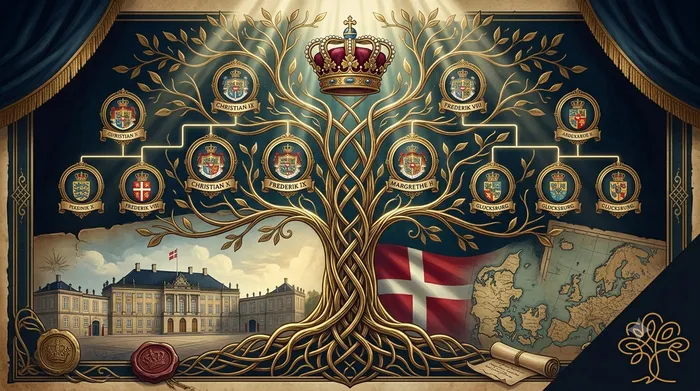
20 August 2026
The Danish Royal Family Tree: The House of Glucksburg Explained
How Denmark's House of Glucksburg became Europe's oldest continuous monarchy, and how it quietly supplied royal houses to Greece, Norway, and the UK.
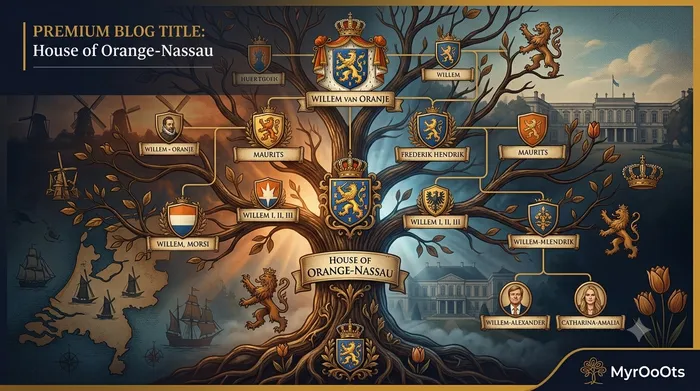
20 August 2026
The Dutch Royal Family Tree: The House of Orange-Nassau Explained
How a 16th-century rebel prince became the namesake of the Netherlands' royal house, and how the House of Orange-Nassau's lineage leads to King Willem-Alexander today.
6 August 2026
The British Royal Family Tree Explained Simply
A simple guide to the British Royal Family tree, from Queen Elizabeth II to King Charles III, the Prince of Wales, and the next generation of working royals.
19 August 2026
The Grimaldi Family Tree: Monaco's Royal Dynasty Explained
From a disguised monk who seized a fortress in 1297 to Grace Kelly's grandchildren today, the Grimaldi family tree traces the longest-ruling dynasty in Europe. Here's how it all connects.
18 August 2026
The Tudor Family Tree: From Henry VII to Elizabeth I Explained
From Henry VII's rise at Bosworth Field to Elizabeth I's childless death, trace how one Welsh family became England's most famous royal dynasty.
8 August 2026
The Chola Dynasty Family Tree Explained
Explore the Chola Dynasty family tree from Vijayalaya to Rajaraja I, Rajendra I, and the later rulers who built one of South India’s greatest empires.
Create Your Family Tree for Free
Start building your family history in minutes with the My rOoOts Free Family Tree Creator. Add parents, grandparents, children, and relatives, organize generations visually, and create a beautiful family tree that you can save and share.
👉 Create your free family tree: Free Family Tree Creator
No design skills required. Simply enter your family details and generate a clear, easy-to-read family tree online for free.
Check Zodiac Compatibility for Any Two People
Curious about how well two people match based on their date of birth? Try the My rOoOts Zodiac Compatibility Tool to compare zodiac signs, explore relationship compatibility, and get a quick compatibility score for couples, friends, or family members.
👉 Check compatibility now: Zodiac Compatibility Calculator
You can enter two dates of birth and even mention the relationship type to get a more personalized compatibility result.
Download a Free Family Tree Template
Want to draw your family tree yourself? The My rOoOts Family Tree Template provides a free printable blank pedigree chart for documenting your family history across multiple generations.
👉 Download a free family tree template: Family Tree Template
Choose a 3-generation, 4-generation, or 5-generation family tree template and save it as a PDF for printing, writing, and documenting your ancestors.
Discover the Meaning and Origin of Your Surname
Ever wondered where your family name came from? Use the My rOoOts Surname Meaning Lookup to explore surname meanings, origins, history, and etymology from different regions and cultures around the world.
👉 Discover your surname meaning: Surname Meaning Lookup
Learn more about your last name and explore the possible linguistic, geographic, cultural, and historical roots behind your family surname.
Start your family tree free
No account needed to begin. Build it in minutes, then save it whenever you're ready.
Build your family tree