U.S. Police Ranks Explained: From Officer to Chief
Understanding police ranks helps make sense of law enforcement structure, news reports, and family stories of service. In the United States, ranks are not completely uniform. They vary by city, county, state, and agency size. Still, most municipal police departments follow a recognizable pattern that runs from entry-level Officer to Chief of Police.
This guide explains the common ranks, what each level typically does, and how the hierarchy usually works.
The Basic Rank Structure
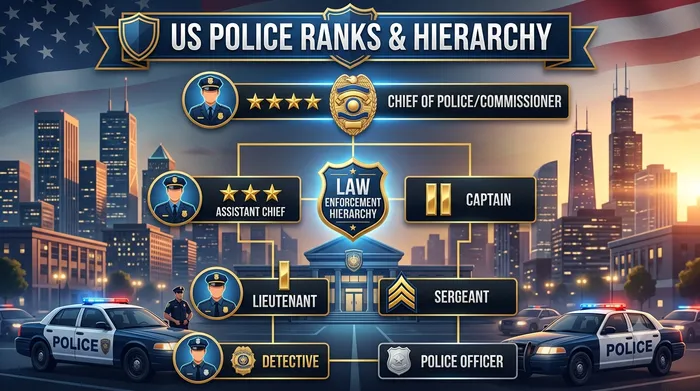
In many mid-to-large city police departments the progression looks like this:
Police Officer
├── Corporal (in some departments)
├── Sergeant
├── Lieutenant
├── Captain
├── Commander / Major (larger agencies)
├── Deputy Chief / Assistant Chief
└── Chief of Police
Smaller departments may skip some titles or combine responsibilities. Sheriff’s offices and state police use related but sometimes different names.
Rank-by-Rank Overview
| Rank | Typical Role | Common Responsibilities | Notes |
|---|---|---|---|
| Police Officer | Front-line patrol and response | Calls for service, traffic, investigations support | Entry level after academy |
| Corporal | Senior officer or first-line supervisor | Mentoring, limited supervision | Not used in every department |
| Sergeant | First-line supervisor | Squad leadership, field decisions, reports | Most common first promotional rank |
| Lieutenant | Shift or unit commander | Oversees sergeants, planning, administrative work | Mid-level management |
| Captain | Division or precinct commander | Major unit leadership, budget input, policy | Senior operational rank |
| Commander / Major | Bureau or large division leadership | High-level oversight in bigger agencies | Title varies by department |
| Deputy / Assistant Chief | Second-in-command or major bureau head | Department-wide support to the Chief | Executive level |
| Chief of Police | Department head | Overall leadership, policy, community & city relations | Appointed or selected by city leadership |
What Each Level Usually Means
Police Officer
This is the foundational rank. Officers respond to calls, conduct patrols, write reports, make arrests, and form the public face of the department. After the academy and field training, most careers begin here.
Sergeant
Sergeants are the first true supervisory rank in most agencies. They lead a squad or team, review reports, provide guidance on the street, and handle initial personnel issues. Many officers consider the move to Sergeant the biggest change in daily work.
Lieutenant
Lieutenants typically manage a shift, a specialized unit, or a section of a precinct. The role becomes more administrative while still requiring operational knowledge. They often serve as the link between sergeants and higher command.
Captain
Captains usually command a precinct, division, or major function such as patrol, investigations, or support services. They handle broader planning, resource allocation, and accountability for results.
Higher Command and Chief
Above Captain, ranks become more executive. Deputy Chiefs or Assistant Chiefs oversee large parts of the organization. The Chief of Police carries final responsibility for the department’s direction, culture, budget advocacy, and relationship with city government and the community.
Variations Across Agencies
Not every agency uses the same ladder.
| Agency Type | Common Differences |
|---|---|
| Large city police | Full rank structure; may include Major or Commander |
| Small town / rural | Fewer ranks; Chief may supervise officers directly |
| Sheriff’s Office | Deputy Sheriff → Sergeant → Lieutenant → Captain → Undersheriff → Sheriff |
| State Police / Highway Patrol | Trooper → Sergeant → Lieutenant → Captain → Major → Colonel or Superintendent |
| Specialized units | Detectives or investigators may hold parallel ranks or titles |
Federal agencies (FBI, DEA, etc.) use completely different systems and are outside the scope of local and state police ranks.
How Promotion Works
Promotion is rarely automatic. Most departments use a combination of:
- Written examinations
- Oral interviews or assessment centers
- Performance evaluations
- Time-in-rank requirements
- Sometimes educational credentials or specialized training
Senior ranks, especially Chief, are often appointed by the mayor, city manager, or police commission rather than filled solely by internal examination.
Insignia and Recognition
Rank is usually shown by badges, collar insignia, and sleeve stripes or bars:
- Officers typically wear a basic badge and nameplate
- Sergeants often display three chevrons
- Lieutenants and above use bars, oak leaves, or eagles similar to military-style insignia (exact designs vary)
Uniform appearance helps both the public and fellow officers quickly identify authority levels.
Police Families and Service Histories
Law enforcement is frequently a multi-generational calling. Many families have fathers, mothers, siblings, or children who have served at different ranks across decades. These careers produce rich stories of service, sacrifice, and community involvement that are worth preserving.
A clear digital family tree can hold ranks held, departments served, years of service, and personal accounts alongside traditional family information. You can start building such a record for free, with no sign-up required, at the My rOoOts create-tree page.
The family tree generator makes it easy to begin with known names and relationships. An ancestor timeline generator helps place career milestones against family events. When relatives from different branches contribute, a relationship calculator can clarify kinship terms across generations.
Why Rank Structure Matters
Understanding ranks helps in several practical ways:
- Interpreting news and official statements
- Knowing whom to contact for different issues
- Appreciating the experience required at each level
- Documenting family service accurately
The structure also reflects the balance between street-level response and organizational leadership that every police agency must maintain.
Conclusion
U.S. police ranks typically progress from Police Officer through Sergeant, Lieutenant, and Captain to the executive levels of Deputy Chief and Chief of Police. While exact titles and requirements differ by department size and type, the overall pattern of increasing responsibility remains consistent.
For those whose families include officers and command staff, recording ranks, service dates, and stories creates a lasting personal and historical record. Combining that information with a well-organized digital family tree ensures that both professional achievements and family connections remain clear for future generations.
Editor's picks

19 August 2026
Indian Army Ranks Explained: Complete Hierarchy from Sepoy to General
A clear guide to Indian Army rank structure, from Sepoy through Havildar and the officer ranks up to General, for anyone researching a family member's military service.
29 July 2026
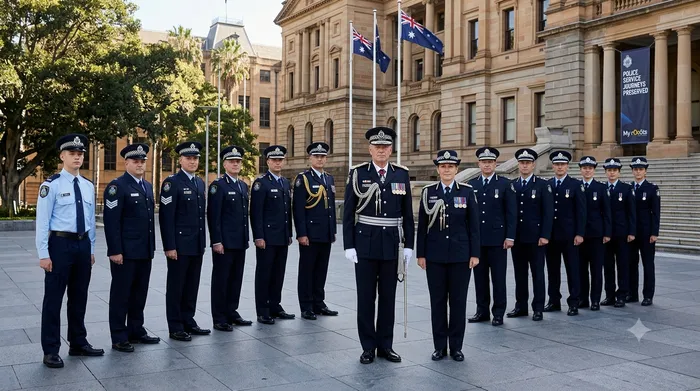
Police Officer Ranks Explained: Understanding the Hierarchy and Family Legacy of Law Enforcement Careers
Explore the hierarchy of police officer ranks, from constable to senior leadership roles, and learn how My rOoOts helps families preserve the service journeys, achievements, and stories of law enforcement members.
5 August 2026
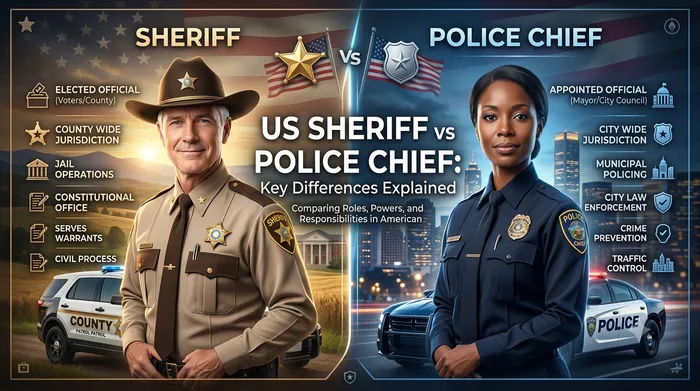
Sheriff vs Police Chief: Who Has More Authority?
Sheriff vs Police Chief - who holds more authority? Learn the key differences in jurisdiction, appointment, powers, and real-world influence across U.S. law enforcement.
Create Your Family Tree for Free
Start building your family history in minutes with the My rOoOts Free Family Tree Creator. Add parents, grandparents, children, and relatives, organize generations visually, and create a beautiful family tree that you can save and share.
👉 Create your free family tree: Free Family Tree Creator
No design skills required. Simply enter your family details and generate a clear, easy-to-read family tree online for free.
Check Zodiac Compatibility for Any Two People
Curious about how well two people match based on their date of birth? Try the My rOoOts Zodiac Compatibility Tool to compare zodiac signs, explore relationship compatibility, and get a quick compatibility score for couples, friends, or family members.
👉 Check compatibility now: Zodiac Compatibility Calculator
You can enter two dates of birth and even mention the relationship type to get a more personalized compatibility result.
Download a Free Family Tree Template
Want to draw your family tree yourself? The My rOoOts Family Tree Template provides a free printable blank pedigree chart for documenting your family history across multiple generations.
👉 Download a free family tree template: Family Tree Template
Choose a 3-generation, 4-generation, or 5-generation family tree template and save it as a PDF for printing, writing, and documenting your ancestors.
Discover the Meaning and Origin of Your Surname
Ever wondered where your family name came from? Use the My rOoOts Surname Meaning Lookup to explore surname meanings, origins, history, and etymology from different regions and cultures around the world.
👉 Discover your surname meaning: Surname Meaning Lookup
Learn more about your last name and explore the possible linguistic, geographic, cultural, and historical roots behind your family surname.
Start your family tree free
No account needed to begin. Build it in minutes, then save it whenever you're ready.
Build your family tree