Police Officer Ranks Explained: Understanding the Hierarchy and Family Legacy of Law Enforcement Careers
Every profession has its own journey of growth, responsibility, and achievement.
For police officers, that journey is often represented through a structured hierarchy of ranks. Each rank represents years of dedication, experience, leadership, and service to the community.
For many families, having a police officer among their ancestors is a source of pride. Their service stories, awards, postings, and experiences become an important part of family history.
A family tree can preserve not only relationships but also the professional journeys that shaped generations.
Understanding Police Officer Hierarchy
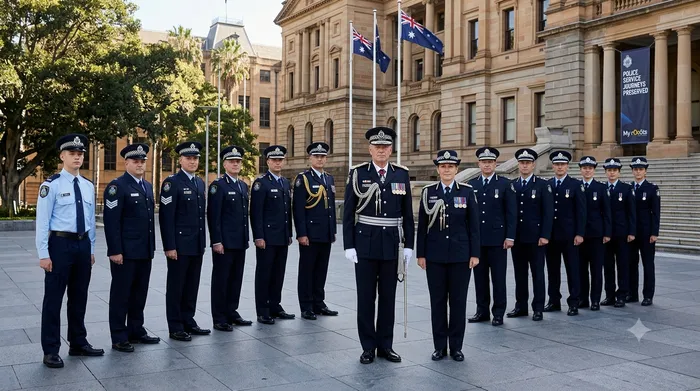
Police ranks can vary between countries and departments, but most law enforcement organizations follow a structured progression.
A typical hierarchy may include:
Entry-Level Police Ranks
Constable / Police Officer
This is usually the starting position for many police careers.
Responsibilities may include:
- Patrolling areas
- Responding to public complaints
- Maintaining law and order
- Assisting investigations
- Supporting senior officers
Many officers begin their careers at this level and gradually progress through experience and examinations.
Junior Leadership Ranks
Head Constable / Senior Police Officer
This rank usually represents an experienced officer who takes additional responsibilities.
They may:
- Guide junior officers
- Manage small teams
- Support investigations
- Handle administrative duties
Supervisory Ranks
Assistant Sub-Inspector (ASI)
An ASI generally works as a bridge between field officers and higher-ranking officials.
Responsibilities may include:
- Supervising police activities
- Managing records
- Assisting investigations
- Coordinating teams
Sub-Inspector (SI)
The Sub-Inspector is often one of the most recognized operational leadership roles.
They may:
- Lead investigations
- Manage police stations or teams
- Register cases
- Supervise constables and junior officers
Senior Operational Ranks
Inspector
An Inspector typically manages larger responsibilities and may oversee:
- Police stations
- Investigation teams
- Multiple officers
- Complex cases
Their role requires strong leadership and decision-making skills.
Senior Police Leadership Roles
Deputy Superintendent of Police (DSP) / Assistant Commissioner of Police (ACP)
These roles involve managing larger areas and multiple teams.
Responsibilities may include:
- Supervising several police units
- Reviewing major investigations
- Managing law enforcement operations
Superintendent of Police (SP)
An SP often leads police administration for a district or major area.
They are responsible for:
- Overall policing strategy
- Officer management
- Public safety operations
Higher Command Positions
Deputy Inspector General (DIG)
Inspector General (IG)
Director General of Police (DGP)
These are senior leadership positions responsible for strategic planning, administration, and statewide or large-scale policing operations.
Officers at these levels often influence policies and reforms that impact generations of police personnel.
Why Police Service Stories Matter in Family History
A police career is more than a job title.
Behind every rank is a story:
- Training experiences
- Challenging assignments
- Important cases
- Transfers and postings
- Awards and achievements
- Sacrifices made for public service
These stories help younger generations understand the dedication behind their family’s history.
Add Professional Journeys to Your Family Tree
Traditional family trees usually focus on names, relationships, and dates.
But every person has a bigger story.
For a police officer in your family, you can preserve:
- Rank progression
- Years of service
- Departments worked with
- Important achievements
- Photos in uniform
- Service memories
This creates a complete picture of the person behind the family connection.
How My rOoOts Helps Preserve Service Histories
My rOoOts helps families build richer family histories by connecting people, memories, and life journeys in one place.
Families can use it to preserve:
- Police service records
- Career milestones
- Family photographs
- Personal stories
- Generational achievements
Whether your family member was a constable beginning their career or a senior officer leading teams, every journey deserves to be remembered.
Create your free family tree with My rOoOts:
https://myrooots.app/create-tree
Preserve the Legacy of Those Who Served
Police officers dedicate years of their lives to protecting communities.
Recording their journeys ensures that future generations know more than just their names: they understand their commitment, courage, and contribution.
A family tree is not only about where we come from. It is also about remembering the lives and achievements that shaped our family story.
Find Any Family Relationship Instantly
Not sure how someone is related to you? Use the MyRooots Relationship Calculator to instantly identify relationships such as cousin, aunt, uncle, nephew, niece, in-laws, and many more. It is a quick and easy tool for understanding complex family connections.
👉 MyRooots Relationship Calculator
Create a Beautiful Family Tree Online
Turn your family information into a clear and organized family tree within minutes. The MyRooots Family Tree Generator helps you add relatives, connect generations, and create a shareable family tree that can grow over time.
👉 MyRooots Family Tree Generator
Visualize Your Family History Through Time
See your ancestors in chronological order with the My rOoOts Ancestor Timeline Generator. It creates a visual timeline of births, marriages, deaths, and important life events, making it easier to understand your family's history across generations.
Check Zodiac Compatibility for Any Two People
Curious about how well two people match based on their date of birth? Try the My rOoOts Zodiac Compatibility Tool to compare zodiac signs, explore relationship compatibility, and get a quick compatibility score for couples, friends, or family members.
👉 Check compatibility now: Zodiac Compatibility Calculator
You can enter two dates of birth and even mention the relationship type to get a more personalized compatibility result.
Create Your Family Tree for Free
Start building your family history in minutes with the My rOoOts Free Family Tree Creator. Add parents, grandparents, children, and relatives, organize generations visually, and create a beautiful family tree that you can save and share.
👉 Create your free family tree: Free Family Tree Creator
No design skills required. Simply enter your family details and generate a clear, easy-to-read family tree online for free.
Download a Free Family Tree Template
Want to draw your family tree yourself? The My rOoOts Family Tree Template provides a free printable blank pedigree chart for documenting your family history across multiple generations.
👉 Download a free family tree template: Family Tree Template
Choose a 3-generation, 4-generation, or 5-generation family tree template and save it as a PDF for printing, writing, and documenting your ancestors.
Discover the Meaning and Origin of Your Surname
Ever wondered where your family name came from? Use the My rOoOts Surname Meaning Lookup to explore surname meanings, origins, history, and etymology from different regions and cultures around the world.
👉 Discover your surname meaning: Surname Meaning Lookup
Learn more about your last name and explore the possible linguistic, geographic, cultural, and historical roots behind your family surname.
Start your family tree free
No account needed to begin. Build it in minutes, then save it whenever you're ready.
Build your family tree