"Once removed" trips people up. "Twice removed" trips them up twice as much. If you've traced your family tree far enough to find a cousin from a different generation than you, this guide breaks down exactly what "second cousin twice removed" means, how to work it out for anyone in your own tree, and how it differs from a second cousin once removed.
The Two Numbers That Matter
Every extended-cousin relationship is really answering two separate questions:
- The cousin number (first, second, third...) tells you how many generations back you have to go to find the shared ancestor. A second cousin means you share a great-grandparent, not a grandparent.
- The "removed" number tells you how many generations apart you and that cousin are from each other, regardless of the shared ancestor.
A second cousin twice removed means: you share a great-grandparent with this person, but there are two generations of difference between you - they might be your parent's second cousin, or your own second cousin's grandchild.
Working It Out With a Chart
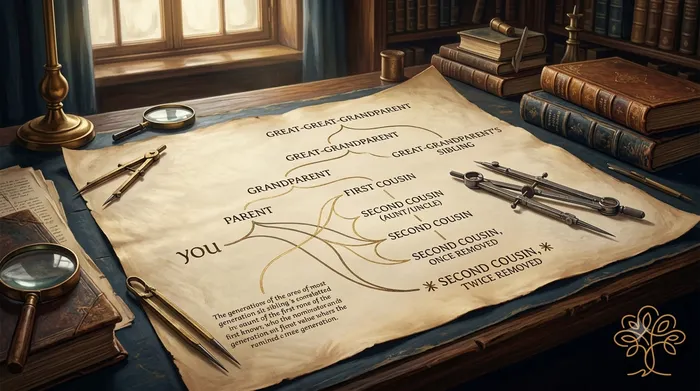
Shared Great-Great-Grandparent
├── Great-Grandparent A --> Grandparent --> Parent --> You
└── Great-Grandparent B --> Grandparent --> Parent --> Second Cousin
                                                          └── Child --> Second cousin once removed (from you)
                                                              └── Grandchild --> Second cousin twice removed (from you)
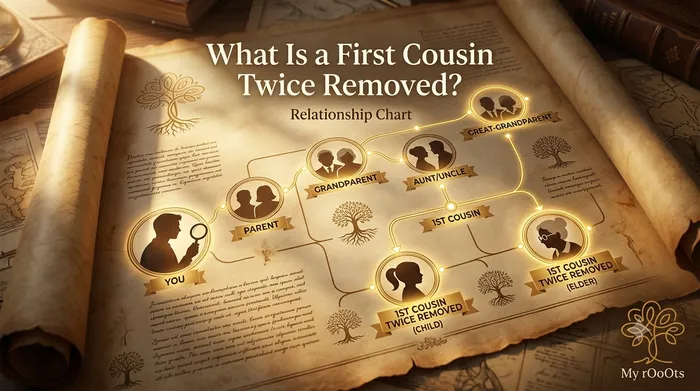
Reading it plainly: your second cousin is the person in your own generation who shares a great-grandparent with you. Their child is your second cousin once removed. Their grandchild - two generations down from your second cousin - is your second cousin twice removed.
A Simple Relationship Table
| Relationship to you | Generation gap from your second cousin | "Removed" count |
|---|---|---|
| Second cousin | Same generation as you | Not removed |
| Second cousin once removed | One generation different (parent's cousin, or cousin's child) | Once removed |
| Second cousin twice removed | Two generations different (grandparent's cousin, or cousin's grandchild) | Twice removed |
| Second cousin three times removed | Three generations different | Three times removed |
It Works in Both Directions
A second cousin twice removed can be either older or younger than you - the term only describes the generational gap, not which direction it runs. That means both of these people are equally your second cousin twice removed:
- Your grandparent's second cousin (two generations older than you)
- Your second cousin's grandchild (two generations younger than you)
This is the part people find most counterintuitive: "removed" never tells you who's older, only how far apart your generations are.
Why This Comes Up So Often in Family Tree Research
Second cousins, and their "removed" variants, show up constantly once you're building out a family tree past three or four generations, because they're the most common relationship connecting two branches of a family that split off from a shared pair of great-grandparents. If you're comparing a DNA match, reading an old family letter, or just trying to place a distant relative you met at a reunion, working out whether someone is a second cousin once removed or twice removed usually comes down to counting generations from the nearest shared ancestor on both sides, then comparing the two counts.
A Faster Way to Check
Doing this math by hand for every distant relative gets tedious fast, especially once a family tree has several branches with different generation gaps. Building the relationship out in a family tree tool that calculates these connections automatically - rather than counting on your fingers each time - is usually the quickest way to get a reliable answer, especially for relationships further out than second cousin.
Frequently Asked Questions
What's the difference between a second cousin once removed and twice removed?
The "removed" number tracks how many generations separate you from that cousin. Once removed means a one-generation gap (like your parent's second cousin); twice removed means a two-generation gap (like your grandparent's second cousin, or your second cousin's grandchild).
Can a second cousin twice removed be younger than me?
Yes. The term only describes the generational distance from your shared great-grandparent, not age or direction, so a second cousin twice removed can be either much older or much younger than you.
Do second cousins twice removed share DNA?
They can, though the expected shared DNA is small and can sometimes be undetectable, since the relationship is quite distant. DNA testing services typically list this kind of relationship as a "distant cousin" rather than naming the exact degree.
How do I find my second cousins twice removed on a family tree?
Start from your great-grandparents, trace all their descendants down two generations further than your own generation (or two generations back past your own second cousins), and any match on that branch is a second cousin twice removed.
Is "twice removed" the same as "second removed"?
Yes, they mean the same thing. "Twice removed" is simply the more common way English speakers phrase a two-generation gap, the same way "once removed" is preferred over "one time removed."
Editor's picks
17 August 2026
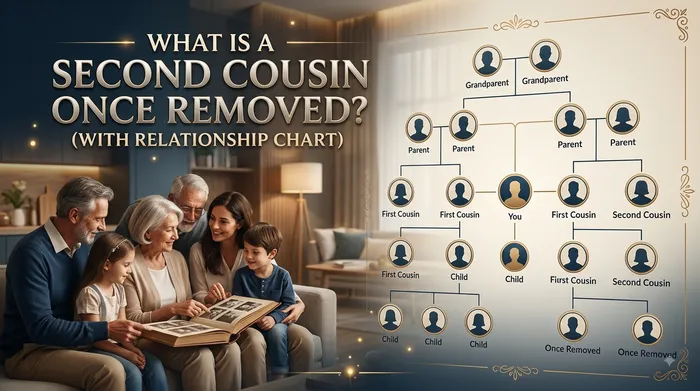
What Is a Second Cousin Once Removed? (With Relationship Chart)
A plain-language explanation of what "second cousin once removed" actually means, with a relationship chart you can use for any cousin connection.
9 August 2026
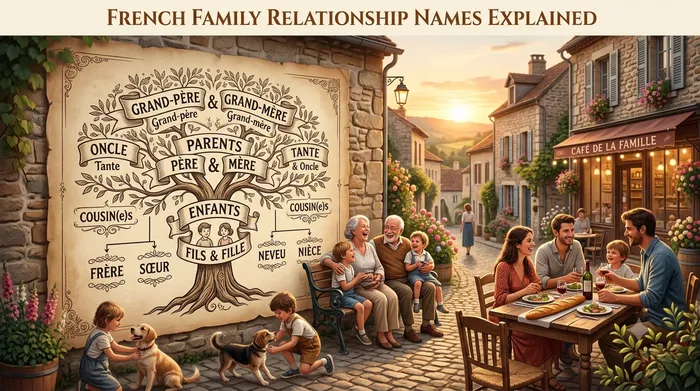
French Family Relationship Names Explained (English to French Guide)
A complete English-to-French guide to family relationship names, covering parents, siblings, grandparents, in-laws, cousins, step-family, and more with clear tables and examples.
9 August 2026
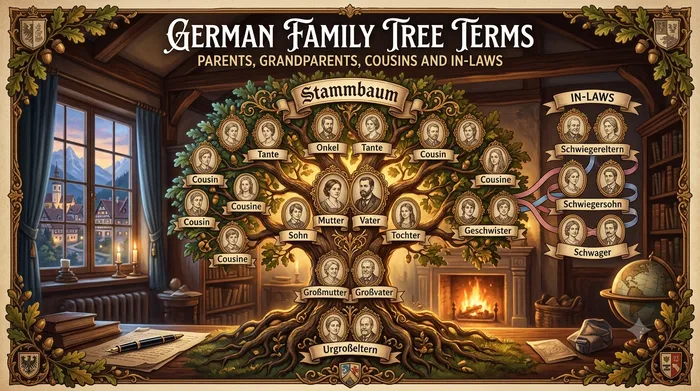
German Family Tree Terms: Parents, Grandparents, Cousins and In-Laws
A clear English-to-German guide to family tree terms, including parents, grandparents, siblings, cousins, uncles, aunts, in-laws, and step-relations with easy tables.
9 August 2026
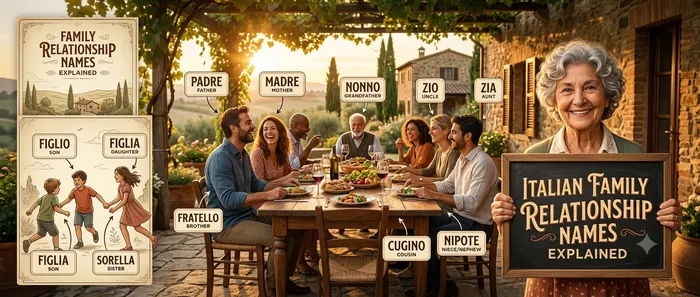
Italian Family Relationship Names Explained
A complete English-to-Italian guide to family relationship names, covering parents, siblings, grandparents, cousins, in-laws, step-family and more with clear tables.
23 August 2026
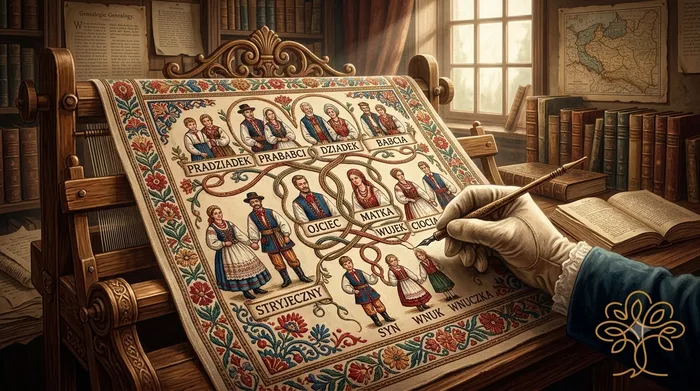
Polish Family Relationship Names Explained (English to Polish Guide)
A complete guide to Polish family and kinship terms in English, including the maternal-paternal uncle and aunt distinctions that matter for genealogy research.
23 August 2026
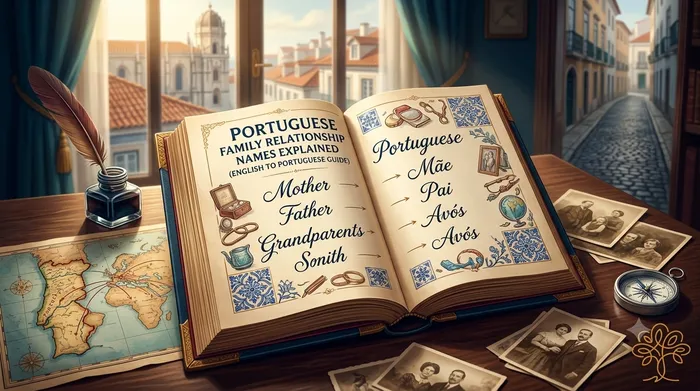
Portuguese Family Relationship Names Explained (English to Portuguese Guide)
A clear guide to Portuguese family and kinship terms in English, covering immediate family, in-laws, and the differences between Brazilian and European Portuguese.
Create Your Family Tree for Free
Start building your family history in minutes with the My rOoOts Free Family Tree Creator. Add parents, grandparents, children, and relatives, organize generations visually, and create a beautiful family tree that you can save and share.
👉 Create your free family tree: Free Family Tree Creator
No design skills required. Simply enter your family details and generate a clear, easy-to-read family tree online for free.
Check Zodiac Compatibility for Any Two People
Curious about how well two people match based on their date of birth? Try the My rOoOts Zodiac Compatibility Tool to compare zodiac signs, explore relationship compatibility, and get a quick compatibility score for couples, friends, or family members.
👉 Check compatibility now: Zodiac Compatibility Calculator
You can enter two dates of birth and even mention the relationship type to get a more personalized compatibility result.
Download a Free Family Tree Template
Want to draw your family tree yourself? The My rOoOts Family Tree Template provides a free printable blank pedigree chart for documenting your family history across multiple generations.
👉 Download a free family tree template: Family Tree Template
Choose a 3-generation, 4-generation, or 5-generation family tree template and save it as a PDF for printing, writing, and documenting your ancestors.
Discover the Meaning and Origin of Your Surname
Ever wondered where your family name came from? Use the My rOoOts Surname Meaning Lookup to explore surname meanings, origins, history, and etymology from different regions and cultures around the world.
👉 Discover your surname meaning: Surname Meaning Lookup
Learn more about your last name and explore the possible linguistic, geographic, cultural, and historical roots behind your family surname.
Start your family tree free
No account needed to begin. Build it in minutes, then save it whenever you're ready.
Build your family tree