"Once removed" is one of those genealogy phrases that sounds more complicated than it is. People hear it and assume it means something distant or vague, when really it's describing something very specific: a difference in generation between two relatives. Once you understand that one idea, first cousin once removed - and every other "removed" relationship - stops being confusing.
The Two Rules That Explain Everything
Every cousin relationship comes down to two separate questions:
- How many "greats" back do you have to go to find the shared ancestor? This determines whether you're first cousins, second cousins, third cousins, and so on.
- Are you and your cousin in the same generation, or one generation apart? This determines whether the relationship is "once removed," "twice removed," or not removed at all.
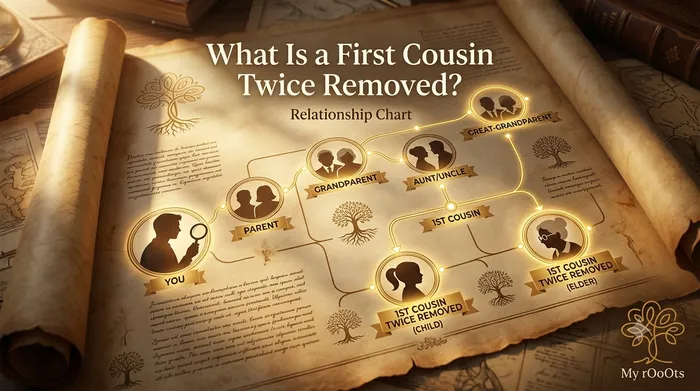
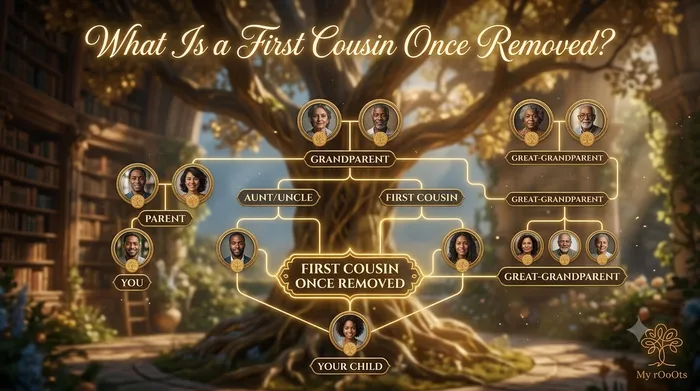
A first cousin shares a grandparent with you and is in your own generation. A first cousin once removed also connects to you through that same shared grandparent-level ancestor, but is one generation up or down from you - either your parent's first cousin, or your first cousin's child.
First Cousin Once Removed, Visually
Shared Great-Grandparent
└── Grandparent A                    └── Grandparent B
    └── Your Parent                     └── Your Parent's First Cousin
        └── You                             └── Their Child
                                                  = Your First Cousin Once Removed
In other words: your parent's first cousin is your first cousin once removed. And going the other direction, your first cousin's child is also your first cousin once removed. The relationship works both ways across the generation gap.
The Cousin Chart
| Relationship to you | Shared ancestor | Generation gap |
|---|---|---|
| First cousin | Grandparent | Same generation |
| First cousin once removed | Grandparent (of one of you) | One generation apart |
| First cousin twice removed | Grandparent (of one of you) | Two generations apart |
| Second cousin | Great-grandparent | Same generation |
| Second cousin once removed | Great-grandparent (of one of you) | One generation apart |
Two Common Ways You End Up With a First Cousin Once Removed
Going up a generation: Your parent's first cousin is your first cousin once removed. This is probably the more common way people encounter the term - it's what you'd call the person your dad or mom grew up calling "cousin," one generation removed from you.
Going down a generation: Your first cousin's child is also your first cousin once removed. From that child's perspective, you're their first cousin once removed too - the relationship label is identical looking from either direction, just applied to different people.
Why This Term Trips People Up
Most of the confusion comes from everyday speech, where people often just say "cousin" for any relative of roughly their own extended generation, regardless of the exact generational math. That's perfectly fine in casual conversation, but it becomes a problem when you're documenting a family tree, writing a family history, or trying to figure out who's actually eligible for something like a family inheritance or a DNA-match interpretation - contexts where the precise relationship matters.
DNA testing services in particular have made "once removed" relationships much more visible to ordinary people, since a shared-DNA match report will often list an unfamiliar name as your "1st cousin 1x removed" with a percentage of shared DNA attached, and it's genuinely useful to know what that means before you start reaching out to a stranger claiming a family connection.
Quick Ways to Check Your Own Family
A few practical steps if you're trying to place someone in your own tree:
- Find the shared ancestor first. Trace both your line and the other person's line backward until they meet at a common ancestor.
- Count the generations on each side separately. If it takes you three steps back to reach the shared ancestor, and it takes them two steps back, the "cousin" number is based on the shorter of the two counts, and the difference in steps is the "removed" number.
- The number of "removed" always equals the difference in generation count, not the number of steps on either side individually.
Frequently Asked Questions
Is a first cousin once removed the same as a second cousin?
No, and this is the most common mix-up. A second cousin shares a great-grandparent with you and is in your own generation. A first cousin once removed shares a grandparent-level ancestor but is one generation apart - a completely different relationship despite sounding similar.
Is my first cousin once removed considered a close relative?
It depends on context, but genetically and socially, a first cousin once removed is generally considered closer than a second cousin, since the shared ancestor (a grandparent, rather than a great-grandparent) is nearer in the family tree.
Can a first cousin once removed be older or younger than me?
Yes, either is possible. If it's your parent's cousin, they're typically older. If it's your first cousin's child, they're typically younger. The generational relationship stays the same either way.
How much DNA do first cousins once removed typically share?
On average, around 6.25%, roughly half of what first cousins typically share (about 12.5%), since the extra generation dilutes the shared DNA by half.
What do I call my first cousin once removed's children?
Your first cousin once removed's children would be your first cousins twice removed, continuing the same pattern one generation further.
Editor's picks
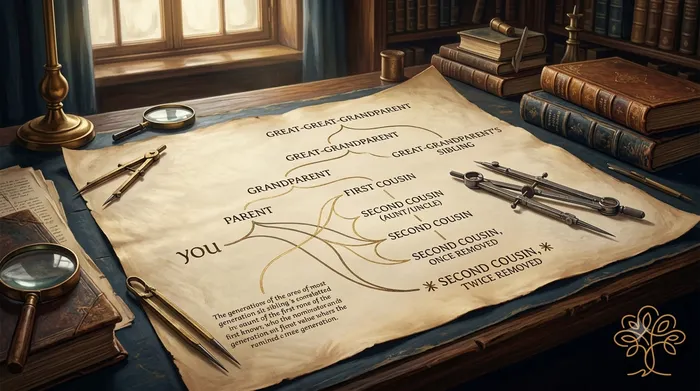
23 August 2026
What Is a Second Cousin Twice Removed? (With Relationship Chart)
A plain-language explanation of what 'second cousin twice removed' means, with a relationship chart showing exactly how to count the generations.
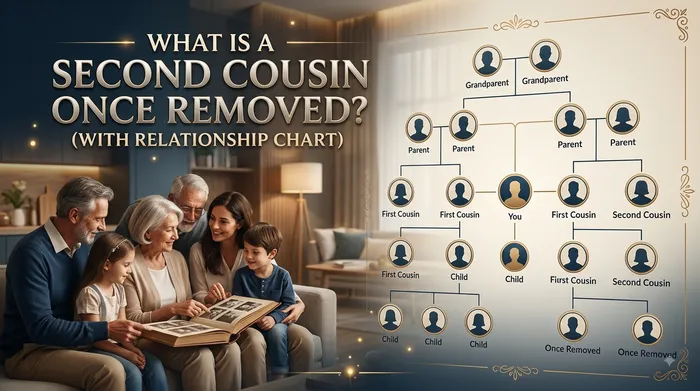
17 August 2026
What Is a Second Cousin Once Removed? (With Relationship Chart)
A plain-language explanation of what "second cousin once removed" actually means, with a relationship chart you can use for any cousin connection.
9 August 2026
French Family Relationship Names Explained (English to French Guide)
A complete English-to-French guide to family relationship names, covering parents, siblings, grandparents, in-laws, cousins, step-family, and more with clear tables and examples.
9 August 2026
German Family Tree Terms: Parents, Grandparents, Cousins and In-Laws
A clear English-to-German guide to family tree terms, including parents, grandparents, siblings, cousins, uncles, aunts, in-laws, and step-relations with easy tables.
9 August 2026
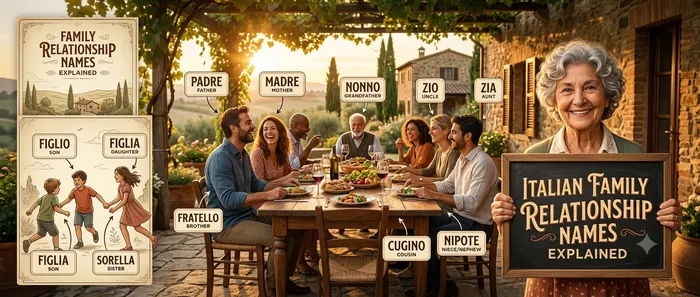
Italian Family Relationship Names Explained
A complete English-to-Italian guide to family relationship names, covering parents, siblings, grandparents, cousins, in-laws, step-family and more with clear tables.
26 August 2026
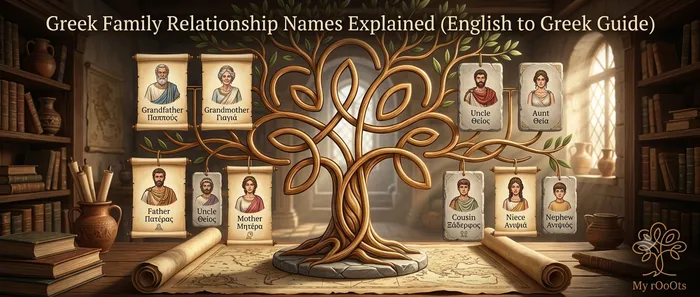
Greek Family Relationship Names Explained (English to Greek Guide)
A plain-language guide to Greek kinship terms, from yiayia and pappous to the more specific words Greek families use for aunts, uncles, cousins, and in-laws.
Download a Free Family Tree Template
Want to draw your family tree yourself? The My rOoOts Family Tree Template provides a free printable blank pedigree chart for documenting your family history across multiple generations.
👉 Download a free family tree template: Family Tree Template
Choose a 3-generation, 4-generation, or 5-generation family tree template and save it as a PDF for printing, writing, and documenting your ancestors.
Create Your Family Tree for Free
Start building your family history in minutes with the My rOoOts Free Family Tree Creator. Add parents, grandparents, children, and relatives, organize generations visually, and create a beautiful family tree that you can save and share.
👉 Create your free family tree: Free Family Tree Creator
No design skills required. Simply enter your family details and generate a clear, easy-to-read family tree online for free.
Check Zodiac Compatibility for Any Two People
Curious about how well two people match based on their date of birth? Try the My rOoOts Zodiac Compatibility Tool to compare zodiac signs, explore relationship compatibility, and get a quick compatibility score for couples, friends, or family members.
👉 Check compatibility now: Zodiac Compatibility Calculator
You can enter two dates of birth and even mention the relationship type to get a more personalized compatibility result.
Start your family tree free
No account needed to begin. Build it in minutes, then save it whenever you're ready.
Build your family tree