Public Family Trees/Mahatma Gandhi/Mohandas Karamchand Gandhi
Mohandas Karamchand Gandhi
1869 - 1948 · Male · Porbandar, Gujarat, India
Son of Karamchand Gandhi and Putlibai Gandhi
2
Generation
2
Ancestors
13
Descendants
4
Children
1
Marriages
Family Snapshot
Expand full treeBiography
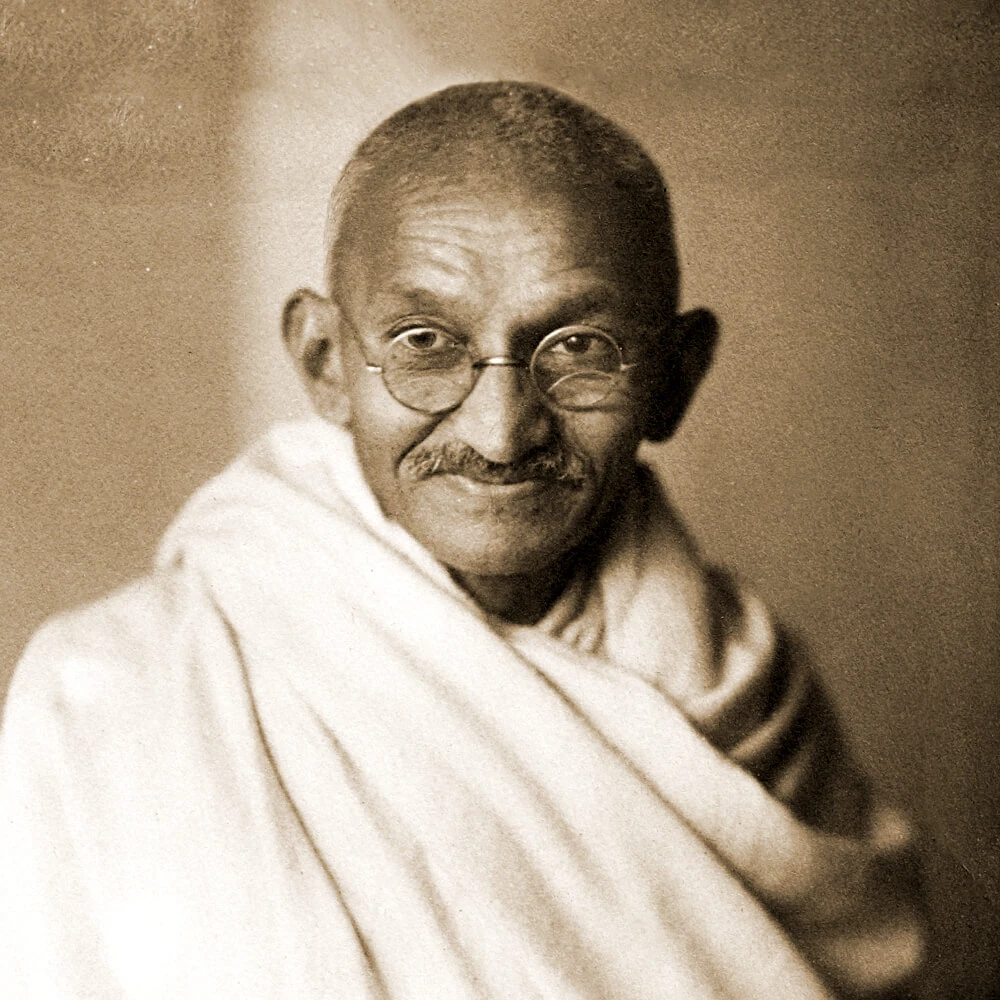
Mohandas Karamchand Gandhi (2 October 1869-1948) was an Indian lawyer and political leader who led India's independence movement from British rule through nonviolent civil disobedience, a philosophy known as satyagraha. Born in Porbandar, Gujarat, to Karamchand and Putlibai Gandhi, he trained as a barrister in London, developed his methods of nonviolent resistance while working in South Africa, and returned to India…
Photos of Mohandas Karamchand Gandhi
5 photos from the Mahatma Gandhi family album
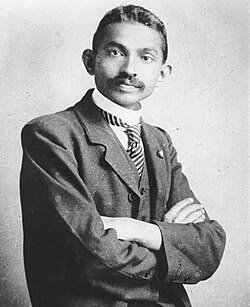
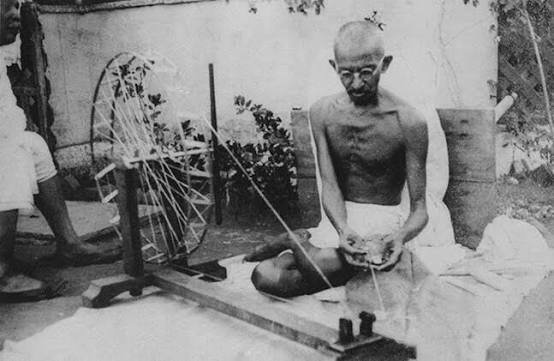
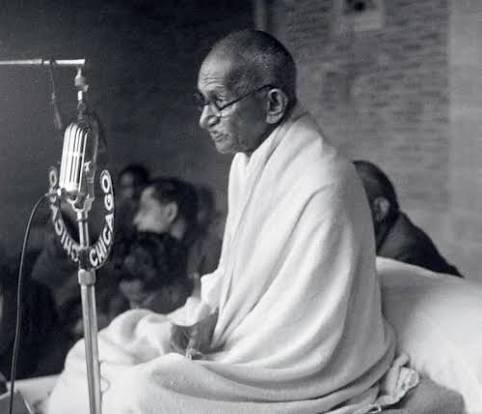
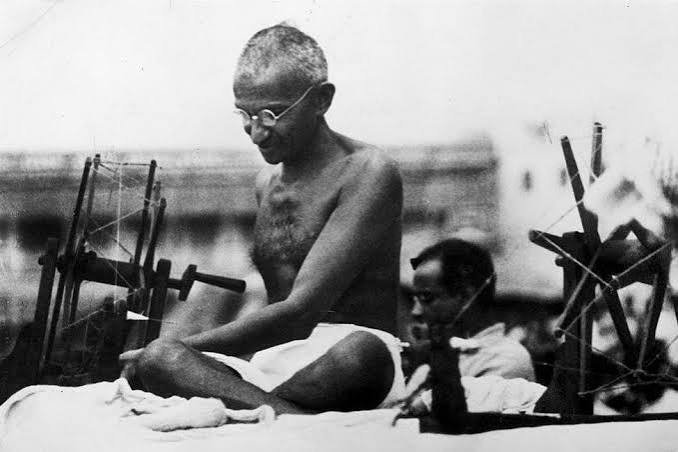
Have old family photos? Give every relative a profile and a photo gallery in your own family tree.
Start your tree, freeLife Timeline
Family
Married Kasturba Gandhi
A partnership that connects two branches of the Mahatma Gandhi family.
Next Generation
Family line continues
4 children recorded in this branch.
Legacy
Lawyer, independence leader
A defining role in the story of the Mahatma Gandhi family.
Died1948
Died
The close of a life whose connections continue through the family record.
Your turn
Map your own family the way Mohandas's is mapped
Free, with no sign-up to start. Add yourself, then your parents and grandparents, and watch the tree grow.
More people in the Mahatma Gandhi family tree
View all 21 peopleTushar Gandhi
Gen 5 · b. 1960
Tushar Gandhi (born 1960) is an Indian author and social activist, a great-grandson of Mahatma Gandhi through the line of his eldest son, Harilal Gandhi, and Harilal's son, Kantilal Gandhi. He is best known for his book 'Let's Kill Gandhi', a detailed account of the events and conspiracy surrounding his great-grandfather's death, and he has served as president of the Mahatma Gandhi Foundation, an organization dedicated to promoting Gandhian values. He has been an outspoken public commentator on nonviolence, communal harmony and the political uses and misuses of his great-grandfather's legacy in contemporary India.
Gulab Gandhi
Gen 3
Gulab Gandhi, also known as Chanchal, was the wife of Harilal Gandhi, Mahatma Gandhi's eldest son. Married as part of a joint wedding ceremony with her husband's family in Rajkot, she raised their children largely on her own as Harilal's life was marked by financial instability and long periods of estrangement from the wider Gandhi family. Comparatively little is recorded about her own life outside her marriage, but she is remembered within the family's history as the mother of Kantilal Gandhi and his siblings, connecting Mahatma Gandhi to his descendants through the Harilal branch of the family, including great-grandson Tushar Gandhi.
Lakshmi Gandhi
Gen 3
Lakshmi Gandhi was the wife of Devdas Gandhi, the youngest son of Mahatma Gandhi, and the daughter of the Indian statesman and independence leader C. Rajagopalachari, who later became independent India's first Indian-born Governor-General. Her 1933 marriage to Devdas, arranged across a caste boundary, was notable at the time and was supported by both families' patriarchs as an expression of their shared opposition to caste restrictions on marriage. She and Devdas raised four children, Rajmohan, Ramchandra, Gopalkrishna and Tara Gandhi, each of whom became prominent figures in independent India in fields ranging from history and philosophy to diplomacy and public service.
Nirmala Gandhi
Gen 3
Nirmala Gandhi was the wife of Ramdas Gandhi, the third son of Mahatma Gandhi and Kasturba Gandhi. She shared her husband's life in central India, where Ramdas was engaged in business and in constructive-work activities connected to his father's movement. Comparatively little is documented about her own public life, but she is remembered as the mother of Sumitra Kulkarni, who carried the family's association with Sabarmati Ashram, Gandhi's institution in Ahmedabad, into the following generation.
Sushila Gandhi
Gen 3
Sushila Gandhi (nee Mashruwala) was the wife of Manilal Gandhi, Mahatma Gandhi's second son, and lived with him for decades at the Phoenix Settlement near Durban, South Africa, the community her father-in-law had founded. She helped run the settlement's press and communal life while raising their children, among them Arun Gandhi and Ela Gandhi, both of whom became public figures in their own right. Her life was closely bound to the Indian community's civil-rights struggles in South Africa during the era of racial discrimination that preceded and continued into apartheid.
Related Family Stories
The Jackson Family Tree - Michael Jackson
Stuart Family Tree - The House of Stuart from Mary, Queen of Scots to Bonnie Prince Charlie
The House of Stuart was the royal dynasty that ruled Scotland from 1371 and both Scotland and England from 1603 until 1714, giving Britain fourteen monarchs from Robert II to Queen Anne as well as the Jacobite claimants who carried its cause into exile. Spelled Stewart in Scotland and Stuart after Mary, Queen of Scots adopted the French form, the family holds the unusual distinction of having united two crowns by inheritance rather than conquest, and of ending in a disputed succession that reshaped the British constitution. ## Origins The family took its name from its office. The Stewarts were hereditary High Stewards of Scotland, a post granted in the twelfth century to a Breton house settled in Renfrewshire. In 1315 Walter Stewart, 6th High Steward, married Marjorie Bruce, daughter of King Robert the Bruce. Their son became Robert II in 1371 when the direct Bruce line failed, and the stewardship turned into a crown. For more than two centuries afterwards the Stewarts ruled Scotland alone, through a run of reigns cut short by battle, captivity and long royal minorities that left the nobility unusually powerful. ## Notable members James IV, the most cultivated of the Scottish kings, married Margaret Tudor in 1503 and so planted the claim that would carry his descendants to the English throne. His granddaughter Mary, Queen of Scots became queen at six days old, reigned briefly and turbulently, and was deposed in 1567 and executed in England twenty years later. Her son, James VI of Scotland, inherited the English crown in 1603 as James I and became the first monarch to rule both kingdoms. His son Charles I lost the Civil Wars and his throne; Charles II returned at the Restoration in 1660; James II and VII was deposed in the Revolution of 1688, after which his daughters Mary II and Anne reigned in his place. In exile his son James Francis Edward Stuart and grandson Charles Edward Stuart, remembered as Bonnie Prince Charlie, led the Jacobite attempts to recover the throne, ending with the rising of 1745. ## Significance No other British dynasty changed the shape of the state so much. The Stuarts brought Scotland and England under one sovereign, presided over the King James Bible and the theatre of Shakespeare's late career, lost a king to Parliament, and provoked the settlements of 1689 and 1701 that made the monarchy answerable to Parliament and Protestant by statute. When Queen Anne died childless in 1714, the crown passed under the Act of Settlement to the descendants of her cousin Sophia of Hanover, granddaughter of James VI and I, so every British monarch since is still a Stuart descendant. | Fact | Details | | --- | --- | | Founder | Robert II, King of Scots from 1371 | | Ruled | Scotland 1371 to 1714; England and Ireland 1603 to 1714 | | Origin | Renfrewshire, Scotland | | Union of the Crowns | 1603, under James VI of Scotland and I of England | | Last reigning monarch | Anne, Queen of Great Britain, died 1714 | | Jacobite claimants | James Francis Edward, Charles Edward and Henry Benedict Stuart | | Succeeded by | The House of Hanover, through Sophia of Hanover |
Vanderbilt Family Tree - America's Gilded Age Dynasty
The Vanderbilts are an American family who rose from Dutch farming stock on Staten Island to hold the largest private fortune in the United States, built by Cornelius Vanderbilt, known as the Commodore, out of nineteenth century shipping and railroads, and known today for the Gilded Age houses their descendants built and for figures from Consuelo, Duchess of Marlborough, to the journalist Anderson Cooper. ## Origins on Staten Island The family descends from Jan Aertsen van der Bilt, a Dutch settler who reached New Netherland in the seventeenth century and whose descendants farmed on Staten Island for generations. Cornelius Vanderbilt (1794-1877) was born there, the son of a boatman, and began work as a teenager carrying freight across New York Harbour in a single sailing barge. He married his first cousin Sophia Johnson in 1813. ## The railroad fortune Vanderbilt moved from sail to steam, dominated the Hudson River and coastal trade, and after the Civil War turned to railroads, consolidating the New York Central system and building Grand Central Depot. He left almost the whole fortune to one son, William Henry Vanderbilt, who nearly doubled it in eight years before dividing it evenly among his own eight children. They built the family's great houses: The Breakers and Marble House at Newport, Biltmore House in North Carolina, Hyde Park on the Hudson, Florham in New Jersey and Shelburne Farms in Vermont. ## Notable members The third and fourth generations produced Consuelo Vanderbilt, who married the 9th Duke of Marlborough and became a social reformer in England; the sculptor Gertrude Vanderbilt Whitney, founder of the Whitney Museum of American Art; Alfred Gwynne Vanderbilt, who died in the sinking of the Lusitania; and Harold Stirling Vanderbilt, who won the America's Cup three times and invented contract bridge. The modern line runs through Reginald Claypoole Vanderbilt to the designer Gloria Vanderbilt and her son, the CNN anchor Anderson Cooper. ## Significance No American family is more closely identified with the Gilded Age. The Vanderbilts set the pattern for how new industrial wealth was spent, and then for how quickly such a fortune disperses across many heirs. What endures is institutional: Vanderbilt University, the Whitney Museum, and the houses at Newport, Hyde Park, Shelburne and Asheville that are now museums and public estates. | Fact | Details | | --- | --- | | Founder | Cornelius Vanderbilt (1794-1877), the Commodore | | Origin | Staten Island, New York, of Dutch descent | | Source of wealth | Steamboat shipping, then the New York Central railroads | | Famous houses | The Breakers, Marble House, Biltmore House, Hyde Park | | Best known members | Consuelo Vanderbilt, Gertrude Vanderbilt Whitney, Gloria Vanderbilt, Anderson Cooper | | Generations covered | Five, from the Commodore to Anderson Cooper |
Rothschild Family Tree - The European Banking Dynasty from Mayer Amschel to Today
The Rothschilds are a European banking dynasty founded in Frankfurt am Main by Mayer Amschel Rothschild (1744-1812), whose five sons established banking houses in Frankfurt, Vienna, Naples, London and Paris and together built the most powerful private financial network of the nineteenth century. ## Origins Mayer Amschel Rothschild was born in 1744 in the Judengasse, the walled Jewish street of Frankfurt am Main, where the family took its name from the red shield that had marked an ancestor's house. He began as a dealer in rare coins and medals, became court factor to Crown Prince Wilhelm of Hesse-Kassel in 1769, and turned that position into a banking business handling loans, bullion and government paper. With his wife Gutle Schnapper he had ten children who reached adulthood, five sons and five daughters. ## The five houses Mayer Amschel's decisive act was to place his sons in five cities so that the family could move money and news across borders as a single firm. Amschel Mayer stayed in Frankfurt, Salomon went to Vienna, Nathan to London, Carl to Naples and James to Paris. The brothers financed the allied campaigns against Napoleon, then the governments, railways and industries of nineteenth century Europe. The Naples house closed in 1860 with Italian unification, Frankfurt in 1901 for want of an heir, and Vienna in 1938 after the Anschluss. London and Paris survived, and their successors trade today as Rothschild and Co and the Edmond de Rothschild Group. ## Notable members Nathan Mayer Rothschild founded N M Rothschild and Sons and made London the centre of international lending. His son Lionel broke the bar on Jews sitting in Parliament, taking his Commons seat in 1858, and his grandson Nathan Mayer became the first Jewish member of the House of Lords in 1885. James Mayer de Rothschild dominated French finance under three regimes and bought Chateau Lafite, while his son Edmond funded the first Jewish agricultural settlements in Palestine. The family also produced naturalists and collectors rather than only bankers: Walter, 2nd Baron Rothschild, the zoologist to whom the Balfour Declaration was addressed in 1917; his brother Charles, the flea specialist who founded British nature conservation; Charles's daughter Dame Miriam Rothschild, a Fellow of the Royal Society; and another daughter, Nica, the patron of Thelonious Monk. Jacob, 4th Baron Rothschild, built RIT Capital Partners and chaired the trustees of the National Gallery. ## Significance The Rothschilds were the first banking family to operate as a genuinely international partnership, and for much of the nineteenth century they were the principal lenders to European states. Their name is attached to railways, mines, hospitals, museums, nature reserves, Bordeaux first growths and a long tradition of Jewish philanthropy. Repeated marriages between first cousins kept capital and control inside the family, which is why the branches of this tree cross back into one another so often. | Fact | Details | | --- | --- | | Founder | Mayer Amschel Rothschild (1744-1812) | | Matriarch | Gutle Schnapper (1753-1849) | | Origin | The Judengasse, Frankfurt am Main | | Children of the founder | Ten, five sons and five daughters | | The five houses | Frankfurt, Vienna, Naples, London, Paris | | Motto | Concordia, Integritas, Industria | | Principal firms | N M Rothschild and Sons, de Rothschild Freres, S. M. von Rothschild | | Still active today | Rothschild and Co, Edmond de Rothschild Group | | Known for | Government finance, railways, wine estates, natural history, art collections, philanthropy |
Frequently Asked Questions
Who were Mohandas Karamchand Gandhi's parents?+−
Mohandas Karamchand Gandhi's recorded parents are Karamchand Gandhi, Putlibai Gandhi.
Who were Mohandas Karamchand Gandhi's children?+−
Mohandas Karamchand Gandhi has 4 recorded children: Harilal Gandhi, Manilal Gandhi, Ramdas Gandhi, Devdas Gandhi.
Who did Mohandas Karamchand Gandhi marry?+−
Mohandas Karamchand Gandhi married Kasturba Gandhi.
What did Mohandas Karamchand Gandhi do?+−
Mohandas Karamchand Gandhi is recorded as Lawyer, independence leader in the Mahatma Gandhi family tree.
Where was Mohandas Karamchand Gandhi from?+−
Mohandas Karamchand Gandhi's recorded native place is Porbandar, Gujarat, India.
How many relatives of Mohandas Karamchand Gandhi are recorded?+−
2 ancestors and 13 descendants of Mohandas Karamchand Gandhi are recorded so far, within a tree of 21 people.
What family tree does Mohandas Karamchand Gandhi belong to?+−
Mohandas Karamchand Gandhi is recorded in the Mahatma Gandhi family tree on My rOoOts, alongside 20 other people.
Every family has a story. Start telling yours.
Trace Mohandas Karamchand Gandhi's connections across the Mahatma Gandhitree, or begin preserving your own family's history today.
Free. Private by default. GEDCOM export any time.