Public Family Trees/Mahatma Gandhi/Tushar Gandhi
5
Generation
7
Ancestors
0
Descendants
0
Children
0
Marriages
Family Snapshot
Expand full treeTushar Gandhi
b. 1960
Biography
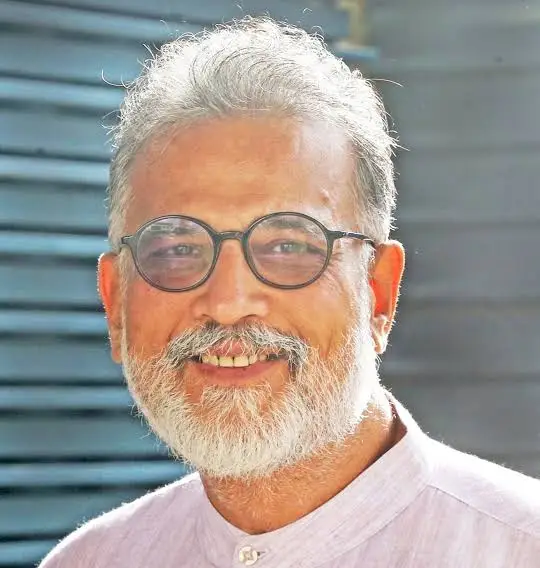
Tushar Gandhi (born 1960) is an Indian author and social activist, a great-grandson of Mahatma Gandhi through the line of his eldest son, Harilal Gandhi, and Harilal's son, Kantilal Gandhi. He is best known for his book 'Let's Kill Gandhi', a detailed account of the events and conspiracy surrounding his great-grandfather's death, and he has served as president of the Mahatma Gandhi Foundation, an organization dedicat…
Photos of Tushar Gandhi
1 photo from the Mahatma Gandhi family album
Have old family photos? Give every relative a profile and a photo gallery in your own family tree.
Start your tree, freeLife Timeline
Legacy
Author, activist
A defining role in the story of the Mahatma Gandhi family.
Your turn
Map your own family the way Tushar's is mapped
Free, with no sign-up to start. Add yourself, then your parents and grandparents, and watch the tree grow.
More people in the Mahatma Gandhi family tree
View all 21 peopleMohandas Karamchand Gandhi
Gen 2 · 1869 - 1948
Mohandas Karamchand Gandhi (2 October 1869-1948) was an Indian lawyer and political leader who led India's independence movement from British rule through nonviolent civil disobedience, a philosophy known as satyagraha. Born in Porbandar, Gujarat, to Karamchand and Putlibai Gandhi, he trained as a barrister in London, developed his methods of nonviolent resistance while working in South Africa, and returned to India in 1915 to lead campaigns such as the Salt March. He married Kasturba Gandhi in 1883 and the couple had four sons, Harilal, Manilal, Ramdas and Devdas, whose descendants carried forward his legacy in India and South Africa. Revered as the Father of the Nation in India, he is honored worldwide as Mahatma, meaning 'great soul'.
Manilal Gandhi
Gen 3 · 1892 - 1956
Manilal Gandhi (1892-1956) was the second son of Mahatma Gandhi and Kasturba Gandhi. He spent most of his adult life in South Africa, where he took over editorship of Indian Opinion, the newspaper his father had founded in 1903 to serve the Indian community, and continued it for decades from the Phoenix Settlement near Durban. He was active in the Natal Indian Congress and took part in passive-resistance campaigns against discriminatory legislation in South Africa, for which he was imprisoned several times. He married Sushila Gandhi, and their children, including Arun Gandhi and Ela Gandhi, continued the family's activist tradition in both India and South Africa. Manilal died in 1956.
Ramdas Gandhi
Gen 3 · 1897 - 1969
Ramdas Gandhi (1897-1969) was the third son of Mahatma Gandhi and Kasturba Gandhi. He worked in business in central India, including a period managing a printing press and other enterprises in Nagpur, while remaining closely involved in his father's constructive-work and khadi (hand-spun cloth) programs. He accompanied Gandhi during parts of the independence movement and was present at various points in his father's later life. He married Nirmala Gandhi, and their daughter, Sumitra Kulkarni, went on to be associated with the preservation of Sabarmati Ashram, the Ahmedabad institution central to Gandhi's constructive-work philosophy. Ramdas died in 1969.
Rajmohan Gandhi
Gen 4 · b. 1935
Rajmohan Gandhi (born 1935) is an Indian historian, biographer and former politician, a grandson of Mahatma Gandhi through his son Devdas Gandhi and daughter-in-law Lakshmi Gandhi. A prolific author, he has written biographies of his grandfather, including 'Mohandas: A True Story of a Man, His People and an Empire', as well as works on other major figures in Indian history. He served as a member of the Rajya Sabha, the upper house of India's Parliament, and has held academic positions at universities including the University of Illinois at Urbana-Champaign, where he has taught history and political science. He is the brother of Ramchandra Gandhi, Gopalkrishna Gandhi and Tara Gandhi Bhattacharjee.
Ela Gandhi
Gen 4 · b. 1940
Ela Gandhi (born 1940) is a South African social worker and politician, a granddaughter of Mahatma Gandhi through his son Manilal Gandhi and daughter-in-law Sushila Gandhi. Raised at the Phoenix Settlement near Durban that her grandfather had founded, she was active in the anti-apartheid movement and was later placed under a banning order by the South African government for her activism. Following the end of apartheid, she served as a Member of Parliament for the African National Congress from 1994 to 2004 and has continued work promoting nonviolence and restorative justice through the Gandhi Development Trust. She is the sister of peace activist Arun Gandhi.
Gopalkrishna Gandhi
Gen 4 · b. 1945
Gopalkrishna Gandhi (born 1945) is an Indian diplomat, writer and former civil servant, a grandson of Mahatma Gandhi through his son Devdas Gandhi and daughter-in-law Lakshmi Gandhi. He had a long career in the Indian Administrative Service and Indian Foreign Service, serving as High Commissioner to South Africa and Sri Lanka and Ambassador to Norway and Iceland, before serving as Governor of West Bengal from 2004 to 2009. He was also the Vice-Presidential candidate for a coalition of opposition parties in India's 2017 election. He is the brother of Rajmohan Gandhi, Ramchandra Gandhi and Tara Gandhi Bhattacharjee.
Karamchand Gandhi
Gen 1
Karamchand Gandhi, known as Kaba Gandhi, was the father of Mahatma Gandhi and served as diwan (chief minister) to the princely state of Porbandar and later to Rajkot and Vankaner in the Kathiawar region of present-day Gujarat. A respected local administrator, he came from a family with a long tradition of holding ministerial posts in the small Kathiawari states. He married several times; his last wife, Putlibai, was Mohandas Gandhi's mother. Karamchand died in 1885, when Mohandas was a teenager, an event Gandhi later wrote about in his autobiography as a formative and painful memory of his youth.
Putlibai Gandhi
Gen 1
Putlibai Gandhi was the mother of Mahatma Gandhi and the fourth wife of Karamchand Gandhi, diwan of Porbandar. A devout Hindu of the Pranami Vaishnava tradition, she was known for her deep religiosity, frequent fasting, and strict personal discipline, qualities that Gandhi later credited as a profound early influence on his own commitment to truth, self-restraint, and nonviolence. She raised Mohandas in Porbandar and Rajkot alongside his siblings. Putlibai died in 1891 while Gandhi was studying law in London, and he learned of her death only after returning to India, a loss he described as one of the deepest sorrows of his early life.
Kasturba Gandhi
Gen 2 · 1869 - 1944
Kasturba Gandhi (1869-1944), also known as Kasturba Makhanji Kapadia before marriage, was the wife of Mahatma Gandhi and an activist in her own right. Married to Mohandas in 1883 in an arranged child marriage customary at the time, she joined him in South Africa and later in India, participating in satyagraha campaigns, being jailed multiple times for civil disobedience, and organizing relief and education work among India's poor. The couple had four sons: Harilal, Manilal, Ramdas and Devdas. She died in 1944 while imprisoned with her husband at the Aga Khan Palace in Pune, during the Quit India movement. She is remembered as 'Ba', a term of affection and respect across India.
Devdas Gandhi
Gen 3 · 1900 - 1957
Devdas Gandhi (1900-1957) was the youngest son of Mahatma Gandhi and Kasturba Gandhi. Unlike his brothers, he pursued a career in journalism, working at Young India and later becoming managing editor of the Hindustan Times, one of India's leading English-language newspapers, a post he held until his death. In 1933 he married Lakshmi, daughter of the Indian statesman C. Rajagopalachari, in a match his father supported despite the families' different castes, seeing it as consistent with his opposition to caste restrictions on marriage. Devdas and Lakshmi had four children, Rajmohan, Ramchandra, Gopalkrishna and Tara, who became, respectively, a historian and politician, a philosopher, a diplomat and governor, and a writer, each prominent in independent India's public life. Devdas died in 1957.
Arun Gandhi
Gen 4 · b. 1934
Arun Gandhi (born 1934) is a peace activist and writer, a grandson of Mahatma Gandhi through his father, Manilal Gandhi, and mother, Sushila Gandhi. Raised partly in South Africa during the era of racial discrimination that preceded and continued into apartheid, he later moved to India and worked as a journalist before relocating to the United States. In 1991 he co-founded the M.K. Gandhi Institute for Nonviolence, through which he has written and lectured internationally on nonviolent conflict resolution, drawing on his childhood memories of his grandfather, which he recounted in books including 'The Gift of Anger' and other memoirs. He is the brother of South African politician Ela Gandhi.
Related Family Stories
Bourbon Family Tree - The House of Bourbon in France and Spain
The House of Bourbon is a European royal dynasty, descended in the male line from the Capetian kings of France, that ruled France from 1589 to 1792 and again from 1814 to 1848, and that still reigns in Spain today under King Felipe VI. Over four centuries its members also held the thrones of Navarre, Naples and Sicily, Parma and Etruria, which makes it one of the most widely established royal houses in European history. ## Origins The family takes its name from the lordship of Bourbon in the Auvergne, centred on Bourbon-l'Archambault. Its royal line descends from Robert, Count of Clermont, a younger son of King Louis IX of France, whose marriage to Beatrice of Burgundy, heiress of Bourbon, carried the name into the Capetian house in 1272. For three centuries afterwards the Bourbons were powerful French princes of the blood rather than kings. That changed with Antoine de Bourbon, Duke of Vendome, whose marriage to Jeanne d'Albret, queen regnant of Navarre, produced Henry of Navarre. When the Valois line died out in 1589, Henry was the senior Capetian heir, and he took the French throne as Henry IV. ## Notable members Henry IV ended the French Wars of Religion and issued the Edict of Nantes in 1598. His son Louis XIII, guided by Cardinal Richelieu, built the centralised state that Louis XIV, the Sun King, carried to its height across a reign of seventy-two years, the longest of any European sovereign, and to the palace of Versailles. Louis XV and then Louis XVI inherited that system, and Louis XVI and his queen, Marie Antoinette, were swept away by the French Revolution in 1792. The dynasty returned with Louis XVIII in 1814 and Charles X in 1824, and in 1830 the crown passed to Louis Philippe I of the cadet House of Orleans, the last king to rule in France. ## The Spanish branch In 1700 the childless Charles II of Spain left his crown to Philip, Duke of Anjou, a grandson of Louis XIV. Philip became Philip V, the first Bourbon king of Spain, at the cost of the War of the Spanish Succession, which ended with his renunciation of any claim to the French throne. His descendants include the reforming Charles III, Ferdinand VII, Isabella II, Alfonso XII and Alfonso XIII, who left Spain in 1931. The monarchy was restored in 1975 under Juan Carlos I, grandson of Alfonso XIII, who presided over Spain's transition to democracy and abdicated in 2014 in favour of his son Felipe VI. Felipe's elder daughter Leonor, Princess of Asturias, is heir to the throne. ## Significance No other family links the absolute monarchy of Versailles to a working constitutional monarchy in twenty-first century Madrid. Bourbon marriages tied the house to the Habsburgs of Austria and Spain, the dukes of Savoy, the Medici of Florence and the British royal family, so a Bourbon family tree doubles as a map of European dynastic politics from the Reformation to the present day. | Fact | Details | | --- | --- | | Family name | House of Bourbon (Maison de Bourbon, Casa de Borbon) | | Place of origin | Bourbon-l'Archambault, Auvergne, France | | Founder of the line | Robert, Count of Clermont (1256-1317), son of Louis IX | | First king of France | Henry IV, reigned 1589 to 1610 | | Last king to rule France | Louis Philippe I, reigned 1830 to 1848 | | First king of Spain | Philip V, reigned 1700 to 1746 | | Head of the house in Spain | King Felipe VI, since 2014 | | Heir in Spain | Leonor, Princess of Asturias | | Principal seats | Versailles, Fontainebleau, the Louvre, the Royal Palace of Madrid |
Hohenzollern Family Tree - Prussia's Royal House from Frederick the Great to Kaiser Wilhelm II
The House of Hohenzollern is the German dynasty that ruled Brandenburg from 1415, held the Prussian crown from 1701, and gave Germany its three emperors between 1871 and the fall of the monarchy in 1918. This tree follows the senior Prussian line in one unbroken descent, from Frederick William the Great Elector, through the kings of Prussia and the German Emperors, down to Georg Friedrich, Prince of Prussia, the present head of the house. ## Origins The family takes its name from Hohenzollern Castle on a hill in the Swabian Alb, where a line of counts is recorded from the eleventh century. A Swabian Zollern married into the burgraviate of Nuremberg in 1192, and the Franconian branch that grew from it spent two centuries accumulating lands and credit with the Holy Roman Emperors. The decisive moment came in 1415, when Emperor Sigismund invested Frederick VI of Nuremberg as Elector of Brandenburg in return for his political and financial support. The Duchy of Prussia, a separate inheritance lying outside the Empire, passed to the Brandenburg electors in 1618, and Frederick William, the Great Elector, welded the two into a single functioning state after the devastation of the Thirty Years' War. ## Notable members Frederick I turned the electorate into a kingdom in 1701. His son Frederick William I, the Soldier King, built the army and the treasury that his own son, **Frederick the Great**, used to seize Silesia and to make Prussia a European power, while also composing music, building Sanssouci and corresponding with Voltaire. **Queen Louise** became the emotional centre of Prussian resistance to Napoleon. **Wilhelm I**, with Otto von Bismarck as his minister president, was proclaimed German Emperor at Versailles in 1871. His son **Frederick III** and the liberal English princess he married, Victoria, daughter of Queen Victoria, reigned for only ninety nine days. **Wilhelm II**, the last Kaiser, abdicated in 1918 and died in Dutch exile in 1941. ## Significance No other German family shaped the modern state so directly. Hohenzollern rulers created the Prussian civil service, compulsory schooling and the general staff, sponsored the Berlin academies and the Humboldt university model, and then used Prussian power to unify Germany around themselves. The monarchy ended with the revolution of November 1918, but the house continues as a private family: the headship passed from Wilhelm II to his eldest son, then to Louis Ferdinand, and in 1994 to Georg Friedrich, whose own father and uncles are part of the succession story told in this tree. ## Quick facts | Fact | Details | |---|---| | Family name | Hohenzollern | | Place of origin | Hohenzollern Castle, Swabia, southern Germany | | Ruled | Brandenburg from 1415, Prussia from 1618, Germany from 1871 | | Royal title | King in Prussia from 1701, King of Prussia from 1772 | | Imperial title | German Emperor, 1871 to 1918 | | German Emperors | Wilhelm I, Frederick III, Wilhelm II | | Monarchy ended | 9 November 1918 | | Present head of the house | Georg Friedrich, Prince of Prussia, since 1994 | | Principal residences | Berlin City Palace, Sanssouci and Cecilienhof at Potsdam, Charlottenburg | | Branch shown here | The senior Prussian line only, not Hohenzollern-Sigmaringen |
Tudor Family Tree - The House of Tudor from Henry VII to Elizabeth I
The House of Tudor was the royal family that ruled England and Wales from 1485 to 1603, founded by Henry VII after his victory at Bosworth Field and ending with the death of his granddaughter Elizabeth I. In five reigns the dynasty took England out of the Roman Catholic church, made the monarch the head of a national religion, and turned a peripheral kingdom into a naval and literary power. This tree follows the line from the Welsh courtier Owen Tudor and the dowager queen Catherine of Valois down to Elizabeth I, together with the Brandon, Grey and Clifford cousins and the Scottish line that ended in James VI and I. ## Origins The family name comes from Penmynydd in Anglesey, north Wales, where the Tudors were landed gentry in the service of the princes of Gwynedd. Owen Tudor came to the English court in the 1420s and married Catherine of Valois, the widow of Henry V. Their sons Edmund and Jasper Tudor were half-brothers of Henry VI, who raised them to earldoms in 1452. Edmund's marriage to Lady Margaret Beaufort, a great-granddaughter of John of Gaunt, added the senior Lancastrian claim to the throne, and their only child, born after his father's death, became Henry VII. His marriage to Elizabeth of York, eldest daughter of Edward IV, joined the two houses whose rivalry had driven the Wars of the Roses and gave the dynasty its red and white rose. ## Notable members Henry VII rebuilt the crown's finances and secured the new dynasty through marriage alliances with Spain and Scotland. Henry VIII married six times and broke with Rome, and his three surviving children each reigned in turn: Edward VI as a Protestant boy king, Mary I as the first queen to rule England in her own right, and Elizabeth I for forty-four years. Around them stand the cousins who carried royal blood without the crown, among them Lady Jane Grey, queen for nine days, her sisters Catherine and Mary Grey, and Margaret Pole, Countess of Salisbury, one of the last Plantagenets. ## The Scottish and Suffolk lines Henry VII's daughters carried the blood outward. Margaret Tudor married James IV of Scotland, and her line runs through James V and Mary, Queen of Scots, to James VI and I, who inherited England in 1603. Mary Tudor married Charles Brandon, 1st Duke of Suffolk, and their daughters Frances and Eleanor Brandon produced the Grey and Clifford claimants whom Henry VIII's will preferred over the Scottish descendants of his elder sister. ## Significance No English dynasty changed the country more in so few generations. The Tudors created the Church of England, absorbed the wealth of the monasteries into the crown, brought Wales formally into the English legal and parliamentary system, and built the navy that met the Spanish Armada. The Elizabethan settlement shaped English religion for centuries, and the Elizabethan decades produced Shakespeare, Spenser and the first English voyages to the Americas. When Elizabeth I died unmarried in 1603, the throne passed peacefully to her Scottish cousin, and the two crowns were joined in one person for the first time. | Fact | Details | |---|---| | Origin | Penmynydd, Anglesey, Wales | | Ruled | England, Wales and Ireland, 1485 to 1603 | | Founder | Owen Tudor, through his son Edmund Tudor | | Monarchs | Henry VII, Henry VIII, Edward VI, Mary I, Elizabeth I | | Emblem | The Tudor rose, red and white combined | | Principal seats | Richmond, Greenwich, Hampton Court and Whitehall palaces | | Ended | Death of Elizabeth I in 1603, succeeded by James VI of Scotland |
The Jackson Family Tree - Michael Jackson
Frequently Asked Questions
Who were Tushar Gandhi's parents?+−
Tushar Gandhi's recorded parent is Kantilal Gandhi.
What did Tushar Gandhi do?+−
Tushar Gandhi is recorded as Author, activist in the Mahatma Gandhi family tree.
Where was Tushar Gandhi from?+−
Tushar Gandhi's recorded native place is Mumbai, India.
How many relatives of Tushar Gandhi are recorded?+−
7 ancestors and 0 descendants of Tushar Gandhi are recorded so far, within a tree of 21 people.
What family tree does Tushar Gandhi belong to?+−
Tushar Gandhi is recorded in the Mahatma Gandhi family tree on My rOoOts, alongside 20 other people.
Every family has a story. Start telling yours.
Trace Tushar Gandhi's connections across the Mahatma Gandhitree, or begin preserving your own family's history today.
Free. Private by default. GEDCOM export any time.