Public Family Trees/Mahatma Gandhi/Ramdas Gandhi
Ramdas Gandhi
1897 - 1969 · Male · Porbandar, Gujarat, India
Son of Mohandas Karamchand Gandhi and Kasturba Gandhi
3
Generation
4
Ancestors
1
Descendants
1
Children
1
Marriages
Family Snapshot
Expand full treeRamdas Gandhi
1897 - 1969
Biography
Ramdas Gandhi (1897-1969) was the third son of Mahatma Gandhi and Kasturba Gandhi. He worked in business in central India, including a period managing a printing press and other enterprises in Nagpur, while remaining closely involved in his father's constructive-work and khadi (hand-spun cloth) programs. He accompanied Gandhi during parts of the independence movement and was present at various points in his father's…
Photos of Ramdas Gandhi
1 photo from the Mahatma Gandhi family album
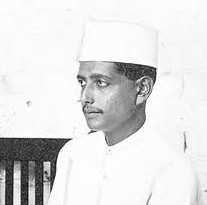
Have old family photos? Give every relative a profile and a photo gallery in your own family tree.
Start your tree, freeLife Timeline
Born1897
Born
Born to Mohandas Karamchand Gandhi, Kasturba Gandhi.
Family
Married Nirmala Gandhi
A partnership that connects two branches of the Mahatma Gandhi family.
Legacy
Businessman
A defining role in the story of the Mahatma Gandhi family.
Died1969
Died
The close of a life whose connections continue through the family record.
Your turn
Map your own family the way Ramdas's is mapped
Free, with no sign-up to start. Add yourself, then your parents and grandparents, and watch the tree grow.
More people in the Mahatma Gandhi family tree
View all 21 peopleRajmohan Gandhi
Gen 4 · b. 1935
Rajmohan Gandhi (born 1935) is an Indian historian, biographer and former politician, a grandson of Mahatma Gandhi through his son Devdas Gandhi and daughter-in-law Lakshmi Gandhi. A prolific author, he has written biographies of his grandfather, including 'Mohandas: A True Story of a Man, His People and an Empire', as well as works on other major figures in Indian history. He served as a member of the Rajya Sabha, the upper house of India's Parliament, and has held academic positions at universities including the University of Illinois at Urbana-Champaign, where he has taught history and political science. He is the brother of Ramchandra Gandhi, Gopalkrishna Gandhi and Tara Gandhi Bhattacharjee.
Ela Gandhi
Gen 4 · b. 1940
Ela Gandhi (born 1940) is a South African social worker and politician, a granddaughter of Mahatma Gandhi through his son Manilal Gandhi and daughter-in-law Sushila Gandhi. Raised at the Phoenix Settlement near Durban that her grandfather had founded, she was active in the anti-apartheid movement and was later placed under a banning order by the South African government for her activism. Following the end of apartheid, she served as a Member of Parliament for the African National Congress from 1994 to 2004 and has continued work promoting nonviolence and restorative justice through the Gandhi Development Trust. She is the sister of peace activist Arun Gandhi.
Gopalkrishna Gandhi
Gen 4 · b. 1945
Gopalkrishna Gandhi (born 1945) is an Indian diplomat, writer and former civil servant, a grandson of Mahatma Gandhi through his son Devdas Gandhi and daughter-in-law Lakshmi Gandhi. He had a long career in the Indian Administrative Service and Indian Foreign Service, serving as High Commissioner to South Africa and Sri Lanka and Ambassador to Norway and Iceland, before serving as Governor of West Bengal from 2004 to 2009. He was also the Vice-Presidential candidate for a coalition of opposition parties in India's 2017 election. He is the brother of Rajmohan Gandhi, Ramchandra Gandhi and Tara Gandhi Bhattacharjee.
Tushar Gandhi
Gen 5 · b. 1960
Tushar Gandhi (born 1960) is an Indian author and social activist, a great-grandson of Mahatma Gandhi through the line of his eldest son, Harilal Gandhi, and Harilal's son, Kantilal Gandhi. He is best known for his book 'Let's Kill Gandhi', a detailed account of the events and conspiracy surrounding his great-grandfather's death, and he has served as president of the Mahatma Gandhi Foundation, an organization dedicated to promoting Gandhian values. He has been an outspoken public commentator on nonviolence, communal harmony and the political uses and misuses of his great-grandfather's legacy in contemporary India.
Arun Gandhi
Gen 4 · b. 1934
Arun Gandhi (born 1934) is a peace activist and writer, a grandson of Mahatma Gandhi through his father, Manilal Gandhi, and mother, Sushila Gandhi. Raised partly in South Africa during the era of racial discrimination that preceded and continued into apartheid, he later moved to India and worked as a journalist before relocating to the United States. In 1991 he co-founded the M.K. Gandhi Institute for Nonviolence, through which he has written and lectured internationally on nonviolent conflict resolution, drawing on his childhood memories of his grandfather, which he recounted in books including 'The Gift of Anger' and other memoirs. He is the brother of South African politician Ela Gandhi.
Tara Gandhi Bhattacharjee
Gen 4 · b. 1934
Tara Gandhi Bhattacharjee (born 1934) is a writer and social worker, a granddaughter of Mahatma Gandhi through his son Devdas Gandhi and daughter-in-law Lakshmi Gandhi. She has spent much of her life engaged in Gandhian constructive-work programs and institutions dedicated to preserving and interpreting her grandfather's philosophy, including serving in leadership roles connected to Gandhi Smriti and related memorial trusts in Delhi. She has written and spoken widely on nonviolence and her grandfather's legacy, and is the sister of Rajmohan Gandhi, Ramchandra Gandhi and Gopalkrishna Gandhi.
Gulab Gandhi
Gen 3
Gulab Gandhi, also known as Chanchal, was the wife of Harilal Gandhi, Mahatma Gandhi's eldest son. Married as part of a joint wedding ceremony with her husband's family in Rajkot, she raised their children largely on her own as Harilal's life was marked by financial instability and long periods of estrangement from the wider Gandhi family. Comparatively little is recorded about her own life outside her marriage, but she is remembered within the family's history as the mother of Kantilal Gandhi and his siblings, connecting Mahatma Gandhi to his descendants through the Harilal branch of the family, including great-grandson Tushar Gandhi.
Ramchandra Gandhi
Gen 4 · 1937 - 2007
Ramchandra Gandhi (1937-2007) was an Indian philosopher, a grandson of Mahatma Gandhi through his son Devdas Gandhi and daughter-in-law Lakshmi Gandhi. He taught philosophy at universities including the University of Hyderabad and Visva-Bharati, and was known for his work exploring Indian philosophy, Advaita Vedanta, and questions of nonviolence and spirituality in relation to his grandfather's legacy. He was a familiar public intellectual in Delhi's academic and cultural circles, engaging in wide-ranging writing and lecturing until his death in 2007. He was the brother of Rajmohan Gandhi, Gopalkrishna Gandhi and Tara Gandhi Bhattacharjee.
Kantilal Gandhi
Gen 4
Kantilal Gandhi was a son of Harilal Gandhi and Gulab (Chanchal) Gandhi, making him a grandson of Mahatma Gandhi through the Harilal branch of the family. Comparatively little is documented about his own life and career, but he is recorded within the family's history as the father of Tushar Gandhi, the author and activist who has written extensively about his great-grandfather's life and, in particular, about the events surrounding Gandhi's death.
Lakshmi Gandhi
Gen 3
Lakshmi Gandhi was the wife of Devdas Gandhi, the youngest son of Mahatma Gandhi, and the daughter of the Indian statesman and independence leader C. Rajagopalachari, who later became independent India's first Indian-born Governor-General. Her 1933 marriage to Devdas, arranged across a caste boundary, was notable at the time and was supported by both families' patriarchs as an expression of their shared opposition to caste restrictions on marriage. She and Devdas raised four children, Rajmohan, Ramchandra, Gopalkrishna and Tara Gandhi, each of whom became prominent figures in independent India in fields ranging from history and philosophy to diplomacy and public service.
Sushila Gandhi
Gen 3
Sushila Gandhi (nee Mashruwala) was the wife of Manilal Gandhi, Mahatma Gandhi's second son, and lived with him for decades at the Phoenix Settlement near Durban, South Africa, the community her father-in-law had founded. She helped run the settlement's press and communal life while raising their children, among them Arun Gandhi and Ela Gandhi, both of whom became public figures in their own right. Her life was closely bound to the Indian community's civil-rights struggles in South Africa during the era of racial discrimination that preceded and continued into apartheid.
Related Family Stories
Kennedy Family Tree - America's Political Dynasty
The Kennedy family is an Irish American political dynasty from Boston, Massachusetts, whose members have included the 35th President of the United States, three United States senators, four congressmen, several ambassadors, and the founders of the Peace Corps and the Special Olympics. Across four documented generations the family moved from a County Wexford farm to the White House, and its name became shorthand in American public life for both political ambition and public service. ## Origins The American line begins with Patrick Kennedy, a farmer's son from Dunganstown, near New Ross in County Wexford, who emigrated to East Boston during the Great Famine. His son, Patrick Joseph "P. J." Kennedy (1858 to 1929), built a livelihood in the liquor and banking trades and served in both houses of the Massachusetts legislature, becoming one of the Democratic ward leaders who ran the city's Irish Catholic politics. On the other side stood John Francis "Honey Fitz" Fitzgerald (1863 to 1950), congressman and twice Mayor of Boston. The two families joined in 1914 when P. J.'s son Joseph P. Kennedy Sr. married Honey Fitz's daughter Rose Fitzgerald. Their nine children, raised between Brookline, Bronxville and the compound at Hyannis Port on Cape Cod, form the generation the world knows. ## Notable members John F. Kennedy served as President from 1961 until his death in 1963, having previously represented Massachusetts in the House and Senate. His brother Robert F. Kennedy was Attorney General, then Senator from New York, and a candidate for the presidency in 1968. Their youngest brother Edward "Ted" Kennedy sat in the United States Senate for almost 47 years and was one of the most productive legislators of his era. The eldest son, Joseph P. Kennedy Jr., was a naval aviator killed on a volunteer mission in 1944. Away from elected office, Eunice Kennedy Shriver founded the Special Olympics, her husband Sargent Shriver created the Peace Corps and Head Start, and Jean Kennedy Smith founded the arts and disability organisation VSA before serving as United States Ambassador to Ireland. The following generations have produced congressmen, a lieutenant governor, ambassadors, documentary filmmakers, human rights advocates and journalists. ## Significance No other American family has combined electoral success, philanthropy and public visibility on this scale for so long. The Kennedys shaped the civil rights era, the space programme, immigration reform, health care legislation and the modern understanding of disability rights, and their private losses were mourned publicly in a way usually reserved for royalty. The Kennedy Library in Boston, the Kennedy Center in Washington and dozens of schools and institutions carry the name. | Fact | Details | | --- | --- | | Family name | Kennedy | | Irish origin | Dunganstown, County Wexford, Ireland | | American home | Boston and Hyannis Port, Massachusetts | | Founding couple | Patrick Joseph Kennedy and Mary Augusta Hickey | | Best known member | John F. Kennedy, 35th President of the United States | | Generations covered | Four | | Offices held | Presidency, US Senate, US House, ambassadorships, state office | | Institutions founded | Peace Corps, Special Olympics, Best Buddies, Citizens Energy |
The Jackson Family Tree - Michael Jackson
Belgian Royal Family Tree - The House of Belgium from Leopold I to Princess Elisabeth
The Belgian royal family, formally the House of Belgium and dynastically a branch of the House of Saxe-Coburg and Gotha, is the reigning family of Belgium, founded when the German prince Leopold of Saxe-Coburg-Saalfeld accepted the throne of the newly independent kingdom in 1831 and continuing today through King Philippe and his heir, Princess Elisabeth, Duchess of Brabant. Belgium became independent from the Netherlands in 1830 and chose a constitutional monarchy. Its National Congress looked abroad for a sovereign who could balance French and British interests, and settled on Leopold, a widowed, well-connected and famously cautious prince who had already turned down the crown of Greece. He took the constitutional oath on 21 July 1831, still the Belgian national day. Seven monarchs have reigned since: Leopold I, Leopold II, Albert I, Leopold III, Baudouin, Albert II and Philippe. ## Origins The dynasty's roots are in the small Thuringian duchy of Saxe-Coburg, whose princes married into half the thrones of nineteenth-century Europe. Leopold I was the uncle of both Queen Victoria and her husband Prince Albert, and his second marriage, to Louise-Marie of Orleans, daughter of the French king Louis Philippe I, tied the new kingdom to Paris as well as London. The crown did not pass in a straight line: Leopold II's only son died at the age of nine, so the succession moved to Leopold II's brother Philippe, Count of Flanders, and then to Philippe's son, Albert I. Every Belgian monarch since 1909 descends from that collateral branch. ## Notable members Leopold II is the most studied and most criticised figure in the family, remembered for the industrial boom and monumental building of his reign and, above all, for his personal rule over the Congo Free State. Albert I and Queen Elisabeth of Bavaria became wartime symbols of Belgian resistance behind the Yser in 1914. Leopold III's surrender in 1940 and his conduct under occupation triggered the political crisis known as the Royal Question and ended in his abdication. Baudouin reigned for 42 years and presided over Congolese independence and Belgium's transformation into a federal state. Daughters of the house carried its blood outward: Charlotte became Empress Carlota of Mexico, Marie-Jose was the last Queen of Italy, and Josephine-Charlotte was Grand Duchess of Luxembourg. ## Significance In a country divided by language, the monarchy has been the one institution claimed by both Flemish and Walloon Belgians, and the king's role in brokering coalition governments remains politically real rather than ceremonial. The family has also changed with the country: equal succession was introduced in 1991, making Princess Elisabeth the first female Duchess of Brabant and the future first queen regnant of the Belgians, and in 2020 a court recognised Delphine of Saxe-Coburg as a daughter of Albert II. | Fact | Details | | --- | --- | | Dynasty | House of Belgium (Saxe-Coburg and Gotha) | | Country | Kingdom of Belgium | | Founder | Leopold I, King of the Belgians (1790-1865) | | Reigning since | 21 July 1831 | | Monarchs to date | Seven, from Leopold I to Philippe | | Current head | King Philippe (born 1960), reigning since 2013 | | Heir apparent | Princess Elisabeth, Duchess of Brabant (born 2001) | | Principal residences | Royal Palace of Brussels, Castle of Laeken | | Motto | L'union fait la force / Eendracht maakt macht |
Tudor Family Tree - The House of Tudor from Henry VII to Elizabeth I
The House of Tudor was the royal family that ruled England and Wales from 1485 to 1603, founded by Henry VII after his victory at Bosworth Field and ending with the death of his granddaughter Elizabeth I. In five reigns the dynasty took England out of the Roman Catholic church, made the monarch the head of a national religion, and turned a peripheral kingdom into a naval and literary power. This tree follows the line from the Welsh courtier Owen Tudor and the dowager queen Catherine of Valois down to Elizabeth I, together with the Brandon, Grey and Clifford cousins and the Scottish line that ended in James VI and I. ## Origins The family name comes from Penmynydd in Anglesey, north Wales, where the Tudors were landed gentry in the service of the princes of Gwynedd. Owen Tudor came to the English court in the 1420s and married Catherine of Valois, the widow of Henry V. Their sons Edmund and Jasper Tudor were half-brothers of Henry VI, who raised them to earldoms in 1452. Edmund's marriage to Lady Margaret Beaufort, a great-granddaughter of John of Gaunt, added the senior Lancastrian claim to the throne, and their only child, born after his father's death, became Henry VII. His marriage to Elizabeth of York, eldest daughter of Edward IV, joined the two houses whose rivalry had driven the Wars of the Roses and gave the dynasty its red and white rose. ## Notable members Henry VII rebuilt the crown's finances and secured the new dynasty through marriage alliances with Spain and Scotland. Henry VIII married six times and broke with Rome, and his three surviving children each reigned in turn: Edward VI as a Protestant boy king, Mary I as the first queen to rule England in her own right, and Elizabeth I for forty-four years. Around them stand the cousins who carried royal blood without the crown, among them Lady Jane Grey, queen for nine days, her sisters Catherine and Mary Grey, and Margaret Pole, Countess of Salisbury, one of the last Plantagenets. ## The Scottish and Suffolk lines Henry VII's daughters carried the blood outward. Margaret Tudor married James IV of Scotland, and her line runs through James V and Mary, Queen of Scots, to James VI and I, who inherited England in 1603. Mary Tudor married Charles Brandon, 1st Duke of Suffolk, and their daughters Frances and Eleanor Brandon produced the Grey and Clifford claimants whom Henry VIII's will preferred over the Scottish descendants of his elder sister. ## Significance No English dynasty changed the country more in so few generations. The Tudors created the Church of England, absorbed the wealth of the monasteries into the crown, brought Wales formally into the English legal and parliamentary system, and built the navy that met the Spanish Armada. The Elizabethan settlement shaped English religion for centuries, and the Elizabethan decades produced Shakespeare, Spenser and the first English voyages to the Americas. When Elizabeth I died unmarried in 1603, the throne passed peacefully to her Scottish cousin, and the two crowns were joined in one person for the first time. | Fact | Details | |---|---| | Origin | Penmynydd, Anglesey, Wales | | Ruled | England, Wales and Ireland, 1485 to 1603 | | Founder | Owen Tudor, through his son Edmund Tudor | | Monarchs | Henry VII, Henry VIII, Edward VI, Mary I, Elizabeth I | | Emblem | The Tudor rose, red and white combined | | Principal seats | Richmond, Greenwich, Hampton Court and Whitehall palaces | | Ended | Death of Elizabeth I in 1603, succeeded by James VI of Scotland |
Frequently Asked Questions
Who were Ramdas Gandhi's parents?+−
Ramdas Gandhi's recorded parents are Mohandas Karamchand Gandhi, Kasturba Gandhi.
Who were Ramdas Gandhi's children?+−
Ramdas Gandhi has 1 recorded child: Sumitra Kulkarni.
Who did Ramdas Gandhi marry?+−
Ramdas Gandhi married Nirmala Gandhi.
Who were Ramdas Gandhi's siblings?+−
Ramdas Gandhi has 3 recorded siblings: Harilal Gandhi, Manilal Gandhi, Devdas Gandhi.
What did Ramdas Gandhi do?+−
Ramdas Gandhi is recorded as Businessman in the Mahatma Gandhi family tree.
Where was Ramdas Gandhi from?+−
Ramdas Gandhi's recorded native place is Porbandar, Gujarat, India.
How many relatives of Ramdas Gandhi are recorded?+−
4 ancestors and 1 descendant of Ramdas Gandhi are recorded so far, within a tree of 21 people.
What family tree does Ramdas Gandhi belong to?+−
Ramdas Gandhi is recorded in the Mahatma Gandhi family tree on My rOoOts, alongside 20 other people.
Every family has a story. Start telling yours.
Trace Ramdas Gandhi's connections across the Mahatma Gandhitree, or begin preserving your own family's history today.
Free. Private by default. GEDCOM export any time.