Public Family Trees/Belgian Royal Family Tree - The House of Belgium from Leopold I to Princess Elisabeth
Belgian Royal Family Tree - The House of Belgium from Leopold I to Princess Elisabeth
Explore 48 people across 7 generations of the Belgian Royal family, built with My rOoOts.
48
People
7
Generations
23
Living
25
Passed on
12
Marriages
65 yrs
Avg. lifespan
Family Tree
48 members mapped across 7 generations
Loading family tree…
Your turn
Build a tree like this for your own family
Free, with no sign-up to start. Add yourself, then your parents and grandparents, and watch it grow.
About the Belgian Royal family
The Belgian royal family, formally the House of Belgium and dynastically a branch of the House of Saxe-Coburg and Gotha, is the reigning family of Belgium, founded when the German prince Leopold of Saxe-Coburg-Saalfeld accepted the throne of the newly independent kingdom in 1831 and continuing today through King Philippe and his heir, Princess Elisabeth, Duchess of Brabant.
Belgium became independent from the Netherlands in 1830 and chose a constitutional monarchy. Its National Congress looked abroad for a sovereign who could balance French and British interests, and settled on Leopold, a widowed, well-connected and famously cautious prince who had already turned down the crown of Greece. He took the constitutional oath on 21 July 1831, still the Belgian national day. Seven monarchs have reigned since: Leopold I, Leopold II, Albert I, Leopold III, Baudouin, Albert II and Philippe.
At a glance
- Dynasty
- House of Belgium (Saxe-Coburg and Gotha)
- Country
- Kingdom of Belgium
- Founder
- Leopold I, King of the Belgians (1790-1865)
- Reigning since
- 21 July 1831
- Monarchs to date
- Seven, from Leopold I to Philippe
- Current head
- King Philippe (born 1960), reigning since 2013
- Heir apparent
- Princess Elisabeth, Duchess of Brabant (born 2001)
- Principal residences
- Royal Palace of Brussels, Castle of Laeken
- Motto
- L'union fait la force / Eendracht maakt macht
7 generations, 1790 to 2001
1790
Gen 1
Leopold I of Belgium1835
Gen 2
Leopold II of Belgium1859
Gen 3
Leopold of Belgium1901
Gen 4
Leopold III of Belgium1934
Gen 5
Albert II of Belgium1962
Gen 6
Astrid of Belgium2001
Gen 7
Elisabeth of Belgium
Read the full historyHide the full history
Origins
The dynasty's roots are in the small Thuringian duchy of Saxe-Coburg, whose princes married into half the thrones of nineteenth-century Europe. Leopold I was the uncle of both Queen Victoria and her husband Prince Albert, and his second marriage, to Louise-Marie of Orleans, daughter of the French king Louis Philippe I, tied the new kingdom to Paris as well as London. The crown did not pass in a straight line: Leopold II's only son died at the age of nine, so the succession moved to Leopold II's brother Philippe, Count of Flanders, and then to Philippe's son, Albert I. Every Belgian monarch since 1909 descends from that collateral branch.
Notable members
Leopold II is the most studied and most criticised figure in the family, remembered for the industrial boom and monumental building of his reign and, above all, for his personal rule over the Congo Free State. Albert I and Queen Elisabeth of Bavaria became wartime symbols of Belgian resistance behind the Yser in 1914. Leopold III's surrender in 1940 and his conduct under occupation triggered the political crisis known as the Royal Question and ended in his abdication. Baudouin reigned for 42 years and presided over Congolese independence and Belgium's transformation into a federal state. Daughters of the house carried its blood outward: Charlotte became Empress Carlota of Mexico, Marie-Jose was the last Queen of Italy, and Josephine-Charlotte was Grand Duchess of Luxembourg.
Significance
In a country divided by language, the monarchy has been the one institution claimed by both Flemish and Walloon Belgians, and the king's role in brokering coalition governments remains politically real rather than ceremonial. The family has also changed with the country: equal succession was introduced in 1991, making Princess Elisabeth the first female Duchess of Brabant and the future first queen regnant of the Belgians, and in 2020 a court recognised Delphine of Saxe-Coburg as a daughter of Albert II.
Notable Members
Key figures from 7 generations of the Belgian Royal family
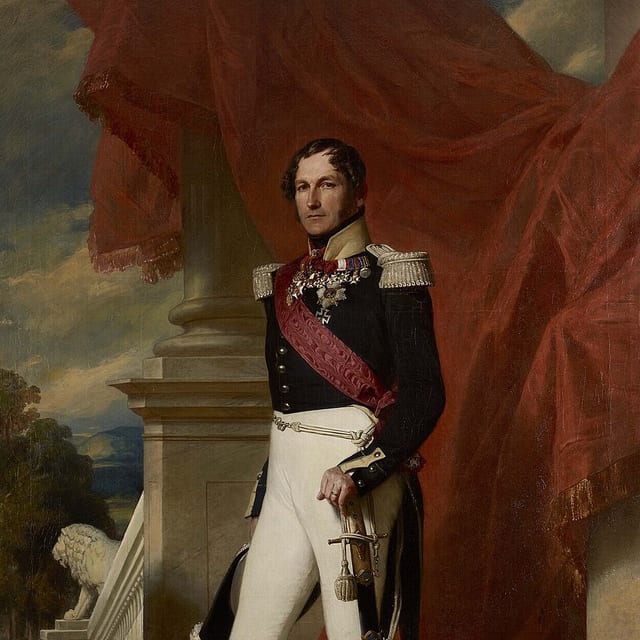 Gen 1
Leopold I of Belgium
1790 - 1865
First King of the Belgians
Photo: Franz Xaver Winterhalter, Public domain, via Wikimedia Commons
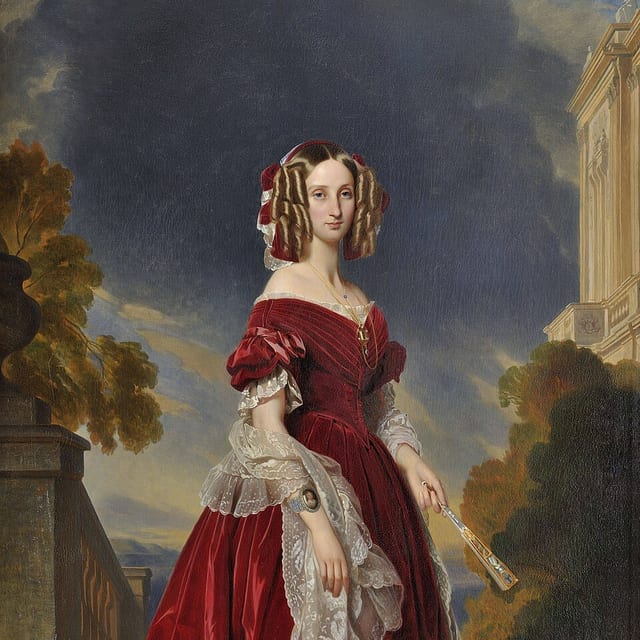 Gen 1
Louise-Marie of Orleans
1812 - 1850
First Queen of the Belgians
Photo: Franz Xaver Winterhalter, Public domain, via Wikimedia Commons
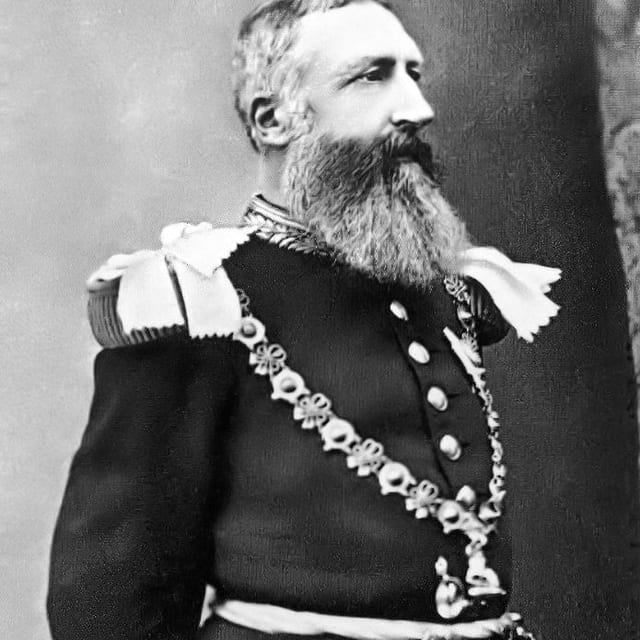 Gen 2
Leopold II of Belgium
1835 - 1909
King of the Belgians
Photo: London Stereoscopic and Photographic Company, Public domain, via Wikimedia Commons
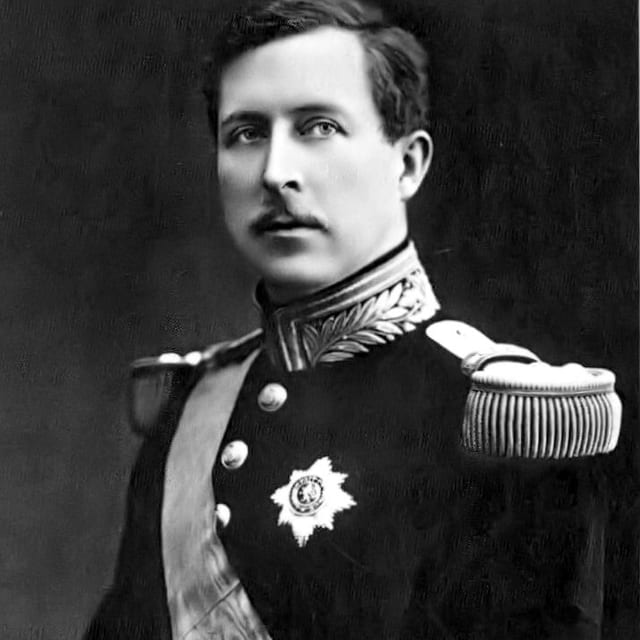 Gen 3
Albert I of Belgium
1875 - 1934
King of the Belgians
Photo: Studio of Eugène Pirou, Public domain, via Wikimedia Commons
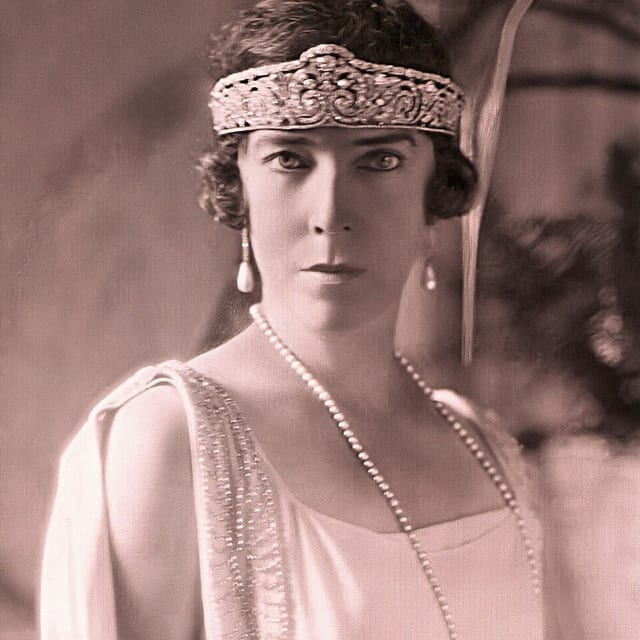 Gen 3
Elisabeth of Bavaria
1876 - 1965
Queen consort of the Belgians
Photo: Unknown author Unknown author, Public domain, via Wikimedia Commons
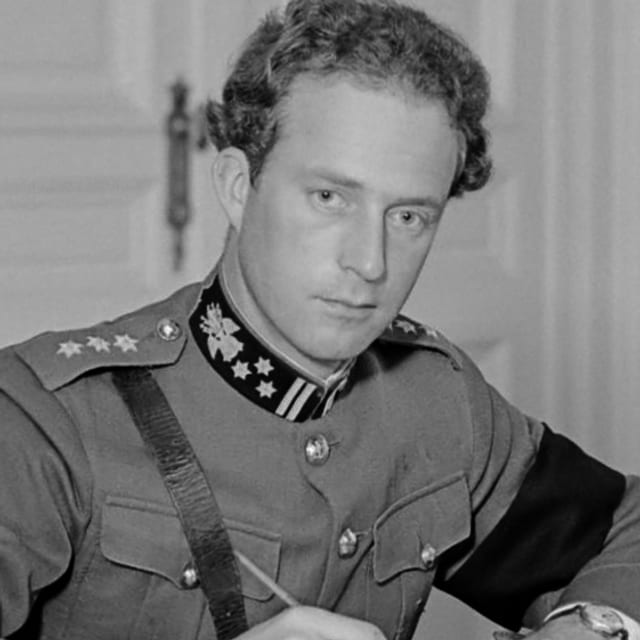
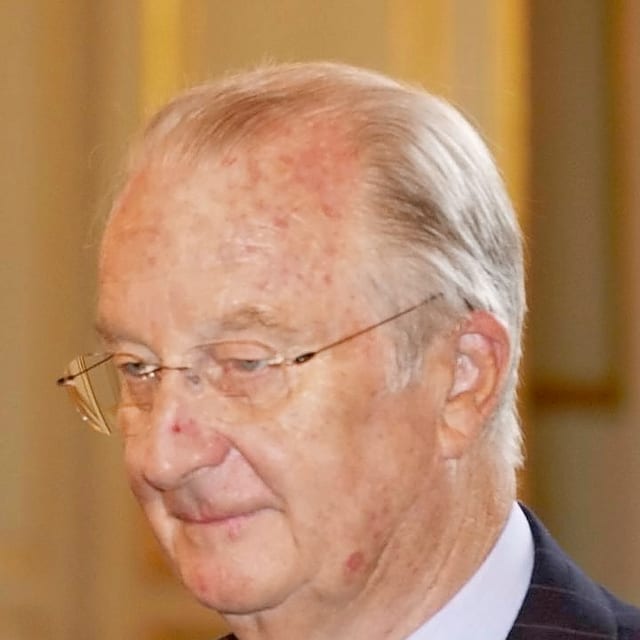
Family Members
Showing 11 of 48 people
Leopold I of Belgium
Gen 1 · 1790 - 1865
Leopold I (1790-1865) was the first King of the Belgians, reigning from 1831 until his death. Born Prince Leopold of Saxe-Coburg-Saalfeld at Coburg, he served as a cavalry officer in the Russian imperial army during the Napoleonic Wars and then settled in Britain, where in 1816 he married Princess Charlotte of Wales, heir to the British throne. Widowed the following year, he declined the newly created throne of Greece in 1830 before accepting the crown of recently independent Belgium, taking the constitutional oath on 21 July 1831. His second marriage, to Louise-Marie of Orleans, produced the dynasty that reigns in Belgium still. Uncle and trusted adviser to both Queen Victoria and Prince Albert, he spent his reign consolidating a fragile new state wedged between France, Prussia and the Netherlands.
Louise-Marie of Orleans
Gen 1 · 1812 - 1850
Louise-Marie of Orleans (1812-1850) was the first Queen of the Belgians, the second wife of Leopold I and the mother of the Belgian dynasty. Born in Palermo, she was the eldest daughter of Louis Philippe I, King of the French, and Maria Amalia of Naples and Sicily, and her marriage at Compiegne in August 1832 sealed the diplomatic understanding between France and the new Belgian kingdom. Devout, reserved and widely liked in her adopted country, where she was known as the Queen of the Poor, she devoted herself to charitable foundations and to the upbringing of her children: the future Leopold II, Prince Philippe, Count of Flanders, and Charlotte, the future Empress Carlota of Mexico. She died at Ostend in October 1850, aged thirty-eight.
Leopold II of Belgium
Gen 2 · 1835 - 1909
Leopold II (1835-1909) was the second King of the Belgians, reigning from 1865 to 1909. The eldest surviving son of Leopold I and Louise-Marie of Orleans, he married Archduchess Marie Henriette of Austria in 1853. At home his long reign brought rapid industrialisation, the expansion of Brussels, Ostend and Antwerp and a wave of monumental public building that earned him the nickname the Builder King. He is remembered above all for the Congo Free State, the vast central African territory he governed from 1885 as his personal possession, and for the regime of forced labour imposed there, whose brutality provoked an international campaign and led the Belgian parliament to take the colony out of his hands in 1908. His only son, Leopold, Duke of Brabant, died in childhood, so the crown passed to his nephew Albert I.
Charlotte of Belgium
Gen 2 · 1840 - 1927
Princess Charlotte of Belgium (1840-1927), known in Mexico as Carlota, was the only daughter of Leopold I and Louise-Marie of Orleans and the sister of Leopold II. Born at Laeken, she married Archduke Maximilian of Austria in 1857 and served with him in Milan while he was viceroy of Lombardy-Venetia, before the couple accepted the Mexican throne offered by French-backed conservatives in 1864. As Empress of Mexico she took an active part in government and acted as regent during Maximilian's absences, but the empire collapsed once Napoleon III withdrew French troops. She travelled to Europe in 1866 to plead for support and never returned; after Maximilian's execution in 1867 she lived sixty years in seclusion in Belgium, latterly at Bouchout Castle in Meise, where she died in 1927.
Leopold of Belgium
Gen 3 · 1859 - 1869
Prince Leopold, Duke of Brabant (1859-1869) was the only son of Leopold II and Marie Henriette of Austria, and from his birth the heir apparent to the Belgian throne. Born at Laeken, he was given the title Duke of Brabant traditionally carried by the heir to the Belgian crown, and his arrival was celebrated as securing the direct line of the young dynasty. He died in January 1869, a few months before his tenth birthday. Because Leopold II had no other son, the succession moved sideways to the King's younger brother, Prince Philippe, Count of Flanders, and then to Philippe's son Albert I, a shift that determined the descent of every Belgian monarch since 1909.
Stephanie of Belgium
Gen 3 · 1864 - 1945
Princess Stephanie of Belgium (1864-1945) was the third child of Leopold II and Marie Henriette of Austria. Born at Laeken, she married Crown Prince Rudolf of Austria in Vienna in 1881, becoming the prospective Habsburg empress, and the couple had one daughter, Elisabeth Marie. Widowed in 1889 when Rudolf died at Mayerling, she remained at the Austrian court until 1900, when she married the Hungarian nobleman Count Elemer Lonyay and in consequence lost her Habsburg rank and her father's favour. She spent the rest of her long life in Hungary, chiefly on her husband's estates, and published her memoirs in 1935. She died at the abbey of Pannonhalma in 1945.
Leopold III of Belgium
Gen 4 · 1901 - 1983
Leopold III (1901-1983) was the fourth King of the Belgians, reigning from 1934 to 1951. The eldest son of Albert I and Elisabeth of Bavaria, he married Princess Astrid of Sweden in 1926; she died in 1935, and in 1941 he married Lilian Baels, who took the title Princess of Rethy. As commander-in-chief he led the Belgian army during the German invasion of May 1940 and surrendered after eighteen days, then remained in occupied Belgium as a prisoner rather than joining the government in exile, a decision that divided the country for a decade. Deported to Germany in 1944 and kept abroad while his brother Prince Charles served as regent, he returned in 1950 into the political crisis known as the Royal Question and abdicated in favour of his son Baudouin in July 1951. He spent his later years travelling as an amateur anthropologist and naturalist.
Charles of Belgium
Gen 4 · 1903 - 1983
Prince Charles, Count of Flanders (1903-1983) was the second son of Albert I and Elisabeth of Bavaria and served as Regent of Belgium from 1944 to 1950. A career naval officer trained in Britain, he was chosen by parliament to exercise royal powers after the liberation, while his elder brother Leopold III was held in Germany and then kept abroad during the dispute over his wartime conduct. As regent Charles presided over post-war reconstruction, the prosecution of collaborators, the extension of the vote to women in national elections and Belgium's entry into the Atlantic alliance. He withdrew almost completely from public life after handing power back in 1950, living quietly near Ostend, where he painted under the name Karel van Vlaanderen. He died in 1983.
Albert II of Belgium
Gen 5 · b. 1934
Albert II (born 1934) was the sixth King of the Belgians, reigning from 1993 to 2013. The younger son of Leopold III and Astrid of Sweden, he was born at Stuyvenberg Castle in Laeken and spent part of his childhood in wartime captivity and then in Swiss exile. In 1959 he married the Italian noblewoman Paola Ruffo di Calabria, with whom he had three children: King Philippe, Princess Astrid and Prince Laurent. For decades he served as honorary president of the Belgian Office of Foreign Trade, leading trade missions abroad, before unexpectedly succeeding his childless elder brother Baudouin in 1993. His twenty-year reign covered repeated government crises and further federal reform. He abdicated on 21 July 2013 in favour of Philippe, and in 2020 legally recognised Delphine of Saxe-Coburg as his daughter.
Alexandre of Belgium
Gen 5 · 1942 - 2009
Prince Alexandre of Belgium (1942-2009) was the eldest child of King Leopold III and his second wife, Lilian Baels, Princess of Rethy, and a half-brother of King Baudouin and King Albert II. Born at Laeken during the German occupation, he was educated in Switzerland, the United States and Britain and served for a time in the Belgian navy. Because he was born of his father's second marriage he stood outside the line of succession, and he kept almost entirely out of public life, working in business and later giving his time to charitable work in Belgium. In 1991 he married Lea Wolman, a marriage made public only in 1998. He died in 2009 and is buried in the royal crypt at Laeken.
Astrid of Belgium
Gen 6 · b. 1962
Princess Astrid of Belgium (born 1962) is the second child of King Albert II and Queen Paola and the sister of King Philippe. Born at Laeken and named for her grandmother Queen Astrid, she studied in Belgium and Switzerland and in 1984 married Archduke Lorenz of Austria-Este, who was created Prince of Belgium in 1995. The couple have five children: Amedeo, Maria Laura, Joachim, Luisa Maria and Laetitia Maria. She leads Belgian economic missions abroad on behalf of her brother, serves as president of the Belgian Red Cross, and has worked for many years on campaigns against anti-personnel landmines and in support of the Special Olympics. She stands in the line of succession to the Belgian throne after King Philippe's children.
Is this your family?
Claim this tree to correct it, add relatives, and keep it up to date yourself.
Claim this treeStart your own family tree
Build yours for free, then send relatives a link to fill in their side of the family.
Start my tree, freeRelationship Explorer
How are two people related?
Pick any two names in the tree to trace the exact line of descent, marriage or shared ancestor connecting them.
Leopold I of Belgium is Albert II of Belgium's Great-Great-Grandfather.
- 👨Albert II of Belgiumson of
- 👨Leopold III of Belgiumson of
- 👨Albert I of Belgiumson of
- 👨Philippe of Belgiumson of
- 👨Leopold I of Belgium
Find out how you're related to your own cousins.
Build your treeIs this your family?
Claim the Belgian Royal family tree to take it over, edit it, and add family members yourself.
Frequently Asked Questions
How many people are in the Belgian Royal family tree?+−
This family tree currently documents 48 people across 7 recorded generations.
How many generations does the Belgian Royal family tree span?+−
7 generations are recorded so far, and may grow as more history is added.
How many marriages are recorded?+−
12 marriages are recorded in this family.
Where is the Belgian Royal family from?+−
The most commonly recorded native place is Brussels, Belgium.
Start building your own family story
Create a tree in minutes, import a GEDCOM file, or explore more public family trees.
Free. Private by default. GEDCOM export any time.