Public Family Trees/Mahatma Gandhi/Manilal Gandhi
Manilal Gandhi
1892 - 1956 · Male · Porbandar, Gujarat, India
Son of Mohandas Karamchand Gandhi and Kasturba Gandhi
3
Generation
4
Ancestors
2
Descendants
2
Children
1
Marriages
Family Snapshot
Expand full treeBiography
Manilal Gandhi (1892-1956) was the second son of Mahatma Gandhi and Kasturba Gandhi. He spent most of his adult life in South Africa, where he took over editorship of Indian Opinion, the newspaper his father had founded in 1903 to serve the Indian community, and continued it for decades from the Phoenix Settlement near Durban. He was active in the Natal Indian Congress and took part in passive-resistance campaigns ag…
Photos of Manilal Gandhi
1 photo from the Mahatma Gandhi family album
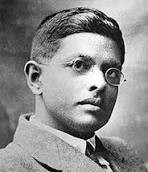
Have old family photos? Give every relative a profile and a photo gallery in your own family tree.
Start your tree, freeLife Timeline
Born1892
Born
Born to Mohandas Karamchand Gandhi, Kasturba Gandhi.
Family
Married Sushila Gandhi
A partnership that connects two branches of the Mahatma Gandhi family.
Legacy
Newspaper editor, activist
A defining role in the story of the Mahatma Gandhi family.
Died1956
Died
The close of a life whose connections continue through the family record.
Your turn
Map your own family the way Manilal's is mapped
Free, with no sign-up to start. Add yourself, then your parents and grandparents, and watch the tree grow.
More people in the Mahatma Gandhi family tree
View all 21 peopleRajmohan Gandhi
Gen 4 · b. 1935
Rajmohan Gandhi (born 1935) is an Indian historian, biographer and former politician, a grandson of Mahatma Gandhi through his son Devdas Gandhi and daughter-in-law Lakshmi Gandhi. A prolific author, he has written biographies of his grandfather, including 'Mohandas: A True Story of a Man, His People and an Empire', as well as works on other major figures in Indian history. He served as a member of the Rajya Sabha, the upper house of India's Parliament, and has held academic positions at universities including the University of Illinois at Urbana-Champaign, where he has taught history and political science. He is the brother of Ramchandra Gandhi, Gopalkrishna Gandhi and Tara Gandhi Bhattacharjee.
Gopalkrishna Gandhi
Gen 4 · b. 1945
Gopalkrishna Gandhi (born 1945) is an Indian diplomat, writer and former civil servant, a grandson of Mahatma Gandhi through his son Devdas Gandhi and daughter-in-law Lakshmi Gandhi. He had a long career in the Indian Administrative Service and Indian Foreign Service, serving as High Commissioner to South Africa and Sri Lanka and Ambassador to Norway and Iceland, before serving as Governor of West Bengal from 2004 to 2009. He was also the Vice-Presidential candidate for a coalition of opposition parties in India's 2017 election. He is the brother of Rajmohan Gandhi, Ramchandra Gandhi and Tara Gandhi Bhattacharjee.
Tushar Gandhi
Gen 5 · b. 1960
Tushar Gandhi (born 1960) is an Indian author and social activist, a great-grandson of Mahatma Gandhi through the line of his eldest son, Harilal Gandhi, and Harilal's son, Kantilal Gandhi. He is best known for his book 'Let's Kill Gandhi', a detailed account of the events and conspiracy surrounding his great-grandfather's death, and he has served as president of the Mahatma Gandhi Foundation, an organization dedicated to promoting Gandhian values. He has been an outspoken public commentator on nonviolence, communal harmony and the political uses and misuses of his great-grandfather's legacy in contemporary India.
Tara Gandhi Bhattacharjee
Gen 4 · b. 1934
Tara Gandhi Bhattacharjee (born 1934) is a writer and social worker, a granddaughter of Mahatma Gandhi through his son Devdas Gandhi and daughter-in-law Lakshmi Gandhi. She has spent much of her life engaged in Gandhian constructive-work programs and institutions dedicated to preserving and interpreting her grandfather's philosophy, including serving in leadership roles connected to Gandhi Smriti and related memorial trusts in Delhi. She has written and spoken widely on nonviolence and her grandfather's legacy, and is the sister of Rajmohan Gandhi, Ramchandra Gandhi and Gopalkrishna Gandhi.
Gulab Gandhi
Gen 3
Gulab Gandhi, also known as Chanchal, was the wife of Harilal Gandhi, Mahatma Gandhi's eldest son. Married as part of a joint wedding ceremony with her husband's family in Rajkot, she raised their children largely on her own as Harilal's life was marked by financial instability and long periods of estrangement from the wider Gandhi family. Comparatively little is recorded about her own life outside her marriage, but she is remembered within the family's history as the mother of Kantilal Gandhi and his siblings, connecting Mahatma Gandhi to his descendants through the Harilal branch of the family, including great-grandson Tushar Gandhi.
Ramchandra Gandhi
Gen 4 · 1937 - 2007
Ramchandra Gandhi (1937-2007) was an Indian philosopher, a grandson of Mahatma Gandhi through his son Devdas Gandhi and daughter-in-law Lakshmi Gandhi. He taught philosophy at universities including the University of Hyderabad and Visva-Bharati, and was known for his work exploring Indian philosophy, Advaita Vedanta, and questions of nonviolence and spirituality in relation to his grandfather's legacy. He was a familiar public intellectual in Delhi's academic and cultural circles, engaging in wide-ranging writing and lecturing until his death in 2007. He was the brother of Rajmohan Gandhi, Gopalkrishna Gandhi and Tara Gandhi Bhattacharjee.
Kantilal Gandhi
Gen 4
Kantilal Gandhi was a son of Harilal Gandhi and Gulab (Chanchal) Gandhi, making him a grandson of Mahatma Gandhi through the Harilal branch of the family. Comparatively little is documented about his own life and career, but he is recorded within the family's history as the father of Tushar Gandhi, the author and activist who has written extensively about his great-grandfather's life and, in particular, about the events surrounding Gandhi's death.
Sumitra Kulkarni
Gen 4
Sumitra Kulkarni (nee Gandhi) was a granddaughter of Mahatma Gandhi through his third son, Ramdas Gandhi, and daughter-in-law Nirmala Gandhi. She was closely associated with Sabarmati Ashram in Ahmedabad, the institution her grandfather founded in 1917 as a base for his campaigns of nonviolent resistance and constructive social work, and she took part in efforts connected to preserving its buildings and legacy for later generations. Through her, the Gandhi family's third-son branch remained connected to one of the movement's most historically significant sites in India.
Lakshmi Gandhi
Gen 3
Lakshmi Gandhi was the wife of Devdas Gandhi, the youngest son of Mahatma Gandhi, and the daughter of the Indian statesman and independence leader C. Rajagopalachari, who later became independent India's first Indian-born Governor-General. Her 1933 marriage to Devdas, arranged across a caste boundary, was notable at the time and was supported by both families' patriarchs as an expression of their shared opposition to caste restrictions on marriage. She and Devdas raised four children, Rajmohan, Ramchandra, Gopalkrishna and Tara Gandhi, each of whom became prominent figures in independent India in fields ranging from history and philosophy to diplomacy and public service.
Nirmala Gandhi
Gen 3
Nirmala Gandhi was the wife of Ramdas Gandhi, the third son of Mahatma Gandhi and Kasturba Gandhi. She shared her husband's life in central India, where Ramdas was engaged in business and in constructive-work activities connected to his father's movement. Comparatively little is documented about her own public life, but she is remembered as the mother of Sumitra Kulkarni, who carried the family's association with Sabarmati Ashram, Gandhi's institution in Ahmedabad, into the following generation.
Related Family Stories
Belgian Royal Family Tree - The House of Belgium from Leopold I to Princess Elisabeth
The Belgian royal family, formally the House of Belgium and dynastically a branch of the House of Saxe-Coburg and Gotha, is the reigning family of Belgium, founded when the German prince Leopold of Saxe-Coburg-Saalfeld accepted the throne of the newly independent kingdom in 1831 and continuing today through King Philippe and his heir, Princess Elisabeth, Duchess of Brabant. Belgium became independent from the Netherlands in 1830 and chose a constitutional monarchy. Its National Congress looked abroad for a sovereign who could balance French and British interests, and settled on Leopold, a widowed, well-connected and famously cautious prince who had already turned down the crown of Greece. He took the constitutional oath on 21 July 1831, still the Belgian national day. Seven monarchs have reigned since: Leopold I, Leopold II, Albert I, Leopold III, Baudouin, Albert II and Philippe. ## Origins The dynasty's roots are in the small Thuringian duchy of Saxe-Coburg, whose princes married into half the thrones of nineteenth-century Europe. Leopold I was the uncle of both Queen Victoria and her husband Prince Albert, and his second marriage, to Louise-Marie of Orleans, daughter of the French king Louis Philippe I, tied the new kingdom to Paris as well as London. The crown did not pass in a straight line: Leopold II's only son died at the age of nine, so the succession moved to Leopold II's brother Philippe, Count of Flanders, and then to Philippe's son, Albert I. Every Belgian monarch since 1909 descends from that collateral branch. ## Notable members Leopold II is the most studied and most criticised figure in the family, remembered for the industrial boom and monumental building of his reign and, above all, for his personal rule over the Congo Free State. Albert I and Queen Elisabeth of Bavaria became wartime symbols of Belgian resistance behind the Yser in 1914. Leopold III's surrender in 1940 and his conduct under occupation triggered the political crisis known as the Royal Question and ended in his abdication. Baudouin reigned for 42 years and presided over Congolese independence and Belgium's transformation into a federal state. Daughters of the house carried its blood outward: Charlotte became Empress Carlota of Mexico, Marie-Jose was the last Queen of Italy, and Josephine-Charlotte was Grand Duchess of Luxembourg. ## Significance In a country divided by language, the monarchy has been the one institution claimed by both Flemish and Walloon Belgians, and the king's role in brokering coalition governments remains politically real rather than ceremonial. The family has also changed with the country: equal succession was introduced in 1991, making Princess Elisabeth the first female Duchess of Brabant and the future first queen regnant of the Belgians, and in 2020 a court recognised Delphine of Saxe-Coburg as a daughter of Albert II. | Fact | Details | | --- | --- | | Dynasty | House of Belgium (Saxe-Coburg and Gotha) | | Country | Kingdom of Belgium | | Founder | Leopold I, King of the Belgians (1790-1865) | | Reigning since | 21 July 1831 | | Monarchs to date | Seven, from Leopold I to Philippe | | Current head | King Philippe (born 1960), reigning since 2013 | | Heir apparent | Princess Elisabeth, Duchess of Brabant (born 2001) | | Principal residences | Royal Palace of Brussels, Castle of Laeken | | Motto | L'union fait la force / Eendracht maakt macht |
The Jackson Family Tree - Michael Jackson
Glucksburg Family Tree - The Royal House of Denmark, Norway and Greece from Christian IX to Today
The House of Glücksburg is the reigning royal house of Denmark and Norway and the former royal house of Greece, a branch of the ancient House of Oldenburg whose modern members all descend from King Christian IX of Denmark (1818 to 1906) and his wife Louise of Hesse-Kassel. Through the marriages of their six children, a minor ducal family from the Danish-German borderland became the common ancestor of monarchs in Copenhagen, Oslo and Athens, of a British queen consort, of a Russian empress, and of Prince Philip, Duke of Edinburgh. ## Origins The house takes its name from Glücksburg, a small castle town in Schleswig, and belongs to the Schleswig-Holstein-Sonderburg-Glücksburg line of the House of Oldenburg, which had held the Danish throne since 1448. Christian IX was a prince of that cadet branch with no expectation of ruling until the childless Frederik VII made the Danish succession an open European question. Christian succeeded him in 1863, and within months his second son was elected King of the Hellenes as George I, planting the family in Greece for 110 years. In 1905 his grandson Prince Carl of Denmark accepted the Norwegian throne as Haakon VII, giving Norway its own dynasty after centuries of union with Denmark and then Sweden. ## Notable members Christian IX was nicknamed the father-in-law of Europe: his daughter Alexandra married Edward VII of the United Kingdom, and his daughter Dagmar became Empress Maria Feodorovna of Russia, mother of Nicholas II. The Danish line runs through Christian X, Frederik IX and Queen Margrethe II, a trained archaeologist and illustrator who reigned from 1972 until her abdication in 2024, to her son King Frederik X and Queen Mary. The Norwegian line runs from Haakon VII and Queen Maud through Olav V, an Olympic sailing champion, to King Harald V and Crown Prince Haakon. The Greek line produced Constantine I, Paul, Constantine II and Queen Anne-Marie, Queen Sofía of Spain, and Prince Andrew's son Philip, consort to Elizabeth II for 73 years. ## Significance No other western dynasty connects as many surviving monarchies in a single documented lineage. Two of Europe's ten reigning royal families, Denmark and Norway, are Glücksburg in the male line, and the house also sits in the ancestry of the British and Spanish royal families. Its history traces the transformation of European monarchy itself: from the dynastic matchmaking of the 1860s, through the loss of the Russian and Greek thrones, to the constitutional, publicly accountable monarchies of modern Scandinavia. | Fact | Details | | --- | --- | | House name | Schleswig-Holstein-Sonderburg-Glücksburg, a branch of the House of Oldenburg | | Founding figure of the modern house | Christian IX of Denmark (1818 to 1906) | | Ancestral seat | Glücksburg Castle, Schleswig | | Thrones held | Denmark (1863 to present), Greece (1863 to 1973), Norway (1905 to present) | | Current heads of state | Frederik X of Denmark, Harald V of Norway | | Best-known member abroad | Prince Philip, Duke of Edinburgh (1921 to 2021) | | Nickname of its founder | The father-in-law of Europe |
Rothschild Family Tree - The European Banking Dynasty from Mayer Amschel to Today
The Rothschilds are a European banking dynasty founded in Frankfurt am Main by Mayer Amschel Rothschild (1744-1812), whose five sons established banking houses in Frankfurt, Vienna, Naples, London and Paris and together built the most powerful private financial network of the nineteenth century. ## Origins Mayer Amschel Rothschild was born in 1744 in the Judengasse, the walled Jewish street of Frankfurt am Main, where the family took its name from the red shield that had marked an ancestor's house. He began as a dealer in rare coins and medals, became court factor to Crown Prince Wilhelm of Hesse-Kassel in 1769, and turned that position into a banking business handling loans, bullion and government paper. With his wife Gutle Schnapper he had ten children who reached adulthood, five sons and five daughters. ## The five houses Mayer Amschel's decisive act was to place his sons in five cities so that the family could move money and news across borders as a single firm. Amschel Mayer stayed in Frankfurt, Salomon went to Vienna, Nathan to London, Carl to Naples and James to Paris. The brothers financed the allied campaigns against Napoleon, then the governments, railways and industries of nineteenth century Europe. The Naples house closed in 1860 with Italian unification, Frankfurt in 1901 for want of an heir, and Vienna in 1938 after the Anschluss. London and Paris survived, and their successors trade today as Rothschild and Co and the Edmond de Rothschild Group. ## Notable members Nathan Mayer Rothschild founded N M Rothschild and Sons and made London the centre of international lending. His son Lionel broke the bar on Jews sitting in Parliament, taking his Commons seat in 1858, and his grandson Nathan Mayer became the first Jewish member of the House of Lords in 1885. James Mayer de Rothschild dominated French finance under three regimes and bought Chateau Lafite, while his son Edmond funded the first Jewish agricultural settlements in Palestine. The family also produced naturalists and collectors rather than only bankers: Walter, 2nd Baron Rothschild, the zoologist to whom the Balfour Declaration was addressed in 1917; his brother Charles, the flea specialist who founded British nature conservation; Charles's daughter Dame Miriam Rothschild, a Fellow of the Royal Society; and another daughter, Nica, the patron of Thelonious Monk. Jacob, 4th Baron Rothschild, built RIT Capital Partners and chaired the trustees of the National Gallery. ## Significance The Rothschilds were the first banking family to operate as a genuinely international partnership, and for much of the nineteenth century they were the principal lenders to European states. Their name is attached to railways, mines, hospitals, museums, nature reserves, Bordeaux first growths and a long tradition of Jewish philanthropy. Repeated marriages between first cousins kept capital and control inside the family, which is why the branches of this tree cross back into one another so often. | Fact | Details | | --- | --- | | Founder | Mayer Amschel Rothschild (1744-1812) | | Matriarch | Gutle Schnapper (1753-1849) | | Origin | The Judengasse, Frankfurt am Main | | Children of the founder | Ten, five sons and five daughters | | The five houses | Frankfurt, Vienna, Naples, London, Paris | | Motto | Concordia, Integritas, Industria | | Principal firms | N M Rothschild and Sons, de Rothschild Freres, S. M. von Rothschild | | Still active today | Rothschild and Co, Edmond de Rothschild Group | | Known for | Government finance, railways, wine estates, natural history, art collections, philanthropy |
Frequently Asked Questions
Who were Manilal Gandhi's parents?+−
Manilal Gandhi's recorded parents are Mohandas Karamchand Gandhi, Kasturba Gandhi.
Who were Manilal Gandhi's children?+−
Manilal Gandhi has 2 recorded children: Arun Gandhi, Ela Gandhi.
Who did Manilal Gandhi marry?+−
Manilal Gandhi married Sushila Gandhi.
Who were Manilal Gandhi's siblings?+−
Manilal Gandhi has 3 recorded siblings: Harilal Gandhi, Ramdas Gandhi, Devdas Gandhi.
What did Manilal Gandhi do?+−
Manilal Gandhi is recorded as Newspaper editor, activist in the Mahatma Gandhi family tree.
Where was Manilal Gandhi from?+−
Manilal Gandhi's recorded native place is Porbandar, Gujarat, India.
How many relatives of Manilal Gandhi are recorded?+−
4 ancestors and 2 descendants of Manilal Gandhi are recorded so far, within a tree of 21 people.
What family tree does Manilal Gandhi belong to?+−
Manilal Gandhi is recorded in the Mahatma Gandhi family tree on My rOoOts, alongside 20 other people.
Every family has a story. Start telling yours.
Trace Manilal Gandhi's connections across the Mahatma Gandhitree, or begin preserving your own family's history today.
Free. Private by default. GEDCOM export any time.