Public Family Trees/Glucksburg Family Tree - The Royal House of Denmark, Norway and Greece from Christian IX to Today
Glucksburg Family Tree - The Royal House of Denmark, Norway and Greece from Christian IX to Today
Explore 59 people across 7 generations of the Glucksburg family, built with My rOoOts.
59
People
7
Generations
24
Living
35
Passed on
19
Marriages
72 yrs
Avg. lifespan
Family Tree
59 members mapped across 7 generations
Loading family tree…
Your turn
Build a tree like this for your own family
Free, with no sign-up to start. Add yourself, then your parents and grandparents, and watch it grow.
About the Glucksburg family
The House of Glücksburg is the reigning royal house of Denmark and Norway and the former royal house of Greece, a branch of the ancient House of Oldenburg whose modern members all descend from King Christian IX of Denmark (1818 to 1906) and his wife Louise of Hesse-Kassel. Through the marriages of their six children, a minor ducal family from the Danish-German borderland became the common ancestor of monarchs in Copenhagen, Oslo and Athens, of a British queen consort, of a Russian empress, and of Prince Philip, Duke of Edinburgh.
At a glance
- House name
- Schleswig-Holstein-Sonderburg-Glücksburg, a branch of the House of Oldenburg
- Founding figure of the modern house
- Christian IX of Denmark (1818 to 1906)
- Ancestral seat
- Glücksburg Castle, Schleswig
- Thrones held
- Denmark (1863 to present), Greece (1863 to 1973), Norway (1905 to present)
- Current heads of state
- Frederik X of Denmark, Harald V of Norway
- Best-known member abroad
- Prince Philip, Duke of Edinburgh (1921 to 2021)
- Nickname of its founder
- The father-in-law of Europe
7 generations, 1817 to 2004
1817
Gen 1
Louise of Hesse-Kassel1843
Gen 2
Frederik VIII of Denmark1868
Gen 3
Constantine I of Greece1890
Gen 4
George II of Greece1938
Gen 5
Sofía of Greece and Denmark1965
Gen 6
Alexia of Greece and Denmark2004
Gen 7
Ingrid Alexandra of Norway
Read the full historyHide the full history
Origins
The house takes its name from Glücksburg, a small castle town in Schleswig, and belongs to the Schleswig-Holstein-Sonderburg-Glücksburg line of the House of Oldenburg, which had held the Danish throne since 1448. Christian IX was a prince of that cadet branch with no expectation of ruling until the childless Frederik VII made the Danish succession an open European question. Christian succeeded him in 1863, and within months his second son was elected King of the Hellenes as George I, planting the family in Greece for 110 years. In 1905 his grandson Prince Carl of Denmark accepted the Norwegian throne as Haakon VII, giving Norway its own dynasty after centuries of union with Denmark and then Sweden.
Notable members
Christian IX was nicknamed the father-in-law of Europe: his daughter Alexandra married Edward VII of the United Kingdom, and his daughter Dagmar became Empress Maria Feodorovna of Russia, mother of Nicholas II. The Danish line runs through Christian X, Frederik IX and Queen Margrethe II, a trained archaeologist and illustrator who reigned from 1972 until her abdication in 2024, to her son King Frederik X and Queen Mary. The Norwegian line runs from Haakon VII and Queen Maud through Olav V, an Olympic sailing champion, to King Harald V and Crown Prince Haakon. The Greek line produced Constantine I, Paul, Constantine II and Queen Anne-Marie, Queen Sofía of Spain, and Prince Andrew's son Philip, consort to Elizabeth II for 73 years.
Significance
No other western dynasty connects as many surviving monarchies in a single documented lineage. Two of Europe's ten reigning royal families, Denmark and Norway, are Glücksburg in the male line, and the house also sits in the ancestry of the British and Spanish royal families. Its history traces the transformation of European monarchy itself: from the dynastic matchmaking of the 1860s, through the loss of the Russian and Greek thrones, to the constitutional, publicly accountable monarchies of modern Scandinavia.
Notable Members
Key figures from 7 generations of the Glucksburg family
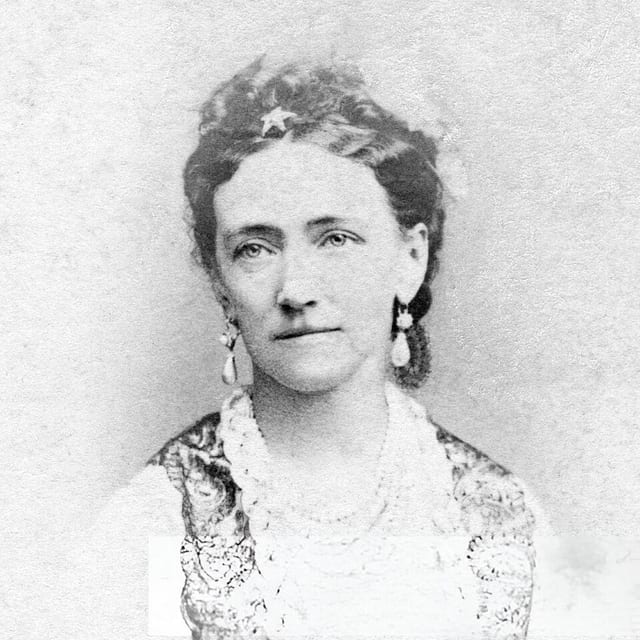 Gen 1
Gen 1Louise of Hesse-Kassel
1817 - 1898
Queen consort of Denmark
Photo: Unknown photographer, Public domain, via Wikimedia Commons
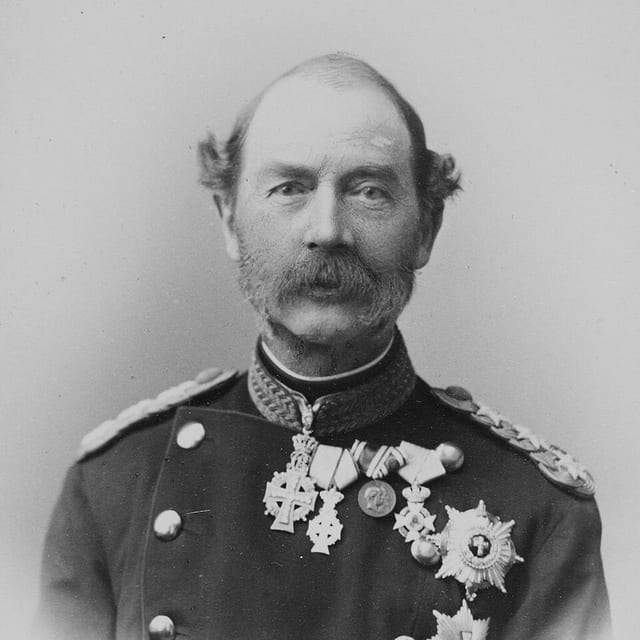 Gen 1
Gen 1Christian IX of Denmark
1818 - 1906
King of Denmark
Photo: The original uploader was Anathema at German Wikipedia ., Public domain, via Wikimedia Commons
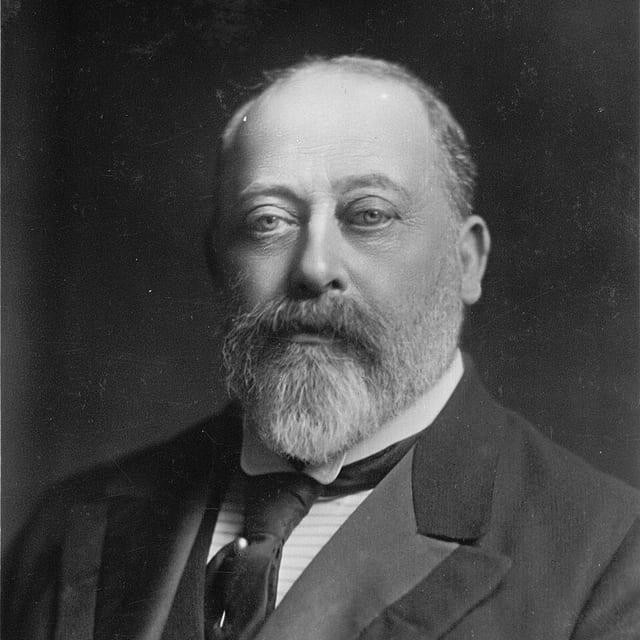
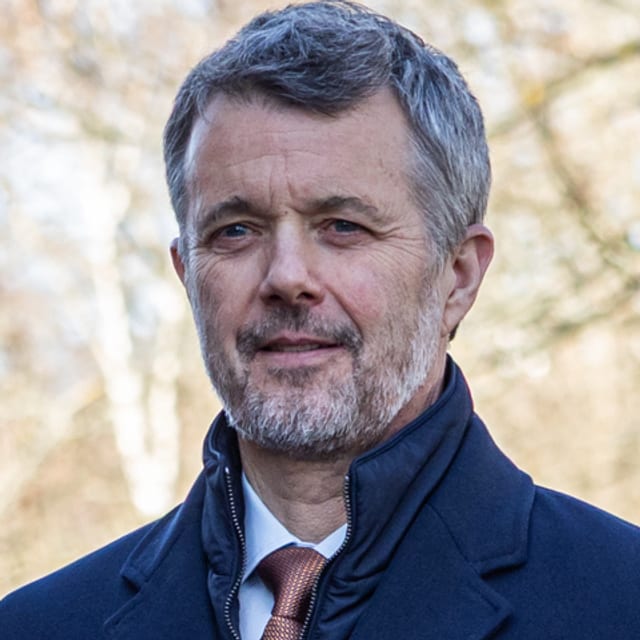
Family Members
Showing 11 of 59 people
Louise of Hesse-Kassel
Gen 1 · 1817 - 1898
Louise of Hesse-Kassel (1817 to 1898) was Queen of Denmark as the wife of Christian IX and the matriarch of the modern House of Glücksburg. Born in Kassel, she was a niece of Christian VIII of Denmark, and it was partly through her own descent that her husband's claim to the Danish succession was strengthened. She married Christian in 1842 and had six children: Frederik VIII, Alexandra, George I of Greece, Dagmar, Thyra and Valdemar. A gifted musician and a determined organiser of her children's futures, she did more than anyone to arrange the marriages that carried her family into the British, Russian, Greek and later Norwegian royal houses.
Christian IX of Denmark
Gen 1 · 1818 - 1906
Christian IX (1818 to 1906) was King of Denmark from 1863 until his death, and the ancestor from whom every later member of the House of Glücksburg descends. Born at Gottorp Castle in Schleswig into a cadet branch of the House of Oldenburg, he was named heir to the childless Frederik VII and came to the throne in a year of crisis, losing Schleswig and Holstein in the war of 1864 and later accepting the parliamentary reforms that shaped modern Danish politics. With his wife Louise of Hesse-Kassel he had six children whose marriages earned him the nickname father-in-law of Europe: Frederik VIII of Denmark, Alexandra, queen consort of the United Kingdom, George I of Greece, Dagmar, who became Empress Maria Feodorovna of Russia, Thyra, and Valdemar.
Frederik VIII of Denmark
Gen 2 · 1843 - 1912
Frederik VIII (1843 to 1912) was King of Denmark from 1906 to 1912, the eldest son of Christian IX and Louise of Hesse-Kassel. He waited more than forty years as crown prince, during which he was more sympathetic than his father to the liberal parliamentary movement, and his short reign was marked by a conciliatory tone towards the Danish government and a cautious reform of the relationship with Iceland. He married Louise of Sweden in 1869. Two of their sons became kings: Christian X of Denmark and Prince Carl, who was elected King of Norway in 1905 as Haakon VII, making Frederik VIII the father of two reigning Scandinavian dynasties.
Alexandra of Denmark
Gen 2 · 1844 - 1925
Alexandra of Denmark (1844 to 1925) was Queen consort of the United Kingdom and Empress of India as the wife of Edward VII. The eldest daughter of Christian IX and Louise of Hesse-Kassel, she grew up in modest circumstances in Copenhagen before her marriage in 1863 made her Princess of Wales, a role she held for 38 years, longer than anyone before her. Admired for her style and her charitable work, she founded the Imperial Military Nursing Service that bears her name and gave her name to Alexandra Rose Day. Her sister Dagmar became Empress of Russia, her brother became George I of Greece, and her daughter Maud became Queen of Norway.
Constantine I of Greece
Gen 3 · 1868 - 1923
Constantine I (1868 to 1923) was King of the Hellenes from 1913 to 1917 and again from 1920 to 1922, the eldest son of George I and Olga Constantinovna of Russia. He commanded Greek forces in the Balkan Wars, when Greece nearly doubled in size, which made him immensely popular at his accession. His insistence on neutrality in the First World War brought him into open conflict with his prime minister Eleftherios Venizelos, splitting the country in the National Schism and forcing him from the throne in 1917. Restored in 1920, he lost the throne again after the defeat in Asia Minor and died in exile in Palermo. He married Sophia of Prussia and was the father of three Greek kings.
Nicholas II of Russia
Gen 3 · 1868 - 1918
Nicholas II (1868 to 1918) was the last Emperor of Russia, reigning from 1894 until his abdication in March 1917. He was the eldest son of Alexander III and of Maria Feodorovna, the Danish-born daughter of Christian IX, which made him a grandson of the founder of the House of Glücksburg and a first cousin of both George V of the United Kingdom and Christian X of Denmark, whom he closely resembled. His reign saw rapid industrial growth alongside the defeat of the Russo-Japanese War, the revolution of 1905 and the creation of the Duma, and finally the strains of the First World War, which brought the three-century Romanov monarchy to an end. He died in 1918.
George II of Greece
Gen 4 · 1890 - 1947
George II (1890 to 1947) was King of the Hellenes from 1922 to 1924 and again from 1935 until his death, the eldest son of Constantine I and Sophia of Prussia. He came to the throne after the Asia Minor defeat, was pushed aside within two years when Greece declared a republic, and lived in exile in Romania and Britain for eleven years before a plebiscite restored the monarchy in 1935. His second reign saw the Metaxas government, the Italian invasion of 1940 and the German occupation, through which he led the Greek government in exile from Cairo and London. He returned to Greece in 1946 and died the following year, succeeded by his brother Paul.
Alexander of Greece
Gen 4 · 1893 - 1920
Alexander (1893 to 1920) was King of the Hellenes from 1917 to 1920, the second son of Constantine I and Sophia of Prussia. He was placed on the throne by the Allies and the Venizelos government after his father and elder brother were forced out, and ruled as a largely powerless monarch while real authority rested with his prime minister, who kept him from political affairs and from contact with his exiled family. During his short reign Greece fought alongside the Allies and made large territorial gains in Thrace and Asia Minor. His marriage in 1919 to Aspasia Manos, a Greek commoner, was not initially recognised. He died in 1920 and was succeeded by his father.
Sofía of Greece and Denmark
Gen 5 · b. 1938
Queen Sofía of Spain (born 1938) was Queen consort of Spain from 1975 to 2014 and is the eldest child of Paul of Greece and Frederica of Hanover. Born in Athens as a princess of Greece and Denmark, she was educated in Germany and Greece, trained as a paediatric nurse, and took part in the Greek sailing team's preparations for the 1960 Olympics alongside her brother Constantine II. She married Juan Carlos of Spain in Athens in 1962, converting from Orthodoxy to Catholicism, and became queen when he acceded on the death of Franco in 1975. Widely respected for her work on disability, music education and social welfare, she is the mother of King Felipe VI of Spain.
Constantine II of Greece
Gen 5 · 1940 - 2023
Constantine II (1940 to 2023) was the last King of the Hellenes, reigning from 1964 to 1973. The only son of Paul and Frederica of Hanover, he spent his early childhood in wartime exile and won an Olympic gold medal for Greece in Dragon class sailing at the Rome Games in 1960. He came to the throne at twenty-three; within three years the colonels' coup of April 1967 had stripped him of power, and after a failed counter-move that December he left the country. The junta abolished the monarchy, and a referendum in 1974 confirmed the republic. He lived mainly in London for decades before settling again in Greece, and remained a member of the International Olympic Committee. He married Anne-Marie of Denmark in 1964.
Alexia of Greece and Denmark
Gen 6 · b. 1965
Princess Alexia of Greece and Denmark (born 1965) is the eldest child of Constantine II and Anne-Marie of Denmark. Born at Mon Repos on Corfu, the same house as her kinsman Prince Philip, she was two when her family left Greece, and she grew up in Rome and London. She studied art history and later trained to work with children with special educational needs, teaching in that field. In 1999 she married Carlos Morales Quintana, an architect, and the couple lived for many years in Lanzarote in the Canary Islands and later in London. She is the sister of Crown Prince Pavlos, Nikolaos, Theodora and Philippos.
Is this your family?
Claim this tree to correct it, add relatives, and keep it up to date yourself.
Claim this treeStart your own family tree
Build yours for free, then send relatives a link to fill in their side of the family.
Start my tree, freeRelationship Explorer
How are two people related?
Pick any two names in the tree to trace the exact line of descent, marriage or shared ancestor connecting them.
Louise of Hesse-Kassel is Frederik X of Denmark's 3x Great-Grandmother.
- 👨Frederik X of Denmarkson of
- 👩Margrethe II of Denmarkdaughter of
- 👨Frederik IX of Denmarkson of
- 👨Christian X of Denmarkson of
- 👨Frederik VIII of Denmarkson of
- 👩Louise of Hesse-Kassel
Find out how you're related to your own cousins.
Build your treeIs this your family?
Claim the Glucksburg family tree to take it over, edit it, and add family members yourself.
Frequently Asked Questions
How many people are in the Glucksburg family tree?+−
This family tree currently documents 59 people across 7 recorded generations.
How many generations does the Glucksburg family tree span?+−
7 generations are recorded so far, and may grow as more history is added.
How many marriages are recorded?+−
19 marriages are recorded in this family.
Where is the Glucksburg family from?+−
The most commonly recorded native place is Copenhagen, Denmark.
Start building your own family story
Create a tree in minutes, import a GEDCOM file, or explore more public family trees.
Free. Private by default. GEDCOM export any time.