Public Family Trees/Mahatma Gandhi Family Tree - The Gandhi Lineage
Mahatma Gandhi Family Tree - The Gandhi Lineage
Explore 21 people across 5 generations of the Mahatma Gandhi family, built with My rOoOts.
21
People
5
Generations
6
Living
15
Passed on
5
Marriages
68 yrs
Avg. lifespan
Family Tree
21 members mapped across 5 generations
Loading family tree…
Your turn
Build a tree like this for your own family
Free, with no sign-up to start. Add yourself, then your parents and grandparents, and watch it grow.
About the Mahatma Gandhi family
The Gandhi family is the direct biological lineage of Mohandas Karamchand Gandhi (1869-1948), the Indian independence leader known as Mahatma Gandhi, tracing his descendants through his wife Kasturba Gandhi and their four sons down to his great-grandchildren active in India, South Africa and beyond. This family is entirely distinct from the Nehru-Gandhi political dynasty of Jawaharlal Nehru, Indira Gandhi and Rajiv Gandhi, whose surname comes from Indira Gandhi's husband Feroze Gandhy and shares no blood relation with Mahatma Gandhi at all.
At a glance
- Patriarch
- Mohandas Karamchand Gandhi (1869-1948)
- Native place
- Porbandar, Gujarat, India
- Spouse
- Kasturba Gandhi (1869-1944)
- Sons
- Harilal, Manilal, Ramdas, Devdas
- Generations covered
- 4 (parents to great-grandchildren)
- Members in this tree
- 21
- Distinct from
- The Nehru-Gandhi political dynasty
4 generations, 1869 to 1960
1869
Gen 2
Mohandas Karamchand Gandhi1888
Gen 3
Harilal Gandhi1935
Gen 4
Rajmohan Gandhi1960
Gen 5
Tushar Gandhi
Read the full historyHide the full history
Origins
The family's roots lie in Porbandar, in the Kathiawar region of present-day Gujarat, where Mohandas Gandhi was born to Karamchand Gandhi, diwan (chief minister) of the princely state, and his wife Putlibai. Gandhi married Kasturba Makhanji Kapadia in 1883, and the couple's shared life, spanning his legal training in London, two decades of activism in South Africa, and his return to lead India's independence movement, produced four sons: Harilal, Manilal, Ramdas and Devdas. Each son's branch of the family took a markedly different path, from journalism and diplomacy to activism against apartheid, while remaining bound by their shared descent from Mohandas and Kasturba.
Notable members
Manilal Gandhi carried his father's work to South Africa, editing the newspaper Indian Opinion for decades; his children Arun Gandhi and Ela Gandhi became, respectively, an internationally known peace educator and an anti-apartheid Member of the South African Parliament. Devdas Gandhi became a leading Indian journalist as editor of the Hindustan Times, and his four children with Lakshmi Gandhi, Rajmohan, Ramchandra, Gopalkrishna and Tara, went on to prominence as a historian, a philosopher, a diplomat-turned-Governor of West Bengal, and a writer. The family's fourth generation includes Tushar Gandhi, a great-grandson through eldest son Harilal's line, known for his writing on his great-grandfather's life and legacy.
Significance
Across four generations, the Gandhi family has remained closely tied to the causes Mohandas Gandhi championed: nonviolent resistance, civil rights, journalism in service of public life, and constructive social work, carried forward in India, South Africa and internationally rather than concentrated in any single institution or country.
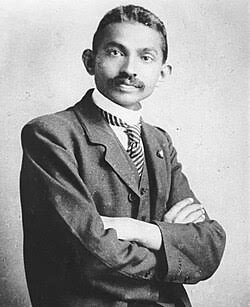
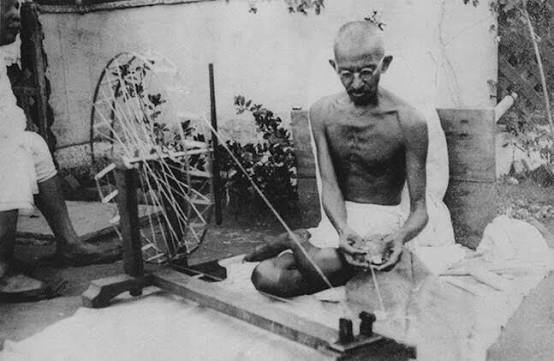
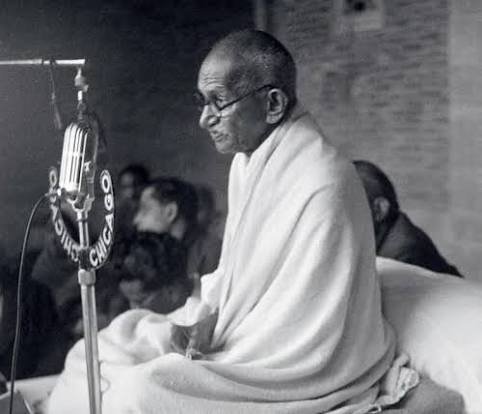
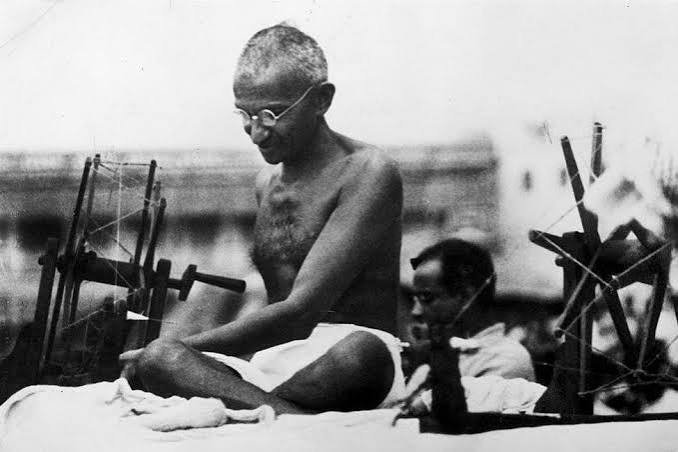
Mahatma Gandhi Family Photos
13 photos shared by the family
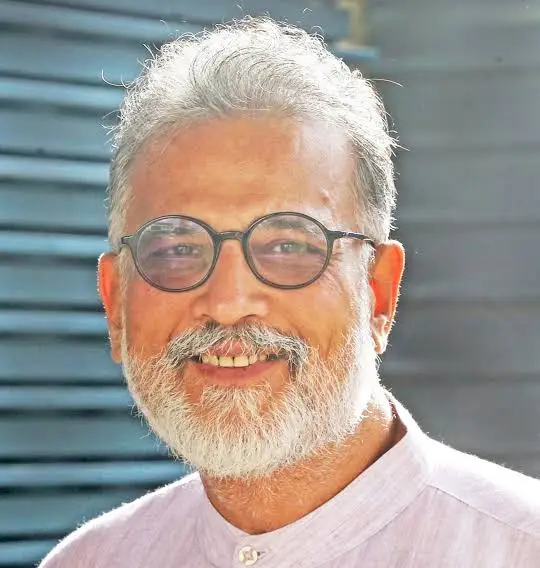
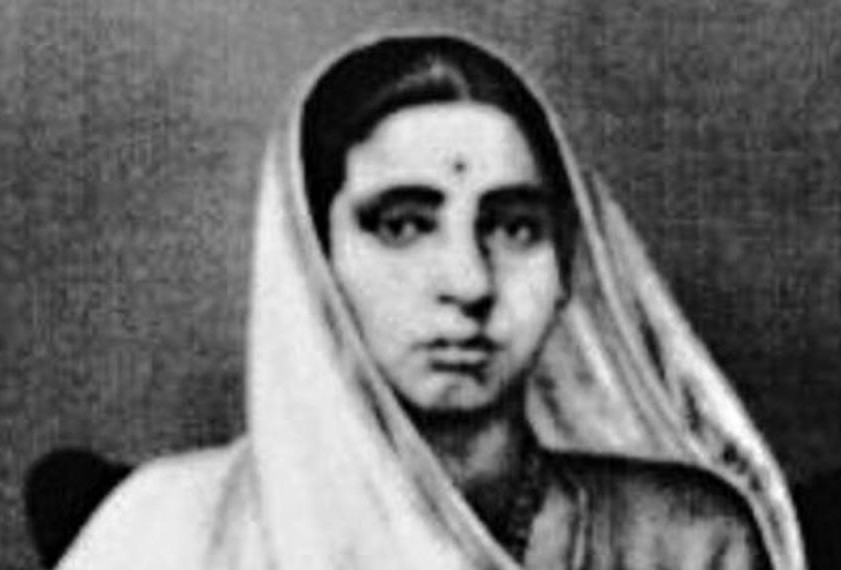
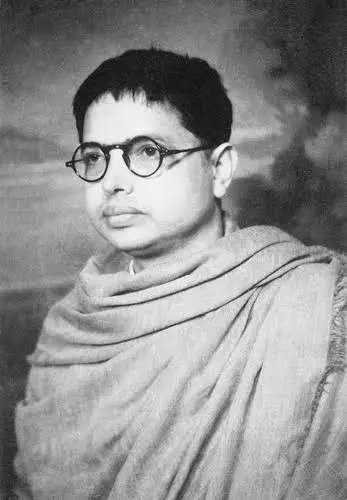
Family Members
Showing 11 of 21 people
Karamchand Gandhi
Gen 1
Karamchand Gandhi, known as Kaba Gandhi, was the father of Mahatma Gandhi and served as diwan (chief minister) to the princely state of Porbandar and later to Rajkot and Vankaner in the Kathiawar region of present-day Gujarat. A respected local administrator, he came from a family with a long tradition of holding ministerial posts in the small Kathiawari states. He married several times; his last wife, Putlibai, was Mohandas Gandhi's mother. Karamchand died in 1885, when Mohandas was a teenager, an event Gandhi later wrote about in his autobiography as a formative and painful memory of his youth.
Putlibai Gandhi
Gen 1
Putlibai Gandhi was the mother of Mahatma Gandhi and the fourth wife of Karamchand Gandhi, diwan of Porbandar. A devout Hindu of the Pranami Vaishnava tradition, she was known for her deep religiosity, frequent fasting, and strict personal discipline, qualities that Gandhi later credited as a profound early influence on his own commitment to truth, self-restraint, and nonviolence. She raised Mohandas in Porbandar and Rajkot alongside his siblings. Putlibai died in 1891 while Gandhi was studying law in London, and he learned of her death only after returning to India, a loss he described as one of the deepest sorrows of his early life.
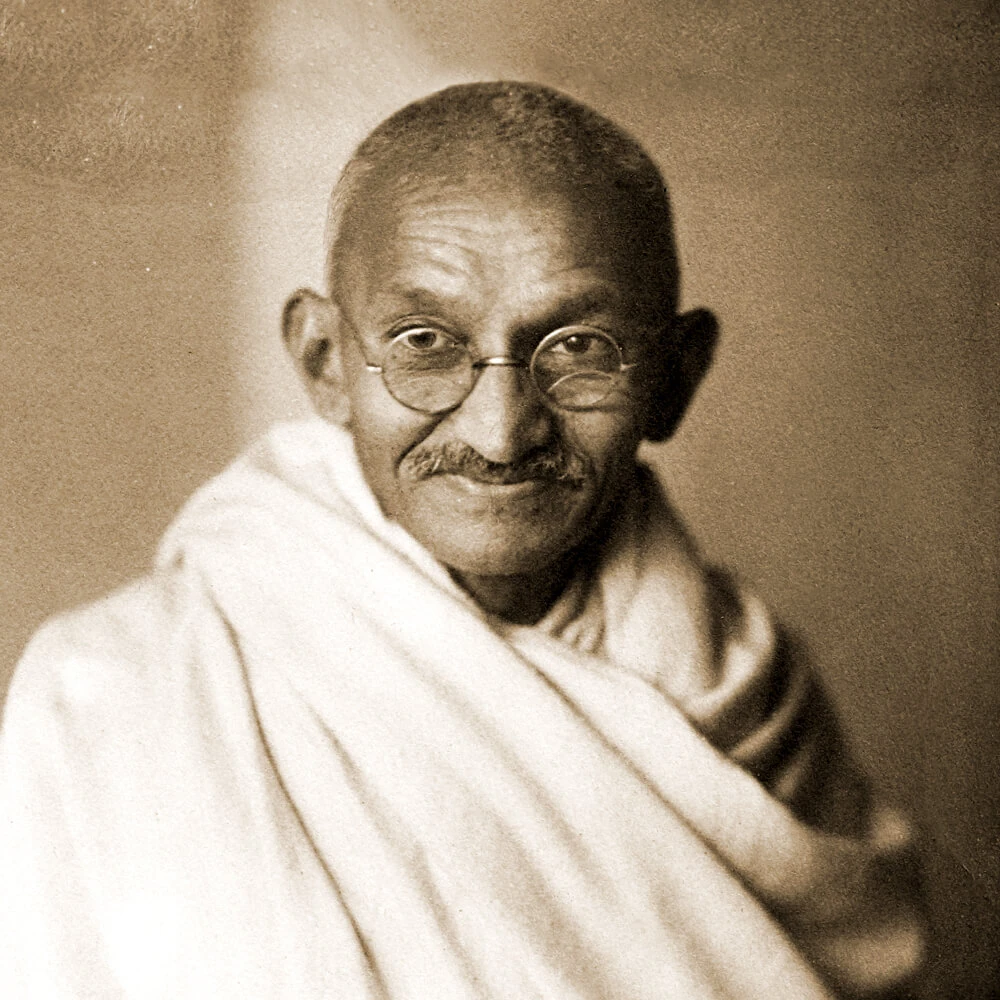
Mohandas Karamchand Gandhi
Gen 2 · 1869 - 1948
Mohandas Karamchand Gandhi (2 October 1869-1948) was an Indian lawyer and political leader who led India's independence movement from British rule through nonviolent civil disobedience, a philosophy known as satyagraha. Born in Porbandar, Gujarat, to Karamchand and Putlibai Gandhi, he trained as a barrister in London, developed his methods of nonviolent resistance while working in South Africa, and returned to India in 1915 to lead campaigns such as the Salt March. He married Kasturba Gandhi in 1883 and the couple had four sons, Harilal, Manilal, Ramdas and Devdas, whose descendants carried forward his legacy in India and South Africa. Revered as the Father of the Nation in India, he is honored worldwide as Mahatma, meaning 'great soul'.
Kasturba Gandhi
Gen 2 · 1869 - 1944
Kasturba Gandhi (1869-1944), also known as Kasturba Makhanji Kapadia before marriage, was the wife of Mahatma Gandhi and an activist in her own right. Married to Mohandas in 1883 in an arranged child marriage customary at the time, she joined him in South Africa and later in India, participating in satyagraha campaigns, being jailed multiple times for civil disobedience, and organizing relief and education work among India's poor. The couple had four sons: Harilal, Manilal, Ramdas and Devdas. She died in 1944 while imprisoned with her husband at the Aga Khan Palace in Pune, during the Quit India movement. She is remembered as 'Ba', a term of affection and respect across India.
Harilal Gandhi
Gen 3 · 1888 - 1948
Harilal Gandhi (1888-1948) was the eldest son of Mahatma Gandhi and Kasturba Gandhi. His relationship with his father was troubled and often publicly strained: Gandhi discouraged him from pursuing a formal legal education in England, a decision Harilal resented for the rest of his life. Harilal struggled with business failures, alcoholism, and a public conversion to Islam and later return to Hinduism, all covered extensively in the Indian press of the time. He married Gulab (Chanchal) Gandhi, with whom he had several children, including a son, Kantilal Gandhi. Estranged from his father for much of his adult life, Harilal died in Mumbai in 1948, shortly after Gandhi's own death.
Manilal Gandhi
Gen 3 · 1892 - 1956
Manilal Gandhi (1892-1956) was the second son of Mahatma Gandhi and Kasturba Gandhi. He spent most of his adult life in South Africa, where he took over editorship of Indian Opinion, the newspaper his father had founded in 1903 to serve the Indian community, and continued it for decades from the Phoenix Settlement near Durban. He was active in the Natal Indian Congress and took part in passive-resistance campaigns against discriminatory legislation in South Africa, for which he was imprisoned several times. He married Sushila Gandhi, and their children, including Arun Gandhi and Ela Gandhi, continued the family's activist tradition in both India and South Africa. Manilal died in 1956.
Ramdas Gandhi
Gen 3 · 1897 - 1969
Ramdas Gandhi (1897-1969) was the third son of Mahatma Gandhi and Kasturba Gandhi. He worked in business in central India, including a period managing a printing press and other enterprises in Nagpur, while remaining closely involved in his father's constructive-work and khadi (hand-spun cloth) programs. He accompanied Gandhi during parts of the independence movement and was present at various points in his father's later life. He married Nirmala Gandhi, and their daughter, Sumitra Kulkarni, went on to be associated with the preservation of Sabarmati Ashram, the Ahmedabad institution central to Gandhi's constructive-work philosophy. Ramdas died in 1969.
Rajmohan Gandhi
Gen 4 · b. 1935
Rajmohan Gandhi (born 1935) is an Indian historian, biographer and former politician, a grandson of Mahatma Gandhi through his son Devdas Gandhi and daughter-in-law Lakshmi Gandhi. A prolific author, he has written biographies of his grandfather, including 'Mohandas: A True Story of a Man, His People and an Empire', as well as works on other major figures in Indian history. He served as a member of the Rajya Sabha, the upper house of India's Parliament, and has held academic positions at universities including the University of Illinois at Urbana-Champaign, where he has taught history and political science. He is the brother of Ramchandra Gandhi, Gopalkrishna Gandhi and Tara Gandhi Bhattacharjee.
Ela Gandhi
Gen 4 · b. 1940
Ela Gandhi (born 1940) is a South African social worker and politician, a granddaughter of Mahatma Gandhi through his son Manilal Gandhi and daughter-in-law Sushila Gandhi. Raised at the Phoenix Settlement near Durban that her grandfather had founded, she was active in the anti-apartheid movement and was later placed under a banning order by the South African government for her activism. Following the end of apartheid, she served as a Member of Parliament for the African National Congress from 1994 to 2004 and has continued work promoting nonviolence and restorative justice through the Gandhi Development Trust. She is the sister of peace activist Arun Gandhi.
Gopalkrishna Gandhi
Gen 4 · b. 1945
Gopalkrishna Gandhi (born 1945) is an Indian diplomat, writer and former civil servant, a grandson of Mahatma Gandhi through his son Devdas Gandhi and daughter-in-law Lakshmi Gandhi. He had a long career in the Indian Administrative Service and Indian Foreign Service, serving as High Commissioner to South Africa and Sri Lanka and Ambassador to Norway and Iceland, before serving as Governor of West Bengal from 2004 to 2009. He was also the Vice-Presidential candidate for a coalition of opposition parties in India's 2017 election. He is the brother of Rajmohan Gandhi, Ramchandra Gandhi and Tara Gandhi Bhattacharjee.
Tushar Gandhi
Gen 5 · b. 1960
Tushar Gandhi (born 1960) is an Indian author and social activist, a great-grandson of Mahatma Gandhi through the line of his eldest son, Harilal Gandhi, and Harilal's son, Kantilal Gandhi. He is best known for his book 'Let's Kill Gandhi', a detailed account of the events and conspiracy surrounding his great-grandfather's death, and he has served as president of the Mahatma Gandhi Foundation, an organization dedicated to promoting Gandhian values. He has been an outspoken public commentator on nonviolence, communal harmony and the political uses and misuses of his great-grandfather's legacy in contemporary India.
Is this your family?
Claim this tree to correct it, add relatives, and keep it up to date yourself.
Claim this treeStart your own family tree
Build yours for free, then send relatives a link to fill in their side of the family.
Start my tree, freeRelationship Explorer
How are two people related?
Pick any two names in the tree to trace the exact line of descent, marriage or shared ancestor connecting them.
Devdas Gandhi is Arun Gandhi's Uncle.
- 👨Arun Gandhison of
- 👨Manilal Gandhison of
- 👨Mohandas Karamchand Gandhifather of
- 👨Devdas Gandhi
Find out how you're related to your own cousins.
Build your treeIs this your family?
Claim the Mahatma Gandhi family tree to take it over, edit it, and add family members yourself.
Frequently Asked Questions
How many people are in the Mahatma Gandhi family tree?+−
This family tree currently documents 21 people across 5 recorded generations.
How many generations does the Mahatma Gandhi family tree span?+−
5 generations are recorded so far, and may grow as more history is added.
How many marriages are recorded?+−
5 marriages are recorded in this family.
Where is the Mahatma Gandhi family from?+−
The most commonly recorded native place is Porbandar, Gujarat, India.
Start building your own family story
Create a tree in minutes, import a GEDCOM file, or explore more public family trees.
Free. Private by default. GEDCOM export any time.