Public Family Trees/Stuart Family Tree - The House of Stuart from Mary, Queen of Scots to Bonnie Prince Charlie
Stuart Family Tree - The House of Stuart from Mary, Queen of Scots to Bonnie Prince Charlie
Explore 49 people across 13 generations of the Stuart family, built with My rOoOts.
49
People
13
Generations
0
Living
49
Passed on
22
Marriages
46 yrs
Avg. lifespan
Family Tree
49 members mapped across 13 generations
Loading family tree…
Your turn
Build a tree like this for your own family
Free, with no sign-up to start. Add yourself, then your parents and grandparents, and watch it grow.
About the Stuart family
The House of Stuart was the royal dynasty that ruled Scotland from 1371 and both Scotland and England from 1603 until 1714, giving Britain fourteen monarchs from Robert II to Queen Anne as well as the Jacobite claimants who carried its cause into exile. Spelled Stewart in Scotland and Stuart after Mary, Queen of Scots adopted the French form, the family holds the unusual distinction of having united two crowns by inheritance rather than conquest, and of ending in a disputed succession that reshaped the British constitution.
At a glance
- Founder
- Robert II, King of Scots from 1371
- Ruled
- Scotland 1371 to 1714; England and Ireland 1603 to 1714
- Origin
- Renfrewshire, Scotland
- Union of the Crowns
- 1603, under James VI of Scotland and I of England
- Last reigning monarch
- Anne, Queen of Great Britain, died 1714
- Jacobite claimants
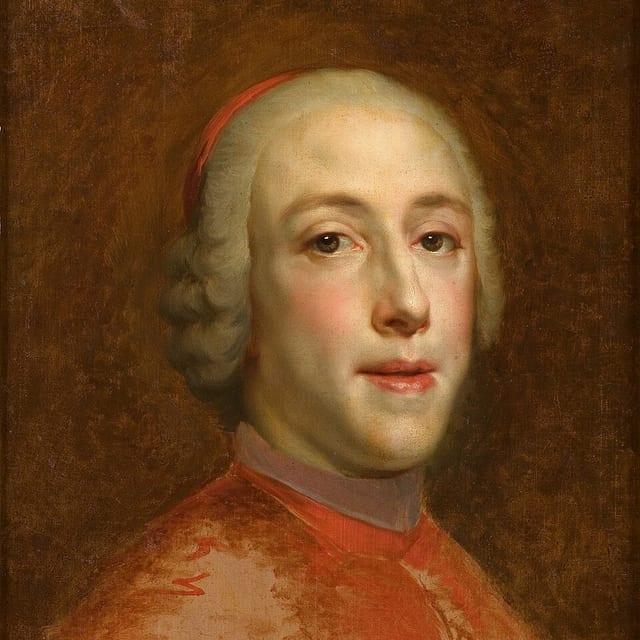
- James Francis Edward, Charles Edward and Henry Benedict Stuart
- Succeeded by
- The House of Hanover, through Sophia of Hanover
13 generations, 1316 to 1689
1316
Gen 1
Robert II Stewart1337
Gen 2
Robert III Stewart1394
Gen 3
James I Stewart1430
Gen 4
James II Stewart1452
Gen 5
James III Stewart1473
Gen 6
James IV Stewart1512
Gen 7
James V Stewart1542
Gen 8
Mary Stuart1566
Gen 9
James VI and I Stuart1594
Gen 10
Henry Frederick Stuart1630
Gen 11
Charles II Stuart1650
Gen 12
William III of Orange1689
Gen 13
William Stuart
Read the full historyHide the full history
Origins
The family took its name from its office. The Stewarts were hereditary High Stewards of Scotland, a post granted in the twelfth century to a Breton house settled in Renfrewshire. In 1315 Walter Stewart, 6th High Steward, married Marjorie Bruce, daughter of King Robert the Bruce. Their son became Robert II in 1371 when the direct Bruce line failed, and the stewardship turned into a crown. For more than two centuries afterwards the Stewarts ruled Scotland alone, through a run of reigns cut short by battle, captivity and long royal minorities that left the nobility unusually powerful.
Notable members
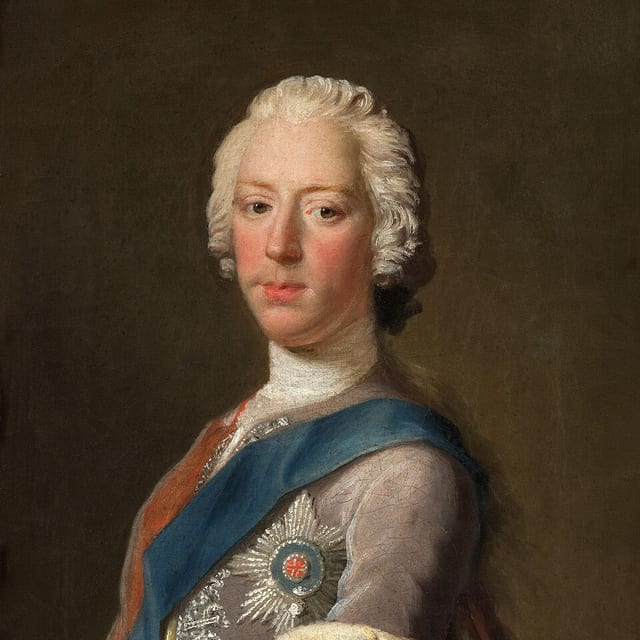
James IV, the most cultivated of the Scottish kings, married Margaret Tudor in 1503 and so planted the claim that would carry his descendants to the English throne. His granddaughter Mary, Queen of Scots became queen at six days old, reigned briefly and turbulently, and was deposed in 1567 and executed in England twenty years later. Her son, James VI of Scotland, inherited the English crown in 1603 as James I and became the first monarch to rule both kingdoms. His son Charles I lost the Civil Wars and his throne; Charles II returned at the Restoration in 1660; James II and VII was deposed in the Revolution of 1688, after which his daughters Mary II and Anne reigned in his place. In exile his son James Francis Edward Stuart and grandson Charles Edward Stuart, remembered as Bonnie Prince Charlie, led the Jacobite attempts to recover the throne, ending with the rising of 1745.
Significance
No other British dynasty changed the shape of the state so much. The Stuarts brought Scotland and England under one sovereign, presided over the King James Bible and the theatre of Shakespeare's late career, lost a king to Parliament, and provoked the settlements of 1689 and 1701 that made the monarchy answerable to Parliament and Protestant by statute. When Queen Anne died childless in 1714, the crown passed under the Act of Settlement to the descendants of her cousin Sophia of Hanover, granddaughter of James VI and I, so every British monarch since is still a Stuart descendant.
Notable Members
Key figures from 13 generations of the Stuart family
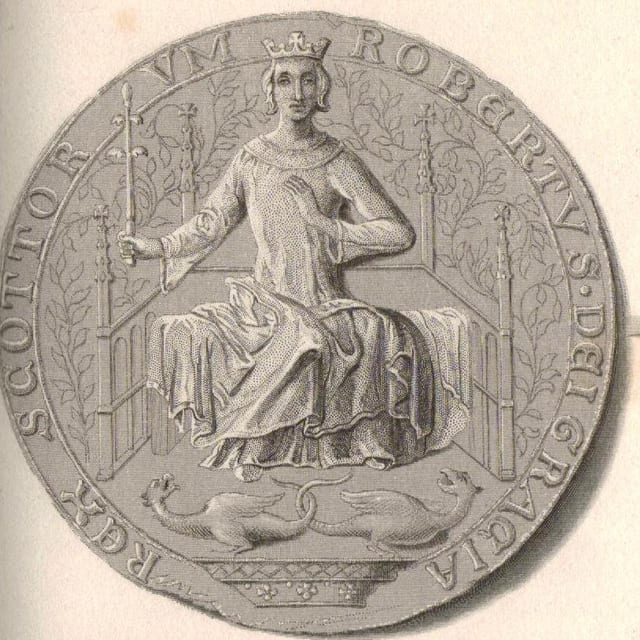 Gen 1
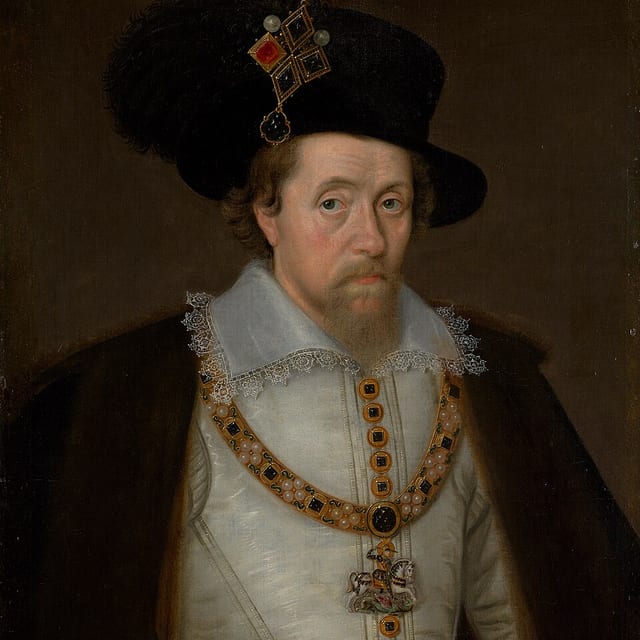
Gen 1Robert II Stewart
1316 - 1390
King of Scots
Photo: Unknown author Unknown author, Public domain, via Wikimedia Commons
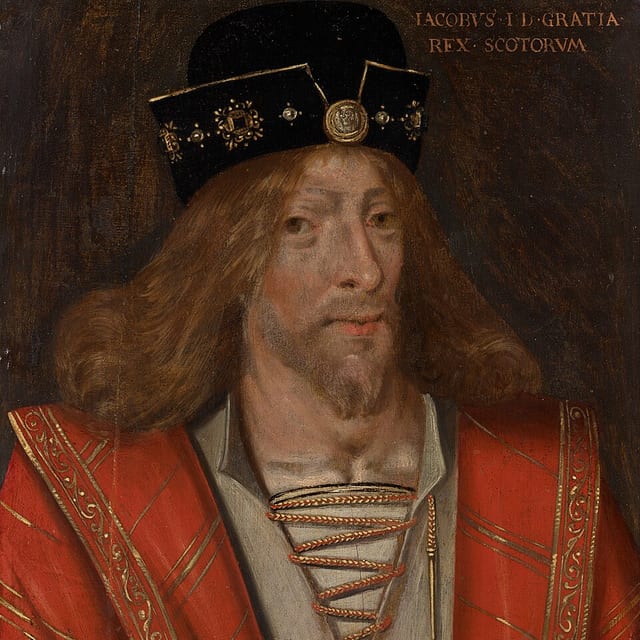
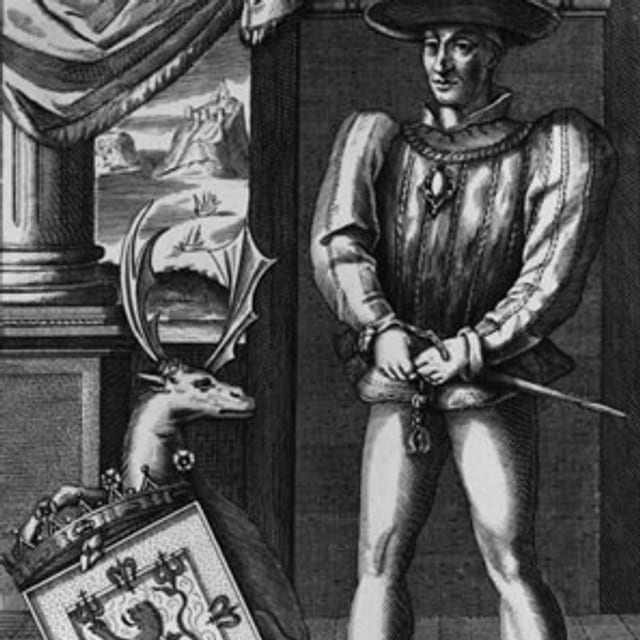
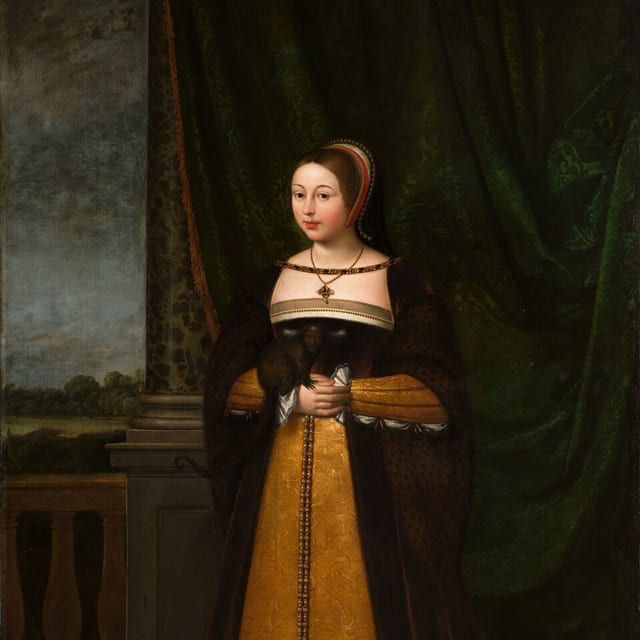
 Gen 10
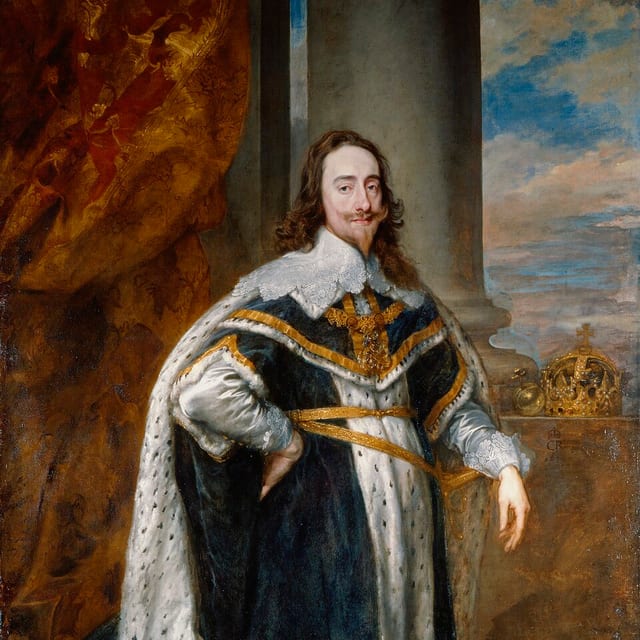
Charles I Stuart
1600 - 1649
King of England, Scotland and Ireland
Photo: Anthony van Dyck, Public domain, via Wikimedia Commons
 Gen 11
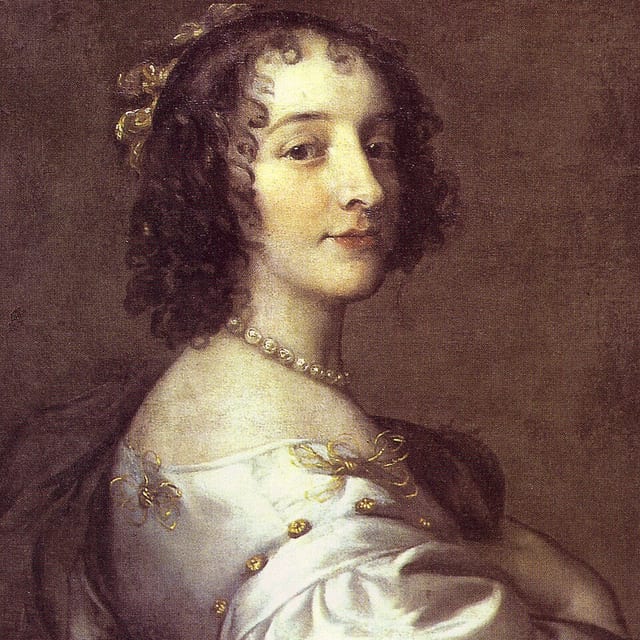
Sophia of Hanover
1630 - 1714
Electress of Hanover
Photo: Peter Lely / Workshop of Peter Lely, Public domain, via Wikimedia Commons
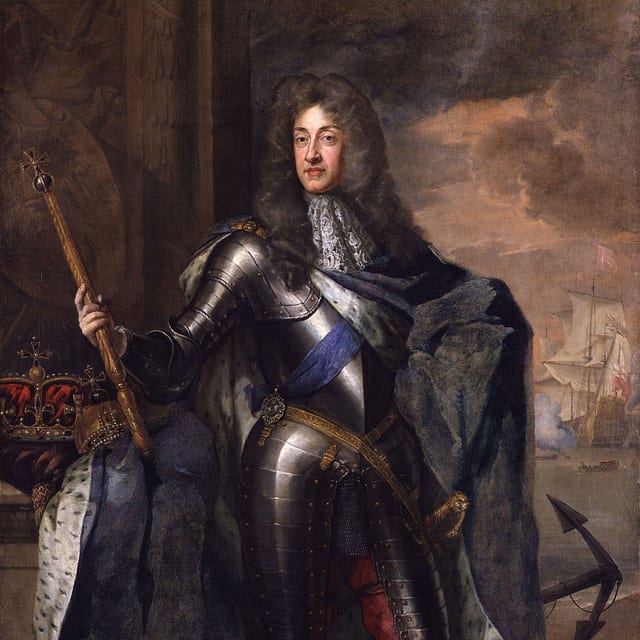 Gen 11
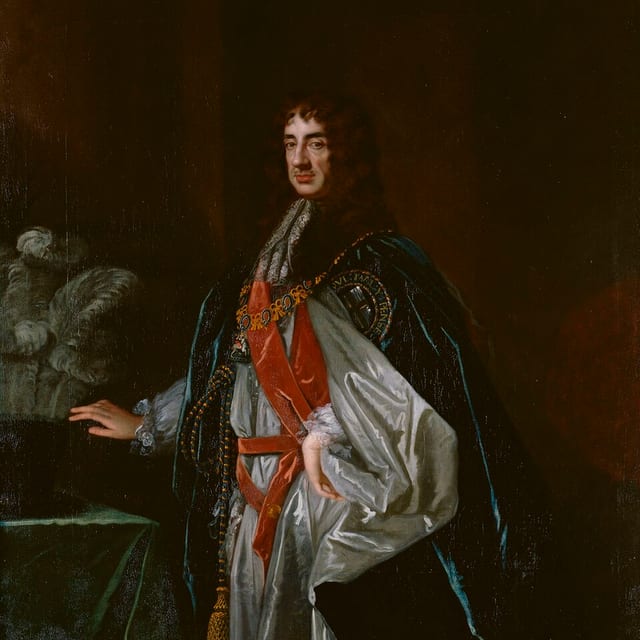
James II and VII Stuart
1633 - 1701
King of England, Scotland and Ireland
Photo: Godfrey Kneller, Public domain, via Wikimedia Commons
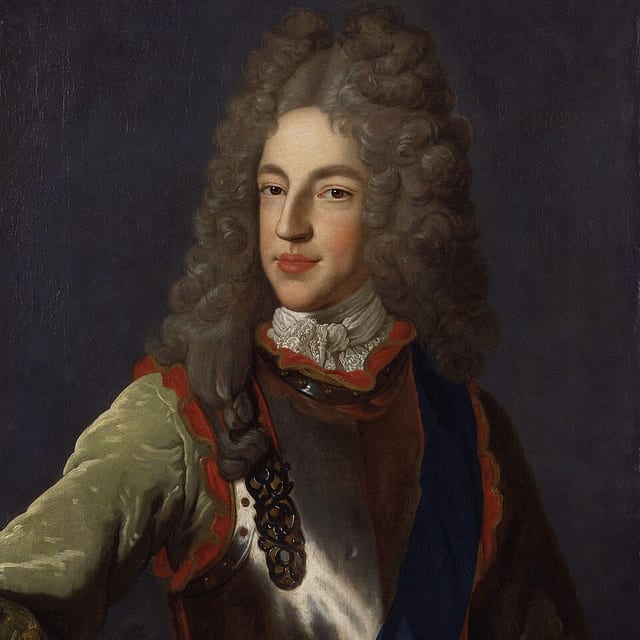 Gen 12
James Francis Edward Stuart
1688 - 1766
Jacobite claimant to the British throne
Photo: Alexis Simon Belle, Public domain, via Wikimedia Commons
Family Members
Showing 11 of 49 people
Robert II Stewart
Gen 1 · 1316 - 1390
Robert II was the first Stewart king of Scots, reigning from 1371 until his death in 1390. He was the son of Walter Stewart, 6th High Steward of Scotland, and Marjorie Bruce, daughter of King Robert the Bruce, and it was through his mother that the crown eventually reached the Stewart line. Born at Paisley in 1316 and orphaned as an infant, he acted as Guardian of Scotland during the long absences and captivity of his uncle David II, and succeeded him in 1371 at the age of fifty-five. His reign saw renewed border warfare with England and a growing reliance on his sons to govern in his name. By his first wife, Elizabeth Mure of Rowallan, he was the father of Robert III, and every later Stewart and Stuart monarch descends from him.
James I Stewart
Gen 3 · 1394 - 1437
James I was king of Scots from 1406 until 1437, though he spent the first eighteen years of his reign as a prisoner in England. Born at Dunfermline in 1394, the youngest son of Robert III and Annabella Drummond, he was captured at sea in 1406 while being sent to France and held at the English court, where he received an excellent education and is generally credited with the long courtly poem The Kingis Quair. Ransomed in 1424, he returned with his English wife Joan Beaufort and ruled with fierce energy, curbing the great magnates, reforming parliament and taxation, and destroying the rival Albany Stewarts. His reign ended when he was killed at Perth in February 1437, and his six-year-old son succeeded as James II.
James II Stewart
Gen 4 · 1430 - 1460
James II was king of Scots from 1437 to 1460. Born at Holyrood in 1430 to James I and Joan Beaufort, he was six when he came to the throne, and his minority was dominated by the rivalries of the Livingston, Crichton and Douglas families. Taking power in his own right in the later 1440s, he broke the overmighty Black Douglases in a series of campaigns that ended with their forfeiture in 1455, and greatly strengthened the crown's lands and finances. He was an enthusiast for the new siege artillery of the age, and it was at the siege of the English-held Roxburgh Castle in August 1460 that he was killed when one of his own guns burst. His son succeeded as James III.
James III Stewart
Gen 5 · 1452 - 1488
James III was king of Scots from 1460 to 1488. The son of James II and Mary of Guelders, he was about eight at his accession and grew into a cultivated but unpopular ruler, more interested in the arts, music and architecture than in the hunting and campaigning his nobility expected. His marriage to Margaret of Denmark in 1469 brought Orkney and Shetland into the Scottish crown in place of her unpaid dowry, a lasting gain. His attempts at friendship with England, his reliance on low-born favourites and his quarrels with his own brothers repeatedly set the magnates against him, and he was overthrown and killed in 1488 after the Battle of Sauchieburn, fought in the name of his eldest son, who became James IV.
James IV Stewart
Gen 6 · 1473 - 1513
James IV was king of Scots from 1488 to 1513 and is usually reckoned the most successful of the Stewart kings. The son of James III and Margaret of Denmark, he came to the throne at fifteen after the rebellion that ended his father's reign, and spent his life atoning for it. He was a genuine Renaissance prince: a linguist, a patron of the poets William Dunbar and Robert Henryson, a founder of the College of Surgeons in Edinburgh and of Scotland's first printing press, and the builder of the great warship the Michael. His marriage to Margaret Tudor in 1503, the Treaty of Perpetual Peace, eventually carried his descendants to the English throne. He was killed at the Battle of Flodden in 1513.
James V Stewart
Gen 7 · 1512 - 1542
James V was king of Scots from 1513 to 1542. Born at Linlithgow Palace in 1512 to James IV and Margaret Tudor, he was seventeen months old when his father was killed at Flodden, and his long minority was fought over by his mother, the Earl of Angus and the Duke of Albany. Ruling in his own right from 1528, he built up the crown's revenues, taxed the church heavily and rebuilt Falkland, Stirling and Linlithgow in the new Renaissance manner. He kept Scotland's French alliance and Catholic allegiance against the pressure of his uncle Henry VIII, marrying first Madeleine of Valois and then Mary of Guise. He died at Falkland Palace in December 1542, days after the birth of his daughter Mary, Queen of Scots.
James VI and I Stuart
Gen 9 · 1566 - 1625
James VI and I was king of Scots from 1567 and the first monarch to rule Scotland, England and Ireland together, succeeding Elizabeth I in 1603 in the Union of the Crowns. Born at Edinburgh Castle in 1566 to Mary, Queen of Scots and Lord Darnley, he became king at thirteen months when his mother was deposed, and was brought up by regents and rigorous Protestant tutors. A genuine scholar, he wrote on kingship, witchcraft and tobacco, and commissioned the King James Bible of 1611. He married Anne of Denmark in 1589 and had three children who survived infancy: Henry Frederick, Elizabeth and Charles. His reign saw the Gunpowder Plot of 1605 and the first permanent English settlements in North America.
Henry Frederick Stuart
Gen 10 · 1594 - 1612
Henry Frederick, Prince of Wales, was the eldest son of James VI and I and Anne of Denmark and heir to the three kingdoms until his death at eighteen. Born at Stirling Castle in 1594 and raised there apart from his mother, he was invested as Prince of Wales in 1610 and quickly became the focus of enormous public expectation: athletic, militantly Protestant, keen on ships and naval power, and a serious collector of art and books whose collection later formed part of his brother's. He built his household at St James's Palace into a rival court to his father's. His death in November 1612 was met with extraordinary national mourning, and the succession passed to his younger brother, Charles I.
Charles II Stuart
Gen 11 · 1630 - 1685
Charles II was king of England, Scotland and Ireland, reigning in Scotland from 1649 and in all three kingdoms from the Restoration of 1660 until his death in 1685. The eldest surviving son of Charles I and Henrietta Maria, he was born at St James's Palace in 1630, fought in the Civil Wars as a teenager and, after defeat at Worcester in 1651, spent nine years in exile on the Continent. Invited back in 1660, he presided over a reign that saw the Great Plague, the Fire of London, the founding of the Royal Society and the Royal Observatory, and three wars with the Dutch. Known as the Merry Monarch, he had no legitimate children by his queen, Catherine of Braganza, so his brother James succeeded him.
William III of Orange
Gen 12 · 1650 - 1702
William III was Prince of Orange from birth, Dutch stadtholder from 1672, and king of England, Scotland and Ireland from 1689 until 1702. Born at The Hague in 1650 to William II of Orange and Mary, Princess Royal, he was a grandson of Charles I and so a Stuart on his mother's side. He made his name resisting Louis XIV's invasion of the Dutch Republic in 1672, and in 1677 married his first cousin Mary, elder daughter of James II. Invited by English politicians in 1688, he landed at Torbay, and when James fled he and Mary were offered the crown jointly on terms set out in the Bill of Rights. He won the Battle of the Boyne in 1690 and ruled alone after Mary's death in 1694.
William Stuart
Gen 13 · 1689 - 1700
Prince William, Duke of Gloucester, was the son of Princess Anne and Prince George of Denmark and, for eleven years, the only surviving heir of the Protestant Stuart line. Born at Hampton Court Palace in July 1689, in the first year of the reign of his uncle William III, he was created Duke of Gloucester and given a household of his own at Campden House in Kensington, where the philosopher John Locke advised on his education and Bishop Gilbert Burnet served as his tutor. He was known for drilling a company of boys as his own miniature army. His death at Windsor in July 1700, shortly after his eleventh birthday, left the Protestant succession without an heir and led directly to the Act of Settlement of 1701.
Is this your family?
Claim this tree to correct it, add relatives, and keep it up to date yourself.
Claim this treeStart your own family tree
Build yours for free, then send relatives a link to fill in their side of the family.
Start my tree, freeRelationship Explorer
How are two people related?
Pick any two names in the tree to trace the exact line of descent, marriage or shared ancestor connecting them.
Robert II Stewart is Henry Benedict Stuart's 10x Great-Grandfather.
- 👨Henry Benedict Stuartson of
- 👨James Francis Edward Stuartson of
- 👨James II and VII Stuartson of
- 👨Charles I Stuartson of
- 👨James VI and I Stuartson of
- 👩Mary Stuartdaughter of
- 👨James V Stewartson of
- 👨James IV Stewartson of
- 👨James III Stewartson of
- 👨James II Stewartson of
- 👨James I Stewartson of
- 👨Robert III Stewartson of
- 👨Robert II Stewart
Find out how you're related to your own cousins.
Build your treeIs this your family?
Claim the Stuart family tree to take it over, edit it, and add family members yourself.
Frequently Asked Questions
How many people are in the Stuart family tree?+−
This family tree currently documents 49 people across 13 recorded generations.
How many generations does the Stuart family tree span?+−
13 generations are recorded so far, and may grow as more history is added.
How many marriages are recorded?+−
22 marriages are recorded in this family.
Where is the Stuart family from?+−
The most commonly recorded native place is St James's Palace, London, England.
Start building your own family story
Create a tree in minutes, import a GEDCOM file, or explore more public family trees.
Free. Private by default. GEDCOM export any time.