Public Family Trees/Moroccan Royal/Moulay Rachid
12
Generation
14
Ancestors
2
Descendants
2
Children
1
Marriages
Biography
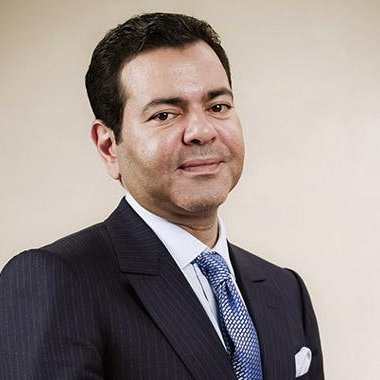
Prince Moulay Rachid is the younger brother of King Mohammed VI and one of Morocco's most active royal representatives. He promotes education, sports, diplomacy, and cultural heritage while representing the king during national ceremonies and international state visits. Known For: - Brother of Mohammed VI. - Diplomatic representation. - Cultural preservation. - Sports development.
Photos of Moulay Rachid
1 photo from the Moroccan Royal family album
Have old family photos? Give every relative a profile and a photo gallery in your own family tree.
Start your tree, freeLife Timeline
Family
Married Lalla Oum Kalthoum Boufarès
A partnership that connects two branches of the Moroccan Royal family.
Legacy
Prince
A defining role in the story of the Moroccan Royal family.
Your turn
Map your own family the way Moulay's is mapped
Free, with no sign-up to start. Add yourself, then your parents and grandparents, and watch the tree grow.
More people in the Moroccan Royal family tree
View all 32 peopleMoulay Ali Sharif
Gen 1 · 1589 - 1659
Moulay Ali Sharif founded the Alaouite dynasty in the Tafilalt region in 1631. Revered as a Sharif claiming descent from Prophet Muhammad through Hasan ibn Ali, he laid the religious and political foundation for Morocco's current ruling dynasty, which has governed the country for nearly four centuries. Known For - Founder of the Alaouite dynasty. - Emir of Tafilalt. - Established Sharifian legitimacy.
Moulay al-Rashid
Gen 2 · 1631 - 1672
Moulay Rashid unified Morocco between 1666 and 1672 after defeating rival dynasties and tribal confederations. He became the first Alaouite Sultan of a united Morocco and transformed a regional family into Morocco's ruling royal house, creating the modern Alaouite state.
Moulay Ismail ibn Sharif
Gen 2 · 1645 - 1727
Moulay Ismail ruled Morocco from 1672 to 1727 during one of the longest reigns in Moroccan history. Known as the "Warrior Sultan," he built Meknes as an imperial capital, created the elite Black Guard army, strengthened royal authority, and expanded Morocco's diplomatic influence.
Moulay Abdallah
Gen 3 · 1694 - 1757
Moulay Abdallah ruled Morocco multiple times between 1729 and 1757 because of repeated rebellions and military coups. Despite instability, he preserved Alaouite rule until the emergence of a more stable monarchy under his son Mohammed III.
Sidi Mohammed ben Abdallah (Mohammed III)
Gen 4 · 1710 - 1790
Mohammed III ruled from 1757 to 1790 and restored stability after decades of succession disputes. He founded the port city of Essaouira, expanded international trade, recognized the United States in 1777, and modernized Morocco's diplomatic and commercial relations.
Moulay Abd al-Rahman
Gen 6 · 1778 - 1859
Moulay Abd al-Rahman ruled Morocco between 1822 and 1859 during increasing European pressure. He modernized parts of the military, navigated conflicts involving Algeria and France, and worked to preserve Moroccan sovereignty despite growing colonial ambitions.
Mohammed IV
Gen 7 · 1802 - 1873
Mohammed IV ruled Morocco from 1859 to 1873 during a period of rapid European influence. He introduced military and administrative reforms after Morocco's defeat in the Hispano-Moroccan War and expanded diplomatic engagement with European powers.
Moulay Hassan I
Gen 8 · 1836 - 1894
Hassan I ruled Morocco from 1873 until 1894 and is remembered as one of the last powerful independent sultans before colonial rule. He traveled extensively across Morocco to strengthen central authority, modernized the army, improved administration, and resisted growing European political influence.
Moulay Yusef
Gen 9 · 1882 - 1927
Moulay Youssef served as Sultan under the French Protectorate from 1912 until 1927. Although political authority was limited, he preserved the Alaouite monarchy's religious legitimacy while navigating French colonial administration and maintaining Morocco's royal institutions.
Lalla Aicha
Gen 11 · 1930 - 2011
Daughter of Mohammed V and Lalla Abla. Sister of Hassan II.
Moulay Hassan
Gen 13 · b. 2003
Crown Prince Moulay Hassan is the eldest son of King Mohammed VI and heir apparent to Morocco's throne. Since childhood, he has represented Morocco during official ceremonies, diplomatic meetings, military events, and international visits, preparing for future leadership of the Alaouite monarchy. Known For: - Crown Prince of Morocco. - Heir Apparent. - Military training. - Diplomatic representation. - Future Alaouite monarch.
Related Family Stories
Bourbon Family Tree - The House of Bourbon in France and Spain
The House of Bourbon is a European royal dynasty, descended in the male line from the Capetian kings of France, that ruled France from 1589 to 1792 and again from 1814 to 1848, and that still reigns in Spain today under King Felipe VI. Over four centuries its members also held the thrones of Navarre, Naples and Sicily, Parma and Etruria, which makes it one of the most widely established royal houses in European history. ## Origins The family takes its name from the lordship of Bourbon in the Auvergne, centred on Bourbon-l'Archambault. Its royal line descends from Robert, Count of Clermont, a younger son of King Louis IX of France, whose marriage to Beatrice of Burgundy, heiress of Bourbon, carried the name into the Capetian house in 1272. For three centuries afterwards the Bourbons were powerful French princes of the blood rather than kings. That changed with Antoine de Bourbon, Duke of Vendome, whose marriage to Jeanne d'Albret, queen regnant of Navarre, produced Henry of Navarre. When the Valois line died out in 1589, Henry was the senior Capetian heir, and he took the French throne as Henry IV. ## Notable members Henry IV ended the French Wars of Religion and issued the Edict of Nantes in 1598. His son Louis XIII, guided by Cardinal Richelieu, built the centralised state that Louis XIV, the Sun King, carried to its height across a reign of seventy-two years, the longest of any European sovereign, and to the palace of Versailles. Louis XV and then Louis XVI inherited that system, and Louis XVI and his queen, Marie Antoinette, were swept away by the French Revolution in 1792. The dynasty returned with Louis XVIII in 1814 and Charles X in 1824, and in 1830 the crown passed to Louis Philippe I of the cadet House of Orleans, the last king to rule in France. ## The Spanish branch In 1700 the childless Charles II of Spain left his crown to Philip, Duke of Anjou, a grandson of Louis XIV. Philip became Philip V, the first Bourbon king of Spain, at the cost of the War of the Spanish Succession, which ended with his renunciation of any claim to the French throne. His descendants include the reforming Charles III, Ferdinand VII, Isabella II, Alfonso XII and Alfonso XIII, who left Spain in 1931. The monarchy was restored in 1975 under Juan Carlos I, grandson of Alfonso XIII, who presided over Spain's transition to democracy and abdicated in 2014 in favour of his son Felipe VI. Felipe's elder daughter Leonor, Princess of Asturias, is heir to the throne. ## Significance No other family links the absolute monarchy of Versailles to a working constitutional monarchy in twenty-first century Madrid. Bourbon marriages tied the house to the Habsburgs of Austria and Spain, the dukes of Savoy, the Medici of Florence and the British royal family, so a Bourbon family tree doubles as a map of European dynastic politics from the Reformation to the present day. | Fact | Details | | --- | --- | | Family name | House of Bourbon (Maison de Bourbon, Casa de Borbon) | | Place of origin | Bourbon-l'Archambault, Auvergne, France | | Founder of the line | Robert, Count of Clermont (1256-1317), son of Louis IX | | First king of France | Henry IV, reigned 1589 to 1610 | | Last king to rule France | Louis Philippe I, reigned 1830 to 1848 | | First king of Spain | Philip V, reigned 1700 to 1746 | | Head of the house in Spain | King Felipe VI, since 2014 | | Heir in Spain | Leonor, Princess of Asturias | | Principal seats | Versailles, Fontainebleau, the Louvre, the Royal Palace of Madrid |
Belgian Royal Family Tree - The House of Belgium from Leopold I to Princess Elisabeth
The Belgian royal family, formally the House of Belgium and dynastically a branch of the House of Saxe-Coburg and Gotha, is the reigning family of Belgium, founded when the German prince Leopold of Saxe-Coburg-Saalfeld accepted the throne of the newly independent kingdom in 1831 and continuing today through King Philippe and his heir, Princess Elisabeth, Duchess of Brabant. Belgium became independent from the Netherlands in 1830 and chose a constitutional monarchy. Its National Congress looked abroad for a sovereign who could balance French and British interests, and settled on Leopold, a widowed, well-connected and famously cautious prince who had already turned down the crown of Greece. He took the constitutional oath on 21 July 1831, still the Belgian national day. Seven monarchs have reigned since: Leopold I, Leopold II, Albert I, Leopold III, Baudouin, Albert II and Philippe. ## Origins The dynasty's roots are in the small Thuringian duchy of Saxe-Coburg, whose princes married into half the thrones of nineteenth-century Europe. Leopold I was the uncle of both Queen Victoria and her husband Prince Albert, and his second marriage, to Louise-Marie of Orleans, daughter of the French king Louis Philippe I, tied the new kingdom to Paris as well as London. The crown did not pass in a straight line: Leopold II's only son died at the age of nine, so the succession moved to Leopold II's brother Philippe, Count of Flanders, and then to Philippe's son, Albert I. Every Belgian monarch since 1909 descends from that collateral branch. ## Notable members Leopold II is the most studied and most criticised figure in the family, remembered for the industrial boom and monumental building of his reign and, above all, for his personal rule over the Congo Free State. Albert I and Queen Elisabeth of Bavaria became wartime symbols of Belgian resistance behind the Yser in 1914. Leopold III's surrender in 1940 and his conduct under occupation triggered the political crisis known as the Royal Question and ended in his abdication. Baudouin reigned for 42 years and presided over Congolese independence and Belgium's transformation into a federal state. Daughters of the house carried its blood outward: Charlotte became Empress Carlota of Mexico, Marie-Jose was the last Queen of Italy, and Josephine-Charlotte was Grand Duchess of Luxembourg. ## Significance In a country divided by language, the monarchy has been the one institution claimed by both Flemish and Walloon Belgians, and the king's role in brokering coalition governments remains politically real rather than ceremonial. The family has also changed with the country: equal succession was introduced in 1991, making Princess Elisabeth the first female Duchess of Brabant and the future first queen regnant of the Belgians, and in 2020 a court recognised Delphine of Saxe-Coburg as a daughter of Albert II. | Fact | Details | | --- | --- | | Dynasty | House of Belgium (Saxe-Coburg and Gotha) | | Country | Kingdom of Belgium | | Founder | Leopold I, King of the Belgians (1790-1865) | | Reigning since | 21 July 1831 | | Monarchs to date | Seven, from Leopold I to Philippe | | Current head | King Philippe (born 1960), reigning since 2013 | | Heir apparent | Princess Elisabeth, Duchess of Brabant (born 2001) | | Principal residences | Royal Palace of Brussels, Castle of Laeken | | Motto | L'union fait la force / Eendracht maakt macht |
Hohenzollern Family Tree - Prussia's Royal House from Frederick the Great to Kaiser Wilhelm II
The House of Hohenzollern is the German dynasty that ruled Brandenburg from 1415, held the Prussian crown from 1701, and gave Germany its three emperors between 1871 and the fall of the monarchy in 1918. This tree follows the senior Prussian line in one unbroken descent, from Frederick William the Great Elector, through the kings of Prussia and the German Emperors, down to Georg Friedrich, Prince of Prussia, the present head of the house. ## Origins The family takes its name from Hohenzollern Castle on a hill in the Swabian Alb, where a line of counts is recorded from the eleventh century. A Swabian Zollern married into the burgraviate of Nuremberg in 1192, and the Franconian branch that grew from it spent two centuries accumulating lands and credit with the Holy Roman Emperors. The decisive moment came in 1415, when Emperor Sigismund invested Frederick VI of Nuremberg as Elector of Brandenburg in return for his political and financial support. The Duchy of Prussia, a separate inheritance lying outside the Empire, passed to the Brandenburg electors in 1618, and Frederick William, the Great Elector, welded the two into a single functioning state after the devastation of the Thirty Years' War. ## Notable members Frederick I turned the electorate into a kingdom in 1701. His son Frederick William I, the Soldier King, built the army and the treasury that his own son, **Frederick the Great**, used to seize Silesia and to make Prussia a European power, while also composing music, building Sanssouci and corresponding with Voltaire. **Queen Louise** became the emotional centre of Prussian resistance to Napoleon. **Wilhelm I**, with Otto von Bismarck as his minister president, was proclaimed German Emperor at Versailles in 1871. His son **Frederick III** and the liberal English princess he married, Victoria, daughter of Queen Victoria, reigned for only ninety nine days. **Wilhelm II**, the last Kaiser, abdicated in 1918 and died in Dutch exile in 1941. ## Significance No other German family shaped the modern state so directly. Hohenzollern rulers created the Prussian civil service, compulsory schooling and the general staff, sponsored the Berlin academies and the Humboldt university model, and then used Prussian power to unify Germany around themselves. The monarchy ended with the revolution of November 1918, but the house continues as a private family: the headship passed from Wilhelm II to his eldest son, then to Louis Ferdinand, and in 1994 to Georg Friedrich, whose own father and uncles are part of the succession story told in this tree. ## Quick facts | Fact | Details | |---|---| | Family name | Hohenzollern | | Place of origin | Hohenzollern Castle, Swabia, southern Germany | | Ruled | Brandenburg from 1415, Prussia from 1618, Germany from 1871 | | Royal title | King in Prussia from 1701, King of Prussia from 1772 | | Imperial title | German Emperor, 1871 to 1918 | | German Emperors | Wilhelm I, Frederick III, Wilhelm II | | Monarchy ended | 9 November 1918 | | Present head of the house | Georg Friedrich, Prince of Prussia, since 1994 | | Principal residences | Berlin City Palace, Sanssouci and Cecilienhof at Potsdam, Charlottenburg | | Branch shown here | The senior Prussian line only, not Hohenzollern-Sigmaringen |
Rockefeller Family Tree - America's Oil and Philanthropy Dynasty
The Rockefeller family is an American business and philanthropic dynasty founded on the Standard Oil fortune of John D. Rockefeller, whose descendants have shaped American banking, conservation, medicine, modern art and national politics across five generations. From a modest upstate New York farmhouse the family rose to control the largest industrial enterprise of the Gilded Age, then spent the twentieth century converting that fortune into foundations, museums, parks and public office. ## Origins The line begins with William Avery Rockefeller (1810-1906), a traveling salesman from Granger, New York, and his wife Eliza Davison (1813-1889), who married in 1837 and raised six children in Richford, Moravia and Owego before the family moved to Ohio. Their eldest son, John D. Rockefeller, began as a Cleveland bookkeeper, entered oil refining in 1863 and incorporated the Standard Oil Company in 1870 together with his younger brother William Rockefeller. By the 1880s Standard Oil refined the great majority of American petroleum, until the Supreme Court ordered its dissolution in 1911. ## Notable members John D. Rockefeller and Laura Spelman Rockefeller had four children who reached adulthood, among them the Chicago arts patron Edith Rockefeller McCormick and the family's only son, John D. Rockefeller Jr. With Abby Aldrich Rockefeller, a co-founder of the Museum of Modern Art, John Jr. had six children who defined the family's public face: Abby "Babs" Rockefeller Mauze, the philanthropist John D. Rockefeller III, Nelson Rockefeller, who served four terms as Governor of New York and then as Vice President of the United States, the conservationist and venture capitalist Laurance Rockefeller, Winthrop Rockefeller, Governor of Arkansas, and the banker David Rockefeller of Chase Manhattan. Their children, known within the family as the Cousins, include Senator Jay Rockefeller of West Virginia, the Asmat art collector Michael Rockefeller, Lieutenant Governor Winthrop Paul Rockefeller of Arkansas, the economist Neva Goodwin and the Synergos founder Peggy Dulany. ## Significance The family's lasting mark is institutional rather than dynastic. The Rockefeller Foundation, the University of Chicago, Rockefeller University, the Rockefeller Brothers Fund, Rockefeller Center, the Museum of Modern Art, Colonial Williamsburg, Lincoln Center, the Asia Society and several national parks all trace their founding or their endowment to a Rockefeller. Few American families have moved so completely from industrial fortune to organized philanthropy and elected office within three generations. | Fact | Details | | --- | --- | | Surname | Rockefeller | | Origin | Richford, New York, United States | | Founder | John D. Rockefeller (1839-1937) | | Family business | Standard Oil, later Chase Manhattan Bank | | Known for | Standard Oil, the Rockefeller Foundation, Rockefeller Center, the Museum of Modern Art | | Public offices held | Vice President of the United States, Governor of New York, Governor of Arkansas, United States Senator | | Generations covered | Five, from William Avery Rockefeller to the fourth-generation Cousins |
Frequently Asked Questions
Who were Moulay Rachid's parents?+−
Moulay Rachid's recorded parents are Hassan II, Lalla Latifa Amahzoune.
Who were Moulay Rachid's children?+−
Moulay Rachid has 2 recorded children: Moulay Ahmed, Moulay Abdeslam.
Who did Moulay Rachid marry?+−
Moulay Rachid married Lalla Oum Kalthoum Boufarès.
Who were Moulay Rachid's siblings?+−
Moulay Rachid has 4 recorded siblings: Mohammed VI, Lalla Meryem, Lalla Asma, Lalla Hasna.
What did Moulay Rachid do?+−
Moulay Rachid is recorded as Prince in the Moroccan Royal family tree.
Where was Moulay Rachid from?+−
Moulay Rachid's recorded native place is Rabat, Morocco.
How many relatives of Moulay Rachid are recorded?+−
14 ancestors and 2 descendants of Moulay Rachid are recorded so far, within a tree of 32 people.
What family tree does Moulay Rachid belong to?+−
Moulay Rachid is recorded in the Moroccan Royal family tree on My rOoOts, alongside 31 other people.
Every family has a story. Start telling yours.
Trace Moulay Rachid's connections across the Moroccan Royaltree, or begin preserving your own family's history today.
Free. Private by default. GEDCOM export any time.