Public Family Trees/Moroccan Royal/Sidi Mohammed ben Abdallah (Mohammed III)
Sidi Mohammed ben Abdallah (Mohammed III)
1710 - 1790 · Male · Meknes, Morocco
Son of Moulay Abdallah
4
Generation
3
Ancestors
20
Descendants
1
Children
0
Marriages
Family Snapshot
Expand full treeSidi Mohammed ben Abdallah (Mohammed III)
1710 - 1790
Biography
Mohammed III ruled from 1757 to 1790 and restored stability after decades of succession disputes. He founded the port city of Essaouira, expanded international trade, recognized the United States in 1777, and modernized Morocco's diplomatic and commercial relations.
Photos of Sidi Mohammed ben Abdallah (Mohammed III)
1 photo from the Moroccan Royal family album
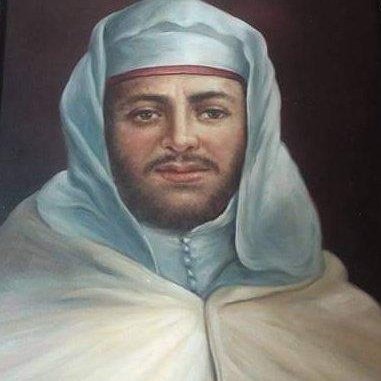
Have old family photos? Give every relative a profile and a photo gallery in your own family tree.
Start your tree, freeLife Timeline
Legacy
Sultan of Morocco
A defining role in the story of the Moroccan Royal family.
Died1790
Died
The close of a life whose connections continue through the family record.
Your turn
Map your own family the way Sidi's is mapped
Free, with no sign-up to start. Add yourself, then your parents and grandparents, and watch the tree grow.
More people in the Moroccan Royal family tree
View all 32 peopleMoulay Ali Sharif
Gen 1 · 1589 - 1659
Moulay Ali Sharif founded the Alaouite dynasty in the Tafilalt region in 1631. Revered as a Sharif claiming descent from Prophet Muhammad through Hasan ibn Ali, he laid the religious and political foundation for Morocco's current ruling dynasty, which has governed the country for nearly four centuries. Known For - Founder of the Alaouite dynasty. - Emir of Tafilalt. - Established Sharifian legitimacy.
Moulay al-Rashid
Gen 2 · 1631 - 1672
Moulay Rashid unified Morocco between 1666 and 1672 after defeating rival dynasties and tribal confederations. He became the first Alaouite Sultan of a united Morocco and transformed a regional family into Morocco's ruling royal house, creating the modern Alaouite state.
Mohammed IV
Gen 7 · 1802 - 1873
Mohammed IV ruled Morocco from 1859 to 1873 during a period of rapid European influence. He introduced military and administrative reforms after Morocco's defeat in the Hispano-Moroccan War and expanded diplomatic engagement with European powers.
Moulay Hassan I
Gen 8 · 1836 - 1894
Hassan I ruled Morocco from 1873 until 1894 and is remembered as one of the last powerful independent sultans before colonial rule. He traveled extensively across Morocco to strengthen central authority, modernized the army, improved administration, and resisted growing European political influence.
Moulay Yusef
Gen 9 · 1882 - 1927
Moulay Youssef served as Sultan under the French Protectorate from 1912 until 1927. Although political authority was limited, he preserved the Alaouite monarchy's religious legitimacy while navigating French colonial administration and maintaining Morocco's royal institutions.
Mohammed V
Gen 10 · 1909 - 1961
Mohammed V became Sultan in 1927 and led Morocco's struggle for independence from France. Exiled in 1953 for supporting nationalism, he returned triumphantly in 1955 and became Morocco's first king in 1957. He is celebrated as the Father of Modern Independent Morocco.
Hassan II
Gen 11 · 1929 - 1999
King Hassan II ruled Morocco from 1961 until 1999 and became one of the country's most influential monarchs. He strengthened the constitutional monarchy, led the historic Green March in 1975, expanded Morocco's infrastructure, and positioned the kingdom as a major diplomatic bridge between Africa, Europe, and the Arab world.
Lalla Aicha
Gen 11 · 1930 - 2011
Daughter of Mohammed V and Lalla Abla. Sister of Hassan II.
Lalla Meryem
Gen 12 · b. 1962
Princess Lalla Meryem is the eldest daughter of King Hassan II and sister of Mohammed VI. She is internationally recognized for advocating children's rights, women's empowerment, literacy, education, and humanitarian causes through the Hassan II Foundation and several Moroccan social organizations. Known For: - Children's rights. - Women's empowerment. - UNESCO advocacy. - Humanitarian leadership.
Mohammed VI
Gen 12 · b. 1963
King Mohammed VI became Morocco's monarch in 1999 and continues the Alaouite dynasty as its 23rd king. His reign is known for economic modernization, renewable energy projects, high-speed rail, constitutional reforms after the Arab Spring, and expanding Morocco's influence across Africa and the Middle East. Known for: - King since 1999. - Noor Solar Project. - Tangier Med Port. - Al Boraq High-Speed Rail. - Economic modernization.
Moulay Hassan
Gen 13 · b. 2003
Crown Prince Moulay Hassan is the eldest son of King Mohammed VI and heir apparent to Morocco's throne. Since childhood, he has represented Morocco during official ceremonies, diplomatic meetings, military events, and international visits, preparing for future leadership of the Alaouite monarchy. Known For: - Crown Prince of Morocco. - Heir Apparent. - Military training. - Diplomatic representation. - Future Alaouite monarch.
Related Family Stories
Plantagenet Family Tree - The House of Plantagenet from Henry II to Richard III
The House of Plantagenet was the royal dynasty that ruled England for 331 years, from the accession of Henry II in 1154 to the death of Richard III at the Battle of Bosworth in 1485, making it the longest-reigning royal house in English history. Fourteen Plantagenet kings held the throne in unbroken succession, and in the fifteenth century the family's two junior branches, the houses of Lancaster and York, fought each other for the crown in the civil wars later known as the Wars of the Roses. ## Origins The dynasty came from Anjou in western France. Geoffrey V, Count of Anjou, is said to have worn a sprig of broom, *planta genista*, in his cap, and from that nickname the family eventually took its name, although it was not used as an actual surname until Richard, 3rd Duke of York, adopted it in the 1440s. Geoffrey's marriage in 1128 to Empress Matilda, daughter and designated heir of Henry I of England, gave their son a claim to the English throne that he made good in 1154. With Normandy and Anjou behind him, and Aquitaine gained through his marriage to Eleanor of Aquitaine, Henry II ruled lands reaching from the Scottish border to the Pyrenees, the assemblage historians call the Angevin Empire. ## Notable members The early, or Angevin, kings are among the most familiar names in English history: Henry II, whose itinerant justices and sworn juries laid the foundations of the common law; Richard the Lionheart, a leading commander of the Third Crusade; and King John, who sealed Magna Carta at Runnymede in 1215. Henry III rebuilt Westminster Abbey, Edward I conquered Wales and summoned the Model Parliament, and Edward III opened the Hundred Years' War and founded the Order of the Garter. Later generations produced Edward the Black Prince, the victor of Poitiers, Henry V of Agincourt, and Richard III, whose lost grave was rediscovered in Leicester in 2012. ## Lancaster and York Edward III's many sons divided the dynasty. From his third surviving son, John of Gaunt, Duke of Lancaster, came Henry IV, Henry V and Henry VI, and, through Gaunt's Beaufort children, Margaret Beaufort and her son Henry VII. From his fourth son, Edmund of Langley, Duke of York, combined with the senior Mortimer descent from his second son, Lionel of Antwerp, came Richard, 3rd Duke of York, and his sons Edward IV and Richard III. The rivalry of those branches produced thirty years of intermittent civil war, ending when Henry Tudor defeated Richard III at Bosworth and married Elizabeth of York, uniting the red and white roses. ## Significance No other family has shaped English institutions so deeply. Under the Plantagenets, Magna Carta became a settled principle, parliament grew from an occasional royal council into a body whose consent was needed for taxation, the common law took its enduring form, and English displaced French as the language of the court. Their castles, abbeys and cathedrals still define the medieval landscape of England and Wales. | Fact | Details | | --- | --- | | Ruled | England, 1154 to 1485 | | Founder | Henry II, son of Geoffrey V of Anjou and Empress Matilda | | Place of origin | Anjou, France | | Kings | Fourteen, from Henry II to Richard III | | Branches | Angevin, Lancaster, York | | Emblems | The broom flower, the red rose of Lancaster, the white rose of York | | Last king | Richard III, killed at Bosworth in 1485 | | Legacy | Magna Carta, English common law, the growth of parliament |
Bourbon Family Tree - The House of Bourbon in France and Spain
The House of Bourbon is a European royal dynasty, descended in the male line from the Capetian kings of France, that ruled France from 1589 to 1792 and again from 1814 to 1848, and that still reigns in Spain today under King Felipe VI. Over four centuries its members also held the thrones of Navarre, Naples and Sicily, Parma and Etruria, which makes it one of the most widely established royal houses in European history. ## Origins The family takes its name from the lordship of Bourbon in the Auvergne, centred on Bourbon-l'Archambault. Its royal line descends from Robert, Count of Clermont, a younger son of King Louis IX of France, whose marriage to Beatrice of Burgundy, heiress of Bourbon, carried the name into the Capetian house in 1272. For three centuries afterwards the Bourbons were powerful French princes of the blood rather than kings. That changed with Antoine de Bourbon, Duke of Vendome, whose marriage to Jeanne d'Albret, queen regnant of Navarre, produced Henry of Navarre. When the Valois line died out in 1589, Henry was the senior Capetian heir, and he took the French throne as Henry IV. ## Notable members Henry IV ended the French Wars of Religion and issued the Edict of Nantes in 1598. His son Louis XIII, guided by Cardinal Richelieu, built the centralised state that Louis XIV, the Sun King, carried to its height across a reign of seventy-two years, the longest of any European sovereign, and to the palace of Versailles. Louis XV and then Louis XVI inherited that system, and Louis XVI and his queen, Marie Antoinette, were swept away by the French Revolution in 1792. The dynasty returned with Louis XVIII in 1814 and Charles X in 1824, and in 1830 the crown passed to Louis Philippe I of the cadet House of Orleans, the last king to rule in France. ## The Spanish branch In 1700 the childless Charles II of Spain left his crown to Philip, Duke of Anjou, a grandson of Louis XIV. Philip became Philip V, the first Bourbon king of Spain, at the cost of the War of the Spanish Succession, which ended with his renunciation of any claim to the French throne. His descendants include the reforming Charles III, Ferdinand VII, Isabella II, Alfonso XII and Alfonso XIII, who left Spain in 1931. The monarchy was restored in 1975 under Juan Carlos I, grandson of Alfonso XIII, who presided over Spain's transition to democracy and abdicated in 2014 in favour of his son Felipe VI. Felipe's elder daughter Leonor, Princess of Asturias, is heir to the throne. ## Significance No other family links the absolute monarchy of Versailles to a working constitutional monarchy in twenty-first century Madrid. Bourbon marriages tied the house to the Habsburgs of Austria and Spain, the dukes of Savoy, the Medici of Florence and the British royal family, so a Bourbon family tree doubles as a map of European dynastic politics from the Reformation to the present day. | Fact | Details | | --- | --- | | Family name | House of Bourbon (Maison de Bourbon, Casa de Borbon) | | Place of origin | Bourbon-l'Archambault, Auvergne, France | | Founder of the line | Robert, Count of Clermont (1256-1317), son of Louis IX | | First king of France | Henry IV, reigned 1589 to 1610 | | Last king to rule France | Louis Philippe I, reigned 1830 to 1848 | | First king of Spain | Philip V, reigned 1700 to 1746 | | Head of the house in Spain | King Felipe VI, since 2014 | | Heir in Spain | Leonor, Princess of Asturias | | Principal seats | Versailles, Fontainebleau, the Louvre, the Royal Palace of Madrid |
Hohenzollern Family Tree - Prussia's Royal House from Frederick the Great to Kaiser Wilhelm II
The House of Hohenzollern is the German dynasty that ruled Brandenburg from 1415, held the Prussian crown from 1701, and gave Germany its three emperors between 1871 and the fall of the monarchy in 1918. This tree follows the senior Prussian line in one unbroken descent, from Frederick William the Great Elector, through the kings of Prussia and the German Emperors, down to Georg Friedrich, Prince of Prussia, the present head of the house. ## Origins The family takes its name from Hohenzollern Castle on a hill in the Swabian Alb, where a line of counts is recorded from the eleventh century. A Swabian Zollern married into the burgraviate of Nuremberg in 1192, and the Franconian branch that grew from it spent two centuries accumulating lands and credit with the Holy Roman Emperors. The decisive moment came in 1415, when Emperor Sigismund invested Frederick VI of Nuremberg as Elector of Brandenburg in return for his political and financial support. The Duchy of Prussia, a separate inheritance lying outside the Empire, passed to the Brandenburg electors in 1618, and Frederick William, the Great Elector, welded the two into a single functioning state after the devastation of the Thirty Years' War. ## Notable members Frederick I turned the electorate into a kingdom in 1701. His son Frederick William I, the Soldier King, built the army and the treasury that his own son, **Frederick the Great**, used to seize Silesia and to make Prussia a European power, while also composing music, building Sanssouci and corresponding with Voltaire. **Queen Louise** became the emotional centre of Prussian resistance to Napoleon. **Wilhelm I**, with Otto von Bismarck as his minister president, was proclaimed German Emperor at Versailles in 1871. His son **Frederick III** and the liberal English princess he married, Victoria, daughter of Queen Victoria, reigned for only ninety nine days. **Wilhelm II**, the last Kaiser, abdicated in 1918 and died in Dutch exile in 1941. ## Significance No other German family shaped the modern state so directly. Hohenzollern rulers created the Prussian civil service, compulsory schooling and the general staff, sponsored the Berlin academies and the Humboldt university model, and then used Prussian power to unify Germany around themselves. The monarchy ended with the revolution of November 1918, but the house continues as a private family: the headship passed from Wilhelm II to his eldest son, then to Louis Ferdinand, and in 1994 to Georg Friedrich, whose own father and uncles are part of the succession story told in this tree. ## Quick facts | Fact | Details | |---|---| | Family name | Hohenzollern | | Place of origin | Hohenzollern Castle, Swabia, southern Germany | | Ruled | Brandenburg from 1415, Prussia from 1618, Germany from 1871 | | Royal title | King in Prussia from 1701, King of Prussia from 1772 | | Imperial title | German Emperor, 1871 to 1918 | | German Emperors | Wilhelm I, Frederick III, Wilhelm II | | Monarchy ended | 9 November 1918 | | Present head of the house | Georg Friedrich, Prince of Prussia, since 1994 | | Principal residences | Berlin City Palace, Sanssouci and Cecilienhof at Potsdam, Charlottenburg | | Branch shown here | The senior Prussian line only, not Hohenzollern-Sigmaringen |
The Jackson Family Tree - Michael Jackson
Frequently Asked Questions
Who were Sidi Mohammed ben Abdallah (Mohammed III)'s parents?+−
Sidi Mohammed ben Abdallah (Mohammed III)'s recorded parent is Moulay Abdallah.
Who were Sidi Mohammed ben Abdallah (Mohammed III)'s children?+−
Sidi Mohammed ben Abdallah (Mohammed III) has 1 recorded child: Moulay Hisham.
What did Sidi Mohammed ben Abdallah (Mohammed III) do?+−
Sidi Mohammed ben Abdallah (Mohammed III) is recorded as Sultan of Morocco in the Moroccan Royal family tree.
Where was Sidi Mohammed ben Abdallah (Mohammed III) from?+−
Sidi Mohammed ben Abdallah (Mohammed III)'s recorded native place is Meknes, Morocco.
How many relatives of Sidi Mohammed ben Abdallah (Mohammed III) are recorded?+−
3 ancestors and 20 descendants of Sidi Mohammed ben Abdallah (Mohammed III) are recorded so far, within a tree of 32 people.
What family tree does Sidi Mohammed ben Abdallah (Mohammed III) belong to?+−
Sidi Mohammed ben Abdallah (Mohammed III) is recorded in the Moroccan Royal family tree on My rOoOts, alongside 31 other people.
Every family has a story. Start telling yours.
Trace Sidi Mohammed ben Abdallah (Mohammed III)'s connections across the Moroccan Royaltree, or begin preserving your own family's history today.
Free. Private by default. GEDCOM export any time.