Public Family Trees/Moroccan Royal/Moulay Ali Sharif
Moulay Ali Sharif
1589 - 1659 · Male · Tafilalt, Morocco
1
Generation
0
Ancestors
25
Descendants
3
Children
0
Marriages
Family Snapshot
Expand full treeMoulay Ali Sharif
1589 - 1659
Biography
Moulay Ali Sharif founded the Alaouite dynasty in the Tafilalt region in 1631. Revered as a Sharif claiming descent from Prophet Muhammad through Hasan ibn Ali, he laid the religious and political foundation for Morocco's current ruling dynasty, which has governed the country for nearly four centuries. Known For - Founder of the Alaouite dynasty. - Emir of Tafilalt. - Established Sharifian legitimacy.
Photos of Moulay Ali Sharif
1 photo from the Moroccan Royal family album
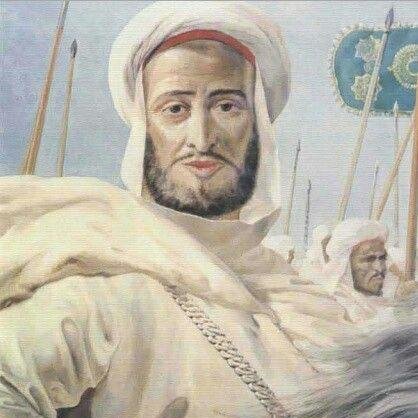
Have old family photos? Give every relative a profile and a photo gallery in your own family tree.
Start your tree, freeLife Timeline
Born1589
Born
The beginning of Moulay Ali Sharif's recorded life.
Next Generation
Family line continues
3 children recorded in this branch.
Legacy
Emir of Tafilalt / Founder of the Alaouite Dynasty
A defining role in the story of the Moroccan Royal family.
Died1659
Died
The close of a life whose connections continue through the family record.
Your turn
Map your own family the way Moulay's is mapped
Free, with no sign-up to start. Add yourself, then your parents and grandparents, and watch the tree grow.
More people in the Moroccan Royal family tree
View all 32 peopleSidi Mohammed ben Abdallah (Mohammed III)
Gen 4 · 1710 - 1790
Mohammed III ruled from 1757 to 1790 and restored stability after decades of succession disputes. He founded the port city of Essaouira, expanded international trade, recognized the United States in 1777, and modernized Morocco's diplomatic and commercial relations.
Moulay Abd al-Rahman
Gen 6 · 1778 - 1859
Moulay Abd al-Rahman ruled Morocco between 1822 and 1859 during increasing European pressure. He modernized parts of the military, navigated conflicts involving Algeria and France, and worked to preserve Moroccan sovereignty despite growing colonial ambitions.
Mohammed IV
Gen 7 · 1802 - 1873
Mohammed IV ruled Morocco from 1859 to 1873 during a period of rapid European influence. He introduced military and administrative reforms after Morocco's defeat in the Hispano-Moroccan War and expanded diplomatic engagement with European powers.
Moulay Hassan I
Gen 8 · 1836 - 1894
Hassan I ruled Morocco from 1873 until 1894 and is remembered as one of the last powerful independent sultans before colonial rule. He traveled extensively across Morocco to strengthen central authority, modernized the army, improved administration, and resisted growing European political influence.
Moulay Yusef
Gen 9 · 1882 - 1927
Moulay Youssef served as Sultan under the French Protectorate from 1912 until 1927. Although political authority was limited, he preserved the Alaouite monarchy's religious legitimacy while navigating French colonial administration and maintaining Morocco's royal institutions.
Mohammed V
Gen 10 · 1909 - 1961
Mohammed V became Sultan in 1927 and led Morocco's struggle for independence from France. Exiled in 1953 for supporting nationalism, he returned triumphantly in 1955 and became Morocco's first king in 1957. He is celebrated as the Father of Modern Independent Morocco.
Hassan II
Gen 11 · 1929 - 1999
King Hassan II ruled Morocco from 1961 until 1999 and became one of the country's most influential monarchs. He strengthened the constitutional monarchy, led the historic Green March in 1975, expanded Morocco's infrastructure, and positioned the kingdom as a major diplomatic bridge between Africa, Europe, and the Arab world.
Lalla Aicha
Gen 11 · 1930 - 2011
Daughter of Mohammed V and Lalla Abla. Sister of Hassan II.
Lalla Meryem
Gen 12 · b. 1962
Princess Lalla Meryem is the eldest daughter of King Hassan II and sister of Mohammed VI. She is internationally recognized for advocating children's rights, women's empowerment, literacy, education, and humanitarian causes through the Hassan II Foundation and several Moroccan social organizations. Known For: - Children's rights. - Women's empowerment. - UNESCO advocacy. - Humanitarian leadership.
Mohammed VI
Gen 12 · b. 1963
King Mohammed VI became Morocco's monarch in 1999 and continues the Alaouite dynasty as its 23rd king. His reign is known for economic modernization, renewable energy projects, high-speed rail, constitutional reforms after the Arab Spring, and expanding Morocco's influence across Africa and the Middle East. Known for: - King since 1999. - Noor Solar Project. - Tangier Med Port. - Al Boraq High-Speed Rail. - Economic modernization.
Moulay Hassan
Gen 13 · b. 2003
Crown Prince Moulay Hassan is the eldest son of King Mohammed VI and heir apparent to Morocco's throne. Since childhood, he has represented Morocco during official ceremonies, diplomatic meetings, military events, and international visits, preparing for future leadership of the Alaouite monarchy. Known For: - Crown Prince of Morocco. - Heir Apparent. - Military training. - Diplomatic representation. - Future Alaouite monarch.
Related Family Stories
The Jackson Family Tree - Michael Jackson
Belgian Royal Family Tree - The House of Belgium from Leopold I to Princess Elisabeth
The Belgian royal family, formally the House of Belgium and dynastically a branch of the House of Saxe-Coburg and Gotha, is the reigning family of Belgium, founded when the German prince Leopold of Saxe-Coburg-Saalfeld accepted the throne of the newly independent kingdom in 1831 and continuing today through King Philippe and his heir, Princess Elisabeth, Duchess of Brabant. Belgium became independent from the Netherlands in 1830 and chose a constitutional monarchy. Its National Congress looked abroad for a sovereign who could balance French and British interests, and settled on Leopold, a widowed, well-connected and famously cautious prince who had already turned down the crown of Greece. He took the constitutional oath on 21 July 1831, still the Belgian national day. Seven monarchs have reigned since: Leopold I, Leopold II, Albert I, Leopold III, Baudouin, Albert II and Philippe. ## Origins The dynasty's roots are in the small Thuringian duchy of Saxe-Coburg, whose princes married into half the thrones of nineteenth-century Europe. Leopold I was the uncle of both Queen Victoria and her husband Prince Albert, and his second marriage, to Louise-Marie of Orleans, daughter of the French king Louis Philippe I, tied the new kingdom to Paris as well as London. The crown did not pass in a straight line: Leopold II's only son died at the age of nine, so the succession moved to Leopold II's brother Philippe, Count of Flanders, and then to Philippe's son, Albert I. Every Belgian monarch since 1909 descends from that collateral branch. ## Notable members Leopold II is the most studied and most criticised figure in the family, remembered for the industrial boom and monumental building of his reign and, above all, for his personal rule over the Congo Free State. Albert I and Queen Elisabeth of Bavaria became wartime symbols of Belgian resistance behind the Yser in 1914. Leopold III's surrender in 1940 and his conduct under occupation triggered the political crisis known as the Royal Question and ended in his abdication. Baudouin reigned for 42 years and presided over Congolese independence and Belgium's transformation into a federal state. Daughters of the house carried its blood outward: Charlotte became Empress Carlota of Mexico, Marie-Jose was the last Queen of Italy, and Josephine-Charlotte was Grand Duchess of Luxembourg. ## Significance In a country divided by language, the monarchy has been the one institution claimed by both Flemish and Walloon Belgians, and the king's role in brokering coalition governments remains politically real rather than ceremonial. The family has also changed with the country: equal succession was introduced in 1991, making Princess Elisabeth the first female Duchess of Brabant and the future first queen regnant of the Belgians, and in 2020 a court recognised Delphine of Saxe-Coburg as a daughter of Albert II. | Fact | Details | | --- | --- | | Dynasty | House of Belgium (Saxe-Coburg and Gotha) | | Country | Kingdom of Belgium | | Founder | Leopold I, King of the Belgians (1790-1865) | | Reigning since | 21 July 1831 | | Monarchs to date | Seven, from Leopold I to Philippe | | Current head | King Philippe (born 1960), reigning since 2013 | | Heir apparent | Princess Elisabeth, Duchess of Brabant (born 2001) | | Principal residences | Royal Palace of Brussels, Castle of Laeken | | Motto | L'union fait la force / Eendracht maakt macht |
Rockefeller Family Tree - America's Oil and Philanthropy Dynasty
The Rockefeller family is an American business and philanthropic dynasty founded on the Standard Oil fortune of John D. Rockefeller, whose descendants have shaped American banking, conservation, medicine, modern art and national politics across five generations. From a modest upstate New York farmhouse the family rose to control the largest industrial enterprise of the Gilded Age, then spent the twentieth century converting that fortune into foundations, museums, parks and public office. ## Origins The line begins with William Avery Rockefeller (1810-1906), a traveling salesman from Granger, New York, and his wife Eliza Davison (1813-1889), who married in 1837 and raised six children in Richford, Moravia and Owego before the family moved to Ohio. Their eldest son, John D. Rockefeller, began as a Cleveland bookkeeper, entered oil refining in 1863 and incorporated the Standard Oil Company in 1870 together with his younger brother William Rockefeller. By the 1880s Standard Oil refined the great majority of American petroleum, until the Supreme Court ordered its dissolution in 1911. ## Notable members John D. Rockefeller and Laura Spelman Rockefeller had four children who reached adulthood, among them the Chicago arts patron Edith Rockefeller McCormick and the family's only son, John D. Rockefeller Jr. With Abby Aldrich Rockefeller, a co-founder of the Museum of Modern Art, John Jr. had six children who defined the family's public face: Abby "Babs" Rockefeller Mauze, the philanthropist John D. Rockefeller III, Nelson Rockefeller, who served four terms as Governor of New York and then as Vice President of the United States, the conservationist and venture capitalist Laurance Rockefeller, Winthrop Rockefeller, Governor of Arkansas, and the banker David Rockefeller of Chase Manhattan. Their children, known within the family as the Cousins, include Senator Jay Rockefeller of West Virginia, the Asmat art collector Michael Rockefeller, Lieutenant Governor Winthrop Paul Rockefeller of Arkansas, the economist Neva Goodwin and the Synergos founder Peggy Dulany. ## Significance The family's lasting mark is institutional rather than dynastic. The Rockefeller Foundation, the University of Chicago, Rockefeller University, the Rockefeller Brothers Fund, Rockefeller Center, the Museum of Modern Art, Colonial Williamsburg, Lincoln Center, the Asia Society and several national parks all trace their founding or their endowment to a Rockefeller. Few American families have moved so completely from industrial fortune to organized philanthropy and elected office within three generations. | Fact | Details | | --- | --- | | Surname | Rockefeller | | Origin | Richford, New York, United States | | Founder | John D. Rockefeller (1839-1937) | | Family business | Standard Oil, later Chase Manhattan Bank | | Known for | Standard Oil, the Rockefeller Foundation, Rockefeller Center, the Museum of Modern Art | | Public offices held | Vice President of the United States, Governor of New York, Governor of Arkansas, United States Senator | | Generations covered | Five, from William Avery Rockefeller to the fourth-generation Cousins |
Rothschild Family Tree - The European Banking Dynasty from Mayer Amschel to Today
The Rothschilds are a European banking dynasty founded in Frankfurt am Main by Mayer Amschel Rothschild (1744-1812), whose five sons established banking houses in Frankfurt, Vienna, Naples, London and Paris and together built the most powerful private financial network of the nineteenth century. ## Origins Mayer Amschel Rothschild was born in 1744 in the Judengasse, the walled Jewish street of Frankfurt am Main, where the family took its name from the red shield that had marked an ancestor's house. He began as a dealer in rare coins and medals, became court factor to Crown Prince Wilhelm of Hesse-Kassel in 1769, and turned that position into a banking business handling loans, bullion and government paper. With his wife Gutle Schnapper he had ten children who reached adulthood, five sons and five daughters. ## The five houses Mayer Amschel's decisive act was to place his sons in five cities so that the family could move money and news across borders as a single firm. Amschel Mayer stayed in Frankfurt, Salomon went to Vienna, Nathan to London, Carl to Naples and James to Paris. The brothers financed the allied campaigns against Napoleon, then the governments, railways and industries of nineteenth century Europe. The Naples house closed in 1860 with Italian unification, Frankfurt in 1901 for want of an heir, and Vienna in 1938 after the Anschluss. London and Paris survived, and their successors trade today as Rothschild and Co and the Edmond de Rothschild Group. ## Notable members Nathan Mayer Rothschild founded N M Rothschild and Sons and made London the centre of international lending. His son Lionel broke the bar on Jews sitting in Parliament, taking his Commons seat in 1858, and his grandson Nathan Mayer became the first Jewish member of the House of Lords in 1885. James Mayer de Rothschild dominated French finance under three regimes and bought Chateau Lafite, while his son Edmond funded the first Jewish agricultural settlements in Palestine. The family also produced naturalists and collectors rather than only bankers: Walter, 2nd Baron Rothschild, the zoologist to whom the Balfour Declaration was addressed in 1917; his brother Charles, the flea specialist who founded British nature conservation; Charles's daughter Dame Miriam Rothschild, a Fellow of the Royal Society; and another daughter, Nica, the patron of Thelonious Monk. Jacob, 4th Baron Rothschild, built RIT Capital Partners and chaired the trustees of the National Gallery. ## Significance The Rothschilds were the first banking family to operate as a genuinely international partnership, and for much of the nineteenth century they were the principal lenders to European states. Their name is attached to railways, mines, hospitals, museums, nature reserves, Bordeaux first growths and a long tradition of Jewish philanthropy. Repeated marriages between first cousins kept capital and control inside the family, which is why the branches of this tree cross back into one another so often. | Fact | Details | | --- | --- | | Founder | Mayer Amschel Rothschild (1744-1812) | | Matriarch | Gutle Schnapper (1753-1849) | | Origin | The Judengasse, Frankfurt am Main | | Children of the founder | Ten, five sons and five daughters | | The five houses | Frankfurt, Vienna, Naples, London, Paris | | Motto | Concordia, Integritas, Industria | | Principal firms | N M Rothschild and Sons, de Rothschild Freres, S. M. von Rothschild | | Still active today | Rothschild and Co, Edmond de Rothschild Group | | Known for | Government finance, railways, wine estates, natural history, art collections, philanthropy |
Frequently Asked Questions
Who were Moulay Ali Sharif's children?+−
Moulay Ali Sharif has 3 recorded children: Muhammad ibn Sharif (Mohammed I), Moulay al-Rashid, Moulay Ismail ibn Sharif.
What did Moulay Ali Sharif do?+−
Moulay Ali Sharif is recorded as Emir of Tafilalt / Founder of the Alaouite Dynasty in the Moroccan Royal family tree.
Where was Moulay Ali Sharif from?+−
Moulay Ali Sharif's recorded native place is Tafilalt, Morocco.
How many relatives of Moulay Ali Sharif are recorded?+−
0 ancestors and 25 descendants of Moulay Ali Sharif are recorded so far, within a tree of 32 people.
What family tree does Moulay Ali Sharif belong to?+−
Moulay Ali Sharif is recorded in the Moroccan Royal family tree on My rOoOts, alongside 31 other people.
Every family has a story. Start telling yours.
Trace Moulay Ali Sharif's connections across the Moroccan Royaltree, or begin preserving your own family's history today.
Free. Private by default. GEDCOM export any time.