Public Family Trees/Moroccan Royal/Lalla Salma Bennani
Lalla Salma Bennani
Born 1978 · Female · Fes, Morocco
12
Generation
0
Ancestors
2
Descendants
2
Children
1
Marriages
Family Snapshot
Expand full treeLalla Salma Bennani
b. 1978
Biography
Princess Lalla Salma became Morocco's first publicly recognized royal spouse after marrying King Mohammed VI in 2002. She gained international recognition for leading cancer awareness programs, promoting women's health, supporting education, and representing Morocco at numerous global humanitarian events. Known For: - First publicly titled royal spouse. - Cancer Foundation. - Women's health advocacy. - Internationa…
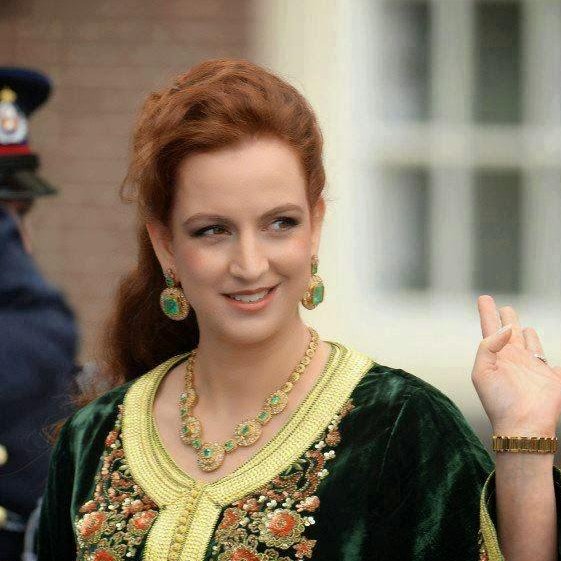
Photos of Lalla Salma Bennani
1 photo from the Moroccan Royal family album
Have old family photos? Give every relative a profile and a photo gallery in your own family tree.
Start your tree, freeLife Timeline
Born1978
Born
The beginning of Lalla Salma Bennani's recorded life.
Family
Married Mohammed VI
A partnership that connects two branches of the Moroccan Royal family.
Legacy
Former Princess Consort
A defining role in the story of the Moroccan Royal family.
Your turn
Map your own family the way Lalla's is mapped
Free, with no sign-up to start. Add yourself, then your parents and grandparents, and watch the tree grow.
More people in the Moroccan Royal family tree
View all 32 peopleMoulay Ali Sharif
Gen 1 · 1589 - 1659
Moulay Ali Sharif founded the Alaouite dynasty in the Tafilalt region in 1631. Revered as a Sharif claiming descent from Prophet Muhammad through Hasan ibn Ali, he laid the religious and political foundation for Morocco's current ruling dynasty, which has governed the country for nearly four centuries. Known For - Founder of the Alaouite dynasty. - Emir of Tafilalt. - Established Sharifian legitimacy.
Moulay al-Rashid
Gen 2 · 1631 - 1672
Moulay Rashid unified Morocco between 1666 and 1672 after defeating rival dynasties and tribal confederations. He became the first Alaouite Sultan of a united Morocco and transformed a regional family into Morocco's ruling royal house, creating the modern Alaouite state.
Moulay Ismail ibn Sharif
Gen 2 · 1645 - 1727
Moulay Ismail ruled Morocco from 1672 to 1727 during one of the longest reigns in Moroccan history. Known as the "Warrior Sultan," he built Meknes as an imperial capital, created the elite Black Guard army, strengthened royal authority, and expanded Morocco's diplomatic influence.
Moulay Abdallah
Gen 3 · 1694 - 1757
Moulay Abdallah ruled Morocco multiple times between 1729 and 1757 because of repeated rebellions and military coups. Despite instability, he preserved Alaouite rule until the emergence of a more stable monarchy under his son Mohammed III.
Sidi Mohammed ben Abdallah (Mohammed III)
Gen 4 · 1710 - 1790
Mohammed III ruled from 1757 to 1790 and restored stability after decades of succession disputes. He founded the port city of Essaouira, expanded international trade, recognized the United States in 1777, and modernized Morocco's diplomatic and commercial relations.
Moulay Abd al-Rahman
Gen 6 · 1778 - 1859
Moulay Abd al-Rahman ruled Morocco between 1822 and 1859 during increasing European pressure. He modernized parts of the military, navigated conflicts involving Algeria and France, and worked to preserve Moroccan sovereignty despite growing colonial ambitions.
Mohammed IV
Gen 7 · 1802 - 1873
Mohammed IV ruled Morocco from 1859 to 1873 during a period of rapid European influence. He introduced military and administrative reforms after Morocco's defeat in the Hispano-Moroccan War and expanded diplomatic engagement with European powers.
Moulay Hassan I
Gen 8 · 1836 - 1894
Hassan I ruled Morocco from 1873 until 1894 and is remembered as one of the last powerful independent sultans before colonial rule. He traveled extensively across Morocco to strengthen central authority, modernized the army, improved administration, and resisted growing European political influence.
Moulay Yusef
Gen 9 · 1882 - 1927
Moulay Youssef served as Sultan under the French Protectorate from 1912 until 1927. Although political authority was limited, he preserved the Alaouite monarchy's religious legitimacy while navigating French colonial administration and maintaining Morocco's royal institutions.
Mohammed V
Gen 10 · 1909 - 1961
Mohammed V became Sultan in 1927 and led Morocco's struggle for independence from France. Exiled in 1953 for supporting nationalism, he returned triumphantly in 1955 and became Morocco's first king in 1957. He is celebrated as the Father of Modern Independent Morocco.
Hassan II
Gen 11 · 1929 - 1999
King Hassan II ruled Morocco from 1961 until 1999 and became one of the country's most influential monarchs. He strengthened the constitutional monarchy, led the historic Green March in 1975, expanded Morocco's infrastructure, and positioned the kingdom as a major diplomatic bridge between Africa, Europe, and the Arab world.
Related Family Stories
Kennedy Family Tree - America's Political Dynasty
The Kennedy family is an Irish American political dynasty from Boston, Massachusetts, whose members have included the 35th President of the United States, three United States senators, four congressmen, several ambassadors, and the founders of the Peace Corps and the Special Olympics. Across four documented generations the family moved from a County Wexford farm to the White House, and its name became shorthand in American public life for both political ambition and public service. ## Origins The American line begins with Patrick Kennedy, a farmer's son from Dunganstown, near New Ross in County Wexford, who emigrated to East Boston during the Great Famine. His son, Patrick Joseph "P. J." Kennedy (1858 to 1929), built a livelihood in the liquor and banking trades and served in both houses of the Massachusetts legislature, becoming one of the Democratic ward leaders who ran the city's Irish Catholic politics. On the other side stood John Francis "Honey Fitz" Fitzgerald (1863 to 1950), congressman and twice Mayor of Boston. The two families joined in 1914 when P. J.'s son Joseph P. Kennedy Sr. married Honey Fitz's daughter Rose Fitzgerald. Their nine children, raised between Brookline, Bronxville and the compound at Hyannis Port on Cape Cod, form the generation the world knows. ## Notable members John F. Kennedy served as President from 1961 until his death in 1963, having previously represented Massachusetts in the House and Senate. His brother Robert F. Kennedy was Attorney General, then Senator from New York, and a candidate for the presidency in 1968. Their youngest brother Edward "Ted" Kennedy sat in the United States Senate for almost 47 years and was one of the most productive legislators of his era. The eldest son, Joseph P. Kennedy Jr., was a naval aviator killed on a volunteer mission in 1944. Away from elected office, Eunice Kennedy Shriver founded the Special Olympics, her husband Sargent Shriver created the Peace Corps and Head Start, and Jean Kennedy Smith founded the arts and disability organisation VSA before serving as United States Ambassador to Ireland. The following generations have produced congressmen, a lieutenant governor, ambassadors, documentary filmmakers, human rights advocates and journalists. ## Significance No other American family has combined electoral success, philanthropy and public visibility on this scale for so long. The Kennedys shaped the civil rights era, the space programme, immigration reform, health care legislation and the modern understanding of disability rights, and their private losses were mourned publicly in a way usually reserved for royalty. The Kennedy Library in Boston, the Kennedy Center in Washington and dozens of schools and institutions carry the name. | Fact | Details | | --- | --- | | Family name | Kennedy | | Irish origin | Dunganstown, County Wexford, Ireland | | American home | Boston and Hyannis Port, Massachusetts | | Founding couple | Patrick Joseph Kennedy and Mary Augusta Hickey | | Best known member | John F. Kennedy, 35th President of the United States | | Generations covered | Four | | Offices held | Presidency, US Senate, US House, ambassadorships, state office | | Institutions founded | Peace Corps, Special Olympics, Best Buddies, Citizens Energy |
The Jackson Family Tree - Michael Jackson
Rothschild Family Tree - The European Banking Dynasty from Mayer Amschel to Today
The Rothschilds are a European banking dynasty founded in Frankfurt am Main by Mayer Amschel Rothschild (1744-1812), whose five sons established banking houses in Frankfurt, Vienna, Naples, London and Paris and together built the most powerful private financial network of the nineteenth century. ## Origins Mayer Amschel Rothschild was born in 1744 in the Judengasse, the walled Jewish street of Frankfurt am Main, where the family took its name from the red shield that had marked an ancestor's house. He began as a dealer in rare coins and medals, became court factor to Crown Prince Wilhelm of Hesse-Kassel in 1769, and turned that position into a banking business handling loans, bullion and government paper. With his wife Gutle Schnapper he had ten children who reached adulthood, five sons and five daughters. ## The five houses Mayer Amschel's decisive act was to place his sons in five cities so that the family could move money and news across borders as a single firm. Amschel Mayer stayed in Frankfurt, Salomon went to Vienna, Nathan to London, Carl to Naples and James to Paris. The brothers financed the allied campaigns against Napoleon, then the governments, railways and industries of nineteenth century Europe. The Naples house closed in 1860 with Italian unification, Frankfurt in 1901 for want of an heir, and Vienna in 1938 after the Anschluss. London and Paris survived, and their successors trade today as Rothschild and Co and the Edmond de Rothschild Group. ## Notable members Nathan Mayer Rothschild founded N M Rothschild and Sons and made London the centre of international lending. His son Lionel broke the bar on Jews sitting in Parliament, taking his Commons seat in 1858, and his grandson Nathan Mayer became the first Jewish member of the House of Lords in 1885. James Mayer de Rothschild dominated French finance under three regimes and bought Chateau Lafite, while his son Edmond funded the first Jewish agricultural settlements in Palestine. The family also produced naturalists and collectors rather than only bankers: Walter, 2nd Baron Rothschild, the zoologist to whom the Balfour Declaration was addressed in 1917; his brother Charles, the flea specialist who founded British nature conservation; Charles's daughter Dame Miriam Rothschild, a Fellow of the Royal Society; and another daughter, Nica, the patron of Thelonious Monk. Jacob, 4th Baron Rothschild, built RIT Capital Partners and chaired the trustees of the National Gallery. ## Significance The Rothschilds were the first banking family to operate as a genuinely international partnership, and for much of the nineteenth century they were the principal lenders to European states. Their name is attached to railways, mines, hospitals, museums, nature reserves, Bordeaux first growths and a long tradition of Jewish philanthropy. Repeated marriages between first cousins kept capital and control inside the family, which is why the branches of this tree cross back into one another so often. | Fact | Details | | --- | --- | | Founder | Mayer Amschel Rothschild (1744-1812) | | Matriarch | Gutle Schnapper (1753-1849) | | Origin | The Judengasse, Frankfurt am Main | | Children of the founder | Ten, five sons and five daughters | | The five houses | Frankfurt, Vienna, Naples, London, Paris | | Motto | Concordia, Integritas, Industria | | Principal firms | N M Rothschild and Sons, de Rothschild Freres, S. M. von Rothschild | | Still active today | Rothschild and Co, Edmond de Rothschild Group | | Known for | Government finance, railways, wine estates, natural history, art collections, philanthropy |
Glucksburg Family Tree - The Royal House of Denmark, Norway and Greece from Christian IX to Today
The House of Glücksburg is the reigning royal house of Denmark and Norway and the former royal house of Greece, a branch of the ancient House of Oldenburg whose modern members all descend from King Christian IX of Denmark (1818 to 1906) and his wife Louise of Hesse-Kassel. Through the marriages of their six children, a minor ducal family from the Danish-German borderland became the common ancestor of monarchs in Copenhagen, Oslo and Athens, of a British queen consort, of a Russian empress, and of Prince Philip, Duke of Edinburgh. ## Origins The house takes its name from Glücksburg, a small castle town in Schleswig, and belongs to the Schleswig-Holstein-Sonderburg-Glücksburg line of the House of Oldenburg, which had held the Danish throne since 1448. Christian IX was a prince of that cadet branch with no expectation of ruling until the childless Frederik VII made the Danish succession an open European question. Christian succeeded him in 1863, and within months his second son was elected King of the Hellenes as George I, planting the family in Greece for 110 years. In 1905 his grandson Prince Carl of Denmark accepted the Norwegian throne as Haakon VII, giving Norway its own dynasty after centuries of union with Denmark and then Sweden. ## Notable members Christian IX was nicknamed the father-in-law of Europe: his daughter Alexandra married Edward VII of the United Kingdom, and his daughter Dagmar became Empress Maria Feodorovna of Russia, mother of Nicholas II. The Danish line runs through Christian X, Frederik IX and Queen Margrethe II, a trained archaeologist and illustrator who reigned from 1972 until her abdication in 2024, to her son King Frederik X and Queen Mary. The Norwegian line runs from Haakon VII and Queen Maud through Olav V, an Olympic sailing champion, to King Harald V and Crown Prince Haakon. The Greek line produced Constantine I, Paul, Constantine II and Queen Anne-Marie, Queen Sofía of Spain, and Prince Andrew's son Philip, consort to Elizabeth II for 73 years. ## Significance No other western dynasty connects as many surviving monarchies in a single documented lineage. Two of Europe's ten reigning royal families, Denmark and Norway, are Glücksburg in the male line, and the house also sits in the ancestry of the British and Spanish royal families. Its history traces the transformation of European monarchy itself: from the dynastic matchmaking of the 1860s, through the loss of the Russian and Greek thrones, to the constitutional, publicly accountable monarchies of modern Scandinavia. | Fact | Details | | --- | --- | | House name | Schleswig-Holstein-Sonderburg-Glücksburg, a branch of the House of Oldenburg | | Founding figure of the modern house | Christian IX of Denmark (1818 to 1906) | | Ancestral seat | Glücksburg Castle, Schleswig | | Thrones held | Denmark (1863 to present), Greece (1863 to 1973), Norway (1905 to present) | | Current heads of state | Frederik X of Denmark, Harald V of Norway | | Best-known member abroad | Prince Philip, Duke of Edinburgh (1921 to 2021) | | Nickname of its founder | The father-in-law of Europe |
Frequently Asked Questions
Who were Lalla Salma Bennani's children?+−
Lalla Salma Bennani has 2 recorded children: Moulay Hassan, Lalla Khadija.
Who did Lalla Salma Bennani marry?+−
Lalla Salma Bennani married Mohammed VI.
What did Lalla Salma Bennani do?+−
Lalla Salma Bennani is recorded as Former Princess Consort in the Moroccan Royal family tree.
Where was Lalla Salma Bennani from?+−
Lalla Salma Bennani's recorded native place is Fes, Morocco.
What family tree does Lalla Salma Bennani belong to?+−
Lalla Salma Bennani is recorded in the Moroccan Royal family tree on My rOoOts, alongside 31 other people.
Every family has a story. Start telling yours.
Trace Lalla Salma Bennani's connections across the Moroccan Royaltree, or begin preserving your own family's history today.
Free. Private by default. GEDCOM export any time.