What Comes After Manager? A Simple Guide to Corporate Promotions
Reaching the level of Manager is a significant career milestone. It usually means you have moved from individual contributor work into leading people, projects, or processes. Many professionals then ask the natural next question: what comes after Manager?
The answer depends on the company, industry, and country, but most organizations follow recognizable patterns. This guide outlines the common promotion path after Manager, the typical responsibilities at each stage, and practical points to keep in mind.
The Typical Corporate Ladder After Manager
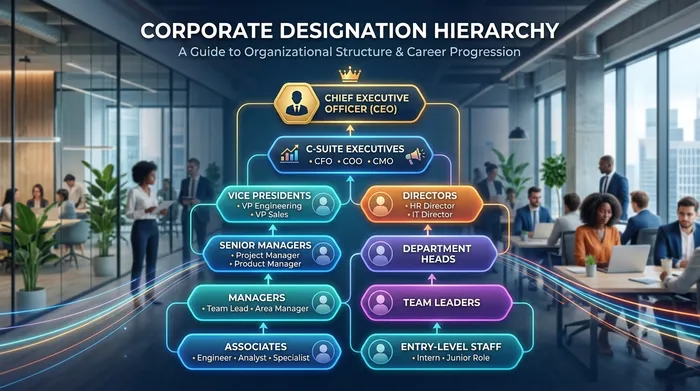
In many mid-to-large companies the progression looks broadly like this:
Manager
├── Senior Manager
├── Director / Associate Director
├── Senior Director
├── Vice President (VP)
├── Senior Vice President (SVP)
└── Executive / C-Level
├── EVP / Group VP
└── C-Suite (CEO, CFO, COO, etc.)
Titles and exact order can vary. Some organizations use “Head of,” “Lead,” or numbered levels (Manager 1, Manager 2) instead of the classic sequence.
Breakdown of Common Levels
| Level | Typical Focus | Key Shift from Previous Level | Common Titles |
|---|---|---|---|
| Manager | Team leadership & delivery | Moving from doing to leading | Manager, Team Lead |
| Senior Manager | Larger teams or complex projects | Broader scope and cross-team influence | Senior Manager, Group Manager |
| Director | Department or major function | Strategy + people + budget ownership | Director, Associate Director |
| Senior Director | Multiple teams or larger business unit | Higher visibility and longer-term planning | Senior Director, Head of |
| Vice President | Business unit or major function | Significant P&L or strategic accountability | VP, Vice President |
| Senior / Executive VP | Large portfolio or region | Enterprise-level impact | SVP, EVP |
| C-Level | Entire organization or major division | Ultimate accountability | CEO, CFO, COO, CTO, etc. |
What Changes as You Move Up
Each step usually involves three kinds of growth:
- Scope: You become responsible for more people, larger budgets, or wider business impact.
- Time horizon: Day-to-day problem solving gives way to quarterly, yearly, and multi-year thinking.
- Influence: Direct authority over a team expands into influence across departments, executives, and sometimes external partners.
Many people discover that the skills that made them a strong Manager (execution, coaching a small team, protecting delivery) are necessary but no longer sufficient. Higher levels reward strategic thinking, stakeholder management, political awareness, and the ability to operate with incomplete information.
Differences by Company Size and Industry
Not every organization uses the full ladder.
| Company Type | Typical Path After Manager | Notes |
|---|---|---|
| Large corporation | Senior Manager → Director → VP → SVP → C-Level | Clear levels and formal promotion processes |
| Mid-size company | Manager → Director → VP | Fewer layers; titles may be broader |
| Startup / Scale-up | Manager → Head of → VP or direct to leadership | Titles can be fluid; impact matters more than hierarchy |
| Consulting / Banking | Manager → Senior Manager → Principal / Director → Partner | Often steeper and more competitive |
| Tech companies | Manager → Senior Manager → Director → VP | Sometimes dual tracks (management vs. individual contributor) |
In some tech and engineering organizations there is a parallel individual-contributor track that allows senior experts to advance without managing large teams.
Skills That Matter More at Higher Levels
Moving beyond Manager usually requires deliberate development in several areas:
- Setting and communicating strategy rather than only executing it
- Managing managers (and later managing directors)
- Building relationships with senior stakeholders and executives
- Making decisions with imperfect data
- Representing the function or company externally
- Developing talent and succession plans
- Understanding financial metrics and business models at a deeper level
Soft skills such as executive presence, clear communication, and emotional intelligence become increasingly visible and important.
How Promotions Actually Happen
In most companies, promotion after Manager is not automatic. Common factors include:
- Consistent delivery of results over time
- Demonstration of readiness for the next level (often by already performing parts of the higher role)
- Business need — a vacancy or a growing area that requires stronger leadership
- Sponsorship from senior leaders
- Performance ratings and calibration discussions
- Sometimes formal readiness assessments or leadership programs
Timing varies widely. Some people move from Manager to Senior Manager in two to three years; others stay longer. The jump to Director or VP often takes longer and is more competitive.
Career Stories and Personal Legacy
Corporate titles mark professional progress, but they also form part of a longer personal and family story. Many people later want to record how their career unfolded — the roles, the moves, the lessons, and the people who helped along the way.
Capturing that journey alongside family history creates a richer record for the next generation. A digital family tree can hold career milestones, locations, and stories just as easily as birthplaces and relationships. You can begin building such a record for free at the My rOoOts create-tree page.
The ancestor timeline generator is useful for placing career phases against family events. The family tree generator helps organize the people and relationships that supported professional growth. When relatives contribute details, a relationship calculator can clarify connections across generations.
Practical Advice for the Next Step
- Talk openly with your manager about what the next level requires in your specific organization.
- Seek opportunities that stretch you into the work of the level above.
- Build relationships beyond your immediate team.
- Track achievements in business terms (impact, revenue, efficiency, people development).
- Consider whether you want to stay on the people-management path or explore a senior individual-contributor route.
- Review how titles and expectations differ if you change companies or industries.
Conclusion
After Manager, the common path leads through Senior Manager, Director, Vice President, and eventually into senior executive or C-level roles. Each step expands scope, time horizon, and organizational influence. The exact titles and speed of progress depend on the company, industry, and individual performance.
Understanding the typical ladder helps you plan deliberately rather than waiting for the next title to appear. At the same time, the professional journey forms part of a larger life story. Recording roles, milestones, and the people involved in a clear digital family archive ensures that both career achievements and personal relationships remain visible for future generations.
Create Your Family Tree for Free
Start building your family history in minutes with the My rOoOts Free Family Tree Creator. Add parents, grandparents, children, and relatives, organize generations visually, and create a beautiful family tree that you can save and share.
👉 Create your free family tree: Free Family Tree Creator
No design skills required. Simply enter your family details and generate a clear, easy-to-read family tree online for free.
Check Zodiac Compatibility for Any Two People
Curious about how well two people match based on their date of birth? Try the My rOoOts Zodiac Compatibility Tool to compare zodiac signs, explore relationship compatibility, and get a quick compatibility score for couples, friends, or family members.
👉 Check compatibility now: Zodiac Compatibility Calculator
You can enter two dates of birth and even mention the relationship type to get a more personalized compatibility result.
Download a Free Family Tree Template
Want to draw your family tree yourself? The My rOoOts Family Tree Template provides a free printable blank pedigree chart for documenting your family history across multiple generations.
👉 Download a free family tree template: Family Tree Template
Choose a 3-generation, 4-generation, or 5-generation family tree template and save it as a PDF for printing, writing, and documenting your ancestors.
Discover the Meaning and Origin of Your Surname
Ever wondered where your family name came from? Use the My rOoOts Surname Meaning Lookup to explore surname meanings, origins, history, and etymology from different regions and cultures around the world.
👉 Discover your surname meaning: Surname Meaning Lookup
Learn more about your last name and explore the possible linguistic, geographic, cultural, and historical roots behind your family surname.
Start your family tree free
No account needed to begin. Build it in minutes, then save it whenever you're ready.
Build your family tree