Parish Records Explained: Baptism, Marriage, and Burial Registers
If you are researching your European ancestors, you will encounter parish records sooner or later. In many countries, parish registers are the oldest surviving records of ordinary people, often dating back to the 1500s or even earlier. Long before governments began keeping civil birth, marriage, and death records, local churches recorded baptisms, marriages, and burials.
For anyone interested in European genealogy, understanding parish records is one of the most important research skills you can learn.
In this guide, we’ll explain what parish records are, what information they contain, how to read them, and how to use them to build your family tree.
🌳 Preserve your family history with My rOoOts: https://myrooots.app/
What Are Parish Records?
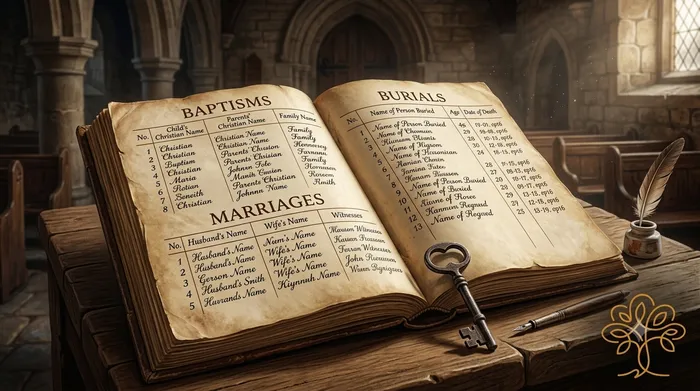
Parish records are registers maintained by a church parish documenting key life events of its members. The three most important types are:
- Baptism registers (birth-related records)
- Marriage registers
- Burial registers (death-related records)
These records were typically kept by priests, pastors, ministers, or other clergy members.
In many European countries, parish records are the primary source for genealogy before civil registration began.
Why Parish Records Matter
Parish registers are invaluable because they often include:
- Names of parents
- Maiden names of mothers
- Names of spouses
- Residence or village
- Occupation
- Names of witnesses or godparents
- Dates of events
- Age at death
A single parish entry can connect multiple generations of a family.
Historical Background
Church authorities gradually required parishes to maintain registers.
Examples:
- England: parish registers mandated in 1538.
- Catholic Church: systematic record keeping strengthened after the Council of Trent (1563).
- Many Lutheran and Protestant regions adopted parish registers in the 16th and 17th centuries.
As a result, parish records may extend centuries earlier than government records.
What Is a Baptism Register?
A baptism register records the baptism of a child, usually shortly after birth.
Typical Information
- Child’s name
- Baptism date
- Birth date (sometimes)
- Father’s name
- Mother’s name (often including maiden surname)
- Residence
- Occupation of father
- Names of godparents or sponsors
Example
5 May 1823 – Baptized John, son of William Brown, farmer of York, and Mary Smith, his wife.
Godparents: Thomas Green and Anne Green.
Why It’s Useful
Baptism records can:
- identify parents,
- reveal the mother’s maiden name,
- distinguish between families with the same surname,
- and suggest relatives through godparents.
What Is a Marriage Register?
Marriage registers document the union of two people.
Typical Information
- Groom’s name
- Bride’s name
- Marital status (bachelor, widow, widower)
- Residence
- Occupation
- Date of marriage
- Names of witnesses
- Father’s names (in many later records)
Example
12 October 1851 – William Brown, bachelor, carpenter of York, married Sarah Green, spinster of York.
Witnesses: Thomas Brown and Elizabeth Green.
Why It’s Useful
Marriage records often provide the strongest evidence linking one generation to the next.
What Is a Burial Register?
Burial registers record the burial of a deceased person.
Typical Information
- Name of deceased
- Burial date
- Age at death
- Residence
- Marital status
- Sometimes cause of death
- Occasionally spouse or parent
Example
Buried 3 March 1878 – Mary Brown of York, aged 62 years.
Why It’s Useful
Burial records can help estimate birth years when no baptism record survives.
Baptism vs. Birth: Important Difference
A common mistake is assuming the baptism date is the birth date.
- Birth date = when the child was born.
- Baptism date = when the child was baptized.
In many Catholic communities, baptism occurred within days of birth, but in other regions it could occur weeks or months later.
Always record the two dates separately when available.
Marriage Date vs. Marriage License
Some traditions kept separate records for:
- banns (public announcements),
- marriage licenses,
- and the actual marriage ceremony.
The marriage register usually records the ceremony date, not the license date.
Burial Date vs. Death Date
Burial registers frequently record only the burial date.
If no death date is listed, avoid assuming the person died on the burial date; death may have occurred days earlier.
Common Languages in Parish Records
European parish records may be written in:
- Latin
- German
- French
- Italian
- Spanish
- Polish
- Czech
- Hungarian
Learning a few common genealogy terms can help enormously.
| English | Latin | German | French | Italian |
|---|---|---|---|---|
| Baptism | Baptizatus | Taufe | Baptême | Battesimo |
| Marriage | Matrimonium | Heirat | Mariage | Matrimonio |
| Burial | Sepultus | Begräbnis | Sépulture | Sepoltura |
| Son | Filius | Sohn | Fils | Figlio |
| Daughter | Filia | Tochter | Fille | Figlia |
How to Read Old Handwriting
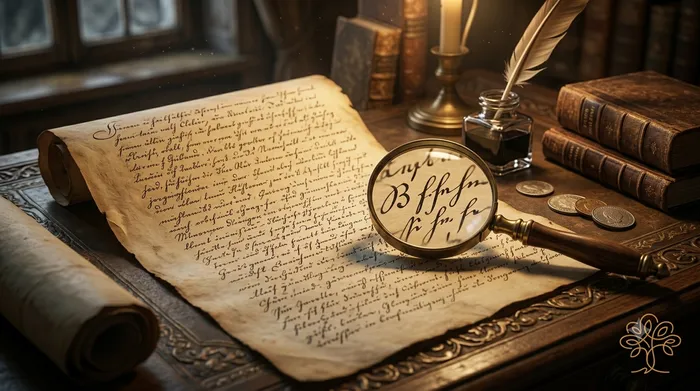
Older parish records are often difficult to read.
Tips
- Compare letters within the same page.
- Learn common abbreviations.
- Read several entries before focusing on your ancestor.
- Use paleography guides for the relevant language.
- Don’t rely solely on automatic transcription.
Understanding Latin Entries
Many Catholic records were written in Latin.
Example:
Joannes filius Gulielmi Brown et Mariae Smith baptizatus est.
Translation:
John, son of William Brown and Mary Smith, was baptized.
Recognizing words such as filius (son) and filia (daughter) is often enough to identify relationships.
Using Parish Records to Build a Family Tree
A powerful genealogy method is to link all three record types.
Example Workflow
- Find a baptism for John Brown (1823).
- Find a marriage for John Brown (1851).
- Find a burial for John Brown (1890).
Together these records can reveal:
- parents,
- spouse,
- children,
- occupation,
- residence,
- and approximate lifespan.
This is the foundation of a reliable family tree.
What If the Record Is Missing?
Parish records may be lost due to fire, war, flood, or deterioration.
Look for substitute sources:
- bishop’s transcripts,
- parish copies,
- civil records,
- cemetery records,
- probate files,
- tax records,
- or census records.
Never stop after one missing register.
Where Can You Find Parish Records?
Many European parish records are now digitized.
Major Sources
- FamilySearch
- National archives
- Regional archive websites
- Diocesan archives
- Parish offices
- Subscription genealogy sites
Search by parish name, not just by surname.
Country-Specific Notes
England
Parish registers often begin in the 1500s and are widely indexed.
Ireland
Catholic parish registers are among the most important surviving records.
Germany
Church books (Kirchenbücher) are usually organized by parish and denomination.
France
Parish registers (registres paroissiaux) generally continue until civil registration began in 1792.
Italy
Parish baptism, marriage, and death records can extend well before civil registration.
Recording Parish Sources Properly
Always save:
- parish name,
- town and country,
- denomination,
- register type,
- page number,
- entry number,
- archive or website,
- and image reference.
Good citations allow you or future researchers to find the record again.
Organizing Parish Records Digitally
As you collect records from multiple parishes and countries, organization becomes essential.
With My rOoOts, you can:
- attach baptism, marriage, and burial records to individuals,
- store scanned images,
- record source citations,
- connect multiple generations,
- and preserve your family history securely.
👉 Start building your documented family tree: https://myrooots.app/
Common Beginner Mistakes
Assuming Every Parish Is Indexed
Many records are image-only and require manual browsing.
Ignoring Witnesses and Godparents
These people are often relatives.
Searching Only One Spelling
Surnames frequently vary in spelling.
Forgetting Historical Boundaries
A village may have belonged to a different country or diocese when the record was created.
Frequently Asked Questions
What is a parish record?
A church register recording baptisms, marriages, and burials of parish members.
Are parish records the same as birth certificates?
No. Baptism records are church records and may not include an official birth registration.
How far back do parish records go?
In some European parishes, records begin in the 1500s; a few begin even earlier.
Are parish records free to access?
Many are free through archives and FamilySearch, though some websites require subscriptions.
Can parish records prove family relationships?
Yes. Baptism and marriage registers are often the strongest evidence for parent-child and spouse relationships.
Final Thoughts
Parish records are the backbone of European genealogy. Learning to read baptism, marriage, and burial registers opens the door to centuries of family history that may not exist anywhere else.
By understanding what each register contains and how the records connect across generations, you can transform scattered names and dates into a meaningful family story.
🌳 Preserve your European family history with My rOoOts: https://myrooots.app/
Find Any Family Relationship Instantly
Not sure how someone is related to you? Use the MyRooots Relationship Calculator to instantly identify relationships such as cousin, aunt, uncle, nephew, niece, in-laws, and many more. It is a quick and easy tool for understanding complex family connections.
👉 MyRooots Relationship Calculator
Create a Beautiful Family Tree Online
Turn your family information into a clear and organized family tree within minutes. The MyRooots Family Tree Generator helps you add relatives, connect generations, and create a shareable family tree that can grow over time.
👉 MyRooots Family Tree Generator
Visualize Your Family History Through Time
See your ancestors in chronological order with the My rOoOts Ancestor Timeline Generator. It creates a visual timeline of births, marriages, deaths, and important life events, making it easier to understand your family's history across generations.
Check Zodiac Compatibility for Any Two People
Curious about how well two people match based on their date of birth? Try the My rOoOts Zodiac Compatibility Tool to compare zodiac signs, explore relationship compatibility, and get a quick compatibility score for couples, friends, or family members.
👉 Check compatibility now: Zodiac Compatibility Calculator
You can enter two dates of birth and even mention the relationship type to get a more personalized compatibility result.
Create Your Family Tree for Free
Start building your family history in minutes with the My rOoOts Free Family Tree Creator. Add parents, grandparents, children, and relatives, organize generations visually, and create a beautiful family tree that you can save and share.
👉 Create your free family tree: Free Family Tree Creator
No design skills required. Simply enter your family details and generate a clear, easy-to-read family tree online for free.
Download a Free Family Tree Template
Want to draw your family tree yourself? The My rOoOts Family Tree Template provides a free printable blank pedigree chart for documenting your family history across multiple generations.
👉 Download a free family tree template: Family Tree Template
Choose a 3-generation, 4-generation, or 5-generation family tree template and save it as a PDF for printing, writing, and documenting your ancestors.
Discover the Meaning and Origin of Your Surname
Ever wondered where your family name came from? Use the My rOoOts Surname Meaning Lookup to explore surname meanings, origins, history, and etymology from different regions and cultures around the world.
👉 Discover your surname meaning: Surname Meaning Lookup
Learn more about your last name and explore the possible linguistic, geographic, cultural, and historical roots behind your family surname.
Start your family tree free
No account needed to begin. Build it in minutes, then save it whenever you're ready.
Build your family tree