How to Read Old European Handwriting in Genealogy Documents
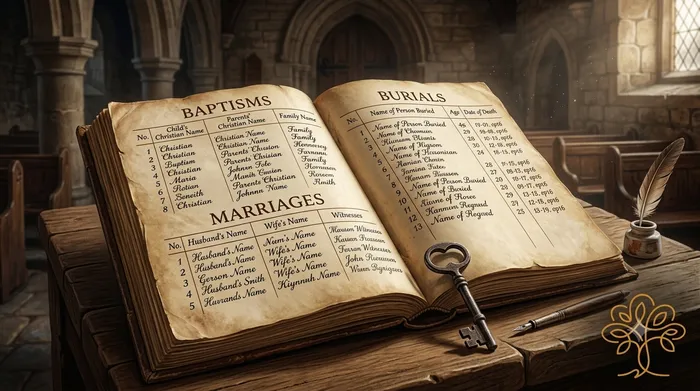
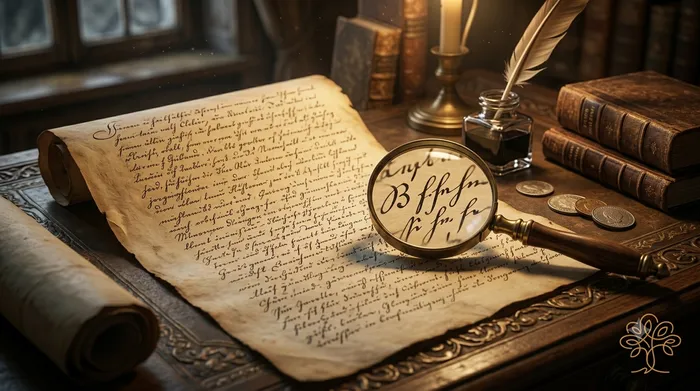
One of the biggest challenges in European genealogy is not finding records—it is reading them. Many baptism, marriage, burial, census, military, and parish records were written in scripts that look completely unfamiliar to modern readers. German records may appear in Gothic script or Kurrent, Catholic records are often written in Latin, and church registers frequently use abbreviations, archaic spellings, and local handwriting styles.
The good news is that you do not need to become a professional historian to read old genealogy documents. With a few practical techniques, you can learn to identify names, dates, relationships, and key family details.
This guide focuses on the most common handwriting systems encountered in European genealogy:
- Gothic script (Fraktur-style handwriting)
- Kurrent
- Sütterlin
- Latin church records
- Old parish and civil registers
🌳 Organize your genealogy records with My rOoOts: https://myrooots.app/
Why Old European Handwriting Looks So Different
Before standardized modern handwriting became common, people were taught regional writing styles. Clergy, government clerks, and schoolteachers each used specific scripts.
As a result:
- The same letter may look very different from modern handwriting.
- The same name may be spelled several ways.
- Writers often used abbreviations to save space.
- Ink fading and paper damage can make reading harder.
The key is to recognize patterns rather than trying to read every letter immediately.
Start with What You Already Know
Before decoding a document, identify:
- Type of record (baptism, marriage, burial, census, etc.)
- Language (German, Latin, French, Italian, etc.)
- Date range
- Location or parish
A baptism register, for example, almost always follows a predictable structure: date → child → parents → witnesses.
Knowing the expected structure is often more important than reading every word.
Gothic Script (Fraktur-Style Handwriting)
Gothic script is common in German-speaking regions and older printed records.
Common Features
- Sharp angular letters
- Tall vertical strokes
- Similar-looking letters such as e, n, m, u
- Decorative capitals
Beginner Tip
Look for familiar words such as:
- Johann
- Maria
- Anna
- geboren (born)
- getauft (baptized)
Once you recognize a few words, the rest of the entry becomes easier.
Kurrent: The Most Important German Genealogy Script
Kurrent was the standard handwritten script in German-speaking areas for centuries.
Why It Is Difficult
Letters often resemble loops and hooks rather than printed characters.
For example:
- e may look like a small loop.
- s has several forms.
- h and k can be easily confused.
Practical Method
- Find a name you already know.
- Compare each letter with other occurrences on the page.
- Create your own alphabet chart from that document.
- Read one word at a time, not one letter at a time.
Genealogists often begin by identifying the surname first and then work outward.
Sütterlin
Sütterlin is a later German handwriting style introduced in the early 20th century.
Characteristics
- More rounded than Kurrent
- More consistent letter forms
- Common in records from roughly 1915–1940
If a German document appears unusually neat and upright, it may be Sütterlin rather than Kurrent.
The Most Commonly Confused German Letters
| Letter | Often Confused With |
|---|---|
| e | n |
| n | m |
| u | n |
| r | v |
| h | k |
| s | f |
| c | e |
When a word makes no sense, check whether one of these substitutions resolves it.
Reading Latin Church Records
Catholic parish records across Europe were frequently written in Latin.
Essential Genealogy Words
| Latin | Meaning |
|---|---|
| filius | son |
| filia | daughter |
| uxoris | wife |
| conjugum | married couple |
| baptizatus | baptized |
| matrimonium | marriage |
| sepultus | buried |
| natus | born |
| mortuus | died |
Example
Joannes filius Georgii et Mariae baptizatus est.
Translation:
John, son of George and Mary, was baptized.
Notice that once you recognize filius and baptizatus, the family relationship becomes clear even if other words remain uncertain.
Decoding Dates in Latin Records
Months are often written in Latin.
| Latin | English |
|---|---|
| Januarii | January |
| Februarii | February |
| Martii | March |
| Aprilis | April |
| Maii | May |
| Junii | June |
| Julii | July |
| Augusti | August |
| Septembris | September |
| Octobris | October |
| Novembris | November |
| Decembris | December |
A date such as 12 Octobris 1784 simply means 12 October 1784.
Understanding Old Church Record Abbreviations
Clergy often abbreviated frequently used words.
| Abbreviation | Meaning |
|---|---|
| b. | baptized / born |
| m. | married |
| d. | died |
| sep. | buried |
| ux. | wife |
| vid. | widow |
Always consider the context before expanding an abbreviation.
A Step-by-Step Example
Imagine a burial entry:
Die 14 Martii sepultus est Georgius Müller aetatis 63 annorum.
Break it into pieces:
- Die 14 Martii = on 14 March
- sepultus est = was buried
- Georgius Müller = George Müller
- aetatis 63 annorum = aged 63 years
Final translation:
George Müller was buried on 14 March at the age of 63 years.
Notice that you did not need to know every Latin word to understand the record.
How to Read Damaged or Faded Records
Increase Contrast
Use a photo editor to:
- increase contrast,
- reduce brightness,
- or convert the image to grayscale.
Compare Neighboring Entries
If one word is faded, the same word may appear clearly elsewhere on the page.
Read the Entire Page
Repeated names and phrases help train your eye to the writer’s style.
Build Your Own Letter Chart
For difficult records:
- Write the alphabet A–Z.
- Copy each letter from the document when you identify it.
- Use your chart to decode additional words.
This method is especially effective for Kurrent handwriting.
Common Genealogy Phrases
Baptism Records
- son of
- daughter of
- lawful marriage
- godparents
Marriage Records
- bachelor
- spinster
- widow
- widower
- witnesses
Burial Records
- aged
- buried
- deceased
- widow of
Learning these repeated phrases dramatically speeds up transcription.
Don’t Modernize Too Early
Record the text exactly as written before creating a modern translation.
Example:
- Original: Catharina
- Modern: Katherine / Catherine
Keeping the original spelling preserves historical accuracy.
Best Practice: Transcribe, Then Translate
Create two versions:
Original Transcription
Catharina filia Johannis Bauer et Annae.
Translation
Catherine, daughter of Johann Bauer and Anna.
This preserves evidence while making it readable for family members.
Useful Research Workflow
- Save the image.
- Identify language and script.
- Mark dates.
- Mark names.
- Mark relationship words.
- Transcribe line by line.
- Translate afterward.
- Add the information to your family tree.
Consistency is more important than speed.
Organizing Transcriptions in Your Family Tree
As you decode records, attach both the image and transcription to the correct ancestor.
With My rOoOts, you can:
- upload scanned church records,
- store transcriptions,
- add translations,
- cite sources,
- and connect records across generations.
👉 Start preserving your genealogy research: https://myrooots.app/
Frequently Asked Questions
What is Kurrent handwriting?
Kurrent is an old German cursive script widely used in German-speaking Europe before the mid-20th century.
Is Gothic script the same as Kurrent?
No. Gothic usually refers to blackletter-style writing or printing, while Kurrent is a handwritten cursive script.
Why are many church records written in Latin?
Latin was the administrative language of the Catholic Church across much of Europe for centuries.
Do I need to learn German or Latin fluently?
No. Most genealogy records use a limited vocabulary that can be learned with practice.
What is the easiest way to start reading old records?
Begin with records where you already know a name or date and compare repeated words across the page.
Final Thoughts
Reading old European handwriting is a skill that improves surprisingly quickly. At first, Gothic letters and Kurrent loops may seem impossible, but after identifying a few names, dates, and relationship words, patterns begin to emerge. Remember that genealogy research is not about perfect translation—it is about extracting reliable family information from historical records.
With patience, practice, and careful organization, you can unlock centuries of European family history hidden in church books and archival documents.
🌳 Preserve every transcription and family connection with My rOoOts: https://myrooots.app/
Find Any Family Relationship Instantly
Not sure how someone is related to you? Use the MyRooots Relationship Calculator to instantly identify relationships such as cousin, aunt, uncle, nephew, niece, in-laws, and many more. It is a quick and easy tool for understanding complex family connections.
👉 MyRooots Relationship Calculator
Create a Beautiful Family Tree Online
Turn your family information into a clear and organized family tree within minutes. The MyRooots Family Tree Generator helps you add relatives, connect generations, and create a shareable family tree that can grow over time.
👉 MyRooots Family Tree Generator
Visualize Your Family History Through Time
See your ancestors in chronological order with the My rOoOts Ancestor Timeline Generator. It creates a visual timeline of births, marriages, deaths, and important life events, making it easier to understand your family's history across generations.
Check Zodiac Compatibility for Any Two People
Curious about how well two people match based on their date of birth? Try the My rOoOts Zodiac Compatibility Tool to compare zodiac signs, explore relationship compatibility, and get a quick compatibility score for couples, friends, or family members.
👉 Check compatibility now: Zodiac Compatibility Calculator
You can enter two dates of birth and even mention the relationship type to get a more personalized compatibility result.
Create Your Family Tree for Free
Start building your family history in minutes with the My rOoOts Free Family Tree Creator. Add parents, grandparents, children, and relatives, organize generations visually, and create a beautiful family tree that you can save and share.
👉 Create your free family tree: Free Family Tree Creator
No design skills required. Simply enter your family details and generate a clear, easy-to-read family tree online for free.
Download a Free Family Tree Template
Want to draw your family tree yourself? The My rOoOts Family Tree Template provides a free printable blank pedigree chart for documenting your family history across multiple generations.
👉 Download a free family tree template: Family Tree Template
Choose a 3-generation, 4-generation, or 5-generation family tree template and save it as a PDF for printing, writing, and documenting your ancestors.
Discover the Meaning and Origin of Your Surname
Ever wondered where your family name came from? Use the My rOoOts Surname Meaning Lookup to explore surname meanings, origins, history, and etymology from different regions and cultures around the world.
👉 Discover your surname meaning: Surname Meaning Lookup
Learn more about your last name and explore the possible linguistic, geographic, cultural, and historical roots behind your family surname.
Start your family tree free
No account needed to begin. Build it in minutes, then save it whenever you're ready.
Build your family tree