Family Snapshot
Expand full treeRani Mukerji
b. 1978
Biography
Rani Mukerji is an Indian actress who has starred in numerous major Hindi films since the late 1990s, including Kuch Kuch Hota Hai (1998), Black (2005), Bunty Aur Babli, Mardaani, and Hichki. Born into a film family, she is the daughter of director-producer Ram Mukherjee, a co-founder of Filmalaya Studios. She married Aditya Chopra, chairman of Yash Raj Films, in a private ceremony in 2014, joining the Chopra family…
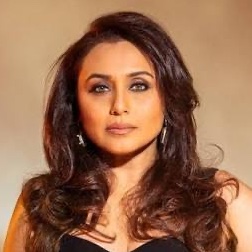
Photos of Rani Mukerji
1 photo from the Chopra family album
Have old family photos? Give every relative a profile and a photo gallery in your own family tree.
Start your tree, freeLife Timeline
Born1978
Born
The beginning of Rani Mukerji's recorded life.
Family
Married Aditya Chopra
A partnership that connects two branches of the Chopra family.
Legacy
Actress
A defining role in the story of the Chopra family.
Your turn
Map your own family the way Rani's is mapped
Free, with no sign-up to start. Add yourself, then your parents and grandparents, and watch the tree grow.
More people in the Chopra family tree
View all 8 peopleBaldev Raj Chopra
Gen 2 · 1914 - 2008
Baldev Raj Chopra, known professionally as B.R. Chopra, was an Indian film director and producer born on 22 April 1914 in Ludhiana, Punjab, and raised in Lahore, where he worked as a film journalist before entering the film industry. He founded B.R. Films in 1955 and directed landmark Hindi films including Naya Daur (1957), Waqt (1965), Gumrah, and Nikaah, tackling social themes rarely addressed in mainstream cinema of the time. Later, with his son Ravi Chopra, he produced the enormously popular television adaptation of the Mahabharata (1988-1990). He was the elder brother of Yash Chopra, whom he brought into the film industry and mentored early in his career. B.R. Chopra died in Mumbai on 5 November 2008.
Uday Chopra
Gen 3 · b. 1973
Uday Chopra is an Indian actor and producer, the younger son of Yash Chopra and Pamela Chopra, and younger brother of Aditya Chopra. He appeared in Yash Raj Films productions such as Mohabbatein (2000) and Mujhse Dosti Karoge!, and is best known for playing Ali Akbar Fateh Khan in the Dhoom action-comedy franchise (2004-2013). He has also worked as a producer at Yash Raj Films. Uday Chopra has largely stepped back from acting in recent years and maintains a lower public profile than his brother or father.
Yash Chopra
Gen 2 · 1932 - 2012
Yash Chopra was an Indian film director and producer, born on 27 September 1932 in Lahore, British India, one of several children in a Punjabi family. He began his career in the late 1950s as an assistant to his elder brother, B.R. Chopra, before directing his own films at B.R. Films. In 1970 he founded Yash Raj Films (YRF), which grew into one of Hindi cinema's most powerful studios. Known as the "King of Romance," he directed influential films including Deewaar (1975), Kabhi Kabhie, Silsila, Chandni, Darr, Dil To Pagal Hai, Veer-Zaara, and his final film, Jab Tak Hai Jaan (2012). He was married to Pamela Chopra and was the father of Aditya Chopra, who now heads YRF, and actor-producer Uday Chopra. Yash Chopra died in Mumbai on 21 October 2012, days before his last film's release.
Ravi Chopra
Gen 3 · 1946 - 2014
Ravi Chopra was an Indian film director and producer, the son of B.R. Chopra, who worked alongside his father at B.R. Films for much of his career. He is best known for directing the television series Mahabharat (1988-1990), a hugely popular adaptation of the Hindu epic produced by his father, which became one of Indian television's most watched programmes. He also directed feature films including Baghban (2003), a family drama that was a major commercial success, as well as Aaj Ki Awaaz and Zameer. After B.R. Chopra's death in 2008, Ravi Chopra continued to run B.R. Films until his own death in 2014.
Unknown Chopra
Gen 1
The father of Baldev Raj (B.R.) Chopra and Yash Chopra, the two brothers who together founded Hindi cinema's B.R. Films and Yash Raj Films production houses. He raised his family in Lahore, British India, before the 1947 Partition, after which the Chopras resettled in India. Little else about his own life is publicly documented, but his legacy endures through the multigenerational filmmaking dynasty his sons and grandsons built, from B.R. Films' social dramas and the television epic Mahabharat to Yash Raj Films' romances, now led by his grandson Aditya Chopra.
Pamela Chopra
Gen 2
Pamela Chopra is the wife of the late director-producer Yash Chopra and has long been closely involved with Yash Raj Films (YRF), the studio he founded, contributing to costume design, music, and production on many of its films. She and Yash Chopra married in the 1970s and had two sons, Aditya Chopra, the current chairman of YRF, and Uday Chopra, an actor and producer. Within the close-knit Chopra family, she has been described as a steadying presence behind the scenes of the studio's biggest productions, and she remains associated with YRF's family legacy following her husband's death in 2012.
Related Family Stories
Rockefeller Family Tree - America's Oil and Philanthropy Dynasty
The Rockefeller family is an American business and philanthropic dynasty founded on the Standard Oil fortune of John D. Rockefeller, whose descendants have shaped American banking, conservation, medicine, modern art and national politics across five generations. From a modest upstate New York farmhouse the family rose to control the largest industrial enterprise of the Gilded Age, then spent the twentieth century converting that fortune into foundations, museums, parks and public office. ## Origins The line begins with William Avery Rockefeller (1810-1906), a traveling salesman from Granger, New York, and his wife Eliza Davison (1813-1889), who married in 1837 and raised six children in Richford, Moravia and Owego before the family moved to Ohio. Their eldest son, John D. Rockefeller, began as a Cleveland bookkeeper, entered oil refining in 1863 and incorporated the Standard Oil Company in 1870 together with his younger brother William Rockefeller. By the 1880s Standard Oil refined the great majority of American petroleum, until the Supreme Court ordered its dissolution in 1911. ## Notable members John D. Rockefeller and Laura Spelman Rockefeller had four children who reached adulthood, among them the Chicago arts patron Edith Rockefeller McCormick and the family's only son, John D. Rockefeller Jr. With Abby Aldrich Rockefeller, a co-founder of the Museum of Modern Art, John Jr. had six children who defined the family's public face: Abby "Babs" Rockefeller Mauze, the philanthropist John D. Rockefeller III, Nelson Rockefeller, who served four terms as Governor of New York and then as Vice President of the United States, the conservationist and venture capitalist Laurance Rockefeller, Winthrop Rockefeller, Governor of Arkansas, and the banker David Rockefeller of Chase Manhattan. Their children, known within the family as the Cousins, include Senator Jay Rockefeller of West Virginia, the Asmat art collector Michael Rockefeller, Lieutenant Governor Winthrop Paul Rockefeller of Arkansas, the economist Neva Goodwin and the Synergos founder Peggy Dulany. ## Significance The family's lasting mark is institutional rather than dynastic. The Rockefeller Foundation, the University of Chicago, Rockefeller University, the Rockefeller Brothers Fund, Rockefeller Center, the Museum of Modern Art, Colonial Williamsburg, Lincoln Center, the Asia Society and several national parks all trace their founding or their endowment to a Rockefeller. Few American families have moved so completely from industrial fortune to organized philanthropy and elected office within three generations. | Fact | Details | | --- | --- | | Surname | Rockefeller | | Origin | Richford, New York, United States | | Founder | John D. Rockefeller (1839-1937) | | Family business | Standard Oil, later Chase Manhattan Bank | | Known for | Standard Oil, the Rockefeller Foundation, Rockefeller Center, the Museum of Modern Art | | Public offices held | Vice President of the United States, Governor of New York, Governor of Arkansas, United States Senator | | Generations covered | Five, from William Avery Rockefeller to the fourth-generation Cousins |
Stuart Family Tree - The House of Stuart from Mary, Queen of Scots to Bonnie Prince Charlie
The House of Stuart was the royal dynasty that ruled Scotland from 1371 and both Scotland and England from 1603 until 1714, giving Britain fourteen monarchs from Robert II to Queen Anne as well as the Jacobite claimants who carried its cause into exile. Spelled Stewart in Scotland and Stuart after Mary, Queen of Scots adopted the French form, the family holds the unusual distinction of having united two crowns by inheritance rather than conquest, and of ending in a disputed succession that reshaped the British constitution. ## Origins The family took its name from its office. The Stewarts were hereditary High Stewards of Scotland, a post granted in the twelfth century to a Breton house settled in Renfrewshire. In 1315 Walter Stewart, 6th High Steward, married Marjorie Bruce, daughter of King Robert the Bruce. Their son became Robert II in 1371 when the direct Bruce line failed, and the stewardship turned into a crown. For more than two centuries afterwards the Stewarts ruled Scotland alone, through a run of reigns cut short by battle, captivity and long royal minorities that left the nobility unusually powerful. ## Notable members James IV, the most cultivated of the Scottish kings, married Margaret Tudor in 1503 and so planted the claim that would carry his descendants to the English throne. His granddaughter Mary, Queen of Scots became queen at six days old, reigned briefly and turbulently, and was deposed in 1567 and executed in England twenty years later. Her son, James VI of Scotland, inherited the English crown in 1603 as James I and became the first monarch to rule both kingdoms. His son Charles I lost the Civil Wars and his throne; Charles II returned at the Restoration in 1660; James II and VII was deposed in the Revolution of 1688, after which his daughters Mary II and Anne reigned in his place. In exile his son James Francis Edward Stuart and grandson Charles Edward Stuart, remembered as Bonnie Prince Charlie, led the Jacobite attempts to recover the throne, ending with the rising of 1745. ## Significance No other British dynasty changed the shape of the state so much. The Stuarts brought Scotland and England under one sovereign, presided over the King James Bible and the theatre of Shakespeare's late career, lost a king to Parliament, and provoked the settlements of 1689 and 1701 that made the monarchy answerable to Parliament and Protestant by statute. When Queen Anne died childless in 1714, the crown passed under the Act of Settlement to the descendants of her cousin Sophia of Hanover, granddaughter of James VI and I, so every British monarch since is still a Stuart descendant. | Fact | Details | | --- | --- | | Founder | Robert II, King of Scots from 1371 | | Ruled | Scotland 1371 to 1714; England and Ireland 1603 to 1714 | | Origin | Renfrewshire, Scotland | | Union of the Crowns | 1603, under James VI of Scotland and I of England | | Last reigning monarch | Anne, Queen of Great Britain, died 1714 | | Jacobite claimants | James Francis Edward, Charles Edward and Henry Benedict Stuart | | Succeeded by | The House of Hanover, through Sophia of Hanover |
Hohenzollern Family Tree - Prussia's Royal House from Frederick the Great to Kaiser Wilhelm II
The House of Hohenzollern is the German dynasty that ruled Brandenburg from 1415, held the Prussian crown from 1701, and gave Germany its three emperors between 1871 and the fall of the monarchy in 1918. This tree follows the senior Prussian line in one unbroken descent, from Frederick William the Great Elector, through the kings of Prussia and the German Emperors, down to Georg Friedrich, Prince of Prussia, the present head of the house. ## Origins The family takes its name from Hohenzollern Castle on a hill in the Swabian Alb, where a line of counts is recorded from the eleventh century. A Swabian Zollern married into the burgraviate of Nuremberg in 1192, and the Franconian branch that grew from it spent two centuries accumulating lands and credit with the Holy Roman Emperors. The decisive moment came in 1415, when Emperor Sigismund invested Frederick VI of Nuremberg as Elector of Brandenburg in return for his political and financial support. The Duchy of Prussia, a separate inheritance lying outside the Empire, passed to the Brandenburg electors in 1618, and Frederick William, the Great Elector, welded the two into a single functioning state after the devastation of the Thirty Years' War. ## Notable members Frederick I turned the electorate into a kingdom in 1701. His son Frederick William I, the Soldier King, built the army and the treasury that his own son, **Frederick the Great**, used to seize Silesia and to make Prussia a European power, while also composing music, building Sanssouci and corresponding with Voltaire. **Queen Louise** became the emotional centre of Prussian resistance to Napoleon. **Wilhelm I**, with Otto von Bismarck as his minister president, was proclaimed German Emperor at Versailles in 1871. His son **Frederick III** and the liberal English princess he married, Victoria, daughter of Queen Victoria, reigned for only ninety nine days. **Wilhelm II**, the last Kaiser, abdicated in 1918 and died in Dutch exile in 1941. ## Significance No other German family shaped the modern state so directly. Hohenzollern rulers created the Prussian civil service, compulsory schooling and the general staff, sponsored the Berlin academies and the Humboldt university model, and then used Prussian power to unify Germany around themselves. The monarchy ended with the revolution of November 1918, but the house continues as a private family: the headship passed from Wilhelm II to his eldest son, then to Louis Ferdinand, and in 1994 to Georg Friedrich, whose own father and uncles are part of the succession story told in this tree. ## Quick facts | Fact | Details | |---|---| | Family name | Hohenzollern | | Place of origin | Hohenzollern Castle, Swabia, southern Germany | | Ruled | Brandenburg from 1415, Prussia from 1618, Germany from 1871 | | Royal title | King in Prussia from 1701, King of Prussia from 1772 | | Imperial title | German Emperor, 1871 to 1918 | | German Emperors | Wilhelm I, Frederick III, Wilhelm II | | Monarchy ended | 9 November 1918 | | Present head of the house | Georg Friedrich, Prince of Prussia, since 1994 | | Principal residences | Berlin City Palace, Sanssouci and Cecilienhof at Potsdam, Charlottenburg | | Branch shown here | The senior Prussian line only, not Hohenzollern-Sigmaringen |
Glucksburg Family Tree - The Royal House of Denmark, Norway and Greece from Christian IX to Today
The House of Glücksburg is the reigning royal house of Denmark and Norway and the former royal house of Greece, a branch of the ancient House of Oldenburg whose modern members all descend from King Christian IX of Denmark (1818 to 1906) and his wife Louise of Hesse-Kassel. Through the marriages of their six children, a minor ducal family from the Danish-German borderland became the common ancestor of monarchs in Copenhagen, Oslo and Athens, of a British queen consort, of a Russian empress, and of Prince Philip, Duke of Edinburgh. ## Origins The house takes its name from Glücksburg, a small castle town in Schleswig, and belongs to the Schleswig-Holstein-Sonderburg-Glücksburg line of the House of Oldenburg, which had held the Danish throne since 1448. Christian IX was a prince of that cadet branch with no expectation of ruling until the childless Frederik VII made the Danish succession an open European question. Christian succeeded him in 1863, and within months his second son was elected King of the Hellenes as George I, planting the family in Greece for 110 years. In 1905 his grandson Prince Carl of Denmark accepted the Norwegian throne as Haakon VII, giving Norway its own dynasty after centuries of union with Denmark and then Sweden. ## Notable members Christian IX was nicknamed the father-in-law of Europe: his daughter Alexandra married Edward VII of the United Kingdom, and his daughter Dagmar became Empress Maria Feodorovna of Russia, mother of Nicholas II. The Danish line runs through Christian X, Frederik IX and Queen Margrethe II, a trained archaeologist and illustrator who reigned from 1972 until her abdication in 2024, to her son King Frederik X and Queen Mary. The Norwegian line runs from Haakon VII and Queen Maud through Olav V, an Olympic sailing champion, to King Harald V and Crown Prince Haakon. The Greek line produced Constantine I, Paul, Constantine II and Queen Anne-Marie, Queen Sofía of Spain, and Prince Andrew's son Philip, consort to Elizabeth II for 73 years. ## Significance No other western dynasty connects as many surviving monarchies in a single documented lineage. Two of Europe's ten reigning royal families, Denmark and Norway, are Glücksburg in the male line, and the house also sits in the ancestry of the British and Spanish royal families. Its history traces the transformation of European monarchy itself: from the dynastic matchmaking of the 1860s, through the loss of the Russian and Greek thrones, to the constitutional, publicly accountable monarchies of modern Scandinavia. | Fact | Details | | --- | --- | | House name | Schleswig-Holstein-Sonderburg-Glücksburg, a branch of the House of Oldenburg | | Founding figure of the modern house | Christian IX of Denmark (1818 to 1906) | | Ancestral seat | Glücksburg Castle, Schleswig | | Thrones held | Denmark (1863 to present), Greece (1863 to 1973), Norway (1905 to present) | | Current heads of state | Frederik X of Denmark, Harald V of Norway | | Best-known member abroad | Prince Philip, Duke of Edinburgh (1921 to 2021) | | Nickname of its founder | The father-in-law of Europe |
Frequently Asked Questions
Who did Rani Mukerji marry?+−
Rani Mukerji married Aditya Chopra.
What did Rani Mukerji do?+−
Rani Mukerji is recorded as Actress in the Chopra family tree.
Where was Rani Mukerji from?+−
Rani Mukerji's recorded native place is Mumbai, India.
What family tree does Rani Mukerji belong to?+−
Rani Mukerji is recorded in the Chopra family tree on My rOoOts, alongside 7 other people.
Every family has a story. Start telling yours.
Trace Rani Mukerji's connections across the Chopratree, or begin preserving your own family's history today.
Free. Private by default. GEDCOM export any time.