Public Family Trees/Chopra/Baldev Raj Chopra
Baldev Raj Chopra
1914 - 2008 · Male · Ludhiana, Punjab, British India
Son of Unknown Chopra
2
Generation
1
Ancestors
1
Descendants
1
Children
0
Marriages
Family Snapshot
Expand full treeBiography
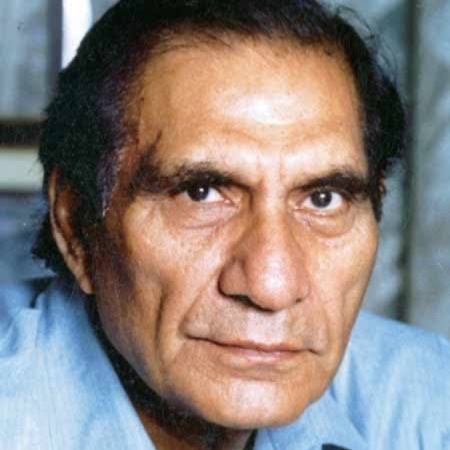
Baldev Raj Chopra, known professionally as B.R. Chopra, was an Indian film director and producer born on 22 April 1914 in Ludhiana, Punjab, and raised in Lahore, where he worked as a film journalist before entering the film industry. He founded B.R. Films in 1955 and directed landmark Hindi films including Naya Daur (1957), Waqt (1965), Gumrah, and Nikaah, tackling social themes rarely addressed in mainstream cinema…
Photos of Baldev Raj Chopra
1 photo from the Chopra family album
Have old family photos? Give every relative a profile and a photo gallery in your own family tree.
Start your tree, freeLife Timeline
Legacy
Film director and producer
A defining role in the story of the Chopra family.
Died2008
Died
The close of a life whose connections continue through the family record.
Your turn
Map your own family the way Baldev's is mapped
Free, with no sign-up to start. Add yourself, then your parents and grandparents, and watch the tree grow.
More people in the Chopra family tree
View all 8 peopleUday Chopra
Gen 3 · b. 1973
Uday Chopra is an Indian actor and producer, the younger son of Yash Chopra and Pamela Chopra, and younger brother of Aditya Chopra. He appeared in Yash Raj Films productions such as Mohabbatein (2000) and Mujhse Dosti Karoge!, and is best known for playing Ali Akbar Fateh Khan in the Dhoom action-comedy franchise (2004-2013). He has also worked as a producer at Yash Raj Films. Uday Chopra has largely stepped back from acting in recent years and maintains a lower public profile than his brother or father.
Rani Mukerji
Gen 3 · b. 1978
Rani Mukerji is an Indian actress who has starred in numerous major Hindi films since the late 1990s, including Kuch Kuch Hota Hai (1998), Black (2005), Bunty Aur Babli, Mardaani, and Hichki. Born into a film family, she is the daughter of director-producer Ram Mukherjee, a co-founder of Filmalaya Studios. She married Aditya Chopra, chairman of Yash Raj Films, in a private ceremony in 2014, joining the Chopra family through marriage; the couple have a daughter together. Through her marriage to Aditya Chopra, she became connected to the family founded by his father Yash Chopra and his uncle B.R. Chopra, though her own family lineage is separate from theirs.
Aditya Chopra
Gen 3 · b. 1971
Aditya Chopra is an Indian film director and producer, the elder son of Yash Chopra and Pamela Chopra. He made his directorial debut with Dilwale Dulhania Le Jayenge (1995), which became one of Hindi cinema's most successful and longest-running films. He later directed Mohabbatein (2000) and Rab Ne Bana Di Jodi (2008), and today serves as chairman and managing director of Yash Raj Films (YRF), the studio founded by his father, overseeing its production slate and its Yash Raj Studios facility. Known for maintaining a low public profile, he is married to actress Rani Mukerji. He is the elder brother of actor-producer Uday Chopra. He is not related to actress Priyanka Chopra, whose family is entirely separate from the Yash Chopra/B.R. Chopra film dynasty despite the shared surname.
Pamela Chopra
Gen 2
Pamela Chopra is the wife of the late director-producer Yash Chopra and has long been closely involved with Yash Raj Films (YRF), the studio he founded, contributing to costume design, music, and production on many of its films. She and Yash Chopra married in the 1970s and had two sons, Aditya Chopra, the current chairman of YRF, and Uday Chopra, an actor and producer. Within the close-knit Chopra family, she has been described as a steadying presence behind the scenes of the studio's biggest productions, and she remains associated with YRF's family legacy following her husband's death in 2012.
Related Family Stories
Tudor Family Tree - The House of Tudor from Henry VII to Elizabeth I
The House of Tudor was the royal family that ruled England and Wales from 1485 to 1603, founded by Henry VII after his victory at Bosworth Field and ending with the death of his granddaughter Elizabeth I. In five reigns the dynasty took England out of the Roman Catholic church, made the monarch the head of a national religion, and turned a peripheral kingdom into a naval and literary power. This tree follows the line from the Welsh courtier Owen Tudor and the dowager queen Catherine of Valois down to Elizabeth I, together with the Brandon, Grey and Clifford cousins and the Scottish line that ended in James VI and I. ## Origins The family name comes from Penmynydd in Anglesey, north Wales, where the Tudors were landed gentry in the service of the princes of Gwynedd. Owen Tudor came to the English court in the 1420s and married Catherine of Valois, the widow of Henry V. Their sons Edmund and Jasper Tudor were half-brothers of Henry VI, who raised them to earldoms in 1452. Edmund's marriage to Lady Margaret Beaufort, a great-granddaughter of John of Gaunt, added the senior Lancastrian claim to the throne, and their only child, born after his father's death, became Henry VII. His marriage to Elizabeth of York, eldest daughter of Edward IV, joined the two houses whose rivalry had driven the Wars of the Roses and gave the dynasty its red and white rose. ## Notable members Henry VII rebuilt the crown's finances and secured the new dynasty through marriage alliances with Spain and Scotland. Henry VIII married six times and broke with Rome, and his three surviving children each reigned in turn: Edward VI as a Protestant boy king, Mary I as the first queen to rule England in her own right, and Elizabeth I for forty-four years. Around them stand the cousins who carried royal blood without the crown, among them Lady Jane Grey, queen for nine days, her sisters Catherine and Mary Grey, and Margaret Pole, Countess of Salisbury, one of the last Plantagenets. ## The Scottish and Suffolk lines Henry VII's daughters carried the blood outward. Margaret Tudor married James IV of Scotland, and her line runs through James V and Mary, Queen of Scots, to James VI and I, who inherited England in 1603. Mary Tudor married Charles Brandon, 1st Duke of Suffolk, and their daughters Frances and Eleanor Brandon produced the Grey and Clifford claimants whom Henry VIII's will preferred over the Scottish descendants of his elder sister. ## Significance No English dynasty changed the country more in so few generations. The Tudors created the Church of England, absorbed the wealth of the monasteries into the crown, brought Wales formally into the English legal and parliamentary system, and built the navy that met the Spanish Armada. The Elizabethan settlement shaped English religion for centuries, and the Elizabethan decades produced Shakespeare, Spenser and the first English voyages to the Americas. When Elizabeth I died unmarried in 1603, the throne passed peacefully to her Scottish cousin, and the two crowns were joined in one person for the first time. | Fact | Details | |---|---| | Origin | Penmynydd, Anglesey, Wales | | Ruled | England, Wales and Ireland, 1485 to 1603 | | Founder | Owen Tudor, through his son Edmund Tudor | | Monarchs | Henry VII, Henry VIII, Edward VI, Mary I, Elizabeth I | | Emblem | The Tudor rose, red and white combined | | Principal seats | Richmond, Greenwich, Hampton Court and Whitehall palaces | | Ended | Death of Elizabeth I in 1603, succeeded by James VI of Scotland |
Bourbon Family Tree - The House of Bourbon in France and Spain
The House of Bourbon is a European royal dynasty, descended in the male line from the Capetian kings of France, that ruled France from 1589 to 1792 and again from 1814 to 1848, and that still reigns in Spain today under King Felipe VI. Over four centuries its members also held the thrones of Navarre, Naples and Sicily, Parma and Etruria, which makes it one of the most widely established royal houses in European history. ## Origins The family takes its name from the lordship of Bourbon in the Auvergne, centred on Bourbon-l'Archambault. Its royal line descends from Robert, Count of Clermont, a younger son of King Louis IX of France, whose marriage to Beatrice of Burgundy, heiress of Bourbon, carried the name into the Capetian house in 1272. For three centuries afterwards the Bourbons were powerful French princes of the blood rather than kings. That changed with Antoine de Bourbon, Duke of Vendome, whose marriage to Jeanne d'Albret, queen regnant of Navarre, produced Henry of Navarre. When the Valois line died out in 1589, Henry was the senior Capetian heir, and he took the French throne as Henry IV. ## Notable members Henry IV ended the French Wars of Religion and issued the Edict of Nantes in 1598. His son Louis XIII, guided by Cardinal Richelieu, built the centralised state that Louis XIV, the Sun King, carried to its height across a reign of seventy-two years, the longest of any European sovereign, and to the palace of Versailles. Louis XV and then Louis XVI inherited that system, and Louis XVI and his queen, Marie Antoinette, were swept away by the French Revolution in 1792. The dynasty returned with Louis XVIII in 1814 and Charles X in 1824, and in 1830 the crown passed to Louis Philippe I of the cadet House of Orleans, the last king to rule in France. ## The Spanish branch In 1700 the childless Charles II of Spain left his crown to Philip, Duke of Anjou, a grandson of Louis XIV. Philip became Philip V, the first Bourbon king of Spain, at the cost of the War of the Spanish Succession, which ended with his renunciation of any claim to the French throne. His descendants include the reforming Charles III, Ferdinand VII, Isabella II, Alfonso XII and Alfonso XIII, who left Spain in 1931. The monarchy was restored in 1975 under Juan Carlos I, grandson of Alfonso XIII, who presided over Spain's transition to democracy and abdicated in 2014 in favour of his son Felipe VI. Felipe's elder daughter Leonor, Princess of Asturias, is heir to the throne. ## Significance No other family links the absolute monarchy of Versailles to a working constitutional monarchy in twenty-first century Madrid. Bourbon marriages tied the house to the Habsburgs of Austria and Spain, the dukes of Savoy, the Medici of Florence and the British royal family, so a Bourbon family tree doubles as a map of European dynastic politics from the Reformation to the present day. | Fact | Details | | --- | --- | | Family name | House of Bourbon (Maison de Bourbon, Casa de Borbon) | | Place of origin | Bourbon-l'Archambault, Auvergne, France | | Founder of the line | Robert, Count of Clermont (1256-1317), son of Louis IX | | First king of France | Henry IV, reigned 1589 to 1610 | | Last king to rule France | Louis Philippe I, reigned 1830 to 1848 | | First king of Spain | Philip V, reigned 1700 to 1746 | | Head of the house in Spain | King Felipe VI, since 2014 | | Heir in Spain | Leonor, Princess of Asturias | | Principal seats | Versailles, Fontainebleau, the Louvre, the Royal Palace of Madrid |
The Jackson Family Tree - Michael Jackson
Plantagenet Family Tree - The House of Plantagenet from Henry II to Richard III
The House of Plantagenet was the royal dynasty that ruled England for 331 years, from the accession of Henry II in 1154 to the death of Richard III at the Battle of Bosworth in 1485, making it the longest-reigning royal house in English history. Fourteen Plantagenet kings held the throne in unbroken succession, and in the fifteenth century the family's two junior branches, the houses of Lancaster and York, fought each other for the crown in the civil wars later known as the Wars of the Roses. ## Origins The dynasty came from Anjou in western France. Geoffrey V, Count of Anjou, is said to have worn a sprig of broom, *planta genista*, in his cap, and from that nickname the family eventually took its name, although it was not used as an actual surname until Richard, 3rd Duke of York, adopted it in the 1440s. Geoffrey's marriage in 1128 to Empress Matilda, daughter and designated heir of Henry I of England, gave their son a claim to the English throne that he made good in 1154. With Normandy and Anjou behind him, and Aquitaine gained through his marriage to Eleanor of Aquitaine, Henry II ruled lands reaching from the Scottish border to the Pyrenees, the assemblage historians call the Angevin Empire. ## Notable members The early, or Angevin, kings are among the most familiar names in English history: Henry II, whose itinerant justices and sworn juries laid the foundations of the common law; Richard the Lionheart, a leading commander of the Third Crusade; and King John, who sealed Magna Carta at Runnymede in 1215. Henry III rebuilt Westminster Abbey, Edward I conquered Wales and summoned the Model Parliament, and Edward III opened the Hundred Years' War and founded the Order of the Garter. Later generations produced Edward the Black Prince, the victor of Poitiers, Henry V of Agincourt, and Richard III, whose lost grave was rediscovered in Leicester in 2012. ## Lancaster and York Edward III's many sons divided the dynasty. From his third surviving son, John of Gaunt, Duke of Lancaster, came Henry IV, Henry V and Henry VI, and, through Gaunt's Beaufort children, Margaret Beaufort and her son Henry VII. From his fourth son, Edmund of Langley, Duke of York, combined with the senior Mortimer descent from his second son, Lionel of Antwerp, came Richard, 3rd Duke of York, and his sons Edward IV and Richard III. The rivalry of those branches produced thirty years of intermittent civil war, ending when Henry Tudor defeated Richard III at Bosworth and married Elizabeth of York, uniting the red and white roses. ## Significance No other family has shaped English institutions so deeply. Under the Plantagenets, Magna Carta became a settled principle, parliament grew from an occasional royal council into a body whose consent was needed for taxation, the common law took its enduring form, and English displaced French as the language of the court. Their castles, abbeys and cathedrals still define the medieval landscape of England and Wales. | Fact | Details | | --- | --- | | Ruled | England, 1154 to 1485 | | Founder | Henry II, son of Geoffrey V of Anjou and Empress Matilda | | Place of origin | Anjou, France | | Kings | Fourteen, from Henry II to Richard III | | Branches | Angevin, Lancaster, York | | Emblems | The broom flower, the red rose of Lancaster, the white rose of York | | Last king | Richard III, killed at Bosworth in 1485 | | Legacy | Magna Carta, English common law, the growth of parliament |
Frequently Asked Questions
Who were Baldev Raj Chopra's parents?+−
Baldev Raj Chopra's recorded parent is Unknown Chopra.
Who were Baldev Raj Chopra's children?+−
Baldev Raj Chopra has 1 recorded child: Ravi Chopra.
Who were Baldev Raj Chopra's siblings?+−
Baldev Raj Chopra has 1 recorded sibling: Yash Chopra.
What did Baldev Raj Chopra do?+−
Baldev Raj Chopra is recorded as Film director and producer in the Chopra family tree.
Where was Baldev Raj Chopra from?+−
Baldev Raj Chopra's recorded native place is Ludhiana, Punjab, British India.
What family tree does Baldev Raj Chopra belong to?+−
Baldev Raj Chopra is recorded in the Chopra family tree on My rOoOts, alongside 7 other people.
Every family has a story. Start telling yours.
Trace Baldev Raj Chopra's connections across the Chopratree, or begin preserving your own family's history today.
Free. Private by default. GEDCOM export any time.