Public Family Trees/Bachchan/Abhishek Bachchan
Abhishek Bachchan
Born 1976 · Male · Mumbai, Maharashtra, India
Son of Amitabh Bachchan and Jaya Bachchan
4
Generation
8
Ancestors
0
Descendants
0
Children
1
Marriages
Family Snapshot
Expand full treeAbhishek Bachchan
b. 1976
Biography
Abhishek Bachchan (born 5 February 1976 in Mumbai) is an Indian actor, the son of Amitabh Bachchan and Jaya Bachchan. He made his debut in Refugee (2000) and established himself through Yuva, Dhoom and Bunty Aur Babli, going on to work in Guru, Sarkar, Paa, Bol Bachchan and, more recently, the streaming films Ludo, Dasvi and I Want To Talk. He has won Filmfare Awards for Best Supporting Actor in three consecutive yea…
Photos of Abhishek Bachchan
1 photo from the Bachchan family album
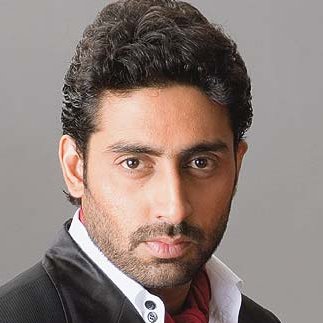
Have old family photos? Give every relative a profile and a photo gallery in your own family tree.
Start your tree, freeLife Timeline
Family
Married Aishwarya Rai Bachchan
A partnership that connects two branches of the Bachchan family.
Legacy
Actor
A defining role in the story of the Bachchan family.
Your turn
Map your own family the way Abhishek's is mapped
Free, with no sign-up to start. Add yourself, then your parents and grandparents, and watch the tree grow.
More people in the Bachchan family tree
View all 24 peopleNavya Naveli Nanda
Gen 5 · b. 1997
Navya Naveli Nanda (born 1997) is an Indian entrepreneur and podcast host, the daughter of the industrialist Nikhil Nanda and the author Shweta Bachchan Nanda, and a granddaughter of Amitabh and Jaya Bachchan. She studied at Fordham University in New York and returned to India to work with the family's Escorts business while founding ventures of her own: Aara Health, a women's healthcare platform, and Project Naveli, an organisation focused on gender equity and on access to education and healthcare for women in India. She hosts the interview podcast What The Hell Navya, in which she appears alongside her mother and her grandmother Jaya Bachchan, and is among the most visible younger voices in the extended Bachchan and Nanda families.
Agastya Nanda
Gen 5 · b. 2000
Agastya Nanda (born 2000) is an Indian actor, the son of the industrialist Nikhil Nanda and the author Shweta Bachchan Nanda, and a grandson of Amitabh and Jaya Bachchan. Raised in Delhi and educated there and abroad, he made his screen debut in Zoya Akhtar's The Archies (2023), a Hindi adaptation of the American comics set in a fictional Indian hill town of the 1960s, in which he played Archie Andrews. He is a great-grandson of the poet Harivansh Rai Bachchan on his mother's side and, through his father's mother Ritu Nanda, a great-grandson of the film-maker Raj Kapoor, placing him at the meeting point of two of Hindi cinema's oldest families.
Nikhil Nanda
Gen 4
Nikhil Nanda is an Indian industrialist and the chairman and managing director of Escorts Kubota, the Delhi-based engineering and tractor manufacturer founded by his grandfather Har Prasad Nanda. The son of Rajan Nanda and Ritu Nanda, and a grandson of the film-maker Raj Kapoor on his mother's side, he joined Escorts in the 1990s and took charge of the group after his father's death in 2018, overseeing its partnership with the Japanese manufacturer Kubota. He married Shweta Bachchan, the daughter of Amitabh and Jaya Bachchan, in 1997, a union that connected two of India's best-known families; their children are Navya Naveli Nanda and Agastya Nanda.
Ajitabh Bachchan
Gen 3 · b. 1947
Ajitabh Bachchan (born 1947) is an Indian businessman and the younger son of the poet Harivansh Rai Bachchan and Teji Bachchan. Educated in Allahabad and Delhi, he went into business rather than the arts, and in the late 1970s and early 1980s managed much of his elder brother Amitabh Bachchan's professional and financial affairs, including the family's film production interests. He lived for several years in London and later in Switzerland before returning to India, and has been involved in ventures in aviation services and infrastructure. With his wife Ramola Bachchan he has daughters including Naina Bachchan, who married the actor Kunal Kapoor in 2015. He has kept a far lower public profile than his brother.
Ritu Nanda
Gen 1 · 1948 - 2020
Ritu Nanda (1948-2020) was an Indian businesswoman and author, and one of the country's best-known insurance entrepreneurs. The eldest daughter of the film-maker and actor Raj Kapoor, she grew up in the Kapoor family of Hindi cinema but built her career in business, becoming a leading agent for the Life Insurance Corporation of India and heading Escolife, an arm of the Escorts group that her husband Rajan Nanda led. She wrote Raj Kapoor Speaks, a widely read oral portrait of her father, published in 2002. Her son Nikhil Nanda married Shweta Bachchan in 1997, making her the link between the Kapoor, Nanda and Bachchan families. She died in January 2020.
Aditya Rai
Gen 2
Aditya Rai is an Indian merchant navy officer and the elder brother of the actress Aishwarya Rai Bachchan. The son of Krishnaraj Rai, a biologist with the Indian Army, and of Brindya Rai, he grew up in Mumbai after the family moved from coastal Karnataka, trained as a marine engineer, and built a career at sea and in shipping rather than in cinema. He has stayed largely out of public life, appearing chiefly at family occasions such as his sister's homecoming after winning Miss World in 1994 and her 2007 marriage to the actor Abhishek Bachchan, which brought the Rai family into the wider Bachchan circle. He lives in Mumbai.
Krishnaraj Rai
Gen 1
Krishnaraj Rai was an Indian biologist and the father of the actress Aishwarya Rai Bachchan. He came from a Tulu-speaking Bunt family of coastal Karnataka and spent his career as a biologist with the Indian Army, work that took the family from Mangalore to Mumbai, where his children grew up and were educated. With his wife Brindya he had two children, Aditya Rai and Aishwarya. He remained a private figure through his daughter's Miss World win in 1994 and her marriage into the Bachchan family in 2007, appearing publicly only at family occasions. He died in Mumbai in 2017.
Pratap Narayan Shrivastava
Gen 1
Pratap Narayan Shrivastava was the father of the Hindi poet Harivansh Rai Bachchan and the earliest documented figure in the family's line. He belonged to a Srivastava Kayastha family from Babupatti, in the Raniganj area of Pratapgarh district in what is now Uttar Pradesh, and moved to Allahabad, where he worked as a clerk in the city's paper trade. He and his wife Saraswati Devi raised their son in modest circumstances in Allahabad, a household the poet later described at length in his autobiography. It was there that Harivansh Rai was given the childhood nickname Bachchan, meaning child, which he adopted as a pen name and passed on as the family surname carried today by his grandson Amitabh Bachchan and his descendants.
Ramola Bachchan
Gen 3
Ramola Bachchan is an Indian fashion entrepreneur based in New Delhi and the wife of the businessman Ajitabh Bachchan, the younger brother of the actor Amitabh Bachchan. She has spent much of her career in the Indian designer-wear and luxury trade, running retail and styling ventures in Delhi and organising fashion and lifestyle events in the capital, where she is a well-known figure on the social circuit. Married to Ajitabh, with whom she lived for a period in London before the family returned to India, she is the mother of Naina Bachchan, who married the actor Kunal Kapoor in 2015, and an aunt of Abhishek Bachchan and Shweta Bachchan Nanda.
Shyama Bachchan
Gen 2
Shyama was the first wife of the Hindi poet Harivansh Rai Bachchan. She married him in 1926, when he was still in his teens, and the ten years of their marriage are described at length in his four-volume autobiography, which treats her as one of the formative presences of his early life. The couple lived in Allahabad and had no children. She died in 1936, and the loss runs through much of the poetry he wrote in the years around his celebrated collection Madhushala. Harivansh Rai remarried in 1941, to Teji Suri, and it is from that second marriage that the present-day Bachchan family, including the actor Amitabh Bachchan, descends.
Naina Bachchan
Gen 4
Naina Bachchan is an Indian investment professional and the daughter of the businessman Ajitabh Bachchan and the fashion entrepreneur Ramola Bachchan. Raised partly in London, where her father lived for several years, she studied in Britain and worked in investment banking and asset management before turning to the family's business interests in India. She is a niece of the actor Amitabh Bachchan and a first cousin of Abhishek Bachchan and Shweta Bachchan Nanda. In 2015 she married the actor Kunal Kapoor, known for Rang De Basanti, in a ceremony in the Seychelles that was among the more widely reported Indian weddings of that year.
Related Family Stories
Belgian Royal Family Tree - The House of Belgium from Leopold I to Princess Elisabeth
The Belgian royal family, formally the House of Belgium and dynastically a branch of the House of Saxe-Coburg and Gotha, is the reigning family of Belgium, founded when the German prince Leopold of Saxe-Coburg-Saalfeld accepted the throne of the newly independent kingdom in 1831 and continuing today through King Philippe and his heir, Princess Elisabeth, Duchess of Brabant. Belgium became independent from the Netherlands in 1830 and chose a constitutional monarchy. Its National Congress looked abroad for a sovereign who could balance French and British interests, and settled on Leopold, a widowed, well-connected and famously cautious prince who had already turned down the crown of Greece. He took the constitutional oath on 21 July 1831, still the Belgian national day. Seven monarchs have reigned since: Leopold I, Leopold II, Albert I, Leopold III, Baudouin, Albert II and Philippe. ## Origins The dynasty's roots are in the small Thuringian duchy of Saxe-Coburg, whose princes married into half the thrones of nineteenth-century Europe. Leopold I was the uncle of both Queen Victoria and her husband Prince Albert, and his second marriage, to Louise-Marie of Orleans, daughter of the French king Louis Philippe I, tied the new kingdom to Paris as well as London. The crown did not pass in a straight line: Leopold II's only son died at the age of nine, so the succession moved to Leopold II's brother Philippe, Count of Flanders, and then to Philippe's son, Albert I. Every Belgian monarch since 1909 descends from that collateral branch. ## Notable members Leopold II is the most studied and most criticised figure in the family, remembered for the industrial boom and monumental building of his reign and, above all, for his personal rule over the Congo Free State. Albert I and Queen Elisabeth of Bavaria became wartime symbols of Belgian resistance behind the Yser in 1914. Leopold III's surrender in 1940 and his conduct under occupation triggered the political crisis known as the Royal Question and ended in his abdication. Baudouin reigned for 42 years and presided over Congolese independence and Belgium's transformation into a federal state. Daughters of the house carried its blood outward: Charlotte became Empress Carlota of Mexico, Marie-Jose was the last Queen of Italy, and Josephine-Charlotte was Grand Duchess of Luxembourg. ## Significance In a country divided by language, the monarchy has been the one institution claimed by both Flemish and Walloon Belgians, and the king's role in brokering coalition governments remains politically real rather than ceremonial. The family has also changed with the country: equal succession was introduced in 1991, making Princess Elisabeth the first female Duchess of Brabant and the future first queen regnant of the Belgians, and in 2020 a court recognised Delphine of Saxe-Coburg as a daughter of Albert II. | Fact | Details | | --- | --- | | Dynasty | House of Belgium (Saxe-Coburg and Gotha) | | Country | Kingdom of Belgium | | Founder | Leopold I, King of the Belgians (1790-1865) | | Reigning since | 21 July 1831 | | Monarchs to date | Seven, from Leopold I to Philippe | | Current head | King Philippe (born 1960), reigning since 2013 | | Heir apparent | Princess Elisabeth, Duchess of Brabant (born 2001) | | Principal residences | Royal Palace of Brussels, Castle of Laeken | | Motto | L'union fait la force / Eendracht maakt macht |
Glucksburg Family Tree - The Royal House of Denmark, Norway and Greece from Christian IX to Today
The House of Glücksburg is the reigning royal house of Denmark and Norway and the former royal house of Greece, a branch of the ancient House of Oldenburg whose modern members all descend from King Christian IX of Denmark (1818 to 1906) and his wife Louise of Hesse-Kassel. Through the marriages of their six children, a minor ducal family from the Danish-German borderland became the common ancestor of monarchs in Copenhagen, Oslo and Athens, of a British queen consort, of a Russian empress, and of Prince Philip, Duke of Edinburgh. ## Origins The house takes its name from Glücksburg, a small castle town in Schleswig, and belongs to the Schleswig-Holstein-Sonderburg-Glücksburg line of the House of Oldenburg, which had held the Danish throne since 1448. Christian IX was a prince of that cadet branch with no expectation of ruling until the childless Frederik VII made the Danish succession an open European question. Christian succeeded him in 1863, and within months his second son was elected King of the Hellenes as George I, planting the family in Greece for 110 years. In 1905 his grandson Prince Carl of Denmark accepted the Norwegian throne as Haakon VII, giving Norway its own dynasty after centuries of union with Denmark and then Sweden. ## Notable members Christian IX was nicknamed the father-in-law of Europe: his daughter Alexandra married Edward VII of the United Kingdom, and his daughter Dagmar became Empress Maria Feodorovna of Russia, mother of Nicholas II. The Danish line runs through Christian X, Frederik IX and Queen Margrethe II, a trained archaeologist and illustrator who reigned from 1972 until her abdication in 2024, to her son King Frederik X and Queen Mary. The Norwegian line runs from Haakon VII and Queen Maud through Olav V, an Olympic sailing champion, to King Harald V and Crown Prince Haakon. The Greek line produced Constantine I, Paul, Constantine II and Queen Anne-Marie, Queen Sofía of Spain, and Prince Andrew's son Philip, consort to Elizabeth II for 73 years. ## Significance No other western dynasty connects as many surviving monarchies in a single documented lineage. Two of Europe's ten reigning royal families, Denmark and Norway, are Glücksburg in the male line, and the house also sits in the ancestry of the British and Spanish royal families. Its history traces the transformation of European monarchy itself: from the dynastic matchmaking of the 1860s, through the loss of the Russian and Greek thrones, to the constitutional, publicly accountable monarchies of modern Scandinavia. | Fact | Details | | --- | --- | | House name | Schleswig-Holstein-Sonderburg-Glücksburg, a branch of the House of Oldenburg | | Founding figure of the modern house | Christian IX of Denmark (1818 to 1906) | | Ancestral seat | Glücksburg Castle, Schleswig | | Thrones held | Denmark (1863 to present), Greece (1863 to 1973), Norway (1905 to present) | | Current heads of state | Frederik X of Denmark, Harald V of Norway | | Best-known member abroad | Prince Philip, Duke of Edinburgh (1921 to 2021) | | Nickname of its founder | The father-in-law of Europe |
Plantagenet Family Tree - The House of Plantagenet from Henry II to Richard III
The House of Plantagenet was the royal dynasty that ruled England for 331 years, from the accession of Henry II in 1154 to the death of Richard III at the Battle of Bosworth in 1485, making it the longest-reigning royal house in English history. Fourteen Plantagenet kings held the throne in unbroken succession, and in the fifteenth century the family's two junior branches, the houses of Lancaster and York, fought each other for the crown in the civil wars later known as the Wars of the Roses. ## Origins The dynasty came from Anjou in western France. Geoffrey V, Count of Anjou, is said to have worn a sprig of broom, *planta genista*, in his cap, and from that nickname the family eventually took its name, although it was not used as an actual surname until Richard, 3rd Duke of York, adopted it in the 1440s. Geoffrey's marriage in 1128 to Empress Matilda, daughter and designated heir of Henry I of England, gave their son a claim to the English throne that he made good in 1154. With Normandy and Anjou behind him, and Aquitaine gained through his marriage to Eleanor of Aquitaine, Henry II ruled lands reaching from the Scottish border to the Pyrenees, the assemblage historians call the Angevin Empire. ## Notable members The early, or Angevin, kings are among the most familiar names in English history: Henry II, whose itinerant justices and sworn juries laid the foundations of the common law; Richard the Lionheart, a leading commander of the Third Crusade; and King John, who sealed Magna Carta at Runnymede in 1215. Henry III rebuilt Westminster Abbey, Edward I conquered Wales and summoned the Model Parliament, and Edward III opened the Hundred Years' War and founded the Order of the Garter. Later generations produced Edward the Black Prince, the victor of Poitiers, Henry V of Agincourt, and Richard III, whose lost grave was rediscovered in Leicester in 2012. ## Lancaster and York Edward III's many sons divided the dynasty. From his third surviving son, John of Gaunt, Duke of Lancaster, came Henry IV, Henry V and Henry VI, and, through Gaunt's Beaufort children, Margaret Beaufort and her son Henry VII. From his fourth son, Edmund of Langley, Duke of York, combined with the senior Mortimer descent from his second son, Lionel of Antwerp, came Richard, 3rd Duke of York, and his sons Edward IV and Richard III. The rivalry of those branches produced thirty years of intermittent civil war, ending when Henry Tudor defeated Richard III at Bosworth and married Elizabeth of York, uniting the red and white roses. ## Significance No other family has shaped English institutions so deeply. Under the Plantagenets, Magna Carta became a settled principle, parliament grew from an occasional royal council into a body whose consent was needed for taxation, the common law took its enduring form, and English displaced French as the language of the court. Their castles, abbeys and cathedrals still define the medieval landscape of England and Wales. | Fact | Details | | --- | --- | | Ruled | England, 1154 to 1485 | | Founder | Henry II, son of Geoffrey V of Anjou and Empress Matilda | | Place of origin | Anjou, France | | Kings | Fourteen, from Henry II to Richard III | | Branches | Angevin, Lancaster, York | | Emblems | The broom flower, the red rose of Lancaster, the white rose of York | | Last king | Richard III, killed at Bosworth in 1485 | | Legacy | Magna Carta, English common law, the growth of parliament |
Rothschild Family Tree - The European Banking Dynasty from Mayer Amschel to Today
The Rothschilds are a European banking dynasty founded in Frankfurt am Main by Mayer Amschel Rothschild (1744-1812), whose five sons established banking houses in Frankfurt, Vienna, Naples, London and Paris and together built the most powerful private financial network of the nineteenth century. ## Origins Mayer Amschel Rothschild was born in 1744 in the Judengasse, the walled Jewish street of Frankfurt am Main, where the family took its name from the red shield that had marked an ancestor's house. He began as a dealer in rare coins and medals, became court factor to Crown Prince Wilhelm of Hesse-Kassel in 1769, and turned that position into a banking business handling loans, bullion and government paper. With his wife Gutle Schnapper he had ten children who reached adulthood, five sons and five daughters. ## The five houses Mayer Amschel's decisive act was to place his sons in five cities so that the family could move money and news across borders as a single firm. Amschel Mayer stayed in Frankfurt, Salomon went to Vienna, Nathan to London, Carl to Naples and James to Paris. The brothers financed the allied campaigns against Napoleon, then the governments, railways and industries of nineteenth century Europe. The Naples house closed in 1860 with Italian unification, Frankfurt in 1901 for want of an heir, and Vienna in 1938 after the Anschluss. London and Paris survived, and their successors trade today as Rothschild and Co and the Edmond de Rothschild Group. ## Notable members Nathan Mayer Rothschild founded N M Rothschild and Sons and made London the centre of international lending. His son Lionel broke the bar on Jews sitting in Parliament, taking his Commons seat in 1858, and his grandson Nathan Mayer became the first Jewish member of the House of Lords in 1885. James Mayer de Rothschild dominated French finance under three regimes and bought Chateau Lafite, while his son Edmond funded the first Jewish agricultural settlements in Palestine. The family also produced naturalists and collectors rather than only bankers: Walter, 2nd Baron Rothschild, the zoologist to whom the Balfour Declaration was addressed in 1917; his brother Charles, the flea specialist who founded British nature conservation; Charles's daughter Dame Miriam Rothschild, a Fellow of the Royal Society; and another daughter, Nica, the patron of Thelonious Monk. Jacob, 4th Baron Rothschild, built RIT Capital Partners and chaired the trustees of the National Gallery. ## Significance The Rothschilds were the first banking family to operate as a genuinely international partnership, and for much of the nineteenth century they were the principal lenders to European states. Their name is attached to railways, mines, hospitals, museums, nature reserves, Bordeaux first growths and a long tradition of Jewish philanthropy. Repeated marriages between first cousins kept capital and control inside the family, which is why the branches of this tree cross back into one another so often. | Fact | Details | | --- | --- | | Founder | Mayer Amschel Rothschild (1744-1812) | | Matriarch | Gutle Schnapper (1753-1849) | | Origin | The Judengasse, Frankfurt am Main | | Children of the founder | Ten, five sons and five daughters | | The five houses | Frankfurt, Vienna, Naples, London, Paris | | Motto | Concordia, Integritas, Industria | | Principal firms | N M Rothschild and Sons, de Rothschild Freres, S. M. von Rothschild | | Still active today | Rothschild and Co, Edmond de Rothschild Group | | Known for | Government finance, railways, wine estates, natural history, art collections, philanthropy |
Frequently Asked Questions
Who were Abhishek Bachchan's parents?+−
Abhishek Bachchan's recorded parents are Amitabh Bachchan, Jaya Bachchan.
Who did Abhishek Bachchan marry?+−
Abhishek Bachchan married Aishwarya Rai Bachchan.
Who were Abhishek Bachchan's siblings?+−
Abhishek Bachchan has 1 recorded sibling: Shweta Bachchan Nanda.
What did Abhishek Bachchan do?+−
Abhishek Bachchan is recorded as Actor in the Bachchan family tree.
Where was Abhishek Bachchan from?+−
Abhishek Bachchan's recorded native place is Mumbai, Maharashtra, India.
How many relatives of Abhishek Bachchan are recorded?+−
8 ancestors and 0 descendants of Abhishek Bachchan are recorded so far, within a tree of 24 people.
What family tree does Abhishek Bachchan belong to?+−
Abhishek Bachchan is recorded in the Bachchan family tree on My rOoOts, alongside 23 other people.
Every family has a story. Start telling yours.
Trace Abhishek Bachchan's connections across the Bachchantree, or begin preserving your own family's history today.
Free. Private by default. GEDCOM export any time.