Public Family Trees/Bachchan/Aishwarya Rai Bachchan
Aishwarya Rai Bachchan
Born 1973 · Female · Mangalore, Karnataka, India
Daughter of Krishnaraj Rai and Brindya Rai
4
Generation
2
Ancestors
0
Descendants
0
Children
1
Marriages
Family Snapshot
Expand full treeAishwarya Rai Bachchan
b. 1973
Biography
Aishwarya Rai Bachchan (born 1 November 1973 in Mangalore) is an Indian actress and the winner of the Miss World title in 1994. Born into a Tulu-speaking family of coastal Karnataka and raised largely in Mumbai, she worked as a model before entering films with Mani Ratnam's Iruvar (1997), and became one of Indian cinema's most internationally recognised stars through Hum Dil De Chuke Sanam, Devdas, Guru and Jodhaa Ak…
Photos of Aishwarya Rai Bachchan
1 photo from the Bachchan family album
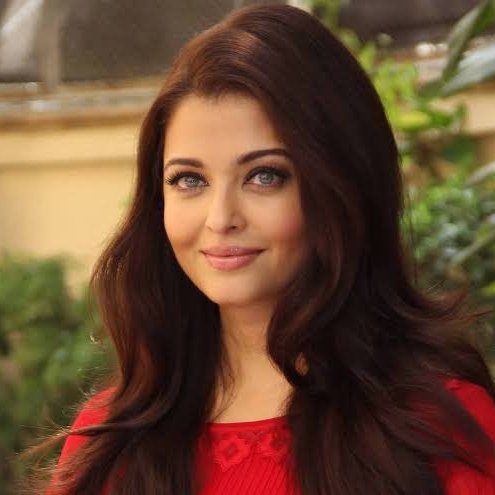
Have old family photos? Give every relative a profile and a photo gallery in your own family tree.
Start your tree, freeLife Timeline
Family
Married Abhishek Bachchan
A partnership that connects two branches of the Bachchan family.
Legacy
Actress
A defining role in the story of the Bachchan family.
Your turn
Map your own family the way Aishwarya's is mapped
Free, with no sign-up to start. Add yourself, then your parents and grandparents, and watch the tree grow.
More people in the Bachchan family tree
View all 24 peopleHarivansh Rai Bachchan
Gen 2 · 1907 - 2003
Harivansh Rai Bachchan (1907-2003) was one of the most widely read Hindi poets of the twentieth century and the patriarch of the Bachchan family. Born into a Kayastha family with roots in Babupatti, Pratapgarh district, and raised in Allahabad, he taught English at Allahabad University, took a doctorate on W. B. Yeats at Cambridge, and later served in the Ministry of External Affairs in Delhi, where he worked on Hindi as an official language. His 1935 collection Madhushala remains his best known work and made him a central figure of the Nayi Kavita movement; he also translated Shakespeare and the Bhagavad Gita into Hindi and wrote a celebrated four-volume autobiography. Married first to Shyama and then to Teji Suri, he was the father of the actor Amitabh Bachchan and the businessman Ajitabh Bachchan, and was awarded the Padma Bhushan in 1976.
Amitabh Bachchan
Gen 3 · b. 1942
Amitabh Bachchan (born 11 October 1942 in Allahabad) is an Indian actor widely regarded as the most influential figure in the history of Hindi cinema. The elder son of the poet Harivansh Rai Bachchan and the social worker Teji Bachchan, he worked briefly in Kolkata before his film debut in Saat Hindustani (1969), and became the defining star of the 1970s through Zanjeer, Deewaar, Sholay and Amar Akbar Anthony, roles that established the angry young man archetype in Indian film. He served a term in the Lok Sabha from Allahabad in the 1980s, returned to prominence hosting the quiz show Kaun Banega Crorepati from 2000, and has since worked steadily in films including Black, Paa, Piku and Pink. He married the actress Jaya Bhaduri in 1973; their children are Shweta Bachchan Nanda and Abhishek Bachchan.
Jaya Bachchan
Gen 3 · b. 1948
Jaya Bachchan (born Jaya Bhaduri on 9 April 1948 in Jabalpur) is an Indian actress and politician. The daughter of the Bengali journalist and author Taroon Kumar Bhaduri and of Indira Bhaduri, she appeared as a teenager in Satyajit Ray's Mahanagar (1963), trained at the Film and Television Institute of India in Pune, and took her first leading role in Hrishikesh Mukherjee's Guddi (1971). Through the 1970s she was among Hindi cinema's foremost actresses in Uphaar, Koshish, Abhimaan, Chupke Chupke and Sholay, and she returned to the screen in later decades with Hazaar Chaurasi Ki Maa, Kabhi Khushi Kabhie Gham and Kal Ho Naa Ho. She married Amitabh Bachchan in 1973 and has served several terms in the Rajya Sabha for the Samajwadi Party.
Shweta Bachchan Nanda
Gen 4 · b. 1974
Shweta Bachchan Nanda (born 17 March 1974) is an Indian author and columnist and the elder child of Amitabh Bachchan and Jaya Bachchan. Raised in Mumbai, she chose not to enter films, and in 1997 married the industrialist Nikhil Nanda, moving to Delhi, where the Nanda family runs the Escorts engineering group. She has written a long-running newspaper column, published the novel Paradise Towers in 2018, and co-founded a clothing label with the designer Monisha Jaising. Through her marriage the Bachchans were linked to the Nandas and, through her mother-in-law Ritu Nanda, to the Kapoor film dynasty. Her children are the entrepreneur Navya Naveli Nanda and the actor Agastya Nanda.
Navya Naveli Nanda
Gen 5 · b. 1997
Navya Naveli Nanda (born 1997) is an Indian entrepreneur and podcast host, the daughter of the industrialist Nikhil Nanda and the author Shweta Bachchan Nanda, and a granddaughter of Amitabh and Jaya Bachchan. She studied at Fordham University in New York and returned to India to work with the family's Escorts business while founding ventures of her own: Aara Health, a women's healthcare platform, and Project Naveli, an organisation focused on gender equity and on access to education and healthcare for women in India. She hosts the interview podcast What The Hell Navya, in which she appears alongside her mother and her grandmother Jaya Bachchan, and is among the most visible younger voices in the extended Bachchan and Nanda families.
Agastya Nanda
Gen 5 · b. 2000
Agastya Nanda (born 2000) is an Indian actor, the son of the industrialist Nikhil Nanda and the author Shweta Bachchan Nanda, and a grandson of Amitabh and Jaya Bachchan. Raised in Delhi and educated there and abroad, he made his screen debut in Zoya Akhtar's The Archies (2023), a Hindi adaptation of the American comics set in a fictional Indian hill town of the 1960s, in which he played Archie Andrews. He is a great-grandson of the poet Harivansh Rai Bachchan on his mother's side and, through his father's mother Ritu Nanda, a great-grandson of the film-maker Raj Kapoor, placing him at the meeting point of two of Hindi cinema's oldest families.
Nikhil Nanda
Gen 4
Nikhil Nanda is an Indian industrialist and the chairman and managing director of Escorts Kubota, the Delhi-based engineering and tractor manufacturer founded by his grandfather Har Prasad Nanda. The son of Rajan Nanda and Ritu Nanda, and a grandson of the film-maker Raj Kapoor on his mother's side, he joined Escorts in the 1990s and took charge of the group after his father's death in 2018, overseeing its partnership with the Japanese manufacturer Kubota. He married Shweta Bachchan, the daughter of Amitabh and Jaya Bachchan, in 1997, a union that connected two of India's best-known families; their children are Navya Naveli Nanda and Agastya Nanda.
Ajitabh Bachchan
Gen 3 · b. 1947
Ajitabh Bachchan (born 1947) is an Indian businessman and the younger son of the poet Harivansh Rai Bachchan and Teji Bachchan. Educated in Allahabad and Delhi, he went into business rather than the arts, and in the late 1970s and early 1980s managed much of his elder brother Amitabh Bachchan's professional and financial affairs, including the family's film production interests. He lived for several years in London and later in Switzerland before returning to India, and has been involved in ventures in aviation services and infrastructure. With his wife Ramola Bachchan he has daughters including Naina Bachchan, who married the actor Kunal Kapoor in 2015. He has kept a far lower public profile than his brother.
Ritu Nanda
Gen 1 · 1948 - 2020
Ritu Nanda (1948-2020) was an Indian businesswoman and author, and one of the country's best-known insurance entrepreneurs. The eldest daughter of the film-maker and actor Raj Kapoor, she grew up in the Kapoor family of Hindi cinema but built her career in business, becoming a leading agent for the Life Insurance Corporation of India and heading Escolife, an arm of the Escorts group that her husband Rajan Nanda led. She wrote Raj Kapoor Speaks, a widely read oral portrait of her father, published in 2002. Her son Nikhil Nanda married Shweta Bachchan in 1997, making her the link between the Kapoor, Nanda and Bachchan families. She died in January 2020.
Indira Bhaduri
Gen 1
Indira Bhaduri was a Bengali theatre performer in Bhopal and the mother of the actress and parliamentarian Jaya Bachchan. Married to the journalist and author Taroon Kumar Bhaduri, she raised the family in Madhya Pradesh, where both parents belonged to the city's active Bengali cultural and amateur theatre circles, the milieu in which her eldest daughter's interest in performance first took shape. She lived much of her later life in Bhopal and remained close to her daughter's family in Mumbai after Jaya's marriage to Amitabh Bachchan in 1973, which made her a grandmother to the author Shweta Bachchan Nanda and the actor Abhishek Bachchan.
Pratap Narayan Shrivastava
Gen 1
Pratap Narayan Shrivastava was the father of the Hindi poet Harivansh Rai Bachchan and the earliest documented figure in the family's line. He belonged to a Srivastava Kayastha family from Babupatti, in the Raniganj area of Pratapgarh district in what is now Uttar Pradesh, and moved to Allahabad, where he worked as a clerk in the city's paper trade. He and his wife Saraswati Devi raised their son in modest circumstances in Allahabad, a household the poet later described at length in his autobiography. It was there that Harivansh Rai was given the childhood nickname Bachchan, meaning child, which he adopted as a pen name and passed on as the family surname carried today by his grandson Amitabh Bachchan and his descendants.
Related Family Stories
Plantagenet Family Tree - The House of Plantagenet from Henry II to Richard III
The House of Plantagenet was the royal dynasty that ruled England for 331 years, from the accession of Henry II in 1154 to the death of Richard III at the Battle of Bosworth in 1485, making it the longest-reigning royal house in English history. Fourteen Plantagenet kings held the throne in unbroken succession, and in the fifteenth century the family's two junior branches, the houses of Lancaster and York, fought each other for the crown in the civil wars later known as the Wars of the Roses. ## Origins The dynasty came from Anjou in western France. Geoffrey V, Count of Anjou, is said to have worn a sprig of broom, *planta genista*, in his cap, and from that nickname the family eventually took its name, although it was not used as an actual surname until Richard, 3rd Duke of York, adopted it in the 1440s. Geoffrey's marriage in 1128 to Empress Matilda, daughter and designated heir of Henry I of England, gave their son a claim to the English throne that he made good in 1154. With Normandy and Anjou behind him, and Aquitaine gained through his marriage to Eleanor of Aquitaine, Henry II ruled lands reaching from the Scottish border to the Pyrenees, the assemblage historians call the Angevin Empire. ## Notable members The early, or Angevin, kings are among the most familiar names in English history: Henry II, whose itinerant justices and sworn juries laid the foundations of the common law; Richard the Lionheart, a leading commander of the Third Crusade; and King John, who sealed Magna Carta at Runnymede in 1215. Henry III rebuilt Westminster Abbey, Edward I conquered Wales and summoned the Model Parliament, and Edward III opened the Hundred Years' War and founded the Order of the Garter. Later generations produced Edward the Black Prince, the victor of Poitiers, Henry V of Agincourt, and Richard III, whose lost grave was rediscovered in Leicester in 2012. ## Lancaster and York Edward III's many sons divided the dynasty. From his third surviving son, John of Gaunt, Duke of Lancaster, came Henry IV, Henry V and Henry VI, and, through Gaunt's Beaufort children, Margaret Beaufort and her son Henry VII. From his fourth son, Edmund of Langley, Duke of York, combined with the senior Mortimer descent from his second son, Lionel of Antwerp, came Richard, 3rd Duke of York, and his sons Edward IV and Richard III. The rivalry of those branches produced thirty years of intermittent civil war, ending when Henry Tudor defeated Richard III at Bosworth and married Elizabeth of York, uniting the red and white roses. ## Significance No other family has shaped English institutions so deeply. Under the Plantagenets, Magna Carta became a settled principle, parliament grew from an occasional royal council into a body whose consent was needed for taxation, the common law took its enduring form, and English displaced French as the language of the court. Their castles, abbeys and cathedrals still define the medieval landscape of England and Wales. | Fact | Details | | --- | --- | | Ruled | England, 1154 to 1485 | | Founder | Henry II, son of Geoffrey V of Anjou and Empress Matilda | | Place of origin | Anjou, France | | Kings | Fourteen, from Henry II to Richard III | | Branches | Angevin, Lancaster, York | | Emblems | The broom flower, the red rose of Lancaster, the white rose of York | | Last king | Richard III, killed at Bosworth in 1485 | | Legacy | Magna Carta, English common law, the growth of parliament |
Hohenzollern Family Tree - Prussia's Royal House from Frederick the Great to Kaiser Wilhelm II
The House of Hohenzollern is the German dynasty that ruled Brandenburg from 1415, held the Prussian crown from 1701, and gave Germany its three emperors between 1871 and the fall of the monarchy in 1918. This tree follows the senior Prussian line in one unbroken descent, from Frederick William the Great Elector, through the kings of Prussia and the German Emperors, down to Georg Friedrich, Prince of Prussia, the present head of the house. ## Origins The family takes its name from Hohenzollern Castle on a hill in the Swabian Alb, where a line of counts is recorded from the eleventh century. A Swabian Zollern married into the burgraviate of Nuremberg in 1192, and the Franconian branch that grew from it spent two centuries accumulating lands and credit with the Holy Roman Emperors. The decisive moment came in 1415, when Emperor Sigismund invested Frederick VI of Nuremberg as Elector of Brandenburg in return for his political and financial support. The Duchy of Prussia, a separate inheritance lying outside the Empire, passed to the Brandenburg electors in 1618, and Frederick William, the Great Elector, welded the two into a single functioning state after the devastation of the Thirty Years' War. ## Notable members Frederick I turned the electorate into a kingdom in 1701. His son Frederick William I, the Soldier King, built the army and the treasury that his own son, **Frederick the Great**, used to seize Silesia and to make Prussia a European power, while also composing music, building Sanssouci and corresponding with Voltaire. **Queen Louise** became the emotional centre of Prussian resistance to Napoleon. **Wilhelm I**, with Otto von Bismarck as his minister president, was proclaimed German Emperor at Versailles in 1871. His son **Frederick III** and the liberal English princess he married, Victoria, daughter of Queen Victoria, reigned for only ninety nine days. **Wilhelm II**, the last Kaiser, abdicated in 1918 and died in Dutch exile in 1941. ## Significance No other German family shaped the modern state so directly. Hohenzollern rulers created the Prussian civil service, compulsory schooling and the general staff, sponsored the Berlin academies and the Humboldt university model, and then used Prussian power to unify Germany around themselves. The monarchy ended with the revolution of November 1918, but the house continues as a private family: the headship passed from Wilhelm II to his eldest son, then to Louis Ferdinand, and in 1994 to Georg Friedrich, whose own father and uncles are part of the succession story told in this tree. ## Quick facts | Fact | Details | |---|---| | Family name | Hohenzollern | | Place of origin | Hohenzollern Castle, Swabia, southern Germany | | Ruled | Brandenburg from 1415, Prussia from 1618, Germany from 1871 | | Royal title | King in Prussia from 1701, King of Prussia from 1772 | | Imperial title | German Emperor, 1871 to 1918 | | German Emperors | Wilhelm I, Frederick III, Wilhelm II | | Monarchy ended | 9 November 1918 | | Present head of the house | Georg Friedrich, Prince of Prussia, since 1994 | | Principal residences | Berlin City Palace, Sanssouci and Cecilienhof at Potsdam, Charlottenburg | | Branch shown here | The senior Prussian line only, not Hohenzollern-Sigmaringen |
Tudor Family Tree - The House of Tudor from Henry VII to Elizabeth I
The House of Tudor was the royal family that ruled England and Wales from 1485 to 1603, founded by Henry VII after his victory at Bosworth Field and ending with the death of his granddaughter Elizabeth I. In five reigns the dynasty took England out of the Roman Catholic church, made the monarch the head of a national religion, and turned a peripheral kingdom into a naval and literary power. This tree follows the line from the Welsh courtier Owen Tudor and the dowager queen Catherine of Valois down to Elizabeth I, together with the Brandon, Grey and Clifford cousins and the Scottish line that ended in James VI and I. ## Origins The family name comes from Penmynydd in Anglesey, north Wales, where the Tudors were landed gentry in the service of the princes of Gwynedd. Owen Tudor came to the English court in the 1420s and married Catherine of Valois, the widow of Henry V. Their sons Edmund and Jasper Tudor were half-brothers of Henry VI, who raised them to earldoms in 1452. Edmund's marriage to Lady Margaret Beaufort, a great-granddaughter of John of Gaunt, added the senior Lancastrian claim to the throne, and their only child, born after his father's death, became Henry VII. His marriage to Elizabeth of York, eldest daughter of Edward IV, joined the two houses whose rivalry had driven the Wars of the Roses and gave the dynasty its red and white rose. ## Notable members Henry VII rebuilt the crown's finances and secured the new dynasty through marriage alliances with Spain and Scotland. Henry VIII married six times and broke with Rome, and his three surviving children each reigned in turn: Edward VI as a Protestant boy king, Mary I as the first queen to rule England in her own right, and Elizabeth I for forty-four years. Around them stand the cousins who carried royal blood without the crown, among them Lady Jane Grey, queen for nine days, her sisters Catherine and Mary Grey, and Margaret Pole, Countess of Salisbury, one of the last Plantagenets. ## The Scottish and Suffolk lines Henry VII's daughters carried the blood outward. Margaret Tudor married James IV of Scotland, and her line runs through James V and Mary, Queen of Scots, to James VI and I, who inherited England in 1603. Mary Tudor married Charles Brandon, 1st Duke of Suffolk, and their daughters Frances and Eleanor Brandon produced the Grey and Clifford claimants whom Henry VIII's will preferred over the Scottish descendants of his elder sister. ## Significance No English dynasty changed the country more in so few generations. The Tudors created the Church of England, absorbed the wealth of the monasteries into the crown, brought Wales formally into the English legal and parliamentary system, and built the navy that met the Spanish Armada. The Elizabethan settlement shaped English religion for centuries, and the Elizabethan decades produced Shakespeare, Spenser and the first English voyages to the Americas. When Elizabeth I died unmarried in 1603, the throne passed peacefully to her Scottish cousin, and the two crowns were joined in one person for the first time. | Fact | Details | |---|---| | Origin | Penmynydd, Anglesey, Wales | | Ruled | England, Wales and Ireland, 1485 to 1603 | | Founder | Owen Tudor, through his son Edmund Tudor | | Monarchs | Henry VII, Henry VIII, Edward VI, Mary I, Elizabeth I | | Emblem | The Tudor rose, red and white combined | | Principal seats | Richmond, Greenwich, Hampton Court and Whitehall palaces | | Ended | Death of Elizabeth I in 1603, succeeded by James VI of Scotland |
The Jackson Family Tree - Michael Jackson
Frequently Asked Questions
Who were Aishwarya Rai Bachchan's parents?+−
Aishwarya Rai Bachchan's recorded parents are Krishnaraj Rai, Brindya Rai.
Who did Aishwarya Rai Bachchan marry?+−
Aishwarya Rai Bachchan married Abhishek Bachchan.
Who were Aishwarya Rai Bachchan's siblings?+−
Aishwarya Rai Bachchan has 1 recorded sibling: Aditya Rai.
What did Aishwarya Rai Bachchan do?+−
Aishwarya Rai Bachchan is recorded as Actress in the Bachchan family tree.
Where was Aishwarya Rai Bachchan from?+−
Aishwarya Rai Bachchan's recorded native place is Mangalore, Karnataka, India.
What family tree does Aishwarya Rai Bachchan belong to?+−
Aishwarya Rai Bachchan is recorded in the Bachchan family tree on My rOoOts, alongside 23 other people.
Every family has a story. Start telling yours.
Trace Aishwarya Rai Bachchan's connections across the Bachchantree, or begin preserving your own family's history today.
Free. Private by default. GEDCOM export any time.