Many people are curious about whether they have royal or noble ancestors hidden somewhere in their family history.
Stories about a great-grandparent being connected to a noble family, inherited family traditions, unusual surnames, or old documents often create curiosity about possible aristocratic roots.
While not everyone has a royal connection, many people discover fascinating links to historical families when they research their ancestry carefully.
Finding a noble or royal ancestor requires more than a family story. It requires evidence from historical records, genealogy research, and documented family connections.
With My rOoOts, you can organise your discoveries, connect generations, and build your European family history.
🌳 Start building your family tree today: https://myrooots.app/
What Does It Mean to Have Noble or Royal Ancestors?
A noble ancestor is someone who belonged to a recognised aristocratic class.
European noble families historically included:
- Dukes
- Duchesses
- Counts
- Countesses
- Earls
- Barons
- Knights
- Lords
- Land-owning aristocratic families
Royal ancestors are individuals connected by blood or marriage to ruling families, such as:
- Kings
- Queens
- Princes
- Princesses
- Monarchs
A connection to nobility usually means there is a documented family line connecting you to that historical person.
Why Are People Interested in Royal Ancestry?
Royal and noble genealogy attracts interest because it connects personal family history with major historical events.
Discovering such ancestors may reveal connections to:
- Medieval Europe
- Ancient kingdoms
- Historical battles
- Royal courts
- Political events
- Famous historical figures
Even when no royal connection exists, researching ancestors can reveal remarkable stories about ordinary people who shaped your family's journey.
Step 1: Start Building Your Family Tree
Before searching for kings or nobles, begin with yourself.
A reliable genealogy search always starts with documented information.
Record:
- Your full name
- Parents
- Grandparents
- Great-grandparents
- Birth locations
- Marriage records
- Family documents
The goal is to build a proven family line before connecting it to historical families.
A mistake many researchers make is searching famous names first without proving their connection.
Step 2: Research Your Family Surnames
Surnames can provide useful clues, especially in European genealogy.
Some surnames may have historical connections to:
- Noble families
- Ancient occupations
- Geographic regions
- Medieval titles
Examples of European surname clues:
- English surnames connected to places or estates
- Scottish clan surnames
- German surnames linked to regions or professions
- French surnames associated with noble families
However, sharing a surname does not automatically mean you are related to a noble family.
Surname research is a starting point, not proof.
Step 3: Look for Family Documents
Old family documents can provide important clues.
Search for:
- Birth certificates
- Marriage certificates
- Baptism records
- Immigration documents
- Family letters
- Old photographs
- Military records
- Property documents
- Family Bibles
A single document may reveal a missing connection between your family and a historical lineage.
Step 4: Explore European Historical Records
Europe has extensive historical archives that can help trace noble connections.
Important sources include:
- Church parish records
- Civil registration records
- Royal archives
- Land ownership records
- Heraldry books
- Nobility registers
- Local historical archives
Many noble families maintained detailed records because inheritance and titles depended on documented family lines.
Step 5: Understand Heraldry and Family Crests
Family crests and coats of arms are often associated with European nobility.
Heraldry can provide information about:
- Family origins
- Historical symbols
- Noble houses
- Military achievements
However, be careful.
Many websites sell generic family crest products that are not connected to your specific ancestry.
A coat of arms belongs to a particular individual or family line, not everyone who shares the same surname.
Step 6: Search Noble and Royal Genealogy Databases
Researchers can explore historical genealogy resources such as:
- National archives
- Royal family records
- Genealogy societies
- Historical publications
- Digitised church records
Many European countries have specialised resources for noble families.
Examples include:
- British peerage records
- German noble family archives
- French aristocratic records
- Scandinavian royal genealogy collections
Step 7: Look for Migration Connections
Many Europeans migrated to other parts of the world.
Families moved from Europe to:
- United States
- Canada
- Australia
- South America
- South Africa
Immigration records can sometimes reveal:
- Original hometowns
- Previous surnames
- Family relationships
- Social status
A person who appears ordinary in immigration records may have a much older family history in Europe.
Step 8: Use DNA Testing Carefully
DNA testing can help identify possible relatives and ancestral connections.
It may help you:
- Find distant cousins
- Confirm family branches
- Discover unknown relatives
However, DNA alone usually cannot prove a royal connection.
Royal ancestry requires a documented genealogical path connecting generations.
Common Signs That May Suggest Noble Ancestry
Some clues may encourage further research:
Unusual Family Surnames
Rare surnames may deserve investigation.
Family Stories About Titles
Stories involving:
- Lords
- Estates
- Castles
- Inheritance
- Royal connections
may contain useful clues.
Old Family Documents
Letters, certificates, or records mentioning places and important families can provide research directions.
Geographic Connections
Families from regions historically associated with noble houses may have interesting histories.
Common Myths About Royal Ancestry
"Having the Same Surname Means We Are Related"
Not necessarily.
Many surnames developed independently in different locations.
"Everyone With a Noble Surname Has Noble Blood"
False.
A surname may have multiple origins.
"DNA Can Automatically Reveal Royal Ancestors"
DNA can support research but cannot replace historical evidence.
How to Verify a Royal Connection
A genuine royal or noble connection requires:
- A documented family tree
- Verified birth and marriage records
- Historical evidence for every generation
- Reliable genealogy sources
The connection must form an unbroken chain from you to the historical person.
Build Your European Royal Ancestry Research With My rOoOts
Discovering noble or royal ancestors is an exciting journey, but keeping your research organised is essential.
With My rOoOts, you can:
- Build detailed family trees
- Record multiple generations
- Add historical information
- Preserve family documents
- Store photographs and memories
- Track your genealogy discoveries
Whether you discover a royal connection or simply uncover the story of your ancestors, every family history is valuable.
🌳 Create your family tree today: https://myrooots.app/
Frequently Asked Questions
How can I find out if I have royal ancestors?
Start by building your documented family tree and researching historical records. Royal connections must be proven through verified genealogy records.
Are people with European surnames often related to royalty?
Most people with European surnames are not directly related to royalty. A surname alone is not enough evidence.
Can DNA tests prove royal ancestry?
DNA tests can help identify relatives but usually cannot prove a royal connection without historical documentation.
How far back can royal ancestry be traced?
Some European royal families have records going back hundreds or even over a thousand years, but your personal connection depends on available evidence.
Can ordinary families have noble ancestors?
Yes. Historical marriages, social changes, and migration mean some modern families may discover distant connections to noble lines.
Final Thoughts
Finding noble or royal European ancestors is not about discovering a famous name—it is about understanding the journey of the people who came before you.
Every family has a history filled with stories, challenges, achievements, and connections.
Whether your ancestors were kings, craftsmen, farmers, soldiers, or explorers, their lives created the path that led to you.
Start documenting your family's story today and discover what your family tree reveals.
🌳 Build your family tree with My rOoOts: https://myrooots.app/
Find Any Family Relationship Instantly
Not sure how someone is related to you? Use the MyRooots Relationship Calculator to instantly identify relationships such as cousin, aunt, uncle, nephew, niece, in-laws, and many more. It is a quick and easy tool for understanding complex family connections.
👉 MyRooots Relationship Calculator
Create a Beautiful Family Tree Online
Turn your family information into a clear and organized family tree within minutes. The MyRooots Family Tree Generator helps you add relatives, connect generations, and create a shareable family tree that can grow over time.
👉 MyRooots Family Tree Generator
Visualize Your Family History Through Time
See your ancestors in chronological order with the My rOoOts Ancestor Timeline Generator. It creates a visual timeline of births, marriages, deaths, and important life events, making it easier to understand your family's history across generations.
Editor's picks
6 August 2026
The British Royal Family Tree Explained Simply
A simple guide to the British Royal Family tree, from Queen Elizabeth II to King Charles III, the Prince of Wales, and the next generation of working royals.
6 August 2026
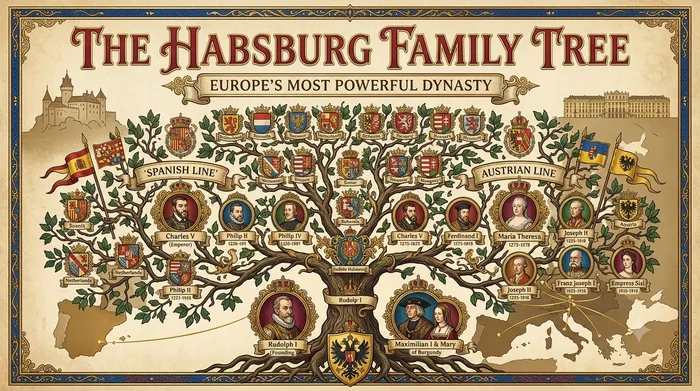
The Habsburg Family Tree: Europe’s Most Powerful Dynasty
Explore the Habsburg family tree, from their Swiss origins to the Spanish and Austrian branches that dominated European politics for centuries through marriage and empire.
Check Zodiac Compatibility for Any Two People
Curious about how well two people match based on their date of birth? Try the My rOoOts Zodiac Compatibility Tool to compare zodiac signs, explore relationship compatibility, and get a quick compatibility score for couples, friends, or family members.
👉 Check compatibility now: Zodiac Compatibility Calculator
You can enter two dates of birth and even mention the relationship type to get a more personalized compatibility result.
Create Your Family Tree for Free
Start building your family history in minutes with the My rOoOts Free Family Tree Creator. Add parents, grandparents, children, and relatives, organize generations visually, and create a beautiful family tree that you can save and share.
👉 Create your free family tree: Free Family Tree Creator
No design skills required. Simply enter your family details and generate a clear, easy-to-read family tree online for free.
Download a Free Family Tree Template
Want to draw your family tree yourself? The My rOoOts Family Tree Template provides a free printable blank pedigree chart for documenting your family history across multiple generations.
👉 Download a free family tree template: Family Tree Template
Choose a 3-generation, 4-generation, or 5-generation family tree template and save it as a PDF for printing, writing, and documenting your ancestors.
Discover the Meaning and Origin of Your Surname
Ever wondered where your family name came from? Use the My rOoOts Surname Meaning Lookup to explore surname meanings, origins, history, and etymology from different regions and cultures around the world.
👉 Discover your surname meaning: Surname Meaning Lookup
Learn more about your last name and explore the possible linguistic, geographic, cultural, and historical roots behind your family surname.
Start your family tree free
No account needed to begin. Build it in minutes, then save it whenever you're ready.
Build your family tree