Discovering your family history has never been more popular. Millions of people around the world are exploring their European roots, searching for information about their ancestors, and trying to understand where their families came from.
Today, genealogy research combines two powerful approaches:
- Traditional family tree research using historical records
- DNA testing to discover genetic connections
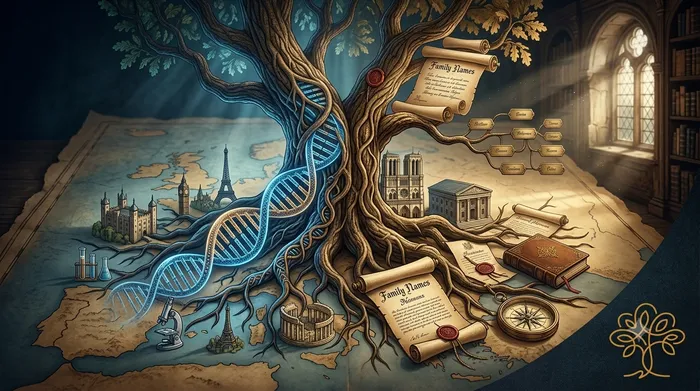
Both methods provide valuable insights, but they answer different questions. DNA can reveal biological connections and ancestral origins, while traditional genealogy uncovers names, dates, locations, and family stories.
The best results often come from combining both approaches.
With My rOoOts, you can organise your discoveries, connect generations, and build a detailed digital family tree.
🌳 Start building your family tree today: https://myrooots.app/
What Is Traditional Family Tree Research?
Traditional genealogy is the process of researching your ancestors using historical documents and family records.
For centuries, genealogists have relied on sources such as:
- Birth certificates
- Marriage records
- Death records
- Church registers
- Census documents
- Immigration records
- Military records
- Land records
- Family photographs
- Personal letters
These records help create a timeline of your family's history and connect one generation to another.
What Is DNA Testing in Genealogy?
DNA testing uses genetic information from your saliva or cheek sample to identify biological relationships and estimate ancestral origins.
Genealogy DNA tests can provide:
- Ethnicity estimates
- Genetic matches with relatives
- Possible ancestral regions
- Connections with unknown family members
DNA testing has become a popular tool for people who want to discover their heritage, especially when traditional records are missing.
DNA Testing vs Traditional Research: Key Differences
| Feature | DNA Testing | Traditional Family Tree Research |
|---|---|---|
| Main Purpose | Discover genetic connections | Document family history |
| Information Source | Biological DNA | Historical records |
| Finds Names | Sometimes | Usually |
| Shows Relationships | Yes | Yes |
| Provides Dates | No | Yes |
| Shows Locations | Limited | Detailed |
| Requires Records | No | Yes |
| Reveals Family Stories | No | Yes |
Benefits of DNA Testing for European Genealogy
1. Discover Unknown Relatives
DNA testing can connect you with people who share parts of your genetic history.
These matches may include:
- Distant cousins
- Unknown family branches
- Relatives from different countries
For people researching European ancestry, DNA matches can help uncover connections across borders.
2. Find Ancestral Regions
Many Europeans have ancestors who moved between countries over centuries.
DNA results may provide clues about regions connected to your ancestry, such as:
- Ireland
- Germany
- Italy
- France
- Poland
- Scandinavia
- Eastern Europe
These results can help guide further historical research.
3. Help When Records Are Missing
Historical records are not always complete.
Wars, natural disasters, migration, and poor record keeping have caused many documents to disappear.
DNA can provide evidence when traditional research reaches a dead end.
Limitations of DNA Testing
While DNA testing is powerful, it does have limitations.
DNA Does Not Tell Your Complete Story
A DNA test may tell you where your ancestors came from, but it usually cannot explain:
- Their names
- Their occupations
- Their daily lives
- Their traditions
- Their personal stories
Historical records provide this human connection.
Ethnicity Estimates Can Change
DNA companies compare your results against reference populations.
As databases improve, your estimated ancestry regions may change over time.
These estimates should be viewed as clues rather than exact historical records.
Benefits of Traditional European Genealogy Research
1. Discover Real Family Stories
Historical documents reveal details DNA cannot provide.
You can discover:
- Where ancestors lived
- Their professions
- Their marriages
- Their children
- Their migrations
- Their challenges and achievements
These details turn a family tree into a family story.
2. Build Accurate Family Trees
Traditional research allows you to create structured family connections.
You can document:
- Parents
- Grandparents
- Great-grandparents
- Multiple generations
- Extended family branches
A well-researched family tree becomes a permanent family record.
3. Explore European Historical Records
Europe has some of the world's richest genealogy resources.
Depending on the country, researchers may find:
- Parish registers
- Civil registration records
- Immigration documents
- Historical archives
- Local community records
These resources can reveal centuries of family history.
Challenges of Traditional Research
Traditional genealogy can also be challenging.
Common difficulties include:
- Records written in old languages
- Difficult handwriting styles
- Missing documents
- Name variations
- Changing borders
- Limited online availability
For example, an ancestor from Germany may have records written in old German handwriting, while an Italian ancestor may appear under different spellings across documents.
Which Method Is Better for European Ancestry?
The answer depends on your goal.
If You Want to Find Biological Relatives
DNA testing may provide faster results.
If You Want to Know Your Family History
Traditional genealogy research is essential.
If You Want the Complete Picture
Use both methods together.
DNA provides connections.
Historical research provides context.
Together, they create a much richer family story.
How to Combine DNA Testing With Family Tree Research
A successful genealogy approach often follows these steps:
Step 1: Build Your Existing Family Tree
Start with information you already know.
Add:
- Parents
- Grandparents
- Great-grandparents
- Locations
- Dates
- Family stories
Step 2: Take a DNA Test
Use DNA results to discover possible connections.
Look for:
- Shared relatives
- Common ancestors
- Geographic patterns
Step 3: Verify DNA Matches Through Records
DNA matches become more valuable when supported by historical evidence.
Compare:
- Family names
- Locations
- Dates
- Migration patterns
Step 4: Add Verified Discoveries to Your Family Tree
Document your findings carefully.
Avoid adding connections based only on assumptions.
A combination of DNA evidence and historical records creates the strongest family history.
Popular European Genealogy Resources
Researchers exploring European ancestry often use:
- National archives
- Church archives
- Local historical societies
- Immigration databases
- Census records
- Cemetery records
- DNA genealogy platforms
Each country has unique resources and research methods.
Preserve Your Discoveries With My rOoOts
Whether you discover your ancestors through DNA testing, historical records, or family stories, keeping your information organised is essential.
My rOoOts helps you:
- Build detailed family trees
- Record multiple generations
- Store family information
- Preserve memories
- Connect relatives
- Continue expanding your family history
Your genealogy research is not just about finding names. It is about preserving the journey of the people who came before you.
🌳 Start creating your family tree today: https://myrooots.app/
Frequently Asked Questions
Is DNA testing enough to create a family tree?
No. DNA testing can identify genetic connections, but traditional research is needed to discover names, dates, and family stories.
Can DNA testing find European ancestors?
Yes. DNA testing can provide clues about European ancestry regions and identify possible relatives with shared DNA.
Which is more accurate: DNA testing or genealogy records?
Both provide different types of information. DNA shows biological connections, while historical records document family history.
Can I combine DNA results with my family tree?
Yes. Combining DNA matches with historical research can help confirm relationships and discover new branches of your family.
How far back can European genealogy research go?
It depends on available records. Some European families can be traced back hundreds of years through church and historical records.
Final Thoughts
DNA testing and traditional genealogy research are not competitors—they are complementary tools.
DNA helps answer:
"Who am I biologically connected to?"
Traditional family research answers:
"Who were my ancestors, and what was their story?"
By combining modern technology with historical records, you can uncover a deeper understanding of your European heritage.
Your family's story has already begun. The next step is preserving it for future generations.
🌳 Build your family tree with My rOoOts: https://myrooots.app/
Find Any Family Relationship Instantly
Not sure how someone is related to you? Use the MyRooots Relationship Calculator to instantly identify relationships such as cousin, aunt, uncle, nephew, niece, in-laws, and many more. It is a quick and easy tool for understanding complex family connections.
👉 MyRooots Relationship Calculator
Create a Beautiful Family Tree Online
Turn your family information into a clear and organized family tree within minutes. The MyRooots Family Tree Generator helps you add relatives, connect generations, and create a shareable family tree that can grow over time.
👉 MyRooots Family Tree Generator
Visualize Your Family History Through Time
See your ancestors in chronological order with the My rOoOts Ancestor Timeline Generator. It creates a visual timeline of births, marriages, deaths, and important life events, making it easier to understand your family's history across generations.
Check Zodiac Compatibility for Any Two People
Curious about how well two people match based on their date of birth? Try the My rOoOts Zodiac Compatibility Tool to compare zodiac signs, explore relationship compatibility, and get a quick compatibility score for couples, friends, or family members.
👉 Check compatibility now: Zodiac Compatibility Calculator
You can enter two dates of birth and even mention the relationship type to get a more personalized compatibility result.
Create Your Family Tree for Free
Start building your family history in minutes with the My rOoOts Free Family Tree Creator. Add parents, grandparents, children, and relatives, organize generations visually, and create a beautiful family tree that you can save and share.
👉 Create your free family tree: Free Family Tree Creator
No design skills required. Simply enter your family details and generate a clear, easy-to-read family tree online for free.
Download a Free Family Tree Template
Want to draw your family tree yourself? The My rOoOts Family Tree Template provides a free printable blank pedigree chart for documenting your family history across multiple generations.
👉 Download a free family tree template: Family Tree Template
Choose a 3-generation, 4-generation, or 5-generation family tree template and save it as a PDF for printing, writing, and documenting your ancestors.
Discover the Meaning and Origin of Your Surname
Ever wondered where your family name came from? Use the My rOoOts Surname Meaning Lookup to explore surname meanings, origins, history, and etymology from different regions and cultures around the world.
👉 Discover your surname meaning: Surname Meaning Lookup
Learn more about your last name and explore the possible linguistic, geographic, cultural, and historical roots behind your family surname.
Start your family tree free
No account needed to begin. Build it in minutes, then save it whenever you're ready.
Build your family tree