Public Family Trees/Dalai Lama/Diki Tsering
Diki Tsering
1919 - 2002 · Female · Taktser, Amdo, Tibet
1
Generation
0
Ancestors
5
Descendants
5
Children
1
Marriages
Family Snapshot
Expand full treeDiki Tsering
1919 - 2002
Spouse
No children recorded
Other children
5 children
Biography
Diki Tsering was the mother of the 14th Dalai Lama and one of the most influential figures in his early life. She was known for her kindness, resilience, and deep devotion to Tibetan Buddhism. After her son's recognition as the Dalai Lama, she traveled with him to Lhasa and became an important support throughout his childhood. She later documented her experiences in the autobiography Dalai Lama, My Son, providing val…
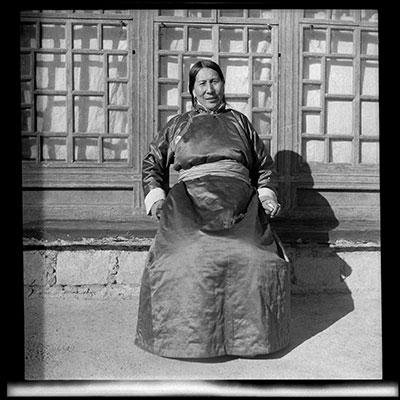
Photos of Diki Tsering
1 photo from the Dalai Lama family album
Have old family photos? Give every relative a profile and a photo gallery in your own family tree.
Start your tree, freeLife Timeline
Born1919
Born
The beginning of Diki Tsering's recorded life.
Next Generation
Family line continues
5 children recorded in this branch.
Legacy
Farmer
A defining role in the story of the Dalai Lama family.
Died2002
Died
The close of a life whose connections continue through the family record.
Your turn
Map your own family the way Diki's is mapped
Free, with no sign-up to start. Add yourself, then your parents and grandparents, and watch the tree grow.
Related Family Stories
Bourbon Family Tree - The House of Bourbon in France and Spain
The House of Bourbon is a European royal dynasty, descended in the male line from the Capetian kings of France, that ruled France from 1589 to 1792 and again from 1814 to 1848, and that still reigns in Spain today under King Felipe VI. Over four centuries its members also held the thrones of Navarre, Naples and Sicily, Parma and Etruria, which makes it one of the most widely established royal houses in European history. ## Origins The family takes its name from the lordship of Bourbon in the Auvergne, centred on Bourbon-l'Archambault. Its royal line descends from Robert, Count of Clermont, a younger son of King Louis IX of France, whose marriage to Beatrice of Burgundy, heiress of Bourbon, carried the name into the Capetian house in 1272. For three centuries afterwards the Bourbons were powerful French princes of the blood rather than kings. That changed with Antoine de Bourbon, Duke of Vendome, whose marriage to Jeanne d'Albret, queen regnant of Navarre, produced Henry of Navarre. When the Valois line died out in 1589, Henry was the senior Capetian heir, and he took the French throne as Henry IV. ## Notable members Henry IV ended the French Wars of Religion and issued the Edict of Nantes in 1598. His son Louis XIII, guided by Cardinal Richelieu, built the centralised state that Louis XIV, the Sun King, carried to its height across a reign of seventy-two years, the longest of any European sovereign, and to the palace of Versailles. Louis XV and then Louis XVI inherited that system, and Louis XVI and his queen, Marie Antoinette, were swept away by the French Revolution in 1792. The dynasty returned with Louis XVIII in 1814 and Charles X in 1824, and in 1830 the crown passed to Louis Philippe I of the cadet House of Orleans, the last king to rule in France. ## The Spanish branch In 1700 the childless Charles II of Spain left his crown to Philip, Duke of Anjou, a grandson of Louis XIV. Philip became Philip V, the first Bourbon king of Spain, at the cost of the War of the Spanish Succession, which ended with his renunciation of any claim to the French throne. His descendants include the reforming Charles III, Ferdinand VII, Isabella II, Alfonso XII and Alfonso XIII, who left Spain in 1931. The monarchy was restored in 1975 under Juan Carlos I, grandson of Alfonso XIII, who presided over Spain's transition to democracy and abdicated in 2014 in favour of his son Felipe VI. Felipe's elder daughter Leonor, Princess of Asturias, is heir to the throne. ## Significance No other family links the absolute monarchy of Versailles to a working constitutional monarchy in twenty-first century Madrid. Bourbon marriages tied the house to the Habsburgs of Austria and Spain, the dukes of Savoy, the Medici of Florence and the British royal family, so a Bourbon family tree doubles as a map of European dynastic politics from the Reformation to the present day. | Fact | Details | | --- | --- | | Family name | House of Bourbon (Maison de Bourbon, Casa de Borbon) | | Place of origin | Bourbon-l'Archambault, Auvergne, France | | Founder of the line | Robert, Count of Clermont (1256-1317), son of Louis IX | | First king of France | Henry IV, reigned 1589 to 1610 | | Last king to rule France | Louis Philippe I, reigned 1830 to 1848 | | First king of Spain | Philip V, reigned 1700 to 1746 | | Head of the house in Spain | King Felipe VI, since 2014 | | Heir in Spain | Leonor, Princess of Asturias | | Principal seats | Versailles, Fontainebleau, the Louvre, the Royal Palace of Madrid |
Stuart Family Tree - The House of Stuart from Mary, Queen of Scots to Bonnie Prince Charlie
The House of Stuart was the royal dynasty that ruled Scotland from 1371 and both Scotland and England from 1603 until 1714, giving Britain fourteen monarchs from Robert II to Queen Anne as well as the Jacobite claimants who carried its cause into exile. Spelled Stewart in Scotland and Stuart after Mary, Queen of Scots adopted the French form, the family holds the unusual distinction of having united two crowns by inheritance rather than conquest, and of ending in a disputed succession that reshaped the British constitution. ## Origins The family took its name from its office. The Stewarts were hereditary High Stewards of Scotland, a post granted in the twelfth century to a Breton house settled in Renfrewshire. In 1315 Walter Stewart, 6th High Steward, married Marjorie Bruce, daughter of King Robert the Bruce. Their son became Robert II in 1371 when the direct Bruce line failed, and the stewardship turned into a crown. For more than two centuries afterwards the Stewarts ruled Scotland alone, through a run of reigns cut short by battle, captivity and long royal minorities that left the nobility unusually powerful. ## Notable members James IV, the most cultivated of the Scottish kings, married Margaret Tudor in 1503 and so planted the claim that would carry his descendants to the English throne. His granddaughter Mary, Queen of Scots became queen at six days old, reigned briefly and turbulently, and was deposed in 1567 and executed in England twenty years later. Her son, James VI of Scotland, inherited the English crown in 1603 as James I and became the first monarch to rule both kingdoms. His son Charles I lost the Civil Wars and his throne; Charles II returned at the Restoration in 1660; James II and VII was deposed in the Revolution of 1688, after which his daughters Mary II and Anne reigned in his place. In exile his son James Francis Edward Stuart and grandson Charles Edward Stuart, remembered as Bonnie Prince Charlie, led the Jacobite attempts to recover the throne, ending with the rising of 1745. ## Significance No other British dynasty changed the shape of the state so much. The Stuarts brought Scotland and England under one sovereign, presided over the King James Bible and the theatre of Shakespeare's late career, lost a king to Parliament, and provoked the settlements of 1689 and 1701 that made the monarchy answerable to Parliament and Protestant by statute. When Queen Anne died childless in 1714, the crown passed under the Act of Settlement to the descendants of her cousin Sophia of Hanover, granddaughter of James VI and I, so every British monarch since is still a Stuart descendant. | Fact | Details | | --- | --- | | Founder | Robert II, King of Scots from 1371 | | Ruled | Scotland 1371 to 1714; England and Ireland 1603 to 1714 | | Origin | Renfrewshire, Scotland | | Union of the Crowns | 1603, under James VI of Scotland and I of England | | Last reigning monarch | Anne, Queen of Great Britain, died 1714 | | Jacobite claimants | James Francis Edward, Charles Edward and Henry Benedict Stuart | | Succeeded by | The House of Hanover, through Sophia of Hanover |
Glucksburg Family Tree - The Royal House of Denmark, Norway and Greece from Christian IX to Today
The House of Glücksburg is the reigning royal house of Denmark and Norway and the former royal house of Greece, a branch of the ancient House of Oldenburg whose modern members all descend from King Christian IX of Denmark (1818 to 1906) and his wife Louise of Hesse-Kassel. Through the marriages of their six children, a minor ducal family from the Danish-German borderland became the common ancestor of monarchs in Copenhagen, Oslo and Athens, of a British queen consort, of a Russian empress, and of Prince Philip, Duke of Edinburgh. ## Origins The house takes its name from Glücksburg, a small castle town in Schleswig, and belongs to the Schleswig-Holstein-Sonderburg-Glücksburg line of the House of Oldenburg, which had held the Danish throne since 1448. Christian IX was a prince of that cadet branch with no expectation of ruling until the childless Frederik VII made the Danish succession an open European question. Christian succeeded him in 1863, and within months his second son was elected King of the Hellenes as George I, planting the family in Greece for 110 years. In 1905 his grandson Prince Carl of Denmark accepted the Norwegian throne as Haakon VII, giving Norway its own dynasty after centuries of union with Denmark and then Sweden. ## Notable members Christian IX was nicknamed the father-in-law of Europe: his daughter Alexandra married Edward VII of the United Kingdom, and his daughter Dagmar became Empress Maria Feodorovna of Russia, mother of Nicholas II. The Danish line runs through Christian X, Frederik IX and Queen Margrethe II, a trained archaeologist and illustrator who reigned from 1972 until her abdication in 2024, to her son King Frederik X and Queen Mary. The Norwegian line runs from Haakon VII and Queen Maud through Olav V, an Olympic sailing champion, to King Harald V and Crown Prince Haakon. The Greek line produced Constantine I, Paul, Constantine II and Queen Anne-Marie, Queen Sofía of Spain, and Prince Andrew's son Philip, consort to Elizabeth II for 73 years. ## Significance No other western dynasty connects as many surviving monarchies in a single documented lineage. Two of Europe's ten reigning royal families, Denmark and Norway, are Glücksburg in the male line, and the house also sits in the ancestry of the British and Spanish royal families. Its history traces the transformation of European monarchy itself: from the dynastic matchmaking of the 1860s, through the loss of the Russian and Greek thrones, to the constitutional, publicly accountable monarchies of modern Scandinavia. | Fact | Details | | --- | --- | | House name | Schleswig-Holstein-Sonderburg-Glücksburg, a branch of the House of Oldenburg | | Founding figure of the modern house | Christian IX of Denmark (1818 to 1906) | | Ancestral seat | Glücksburg Castle, Schleswig | | Thrones held | Denmark (1863 to present), Greece (1863 to 1973), Norway (1905 to present) | | Current heads of state | Frederik X of Denmark, Harald V of Norway | | Best-known member abroad | Prince Philip, Duke of Edinburgh (1921 to 2021) | | Nickname of its founder | The father-in-law of Europe |
Tudor Family Tree - The House of Tudor from Henry VII to Elizabeth I
The House of Tudor was the royal family that ruled England and Wales from 1485 to 1603, founded by Henry VII after his victory at Bosworth Field and ending with the death of his granddaughter Elizabeth I. In five reigns the dynasty took England out of the Roman Catholic church, made the monarch the head of a national religion, and turned a peripheral kingdom into a naval and literary power. This tree follows the line from the Welsh courtier Owen Tudor and the dowager queen Catherine of Valois down to Elizabeth I, together with the Brandon, Grey and Clifford cousins and the Scottish line that ended in James VI and I. ## Origins The family name comes from Penmynydd in Anglesey, north Wales, where the Tudors were landed gentry in the service of the princes of Gwynedd. Owen Tudor came to the English court in the 1420s and married Catherine of Valois, the widow of Henry V. Their sons Edmund and Jasper Tudor were half-brothers of Henry VI, who raised them to earldoms in 1452. Edmund's marriage to Lady Margaret Beaufort, a great-granddaughter of John of Gaunt, added the senior Lancastrian claim to the throne, and their only child, born after his father's death, became Henry VII. His marriage to Elizabeth of York, eldest daughter of Edward IV, joined the two houses whose rivalry had driven the Wars of the Roses and gave the dynasty its red and white rose. ## Notable members Henry VII rebuilt the crown's finances and secured the new dynasty through marriage alliances with Spain and Scotland. Henry VIII married six times and broke with Rome, and his three surviving children each reigned in turn: Edward VI as a Protestant boy king, Mary I as the first queen to rule England in her own right, and Elizabeth I for forty-four years. Around them stand the cousins who carried royal blood without the crown, among them Lady Jane Grey, queen for nine days, her sisters Catherine and Mary Grey, and Margaret Pole, Countess of Salisbury, one of the last Plantagenets. ## The Scottish and Suffolk lines Henry VII's daughters carried the blood outward. Margaret Tudor married James IV of Scotland, and her line runs through James V and Mary, Queen of Scots, to James VI and I, who inherited England in 1603. Mary Tudor married Charles Brandon, 1st Duke of Suffolk, and their daughters Frances and Eleanor Brandon produced the Grey and Clifford claimants whom Henry VIII's will preferred over the Scottish descendants of his elder sister. ## Significance No English dynasty changed the country more in so few generations. The Tudors created the Church of England, absorbed the wealth of the monasteries into the crown, brought Wales formally into the English legal and parliamentary system, and built the navy that met the Spanish Armada. The Elizabethan settlement shaped English religion for centuries, and the Elizabethan decades produced Shakespeare, Spenser and the first English voyages to the Americas. When Elizabeth I died unmarried in 1603, the throne passed peacefully to her Scottish cousin, and the two crowns were joined in one person for the first time. | Fact | Details | |---|---| | Origin | Penmynydd, Anglesey, Wales | | Ruled | England, Wales and Ireland, 1485 to 1603 | | Founder | Owen Tudor, through his son Edmund Tudor | | Monarchs | Henry VII, Henry VIII, Edward VI, Mary I, Elizabeth I | | Emblem | The Tudor rose, red and white combined | | Principal seats | Richmond, Greenwich, Hampton Court and Whitehall palaces | | Ended | Death of Elizabeth I in 1603, succeeded by James VI of Scotland |
Frequently Asked Questions
Who were Diki Tsering's children?+−
Diki Tsering has 5 recorded children: Thupten Jigme Norbu, Gyalo Thondup, Lobsang Samten, Tenzin Gyatso, Jetsun Pema.
Who did Diki Tsering marry?+−
Diki Tsering married Choekyong.
What did Diki Tsering do?+−
Diki Tsering is recorded as Farmer in the Dalai Lama family tree.
Where was Diki Tsering from?+−
Diki Tsering's recorded native place is Taktser, Amdo, Tibet.
How many relatives of Diki Tsering are recorded?+−
0 ancestors and 5 descendants of Diki Tsering are recorded so far, within a tree of 7 people.
What family tree does Diki Tsering belong to?+−
Diki Tsering is recorded in the Dalai Lama family tree on My rOoOts, alongside 6 other people.
Every family has a story. Start telling yours.
Trace Diki Tsering's connections across the Dalai Lamatree, or begin preserving your own family's history today.
Free. Private by default. GEDCOM export any time.