Interactive family tree
Dalai Lama - Complete Biological Family Tree Family Tree
7 people documented: explore the full interactive family tree
The Complete History and Story of the Dalai Lama: Lineage, Life and Mysteries
The Dalai Lama is one of the most recognised spiritual figures in the world. For centuries the title has represented the leading figure of Tibetan Buddhism’s Gelug school and, for a long period, the temporal ruler of Tibet. The story combines religious tradition, political history, and ongoing questions about reincarnation and succession. This guide presents a clear overview of the lineage, the life of the present Dalai Lama, and the main mysteries that surround the institution.
Origins of the Dalai Lama Lineage
The institution of the Dalai Lama belongs to the Gelug tradition of Tibetan Buddhism, founded by Tsongkhapa in the 14th–15th centuries. The first person retrospectively recognised as Dalai Lama was Gendun Drupa (1391–1474). The title “Dalai Lama” (often translated as “Ocean of Wisdom”) was conferred in the 16th century by the Mongol leader Altan Khan on the third in the line, Sonam Gyatso. The title was then applied retrospectively to his two predecessors.
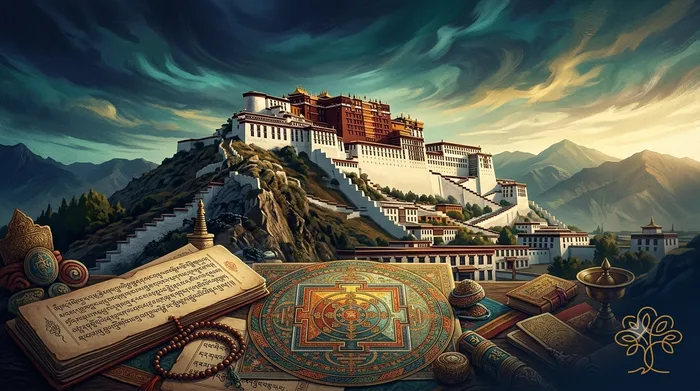
From the time of the Fifth Dalai Lama (Ngawang Lobsang Gyatso, 1617–1682), known as the Great Fifth, the Dalai Lamas held both spiritual and political authority over Tibet. He established the Gaden Phodrang government and began construction of the Potala Palace in Lhasa.
Simplified Lineage Overview
| Number | Name | Lifespan | Notable Points |
|---|---|---|---|
| 1st | Gendun Drupa | 1391–1474 | Retrospectively recognised |
| 3rd | Sonam Gyatso | 1543–1588 | Received the title “Dalai Lama” |
| 5th | Ngawang Lobsang Gyatso | 1617–1682 | Unified spiritual & political power |
| 6th | Tsangyang Gyatso | 1683–1706 | Known for unconventional life |
| 13th | Thubten Gyatso | 1876–1933 | Attempted modernisation of Tibet |
| 14th | Tenzin Gyatso | b. 1935 | Current Dalai Lama; lives in exile |
The 14th Dalai Lama – Tenzin Gyatso
The present Dalai Lama was born Lhamo Thondup on 6 July 1935 in a farming family in Taktser, Amdo (northeastern Tibet). After the death of the 13th Dalai Lama in 1933, a search party following traditional signs and oracles identified the young boy as the reincarnation. He was renamed Tenzin Gyatso and enthroned in Lhasa in 1940.
Key events in his life:
- 1950 – Assumed political power as a teenager after Chinese forces entered Tibet
- 1959 – Fled to India following the Lhasa uprising; established the Tibetan government-in-exile
- 1989 – Awarded the Nobel Peace Prize
- 2011 – Formally transferred political authority to an elected Tibetan leadership, remaining a spiritual leader
He has lived in Dharamshala, India, for more than six decades and is widely known for teaching compassion, interfaith dialogue, and non-violence.
The Reincarnation System
In Tibetan Buddhism, high lamas are believed to be tulkus — intentional reincarnations. When a Dalai Lama dies, senior monks look for a child who shows signs of being the previous incarnation. Traditional methods include:
- Dreams, oracles, and visions
- The child recognising personal objects of the previous Dalai Lama
- Physical marks or unusual behaviour
- Consultation of sacred lakes and high religious authorities
The child is usually identified at a very young age and then receives extensive religious education.
Mysteries and Controversies
Several enduring questions surround the Dalai Lama institution:
1. The Future Succession
The 14th Dalai Lama has stated that the decision about whether and where he will reincarnate rests with him and the Gaden Phodrang Trust. He has indicated that any successor recognised under Chinese government control would not be accepted by him. China maintains that it has the authority to approve reincarnations of high lamas. This raises the possibility of rival claimants after his death.
2. The Panchen Lama Mystery
In 1995 the Dalai Lama recognised a young boy, Gedhun Choekyi Nyima, as the 11th Panchen Lama. Shortly afterward the boy and his family disappeared from public view. China later installed another child as Panchen Lama. The whereabouts of the Dalai Lama’s recognised candidate remain unknown and are one of the most sensitive unresolved issues in Tibetan affairs.
3. Early Deaths and Political Turbulence
Several previous Dalai Lamas died young. The period between the 5th and 13th Dalai Lamas included power struggles, Mongol and Chinese influence, and times when the Dalai Lama’s political authority was limited or contested.
4. The Question of Continuity
The present Dalai Lama has at times suggested the institution could end with him if it no longer serves the Tibetan people. More recently he has affirmed that there will be a 15th Dalai Lama and that the process will follow traditional Tibetan methods free from external political interference.
Spiritual and Cultural Significance
Beyond politics, the Dalai Lama represents a living embodiment of Avalokiteshvara (Chenrezig), the bodhisattva of compassion, in Tibetan belief. The lineage has shaped Tibetan identity, monastic education, art, and the preservation of Buddhist philosophy. In exile, the 14th Dalai Lama has also become a global voice for ethics, environmental concern, and religious harmony.
Recording Lineages and Family Histories
Religious lineages such as that of the Dalai Lama are carefully documented across centuries. Ordinary families can apply the same care to their own histories by recording names, relationships, and important life events.
You can create a private digital family tree for free at the My rOoOts Create Family Tree page.
Helpful tools include:
These tools help preserve personal and ancestral stories in a clear, shareable format.
Frequently Asked Questions: History and Mysteries of the Dalai Lama
Who is the current Dalai Lama?
The current Dalai Lama is the 14th, Tenzin Gyatso (born Lhamo Thondup on 6 July 1935). He is the spiritual leader of Tibetan Buddhism’s Gelug school and has lived in exile in India since 1959.
What does the title “Dalai Lama” mean?
The title is commonly translated as “Ocean of Wisdom.” It was first conferred in the 16th century by the Mongol leader Altan Khan on Sonam Gyatso, the third in the lineage, and then applied retrospectively to his predecessors.
How many Dalai Lamas have there been?
There have been 14 Dalai Lamas recognised so far. The lineage is believed to be a continuous line of reincarnations of the same spiritual being.
How is a new Dalai Lama chosen?
According to Tibetan Buddhist tradition, senior monks search for a young child who shows signs of being the reincarnation of the previous Dalai Lama. Methods include oracles, dreams, the child’s recognition of personal objects belonging to the previous holder, and other spiritual indications.
When did the Dalai Lama first gain political power in Tibet?
The Fifth Dalai Lama (Ngawang Lobsang Gyatso, 1617–1682) established combined spiritual and political authority over Tibet and founded the Gaden Phodrang government.
Why did the 14th Dalai Lama leave Tibet?
In 1959, following a major uprising in Lhasa against Chinese rule, the Dalai Lama fled to India. He has lived in exile in Dharamshala ever since and established the Tibetan government-in-exile (later democratised).
What is the main controversy about the next Dalai Lama?
The 14th Dalai Lama has said that the authority to recognise his reincarnation rests with him and the Gaden Phodrang Trust. The Chinese government claims the right to approve the reincarnation of high Tibetan lamas. This raises the possibility of competing claimants after his death.
What happened to the Panchen Lama recognised by the Dalai Lama?
In 1995 the Dalai Lama identified Gedhun Choekyi Nyima as the 11th Panchen Lama. The boy and his family disappeared from public view shortly afterward. China later appointed a different person as Panchen Lama. The whereabouts of the Dalai Lama’s recognised candidate remain unknown.
Has the Dalai Lama said the institution might end with him?
He has previously suggested that the institution of the Dalai Lama could end if it no longer benefits the Tibetan people. More recently he has affirmed that there will be a 15th Dalai Lama and that the process should follow traditional Tibetan methods free from external political control.
What awards has the 14th Dalai Lama received?
He was awarded the Nobel Peace Prize in 1989 for his non-violent approach and advocacy for the Tibetan people. He has also received many international honours for his work on peace, compassion, and interfaith dialogue.
How can I record my own family or spiritual lineage?
You can create a private digital family tree and document generations, relationships, and important life events for free at My rOoOts Create Family Tree. It is a simple way to preserve personal and ancestral history.
Conclusion
The history of the Dalai Lama stretches from the 15th century to the present day. It includes the unification of spiritual and political power under the Great Fifth, the challenges faced by later holders of the title, and the extraordinary life of the 14th Dalai Lama, Tenzin Gyatso, who has spent most of his life in exile while remaining a central figure for Tibetans and a respected global teacher.
The mysteries surrounding reincarnation, succession, and political authority continue to shape discussions about the future of the institution. Understanding this lineage offers insight into Tibetan Buddhism, the modern history of Tibet, and the enduring human interest in continuity, identity, and spiritual leadership across generations.
Download a Free Family Tree Template
Want to draw your family tree yourself? The My rOoOts Family Tree Template provides a free printable blank pedigree chart for documenting your family history across multiple generations.
👉 Download a free family tree template: Family Tree Template
Choose a 3-generation, 4-generation, or 5-generation family tree template and save it as a PDF for printing, writing, and documenting your ancestors.
Discover the Meaning and Origin of Your Surname
Ever wondered where your family name came from? Use the My rOoOts Surname Meaning Lookup to explore surname meanings, origins, history, and etymology from different regions and cultures around the world.
👉 Discover your surname meaning: Surname Meaning Lookup
Learn more about your last name and explore the possible linguistic, geographic, cultural, and historical roots behind your family surname.
Create Your Family Tree for Free
Start building your family history in minutes with the My rOoOts Free Family Tree Creator. Add parents, grandparents, children, and relatives, organize generations visually, and create a beautiful family tree that you can save and share.
👉 Create your free family tree: Free Family Tree Creator
No design skills required. Simply enter your family details and generate a clear, easy-to-read family tree online for free.
Check Zodiac Compatibility for Any Two People
Curious about how well two people match based on their date of birth? Try the My rOoOts Zodiac Compatibility Tool to compare zodiac signs, explore relationship compatibility, and get a quick compatibility score for couples, friends, or family members.
👉 Check compatibility now: Zodiac Compatibility Calculator
You can enter two dates of birth and even mention the relationship type to get a more personalized compatibility result.
Start your family tree free
No account needed to begin. Build it in minutes, then save it whenever you're ready.
Build your family tree