Public Family Trees/Bernadotte Family Tree - The Swedish Royal House from Charles XIV John to Princess Estelle
Bernadotte Family Tree - The Swedish Royal House from Charles XIV John to Princess Estelle
Explore 43 people across 9 generations of the Bernadotte family, built with My rOoOts.
43
People
9
Generations
13
Living
30
Passed on
15
Marriages
74 yrs
Avg. lifespan
Family Tree
43 members mapped across 9 generations
Loading family tree…
Your turn
Build a tree like this for your own family
Free, with no sign-up to start. Add yourself, then your parents and grandparents, and watch it grow.
About the Bernadotte family
The House of Bernadotte is the royal family of Sweden, founded by the French marshal Jean-Baptiste Bernadotte, who was elected Swedish crown prince in 1810 and reigned from 1818 as King Charles XIV John, and it has held the throne in an unbroken line ever since, down to King Carl XVI Gustaf, Crown Princess Victoria and Princess Estelle.
At a glance
- Family name
- House of Bernadotte
- Country
- Sweden, and Norway until 1905
- Founder
- Charles XIV John, born Jean-Baptiste Bernadotte (1763 to 1844)
- Reigning since
- 1818
- Monarchs
- Charles XIV John, Oscar I, Charles XV, Oscar II, Gustaf V, Gustaf VI Adolf, Carl XVI Gustaf
- Current head
- King Carl XVI Gustaf, reigning since 1973
- Heir apparent
- Crown Princess Victoria, Duchess of Vastergotland
- Principal residences
- Stockholm Palace, Drottningholm Palace, Haga Palace
- Royal motto
- "For Sweden, with the times" (Carl XVI Gustaf)
9 generations, 1763 to 2012
1763
Gen 1
Charles XIV John Bernadotte1799
Gen 2
Oscar I Bernadotte1826
Gen 3
Charles XV Bernadotte1858
Gen 4
Gustaf V Bernadotte1882
Gen 5
Gustaf VI Adolf Bernadotte1906
Gen 6
Gustaf Adolf Bernadotte1934
Gen 7
Margaretha Ambler1977
Gen 8
Victoria Bernadotte2012
Gen 9
Estelle Bernadotte
Read the full historyHide the full history
Origins
The dynasty began far from Sweden, in the Gascon town of Pau, where Jean-Baptiste Bernadotte was born in 1763 as the son of a provincial lawyer. He rose through the revolutionary French army to become a Marshal of the Empire and Prince of Pontecorvo. In 1810 the Swedish Riksdag, left without an heir after the deposition of Gustav IV Adolf and the accession of the childless Charles XIII, unexpectedly offered the succession to the French marshal. He accepted, converted to Lutheranism, took the name Charles John and in 1818 became king of both Sweden and Norway. His marriage to Desiree Clary, a Marseille merchant's daughter once engaged to Napoleon, produced the dynasty's second king, Oscar I.
Notable members
Oscar I's marriage to Josephine of Leuchtenberg, a granddaughter of the Empress Josephine, brought a descent from Sweden's older royal houses into the line, and Gustaf V's marriage to Victoria of Baden, a great granddaughter of the deposed Gustav IV Adolf, reinforced it. Later generations produced an unusual number of figures known for work outside the court: Prince Eugen, one of Sweden's foremost landscape painters; Gustaf VI Adolf, a working archaeologist and botanist; and Sigvard Bernadotte, an industrial designer. The family's daughters carried the name into the other Scandinavian monarchies and into Belgium: Ingrid became queen of Denmark, Astrid queen of the Belgians and Martha crown princess of Norway, which makes this tree a close relative of the Glucksburg line.
Significance
Under the Bernadottes the Swedish monarchy moved from real political power to a purely ceremonial role, settled by the constitution of 1974. In 1980 Sweden became the first monarchy to adopt full absolute primogeniture, making the infant Crown Princess Victoria heir ahead of her younger brother. Carl XVI Gustaf, who became heir at nine months old and king in 1973, is the longest reigning monarch in Swedish history. Several princes of the house lost their royal titles by marrying commoners and were created Counts of Wisborg by the Grand Duke of Luxembourg, a kinsman through Queen Sophia of Nassau, which is why the Bernadotte name is borne today both by a reigning royal house and by a line of counts.
Notable Members
Key figures from 9 generations of the Bernadotte family
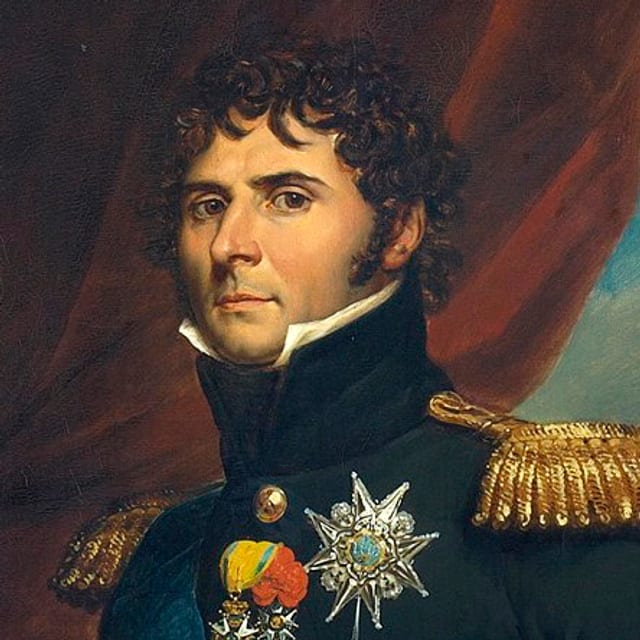 Gen 1
Gen 1Charles XIV John Bernadotte
1763 - 1844
King of Sweden and Norway; Marshal of the French Empire
Photo: Unknown author Unknown author, Public domain, via Wikimedia Commons
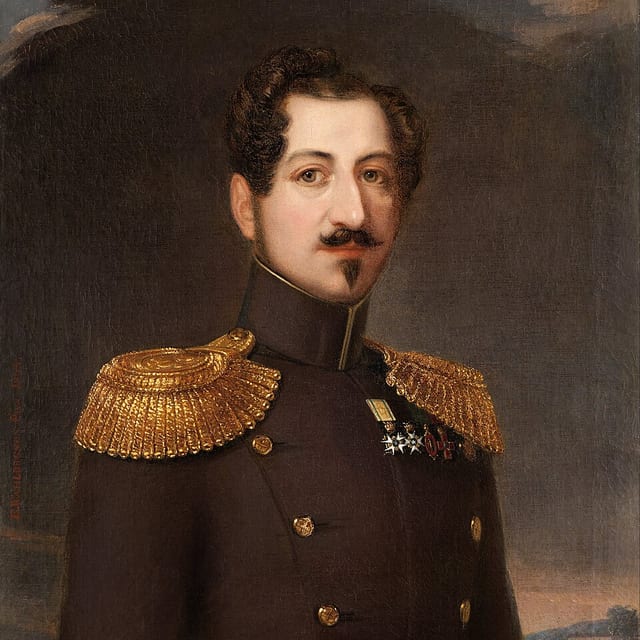 Gen 2
Gen 2Oscar I Bernadotte
1799 - 1859
King of Sweden and Norway
Photo: Erik Wahlbergson, Public domain, via Wikimedia Commons
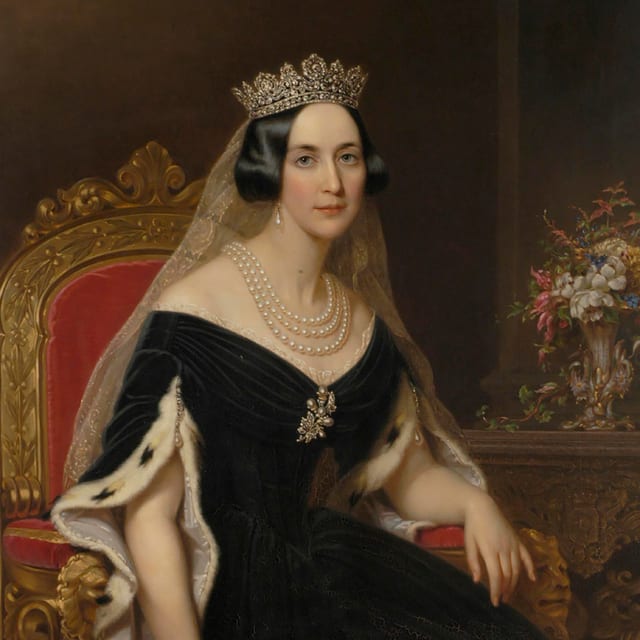 Gen 2
Gen 2Josephine of Leuchtenberg
1807 - 1876
Queen of Sweden and Norway
Photo: Friedrich Dürck, Public domain, via Wikimedia Commons
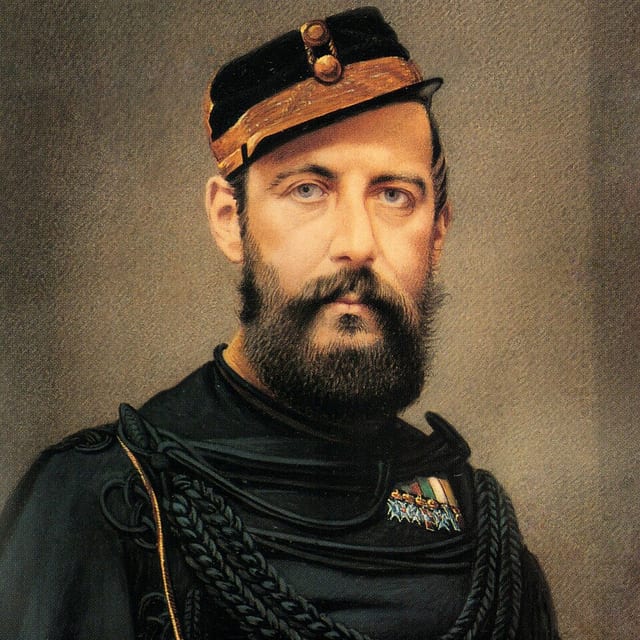 Gen 3
Gen 3Charles XV Bernadotte
1826 - 1872
King of Sweden and Norway
Photo: Photograph by Mathias Hansen (1823-1905), Public domain, via Wikimedia Commons
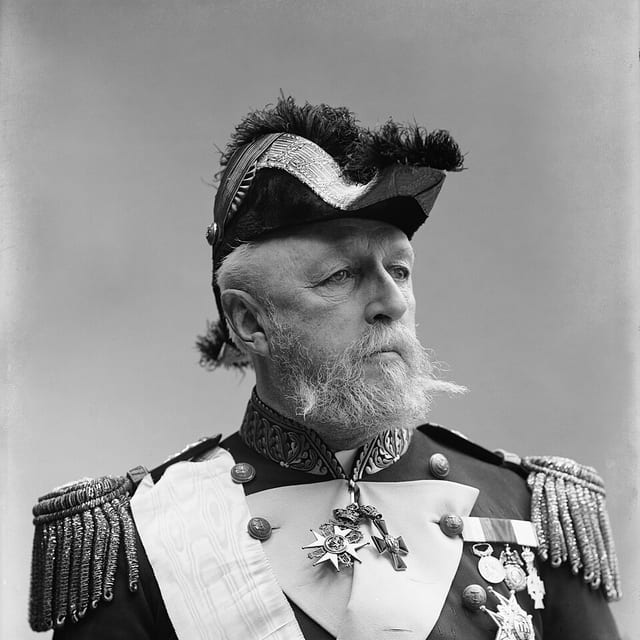
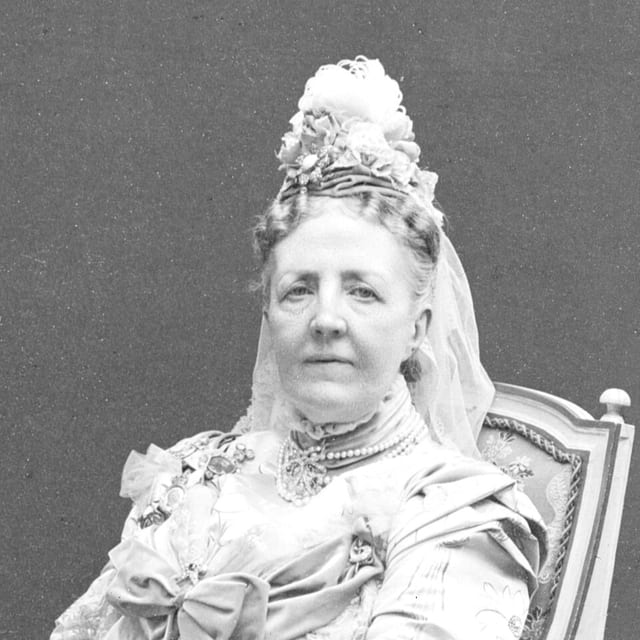 Gen 3
Gen 3Sophia of Nassau
1836 - 1913
Queen of Sweden and Norway
Photo: Unknown author Unknown author, Public domain, via Wikimedia Commons
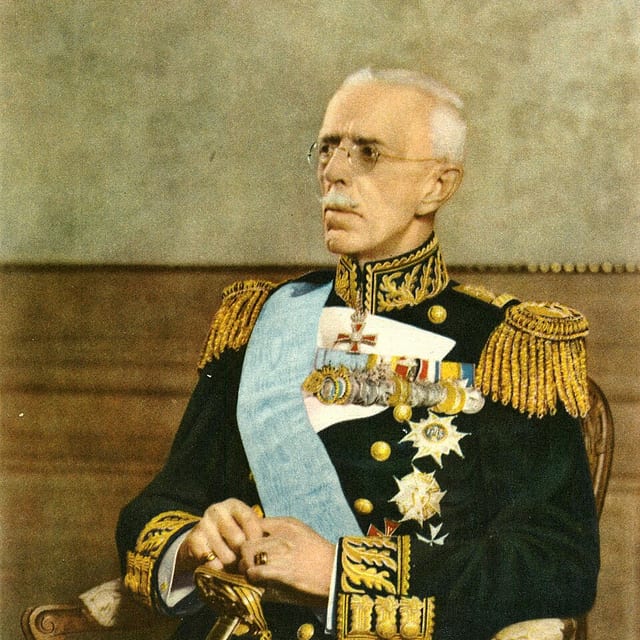 Gen 4
Gen 4Gustaf V Bernadotte
1858 - 1950
King of Sweden
Photo: Unknown author Unknown author, Public domain, via Wikimedia Commons
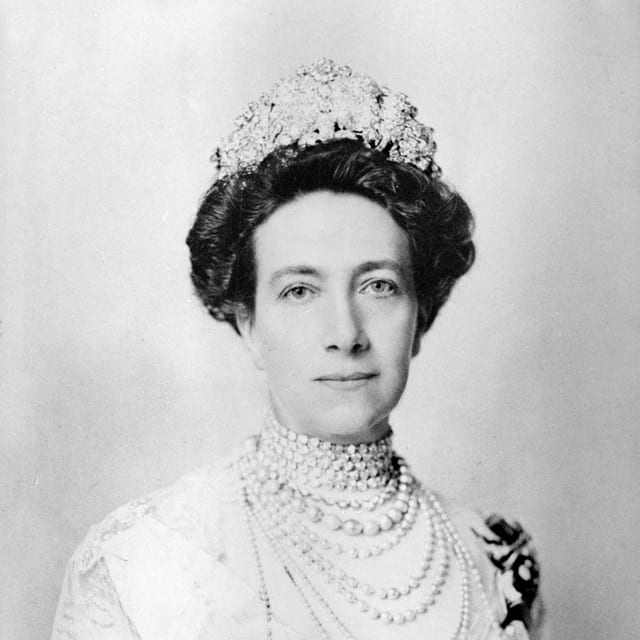
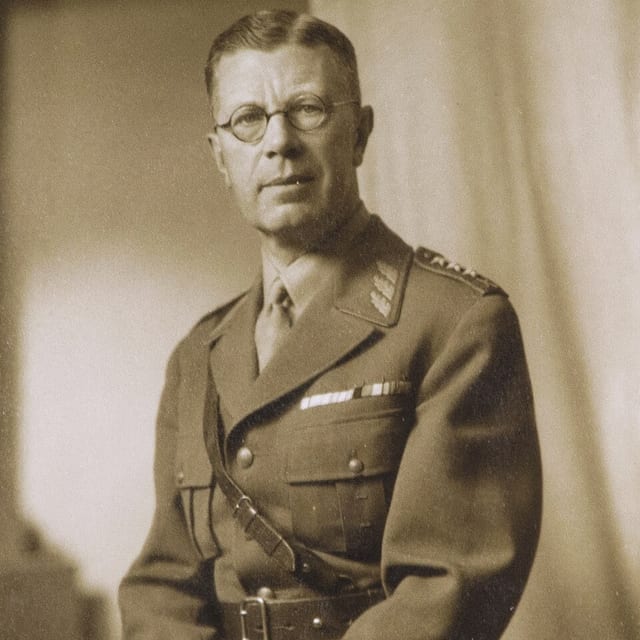 Gen 5
Gen 5Gustaf VI Adolf Bernadotte
1882 - 1973
King of Sweden; archaeologist
Photo: Unknown photographer / Swedish Air Force Museum, CC0, via Wikimedia Commons
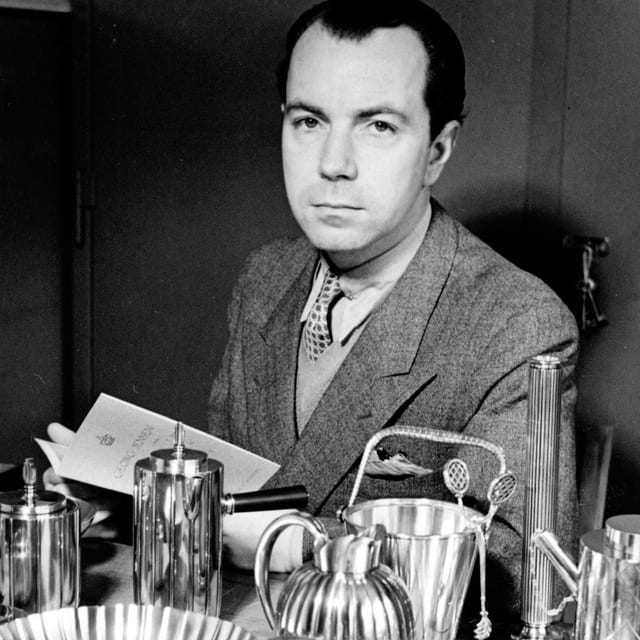
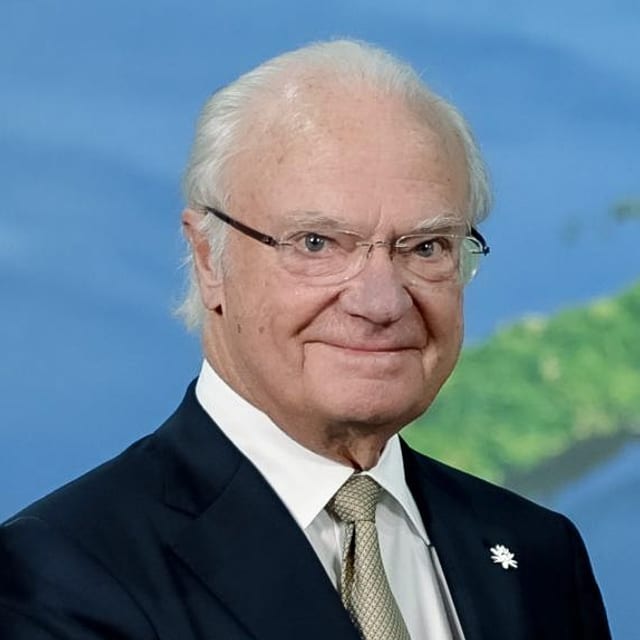
Family Members
Showing 11 of 43 people
Charles XIV John Bernadotte
Gen 1 · 1763 - 1844
Jean-Baptiste Bernadotte was born in 1763 in Pau in south western France, the son of a provincial lawyer, and rose through the revolutionary French army to become a Marshal of the Empire under Napoleon and Prince of Pontecorvo. In 1810 the Swedish Riksdag, looking for an heir for the childless Charles XIII, elected him crown prince of Sweden; he took the name Charles John and converted to Lutheranism. He succeeded to the thrones of Sweden and Norway in 1818 as Charles XIV John and reigned until his death in 1844, founding the House of Bernadotte, which reigns in Sweden to this day. With his wife Desideria, born Desiree Clary, he had one son, the future Oscar I.
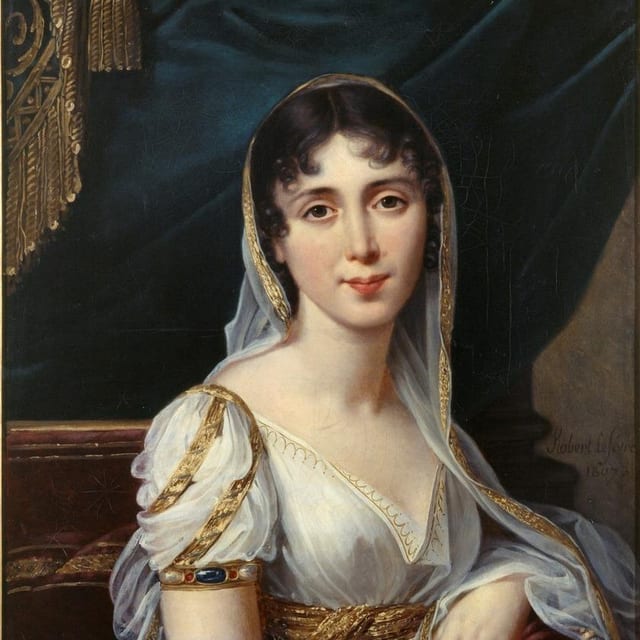
Desiree Clary
Gen 1 · 1777 - 1860
Desiree Clary, who reigned as Queen Desideria, was born in Marseille in 1777, the daughter of a wealthy silk merchant. In her youth she was engaged to the young Napoleon Bonaparte, and her sister Julie married his brother Joseph; in 1798 she married General Jean-Baptiste Bernadotte, and their only child, the future Oscar I, was born in Paris the following year. When her husband was elected crown prince of Sweden she found the northern climate and the formality of the Stockholm court difficult, and lived largely in Paris between 1811 and 1823 before returning for her son's wedding and settling in Sweden for good. She was crowned queen in 1829 and died in Stockholm in 1860.
Oscar I Bernadotte
Gen 2 · 1799 - 1859
Oscar I was born Joseph Francois Oscar Bernadotte in Paris in 1799, the only child of Jean-Baptiste Bernadotte and Desiree Clary, and came to Sweden as a boy of eleven when his father was elected crown prince. King of Sweden and Norway from 1844 until his death in 1859, he was the first Bernadotte brought up Swedish, and his reign brought liberal reform: equal inheritance rights for women in 1845, reform of the prison system, which he had studied and written a book about, freer trade, and a cautious sympathy for Scandinavianism. He married Josephine of Leuchtenberg in 1823, and their sons included Charles XV and Oscar II.
Charles XV Bernadotte
Gen 3 · 1826 - 1872
Charles XV was born in Stockholm in 1826, the eldest son of Oscar I and Josephine of Leuchtenberg, and reigned as king of Sweden and Norway from 1859 until his death in 1872. Informal, popular and a gifted amateur painter and poet, he left much of the detail of government to his ministers, and his reign is remembered above all for the reform of 1866 that replaced the ancient Riksdag of the Estates with a two chamber parliament. He married Louise of the Netherlands in 1850; their only surviving child, Louise, became queen of Denmark, so the Swedish throne passed at his death to his younger brother Oscar II.
Oscar II Bernadotte
Gen 3 · 1829 - 1907
Oscar II was born in Stockholm in 1829, the third son of Oscar I, and became king in 1872 on the death of his elder brother Charles XV. He reigned over Sweden until 1907 and over Norway until 1905, when the union between the two kingdoms was dissolved and he renounced the Norwegian throne for himself and his house, a crisis he handled with a restraint that preserved good relations between the countries. A trained naval officer, he was also a writer and translator of Goethe and Herder and an energetic patron of science, polar exploration and the arts. With Sophia of Nassau he had four sons, among them Gustaf V and Prince Oscar Bernadotte.
Gustaf V Bernadotte
Gen 4 · 1858 - 1950
Gustaf V was born at Drottningholm in 1858, the eldest son of Oscar II and Sophia of Nassau, and reigned as king of Sweden from 1907 until his death in 1950, for nearly forty three years. His reign spanned the end of the union with Norway, the arrival of full parliamentary democracy and Swedish neutrality in both world wars. In the Courtyard Crisis of 1914 he made the last serious attempt by a Swedish monarch to direct policy against his government, and afterwards the crown's political role steadily receded. A lifelong tennis enthusiast, he competed into old age under the pseudonym Mr G and founded the Swedish tennis association. He married Victoria of Baden in 1881.
Carl Bernadotte
Gen 4 · 1861 - 1951
Prince Carl, Duke of Vastergotland, born in 1861, was the third son of Oscar II and Sophia of Nassau and a cavalry general in the Swedish army. He is remembered chiefly for humanitarian work: as chairman of the Swedish Red Cross for more than four decades he organised prisoner of war exchanges and relief transports through the First World War and famine relief in Russia, and the organisation grew into a major institution under him. In 1897 he married Princess Ingeborg of Denmark. Their daughters married into three royal houses, which made him a grandfather of Harald V of Norway and Albert II of Belgium. He died in 1951 at the age of ninety.
Gustaf VI Adolf Bernadotte
Gen 5 · 1882 - 1973
Gustaf VI Adolf was born in Stockholm in 1882, the eldest son of Gustaf V and Victoria of Baden, and was king of Sweden from 1950 until his death in 1973. A genuine scholar, he was a serious archaeologist who took part in excavations in Greece, Italy, Korea and China, a recognised authority on Chinese art and a notable gardener and botanist, elected to several learned academies on merit. His unassuming manner and his motto, Duty before all, made him personally popular and helped carry the monarchy through the republican debates of the 1950s and 1960s. He married Margaret of Connaught in 1905 and, after her death, Louise Mountbatten in 1923, and was succeeded by his grandson Carl XVI Gustaf.
Wilhelm Bernadotte
Gen 5 · 1884 - 1965
Prince Wilhelm, Duke of Sodermanland, born in 1884, was the second son of Gustaf V and Victoria of Baden and had a long career as a writer. A naval officer by training, he published poetry, essays and travel books, and was an early documentary film maker whose expeditions to Africa and Asia in the 1920s and 1930s produced both films and popular accounts of them. He married Grand Duchess Maria Pavlovna of Russia in 1908; their only child was Lennart, later Count Bernadotte of Wisborg, and the marriage was dissolved in 1914. He spent much of his later life at Stenhammar in Sodermanland and died in 1965.
Gustaf Adolf Bernadotte
Gen 6 · 1906 - 1947
Prince Gustaf Adolf, Duke of Vasterbotten, born in 1906, was the eldest son of the future Gustaf VI Adolf and Margaret of Connaught, and from 1950 would have been crown prince of Sweden. A cavalry officer and a notable horseman, he was chairman of the Swedish Olympic Committee, of the national scouting association and of several sports federations, and was widely seen as a capable future king. In 1932 he married Princess Sibylla of Saxe-Coburg and Gotha; they had four daughters and then a son, the future Carl XVI Gustaf, who was nine months old when his father died in January 1947 at the age of forty.
Sigvard Bernadotte
Gen 6 · 1907 - 2002
Sigvard Bernadotte, Count of Wisborg, born in 1907, was the second son of Gustaf VI Adolf and Margaret of Connaught and one of the first members of a European royal family to earn his living as a professional designer. He lost his Swedish royal title in 1934 on marrying Erica Patzek, and was created Count Bernadotte of Wisborg by Luxembourg in 1951. Trained in Stockholm and Munich, he designed silver for Georg Jensen in Copenhagen from 1930 and in 1950 founded the firm Bernadotte and Bjorn with Acton Bjorn, an early industrial design partnership whose work ranged from the Margrethe mixing bowl to typewriters and kitchen appliances. He died in 2002.
Is this your family?
Claim this tree to correct it, add relatives, and keep it up to date yourself.
Claim this treeStart your own family tree
Build yours for free, then send relatives a link to fill in their side of the family.
Start my tree, freeRelationship Explorer
How are two people related?
Pick any two names in the tree to trace the exact line of descent, marriage or shared ancestor connecting them.
Charles XIV John Bernadotte is Carl XVI Gustaf Bernadotte's 4x Great-Grandfather.
- 👨Carl XVI Gustaf Bernadotteson of
- 👨Gustaf Adolf Bernadotteson of
- 👨Gustaf VI Adolf Bernadotteson of
- 👨Gustaf V Bernadotteson of
- 👨Oscar II Bernadotteson of
- 👨Oscar I Bernadotteson of
- 👨Charles XIV John Bernadotte
Find out how you're related to your own cousins.
Build your treeIs this your family?
Claim the Bernadotte family tree to take it over, edit it, and add family members yourself.
Frequently Asked Questions
How many people are in the Bernadotte family tree?+−
This family tree currently documents 43 people across 9 recorded generations.
How many generations does the Bernadotte family tree span?+−
9 generations are recorded so far, and may grow as more history is added.
How many marriages are recorded?+−
15 marriages are recorded in this family.
Where is the Bernadotte family from?+−
The most commonly recorded native place is Stockholm, Sweden.
Start building your own family story
Create a tree in minutes, import a GEDCOM file, or explore more public family trees.
Free. Private by default. GEDCOM export any time.