Public Family Trees/Orange-Nassau Family Tree - The Dutch Royal House from William I to Catharina-Amalia
Orange-Nassau Family Tree - The Dutch Royal House from William I to Catharina-Amalia
Explore 33 people across 8 generations of the Orange-Nassau family, built with My rOoOts.
33
People
8
Generations
12
Living
21
Passed on
11
Marriages
65 yrs
Avg. lifespan
Family Tree
33 members mapped across 8 generations
Loading family tree…
Your turn
Build a tree like this for your own family
Free, with no sign-up to start. Add yourself, then your parents and grandparents, and watch it grow.
About the Orange-Nassau family
The House of Orange-Nassau is the royal family of the Netherlands, the dynasty that has given the country every monarch since William I was proclaimed king in 1815 and that is headed today by King Willem-Alexander, whose eldest daughter Catharina-Amalia, Princess of Orange, is heir to the throne.
At a glance
- House
- Orange-Nassau (Oranje-Nassau)
- Country
- Netherlands, with Luxembourg in personal union until 1890
- First king
- William I, reigned 1815 to 1840
- Monarchs since 1815
- Seven: William I, William II, William III, Wilhelmina, Juliana, Beatrix, Willem-Alexander
- Current head
- King Willem-Alexander, king since 30 April 2013
- Heir apparent
- Catharina-Amalia, Princess of Orange
- Principal residences
- Noordeinde and Huis ten Bosch palaces, The Hague
- Motto
- Je maintiendrai (I will maintain)
8 generations, 1772 to 2003
1772
Gen 1
William I of the Netherlands1792
Gen 2
William II of the Netherlands1817
Gen 3
William III of the Netherlands1880
Gen 4
Wilhelmina of the Netherlands1909
Gen 5
Juliana of the Netherlands1938
Gen 6
Beatrix of the Netherlands1967
Gen 7
Willem-Alexander of the Netherlands2003
Gen 8
Catharina-Amalia of the Netherlands
Read the full historyHide the full history
Origins
The family takes its name from the principality of Orange in southern France and the German county of Nassau, brought together in the sixteenth century in the person of William of Orange, known as William the Silent, who led the Dutch revolt against Spanish rule. For more than two centuries his descendants served the Dutch Republic as stadtholders rather than sovereigns. The republic fell to French invasion in 1795 and the family went into exile in Britain and Prussia. It was William Frederick, son of the last stadtholder William V, who returned in 1813 as sovereign prince and in 1815 became the first King of the Netherlands as William I, ruling Luxembourg as grand duke at the same time.
Notable members
Seven generations descend from William I and his wife Wilhelmina of Prussia. His son William II commanded Dutch troops at Waterloo and accepted the liberal constitution of 1848 that turned the country into a parliamentary monarchy. The long reign of William III ended in a dynastic crisis: all three of his sons died before him, and the crown passed to Wilhelmina, the ten year old daughter of his second marriage to Emma of Waldeck and Pyrmont. Wilhelmina reigned for fifty eight years and became the voice of Dutch resistance, broadcasting from exile in London during the Second World War. Her daughter Juliana, remembered as the citizen queen, saw the Netherlands through decolonisation and the North Sea flood of 1953. Juliana's eldest daughter Beatrix reigned from 1980 to 2013, when she abdicated in favour of Willem-Alexander, the first Dutch king since 1890.
Significance
Three queens regnant in succession, Wilhelmina, Juliana and Beatrix, gave the Netherlands 123 years of unbroken female rule between 1890 and 2013, an unusual record among European monarchies. Each of them handed the crown on by abdication rather than at death, a Dutch habit the family has now followed four times. The monarchy itself was stripped of real political power in 1848 and has survived by adapting to it, trading authority for a bicycling, broadly informal public style that remains one of the most popular institutions in the country. The title Prince or Princess of Orange, held today by Catharina-Amalia, still marks the heir, and the family's colour gives the Netherlands its national orange.
Quick facts
Notable Members
Key figures from 8 generations of the Orange-Nassau family
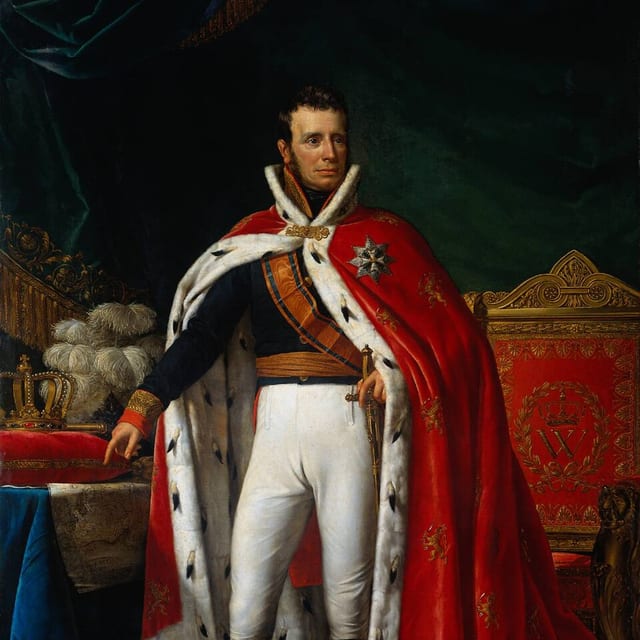 Gen 1
Gen 1William I of the Netherlands
1772 - 1843
King of the Netherlands and Grand Duke of Luxembourg
Photo: Joseph Paelinck, Public domain, via Wikimedia Commons
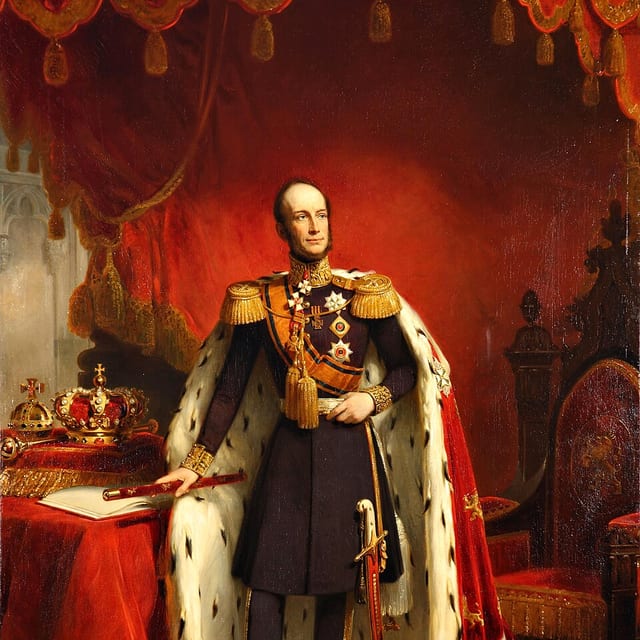 Gen 2
Gen 2William II of the Netherlands
1792 - 1849
King of the Netherlands and Grand Duke of Luxembourg
Photo: Nicolaas Pieneman, Public domain, via Wikimedia Commons
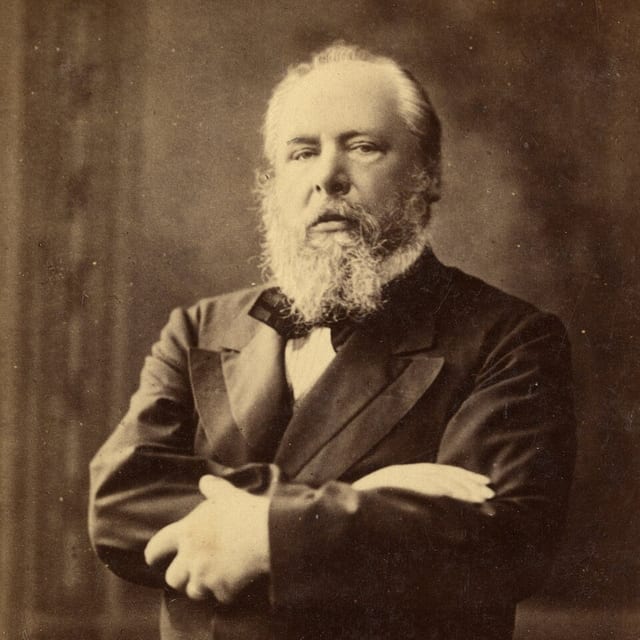
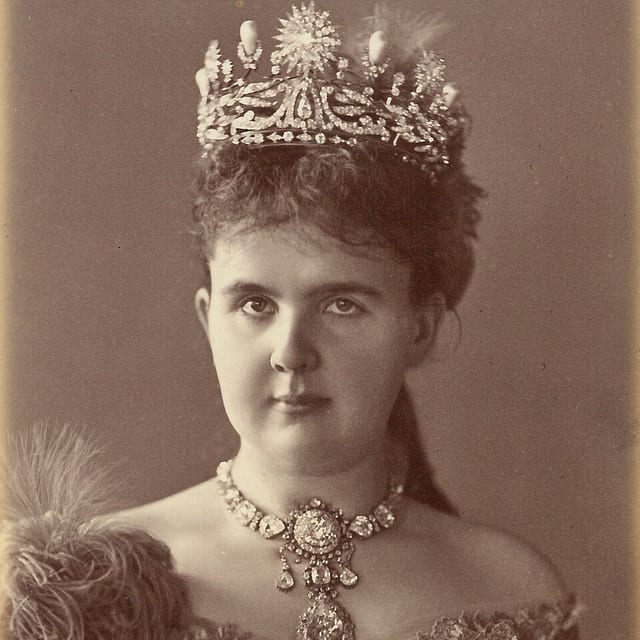
Family Members
Showing 11 of 33 people
William I of the Netherlands
Gen 1 · 1772 - 1843
William I (1772 to 1843) was the first King of the Netherlands and the founder of the Dutch monarchy. Born in The Hague as the son of William V, the last stadtholder of the Dutch Republic, he fought against the French invasion of 1795 and then spent nearly two decades in exile in Britain and Prussia. He returned in 1813 as sovereign prince and was proclaimed king in 1815, ruling Luxembourg as grand duke at the same time. Nicknamed the Merchant King for the canals, shipping lines and industry he financed, he lost the southern provinces in the Belgian Revolution of 1830 and abdicated in 1840 in favour of his son William II. With his wife and first cousin Wilhelmina of Prussia he was the ancestor of every Dutch monarch since.
William II of the Netherlands
Gen 2 · 1792 - 1849
William II (1792 to 1849) was King of the Netherlands and Grand Duke of Luxembourg from 1840 until his death. Born in The Hague and educated in Berlin and at Oxford, he made his name as a soldier, serving under Wellington in Spain and commanding Dutch and Belgian troops at the Battle of Waterloo in 1815, where he was wounded. As Prince of Orange he tried and failed to hold the southern provinces during the Belgian Revolution of 1830. Succeeding his father William I in 1840, he is remembered above all for accepting in 1848 the liberal constitution drafted by Johan Rudolph Thorbecke, which moved real power to parliament and shaped the modern Dutch monarchy. He married Anna Pavlovna of Russia, a sister of two tsars.
Frederick of the Netherlands
Gen 2 · 1797 - 1881
Prince Frederick of the Netherlands (1797 to 1881) was the second son of King William I and Wilhelmina of Prussia and a career soldier in both Dutch and Prussian service. Born in Berlin during his family's exile, he rose to field marshal, commanded the Dutch forces in the Ten Days' Campaign against Belgium in 1831 and was for decades the senior military figure of the young kingdom. He served as Grand Master of Dutch freemasonry for more than sixty years and was a well known patron of charities, schools and the arts. In 1825 he married Princess Louise of Prussia. A younger brother of King William II, he died at Wassenaar in 1881.
William III of the Netherlands
Gen 3 · 1817 - 1890
William III (1817 to 1890) was King of the Netherlands and Grand Duke of Luxembourg from 1849 until his death. Born in Brussels to King William II and Anna Pavlovna of Russia, he resented the constitutional limits his father had accepted in 1848 and clashed repeatedly with his ministers across a long reign in which slavery was abolished in the Dutch colonies, the railways spread and the country industrialised. His attempt to sell Luxembourg to France touched off the international crisis of 1867. After his first wife Sophie of Wurttemberg and all three of their sons had died, he married Emma of Waldeck and Pyrmont in 1879, and their only child Wilhelmina succeeded him in 1890.
Sophie of the Netherlands
Gen 3 · 1824 - 1897
Princess Sophie of the Netherlands (1824 to 1897) was the only surviving daughter of King William II and Anna Pavlovna of Russia and a sister of King William III. Born in The Hague, she married Carl Alexander, the future Grand Duke of Saxe-Weimar-Eisenach, in 1842 and spent the rest of her life in Germany as his consort. She was a serious patron of music and scholarship in a Weimar still living on its literary reputation, and when Goethe's last grandson left the poet's papers to her she founded the Goethe Archive there in 1885, the institution that grew into the Goethe and Schiller Archive. She died in Weimar in 1897.
Wilhelmina of the Netherlands
Gen 4 · 1880 - 1962
Wilhelmina (1880 to 1962) was Queen of the Netherlands from 1890 to 1948 and the longest reigning Dutch monarch. The only child of King William III and Emma of Waldeck and Pyrmont, she came to the throne at the age of ten under her mother's regency and was inaugurated in her own right in 1898. She held the Netherlands to neutrality through the First World War and made the monarchy a byword for stubborn independence. When Germany invaded in May 1940 she escaped to London, where she led the government in exile and spoke to the occupied country over Radio Oranje, becoming the voice of Dutch resistance. She returned in 1945, abdicated in favour of her daughter Juliana in 1948 and died at Het Loo in 1962.
Juliana of the Netherlands
Gen 5 · 1909 - 2004
Juliana (1909 to 2004) was Queen of the Netherlands from 1948 to 1980. The only child of Queen Wilhelmina and Prince Henry, she studied at Leiden University and married Prince Bernhard of Lippe-Biesterfeld in 1937. She spent the Second World War with her young daughters in Canada, where her third daughter Margriet was born, and came home to a country that had grown used to thinking of her as one of its own. Her reign took in Indonesian independence, the North Sea flood of 1953, when her visits to the drowned villages were long remembered, and the social upheavals of the 1960s. Informal and warm in manner, she was known as the citizen queen. She abdicated in favour of her daughter Beatrix in 1980 and died at Soestdijk Palace in 2004.
Beatrix of the Netherlands
Gen 6 · b. 1938
Beatrix (born 1938) was Queen of the Netherlands from 1980 until her abdication in 2013. The eldest daughter of Queen Juliana and Prince Bernhard, she was born at Soestdijk Palace, spent the war years as a child with her family in Canada and read law at Leiden University. Her marriage in 1966 to the German diplomat Claus von Amsberg drew angry protests in Amsterdam, yet the couple became genuinely loved, and she was the mother of King Willem-Alexander, Prince Friso and Prince Constantijn. As queen she was known for an exacting command of her state papers and a formal, hard working style that steadied the monarchy for three decades. She handed the throne to her eldest son on 30 April 2013 and still carries out public duties as Princess Beatrix.
Irene of the Netherlands
Gen 6 · b. 1939
Princess Irene of the Netherlands (born 1939) is the second daughter of Queen Juliana and Prince Bernhard and a younger sister of Princess Beatrix. Born at Soestdijk Palace, she set off a constitutional storm in 1964 when her conversion to Roman Catholicism and her marriage to Carlos Hugo, Duke of Parma, the Carlist claimant to the Spanish throne, went ahead without the approval of parliament, costing her her place in the line of succession. She spent years at her husband's side in Spanish politics before the marriage ended in 1981. Since then she has worked as a writer and campaigner on nature and the human relationship with it, founding the NatuurCollege foundation in 1995.
Willem-Alexander of the Netherlands
Gen 7 · b. 1967
Willem-Alexander (born 1967) has been King of the Netherlands since 30 April 2013, when his mother Beatrix abdicated in his favour, making him the first Dutch king in more than a century. The eldest son of Beatrix and Prince Claus, he was born in Utrecht, read history at Leiden University and trained with the Royal Netherlands Navy and Air Force, keeping up his flying ever since. Before his accession he chaired the United Nations Secretary-General's advisory board on water and sanitation, a subject he still works on. He married the Argentine born Maxima Zorreguieta in Amsterdam in 2002; their eldest daughter, Catharina-Amalia, Princess of Orange, is heir to the throne.
Friso of Orange-Nassau
Gen 7 · 1968 - 2013
Prince Friso of Orange-Nassau (1968 to 2013) was the second son of Queen Beatrix and Prince Claus and a younger brother of King Willem-Alexander. Born in Utrecht, he trained as an aerospace engineer and also studied economics, then built a career in business and finance largely out of the public eye, keeping an interest in engineering and energy throughout his working life. When he married Mabel Wisse Smit in 2004 the government declined to ask parliament to consent to the marriage, so he gave up his place in the line of succession and took the title Prince Friso of Orange-Nassau. The couple had two daughters. He died in The Hague in 2013 at the age of forty-four.
Is this your family?
Claim this tree to correct it, add relatives, and keep it up to date yourself.
Claim this treeStart your own family tree
Build yours for free, then send relatives a link to fill in their side of the family.
Start my tree, freeRelationship Explorer
How are two people related?
Pick any two names in the tree to trace the exact line of descent, marriage or shared ancestor connecting them.
William I of the Netherlands is Emma of Waldeck and Pyrmont's Grandfather-in-law.
- 👩Emma of Waldeck and Pyrmontmarried to
- 👨William III of the Netherlandsson of
- 👨William II of the Netherlandsson of
- 👨William I of the Netherlands
Find out how you're related to your own cousins.
Build your treeIs this your family?
Claim the Orange-Nassau family tree to take it over, edit it, and add family members yourself.
Frequently Asked Questions
How many people are in the Orange-Nassau family tree?+−
This family tree currently documents 33 people across 8 recorded generations.
How many generations does the Orange-Nassau family tree span?+−
8 generations are recorded so far, and may grow as more history is added.
How many marriages are recorded?+−
11 marriages are recorded in this family.
Where is the Orange-Nassau family from?+−
The most commonly recorded native place is The Hague, Netherlands.
Start building your own family story
Create a tree in minutes, import a GEDCOM file, or explore more public family trees.
Free. Private by default. GEDCOM export any time.