Public Family Trees/Bonaparte Family Tree - The House of Bonaparte from Napoleon I to Today
Bonaparte Family Tree - The House of Bonaparte from Napoleon I to Today
Explore 39 people across 7 generations of the Bonaparte family, built with My rOoOts.
39
People
7
Generations
3
Living
36
Passed on
15
Marriages
60 yrs
Avg. lifespan
Family Tree
39 members mapped across 7 generations
Loading family tree…
Your turn
Build a tree like this for your own family
Free, with no sign-up to start. Add yourself, then your parents and grandparents, and watch it grow.
About the Bonaparte family
The House of Bonaparte is the French imperial dynasty founded by Napoleon I, a family of minor Corsican nobles from Ajaccio who within one generation ruled France and placed brothers and sisters on the thrones of Spain, Holland, Naples and Westphalia, and whose senior line survives today in Jean-Christophe, Prince Napoleon.
The family descends from Carlo Buonaparte, an Ajaccio lawyer, and Letizia Ramolino, whose eight surviving children were born between 1768 and 1784 on an island that had only just passed from Genoese to French rule. The second son, Napoleon, became First Consul in 1799 and Emperor of the French in 1804, and the whole family rose with him.
At a glance
- Family name
- Bonaparte, originally Buonaparte
- Place of origin
- Ajaccio, Corsica, with earlier roots in Tuscany
- Founding couple
- Carlo Buonaparte and Letizia Ramolino
- Best known member
- Napoleon I, Emperor of the French
- Thrones held
- France, Italy, Spain, Holland, Naples, Westphalia
- Imperial periods
- First Empire 1804 to 1815, Second Empire 1852 to 1870
- Current head of the house
- Jean-Christophe, Prince Napoleon, born 1986
- Generations in this tree
- Five, from Carlo Buonaparte to Jean-Christophe
7 generations, 1746 to 1986
1746
Gen 1
Carlo Buonaparte1768
Gen 2
Joseph Bonaparte1781
Gen 3
Eugene de Beauharnais1802
Gen 4
Napoleon Charles Bonaparte1856
Gen 5
Napoleon Eugene Bonaparte1950
Gen 6
Charles Bonaparte1986
Gen 7
Jean-Christophe Bonaparte
Read the full historyHide the full history
Origins in Corsica
The Buonaparte were a patrician family of Ajaccio with roots traced to Tuscany, holding local office and a modest estate rather than great wealth. Carlo Buonaparte studied law at Pisa, served in the Corsican assembly and secured French recognition of the family's noble status, which opened the military academies of Brienne and Paris to his sons. After his death in 1785 Letizia Ramolino held the household together, later presiding over the imperial court as Madame Mere and outliving the Empire itself.
Notable members
Napoleon I is the figure the family is remembered for: general of the Italian and Egyptian campaigns, author of the Civil Code, and Emperor until his abdication in 1815 and exile on Saint Helena. His siblings became sovereigns in their own right, Joseph in Naples and Spain, Louis in Holland, Elisa in Tuscany, Caroline in Naples with her husband Joachim Murat, and Jerome in Westphalia. Napoleon's only legitimate son, Napoleon II, was titled King of Rome. The dynasty returned to power through Louis and Hortense de Beauharnais's son, who ruled as Napoleon III from 1852 to 1870 alongside Empress Eugenie. Later generations produced the ornithologist Charles Lucien Bonaparte and the celebrated Paris salon hostess Princess Mathilde.
Significance
No other modern European family moved so far so quickly, and few left as deep a mark. The Napoleonic Code still underpins the civil law of much of continental Europe and Latin America, while the Second Empire rebuilt Paris into the city of boulevards visitors see today. Two empires, two exiles and a princely line that continues in the present make the Bonapartes the most consequential of the newer European houses.
Notable Members
Key figures from 7 generations of the Bonaparte family
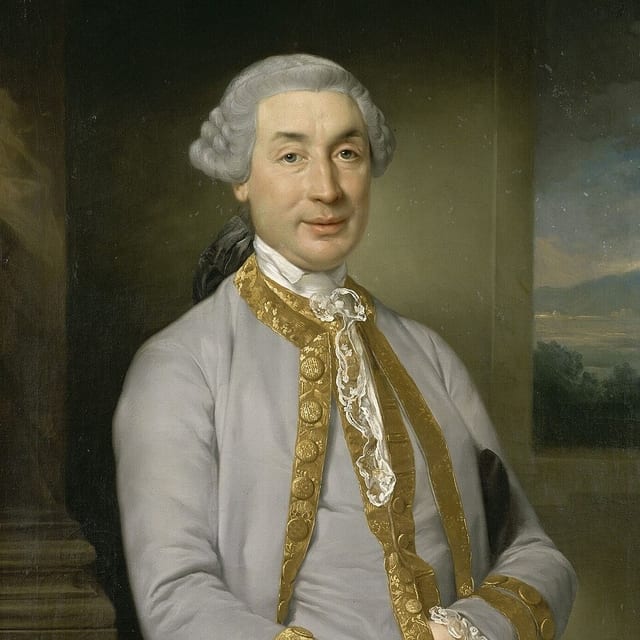 Gen 1
Gen 1Carlo Buonaparte
1746 - 1785
Lawyer and Corsican deputy
Photo: Attributed to Anton Raphael Mengs, Public domain, via Wikimedia Commons
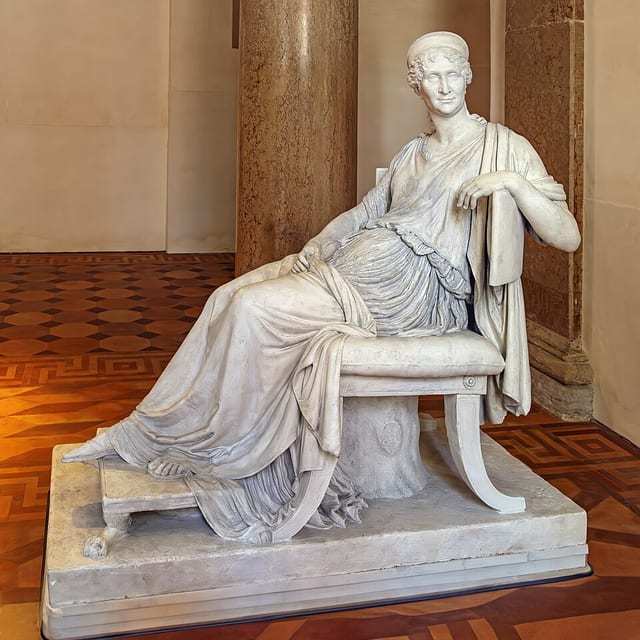 Gen 1
Gen 1Letizia Ramolino
1750 - 1836
Madame Mere de l'Empereur
Photo: Didier Descouens, Public domain, via Wikimedia Commons
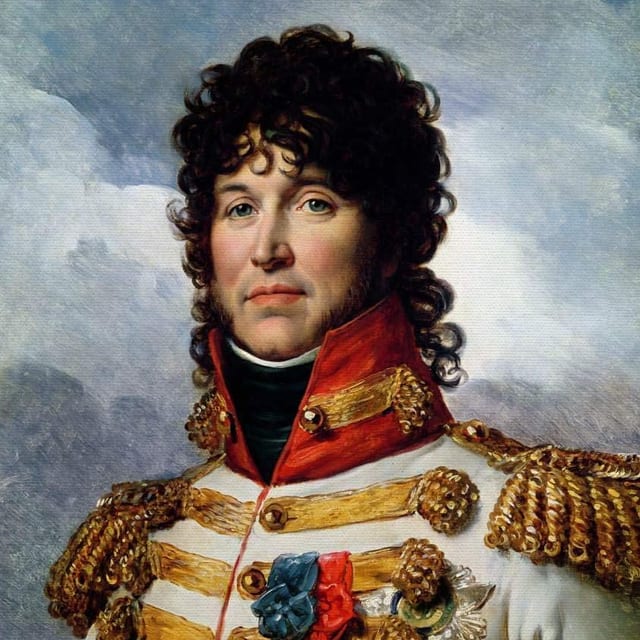 Gen 2
Gen 2Joachim Murat
1767 - 1815
Marshal of the Empire, King of Naples
Photo: François Gérard, Public domain, via Wikimedia Commons
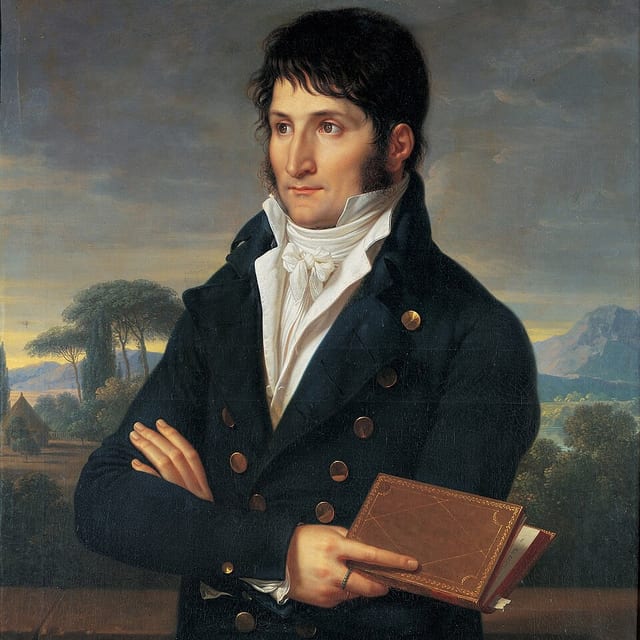 Gen 2
Gen 2Lucien Bonaparte
1775 - 1840
Politician, Prince of Canino and Musignano
Photo: François-Xavier Fabre, Public domain, via Wikimedia Commons
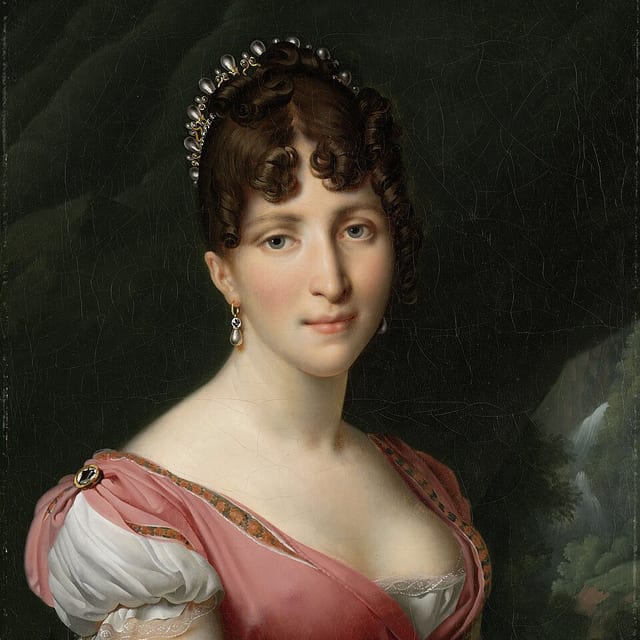 Gen 3
Gen 3Hortense de Beauharnais
1783 - 1837
Queen consort of Holland, composer
Photo: Anne-Louis Girodet, Public domain, via Wikimedia Commons
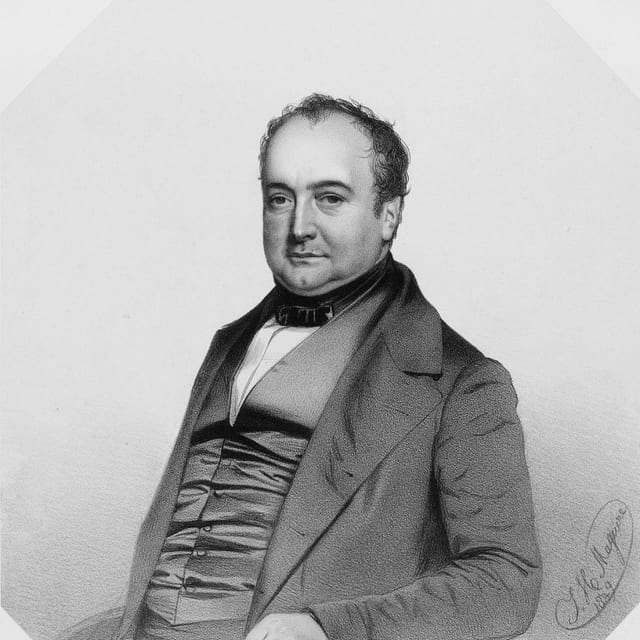
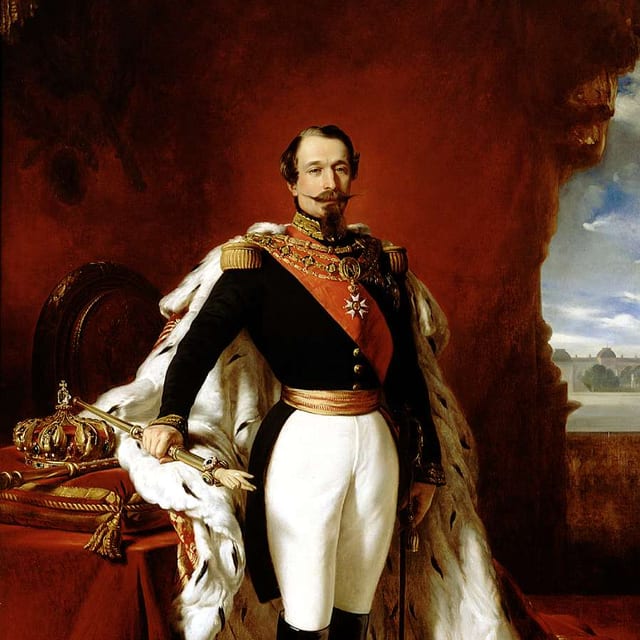
Family Members
Showing 11 of 39 people
Carlo Buonaparte
Gen 1 · 1746 - 1785
Carlo Maria Buonaparte (1746-1785) was a Corsican lawyer from Ajaccio and the father of the imperial House of Bonaparte. Born into a patrician family of the town with earlier Tuscan roots, he studied law at Pisa and first served the Corsican independence leader Pasquale Paoli before accepting French rule after 1769. He married Letizia Ramolino in 1764, and the couple had eight children who survived to adulthood, among them Joseph, Napoleon, Lucien, Elisa, Louis, Pauline, Caroline and Jerome. As a deputy of the Corsican nobility he obtained official recognition of the family's noble status, which allowed his sons free places at French military schools, the opening that set Napoleon on his career. He died at Montpellier in 1785, years before the family's rise.
Letizia Ramolino
Gen 1 · 1750 - 1836
Maria Letizia Ramolino (1750-1836) was the mother of Napoleon I and the matriarch of the House of Bonaparte. Born in Ajaccio to a Corsican family of Lombard descent, she married the lawyer Carlo Buonaparte in 1764 and was widowed in 1785, raising their eight surviving children in straitened circumstances. Frugal and famously unimpressed by the family's sudden grandeur, she was given the formal style Madame Mere de l'Empereur under the First Empire and kept her own household at the Hotel de Brienne in Paris. After Waterloo she settled in Rome under papal protection, where she lived until her death in 1836, outliving her son Napoleon by fifteen years and several of her other children.
Joseph Bonaparte
Gen 2 · 1768 - 1844
Joseph Bonaparte (1768-1844) was the eldest surviving son of Carlo Buonaparte and Letizia Ramolino and the elder brother of Napoleon I. Trained as a lawyer, he served the Republic as a diplomat and negotiated the Treaty of Luneville with Austria and the Treaty of Amiens with Britain. Napoleon made him King of Naples in 1806 and then King of Spain in 1808, a throne he held uneasily through the Peninsular War until 1813. He married Julie Clary in 1794, and their surviving daughters were Zenaide and Charlotte. After the fall of the Empire he lived for many years in the United States, near Bordentown, New Jersey, under the title Comte de Survilliers, returning to Europe late in life and dying in Florence.
Lucien Bonaparte
Gen 2 · 1775 - 1840
Lucien Bonaparte (1775-1840) was the third surviving son of Carlo Buonaparte and Letizia Ramolino, and the brother whose nerve secured Napoleon's seizure of power. As president of the Council of Five Hundred on 18 Brumaire 1799 he rallied the troops when the deputies turned on his brother, making the coup succeed. He served as interior minister and as ambassador to Spain, but broke with Napoleon over his second marriage, to Alexandrine de Bleschamp, which the Emperor refused to recognise, and over his refusal of a throne. Lucien withdrew to Italy, received the title Prince of Canino and Musignano from the Pope, and was briefly held by the British while trying to sail for America. A collector and amateur archaeologist, he excavated Etruscan tombs on his estates and died at Viterbo in 1840.
Eugene de Beauharnais
Gen 3 · 1781 - 1824
Eugene de Beauharnais (1781-1824) was the son of Josephine de Beauharnais by her first marriage and thus the stepson of Napoleon I, who adopted him as a French prince in 1806. Born in Paris, he served as his stepfather's aide-de-camp in Italy and Egypt and proved the most capable soldier of the imperial family, commanding the Army of Italy and fighting in the Russian campaign of 1812, where he took over the retreating army's rearguard. From 1805 he governed the Kingdom of Italy as Viceroy at Milan, and was widely respected there as an administrator. He married Princess Augusta of Bavaria, and after the Empire fell he settled in Munich as Duke of Leuchtenberg, where he died in 1824. He was the elder brother of Hortense de Beauharnais.
Hortense de Beauharnais
Gen 3 · 1783 - 1837
Hortense de Beauharnais (1783-1837) was the daughter of Josephine de Beauharnais and Alexandre de Beauharnais, the stepdaughter of Napoleon I, and the link between the two imperial generations of this family. Born in Paris, she was married in 1802 to Napoleon's brother Louis Bonaparte and became queen consort of Holland in 1806. Of their three sons, the youngest, Louis Napoleon, became Emperor Napoleon III, so Hortense was at once Napoleon I's stepdaughter, sister-in-law and the mother of his successor. Separated from her husband, she was created Duchesse de Saint-Leu and lived after 1815 in exile at Arenenberg in Switzerland, where she raised her surviving son. An accomplished amateur musician, she wrote romances including Partant pour la Syrie, which became an anthem of the Second Empire.
Napoleon Charles Bonaparte
Gen 4 · 1802 - 1807
Napoleon Charles Bonaparte (1802-1807) was the eldest son of Louis Bonaparte and Hortense de Beauharnais, and so both a nephew and a step-grandson of Napoleon I. Born in Paris in the year his parents married, he was the first child of the next Bonaparte generation and, because Napoleon then had no legitimate son, was widely regarded as the intended heir to the Empire; his uncle was said to be deeply attached to him. He died at The Hague in 1807, aged four, shortly after his parents had become king and queen of Holland. His death pushed Napoleon towards the question of the succession that ended in the annulment of his marriage to Josephine, and left his younger brothers Napoleon Louis and the future Napoleon III as the heirs of this branch.
Napoleon Louis Bonaparte
Gen 4 · 1804 - 1831
Napoleon Louis Bonaparte (1804-1831) was the second son of Louis Bonaparte and Hortense de Beauharnais and the elder brother of Napoleon III. Born in Paris, he was made Grand Duke of Berg by his uncle Napoleon I in 1809, a nominal sovereignty held while he was still a child, and for two days in 1810 he was titular king of Holland after his father's abdication, before the kingdom was annexed to France. Raised in Italy after the Empire fell, he married his cousin Charlotte Bonaparte, a daughter of Joseph Bonaparte, and joined the liberal insurrections against papal rule in the Romagna in 1831. He died at Forli during that campaign, aged twenty-six, leaving his younger brother as the heir of the family's imperial claim.
Napoleon Eugene Bonaparte
Gen 5 · 1856 - 1879
Napoleon Eugene Louis Bonaparte (1856-1879), the Prince Imperial, was the only child of Napoleon III and Empress Eugenie and the heir to the Second Empire. His birth at the Tuileries was celebrated across France as securing the dynasty. He accompanied his father to the front in 1870 and was under fire at Saarbrucken at the age of fourteen, weeks before the Empire fell. The family took refuge in England, where he completed his education at the Royal Military Academy at Woolwich and became, on his father's death in 1873, the Bonapartist claimant recognised by the party in France. Seeking active service, he joined the British forces in the Anglo-Zulu War and was killed in a skirmish in Zululand in June 1879, aged twenty-three. His death passed the family's claim to the descendants of Jerome Bonaparte.
Charles Bonaparte
Gen 6 · b. 1950
Prince Charles Napoleon Bonaparte, born in 1950, is the son of Prince Louis Napoleon and a senior living descendant of Jerome Bonaparte, Napoleon I's youngest brother. Trained as an economist, he has worked as a consultant and written books on his family and on Napoleonic history, and has been active in local politics in Corsica and in Provence, serving as a municipal councillor and deputy mayor of Ajaccio, the town where the family began. He has helped found associations that promote Napoleonic heritage sites across Europe. His father's will named his son Jean-Christophe rather than him as head of the house, a decision he has publicly disputed, and Bonapartist opinion has been divided between them since 1997. His children with Princess Beatrice of Bourbon-Two Sicilies are Caroline and Jean-Christophe.
Jean-Christophe Bonaparte
Gen 7 · b. 1986
Jean-Christophe, Prince Napoleon, born in 1986, is the current head of the House of Bonaparte and the senior representative of Napoleon I's family today. The son of Prince Charles Napoleon and Princess Beatrice of Bourbon-Two Sicilies, he was named heir in the will of his grandfather Prince Louis Napoleon, who died in 1997 and passed over his own son, a decision that has been contested within the family. He studied at HEC Paris and took an MBA at Harvard Business School, and has worked in private equity and investment banking in London and Paris. He takes part in Napoleonic commemorations in France and abroad, including the bicentenary observances of 2021. In 2019 he married Countess Olympia von und zu Arco-Zinneberg at Les Invalides in Paris, where Napoleon I is buried.
Is this your family?
Claim this tree to correct it, add relatives, and keep it up to date yourself.
Claim this treeStart your own family tree
Build yours for free, then send relatives a link to fill in their side of the family.
Start my tree, freeRelationship Explorer
How are two people related?
Pick any two names in the tree to trace the exact line of descent, marriage or shared ancestor connecting them.
Carlo Buonaparte is Napoleon III Bonaparte's Paternal Grandfather.
- 👨Napoleon III Bonaparteson of
- 👨Louis Bonaparteson of
- 👨Carlo Buonaparte
Find out how you're related to your own cousins.
Build your treeIs this your family?
Claim the Bonaparte family tree to take it over, edit it, and add family members yourself.
Frequently Asked Questions
How many people are in the Bonaparte family tree?+−
This family tree currently documents 39 people across 7 recorded generations.
How many generations does the Bonaparte family tree span?+−
7 generations are recorded so far, and may grow as more history is added.
How many marriages are recorded?+−
15 marriages are recorded in this family.
Where is the Bonaparte family from?+−
The most commonly recorded native place is Ajaccio, Corsica.
Start building your own family story
Create a tree in minutes, import a GEDCOM file, or explore more public family trees.
Free. Private by default. GEDCOM export any time.